
• KGS/USD = 0.01144 0%
  • KZT/USD = 0.00212 0%
  • TJS/USD = 0.10829 0.19%
  • UZS/USD = 0.00008 0%
  • TMT/USD = 0.28571 0%
  • KGS/USD = 0.01144 0%
  • KZT/USD = 0.00212 0%
  • TJS/USD = 0.10829 0.19%
  • UZS/USD = 0.00008 0%
  • TMT/USD = 0.28571 0%
  • KGS/USD = 0.01144 0%
  • KZT/USD = 0.00212 0%
  • TJS/USD = 0.10829 0.19%
  • UZS/USD = 0.00008 0%
  • TMT/USD = 0.28571 0%
  • KGS/USD = 0.01144 0%
  • KZT/USD = 0.00212 0%
  • TJS/USD = 0.10829 0.19%
  • UZS/USD = 0.00008 0%
  • TMT/USD = 0.28571 0%
  • KGS/USD = 0.01144 0%
  • KZT/USD = 0.00212 0%
  • TJS/USD = 0.10829 0.19%
  • UZS/USD = 0.00008 0%
  • TMT/USD = 0.28571 0%
  • KGS/USD = 0.01144 0%
  • KZT/USD = 0.00212 0%
  • TJS/USD = 0.10829 0.19%
  • UZS/USD = 0.00008 0%
  • TMT/USD = 0.28571 0%
  • KGS/USD = 0.01144 0%
  • KZT/USD = 0.00212 0%
  • TJS/USD = 0.10829 0.19%
  • UZS/USD = 0.00008 0%
  • TMT/USD = 0.28571 0%
  • KGS/USD = 0.01144 0%
  • KZT/USD = 0.00212 0%
  • TJS/USD = 0.10829 0.19%
  • UZS/USD = 0.00008 0%
  • TMT/USD = 0.28571 0%

Viewing results 1 - 6 of 2

Opinion: The Amu Darya Stress Test – Uzbekistan, Turkmenistan, and the Politics of Agricultural Adaptation

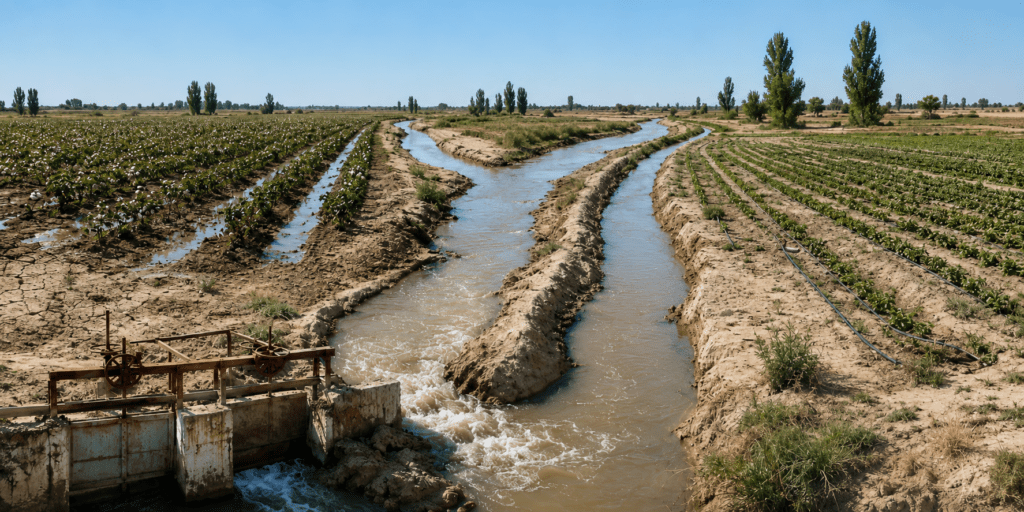
Central Asia’s water crisis is usually discussed as a problem of rivers, reservoirs, and diplomacy. But in 2026, the Amu Darya is also becoming something else: a test of state adaptation. The river basin entered the irrigation season under acute pressure. According to data cited by Kabar, the flow of the Amu Darya stood at only 66.8% of its normal level as of February 11, compared with 101.8% a year earlier. The Times of Central Asia previously reported that the river’s flow could fall to around 65% of its historical norm, raising risks for food security and agriculture across downstream states. Meanwhile, Afghanistan’s Qosh-Tepa Canal is advancing. The canal, one of the Taliban government’s most ambitious infrastructure projects, is designed to divert water from the Amu Darya to irrigate large areas of northern Afghanistan. Carnegie Politika has estimated that, once fully operational by 2028, it could take up to 10 cubic kilometers of water annually from the river. For Uzbekistan and Turkmenistan, the implications are direct. Both rely heavily on Amu Darya water. Both inherited agricultural systems shaped by Soviet-era irrigation, cotton production, and centralized planning, and both are now facing a combination of climate stress, upstream extraction, and aging water infrastructure. Yet their responses are increasingly different. The emerging contrast is not simply between two agricultural policies; it is between two institutional logics: adaptation and control. Uzbekistan’s Adjustment Strategy Uzbekistan is one of the most exposed countries in the region. Its population is large, its agriculture remains water-intensive, and some of its most vulnerable regions, including Khorezm and Karakalpakstan, sit near the lower reaches of the Amu Darya. For decades, the old model relied on large-scale irrigation, cotton, rice, and the assumption that water would continue to move through the regional system much as it had before. That assumption is now weakening. Tashkent’s response remains costly and far from complete. Uzbekistan still faces serious water losses, degraded land, salinization, and uneven implementation of reform. But the direction of travel is visible: the state is trying to reduce exposure by changing crops, infrastructure, and diplomatic behavior. Rice is one example. Traditional flooded rice cultivation is extremely water-intensive, and water shortages have already pushed some Uzbek rice farmers away from traditional Amu Darya regions toward areas with more stable access to water. Uzbekistan has also begun experimenting with less water-intensive methods. In Karakalpakstan, UNDP has supported the introduction of upland rice, which can reduce water consumption by up to 40% compared with traditional rice cultivation. Separately, Uzbekistan has announced plans to expand resource-efficient rice cultivation, including drip irrigation and drought-resilient rice varieties. The state is no longer treating the old water-intensive model as untouchable. In 2026, Uzbekistan allocated significant public financing for water-saving technologies. Government-linked reporting has described plans to expand drip irrigation, sprinkler systems, and laser land leveling across hundreds of thousands of hectares, with a broader target of expanding water-saving technologies to 3.5 million hectares by 2028. Laser leveling may sound technical, but its use reflects a shift from simply demanding more...

ILO Urges Turkmenistan to Abolish Cotton Quota System

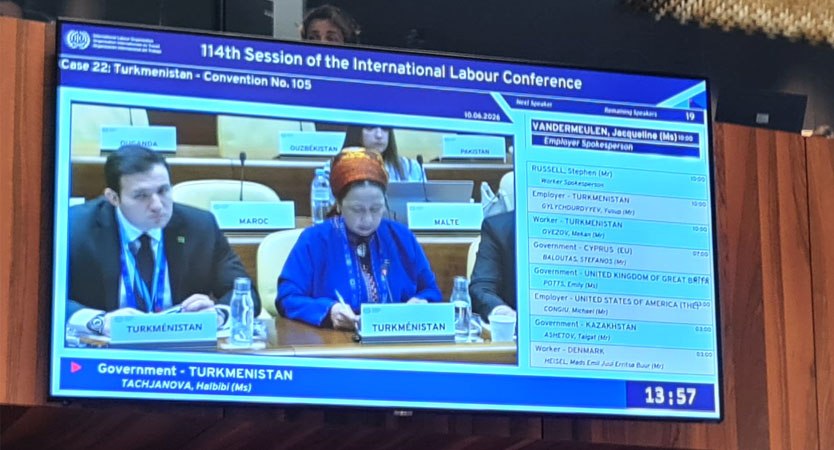
The International Labour Organization (ILO) has again criticized Turkmenistan over the continued use of forced labor in its cotton sector, calling on the country to dismantle its state-imposed cotton quota system and submit a detailed progress report by September 1. The call followed discussions at the annual International Labour Conference in Geneva, where the ILO’s Committee on the Application of Standards reviewed Turkmenistan’s compliance with Convention No. 105 on the Abolition of Forced Labour. This was the fifth time Turkmenistan’s implementation of the convention had been examined by the committee. The country ratified the convention in 1997, but concerns persist over the mobilization of public-sector employees for the annual cotton harvest. Turkmenistan’s delegation was led by Khalbibi Tachjanova, deputy minister of Labour and Social Protection of Population, who reaffirmed the country’s commitment to the convention and outlined reforms introduced in recent years. Tachjanova cited amendments to the Labor Code imposing a full ban on child and forced labor, as well as a draft presidential decree intended to explicitly prohibit any form of coercion during the cotton harvest. According to Tachjanova, labor inspectors carried out 3,867 inspections in 2025, identifying violations in 2,352 cases and imposing 3,040 administrative sanctions. She also said wages in the sector had doubled between 2023 and 2024 as part of the reforms. Yusup Gylychdurdiyev, a senior official from the Union of Industrialists and Entrepreneurs of Turkmenistan, spoke for employers. He said the country’s 340 dehkan farmer associations were gradually moving into private management structures and argued that private businesses lacked the administrative tools to coerce workers. Mekan Ovezov of the National Trade Union Center spoke for workers and cited cooperation between trade unions, government agencies, employers, and the ILO, as well as training and labor rights programs. However, labor and employer representatives on the ILO committee gave a far more critical assessment. Canadian labor lawyer Jackie VanDerMeulen, speaking for employer members, noted that the ILO had already issued observations on Turkmenistan’s cotton sector nine times. She said that despite some positive changes, the 2025 monitoring results showed serious violations remain. Stephen Russell, representing the United Kingdom’s Trades Union Congress, said labor rights abuses persist and pointed to the lack of independent public monitoring mechanisms and the absence of independent trade unions in the country. The findings show that Turkmenistan remains under international scrutiny over one of its most important export industries. Observers continue to call for changes in a sector long associated with state-driven labor mobilization.