• KGS/USD = 0.01143 -0%
  • KZT/USD = 0.00191 0%
  • TJS/USD = 0.10833 0.28%
  • UZS/USD = 0.00008 0%
  • TMT/USD = 0.28575 0%
  • KGS/USD = 0.01143 -0%
  • KZT/USD = 0.00191 0%
  • TJS/USD = 0.10833 0.28%
  • UZS/USD = 0.00008 0%
  • TMT/USD = 0.28575 0%
  • KGS/USD = 0.01143 -0%
  • KZT/USD = 0.00191 0%
  • TJS/USD = 0.10833 0.28%
  • UZS/USD = 0.00008 0%
  • TMT/USD = 0.28575 0%
  • KGS/USD = 0.01143 -0%
  • KZT/USD = 0.00191 0%
  • TJS/USD = 0.10833 0.28%
  • UZS/USD = 0.00008 0%
  • TMT/USD = 0.28575 0%
  • KGS/USD = 0.01143 -0%
  • KZT/USD = 0.00191 0%
  • TJS/USD = 0.10833 0.28%
  • UZS/USD = 0.00008 0%
  • TMT/USD = 0.28575 0%
  • KGS/USD = 0.01143 -0%
  • KZT/USD = 0.00191 0%
  • TJS/USD = 0.10833 0.28%
  • UZS/USD = 0.00008 0%
  • TMT/USD = 0.28575 0%
  • KGS/USD = 0.01143 -0%
  • KZT/USD = 0.00191 0%
  • TJS/USD = 0.10833 0.28%
  • UZS/USD = 0.00008 0%
  • TMT/USD = 0.28575 0%
  • KGS/USD = 0.01143 -0%
  • KZT/USD = 0.00191 0%
  • TJS/USD = 0.10833 0.28%
  • UZS/USD = 0.00008 0%
  • TMT/USD = 0.28575 0%
09 November 2025

Viewing results 1 - 6 of 10

Nineteen Uzbek Citizens Repatriated from Ukraine After Forced Labor Exploitation

Nineteen Uzbek nationals who were found in exploitative labor conditions in Ukraine’s Kyiv region have been safely repatriated to Uzbekistan, according to the Dunyo news agency. Ukrainian media had previously reported that the group was subjected to forced labor at a greenhouse facility in the region. In response, the Embassy of Uzbekistan in Kyiv, working in coordination with Ukraine’s National Police and the International Organization for Migration (IOM) offices in Ukraine and Moldova, launched an urgent operation to secure their release and safe return. Dunyo reports that the embassy took swift and comprehensive measures to safeguard the victims’ rights, address documentation issues, and facilitate their departure. Following negotiations, all 19 individuals were officially recognized as victims under Ukrainian law, allowing them to avoid legal penalties or administrative charges. On October 28, with financial and logistical support from the IOM, the group was transported by road from Kyiv to Chișinău, Moldova. While in the Moldovan capital, they were provided with food, shelter, and essential services. On November 2 the group flew from Chișinău to Istanbul, arriving in Urgench in Uzbekistan on November 3, accompanied by IOM representatives. The operation was hailed as part of Uzbekistan’s broader commitment to protecting the rights and welfare of its citizens abroad. The Uzbek Embassy in Ukraine continues to monitor the status of its nationals in the country and respond promptly to any reported violations.

Medical Staff in Turkmenistan Resign En Masse Over Extortion to Avoid Picking Cotton

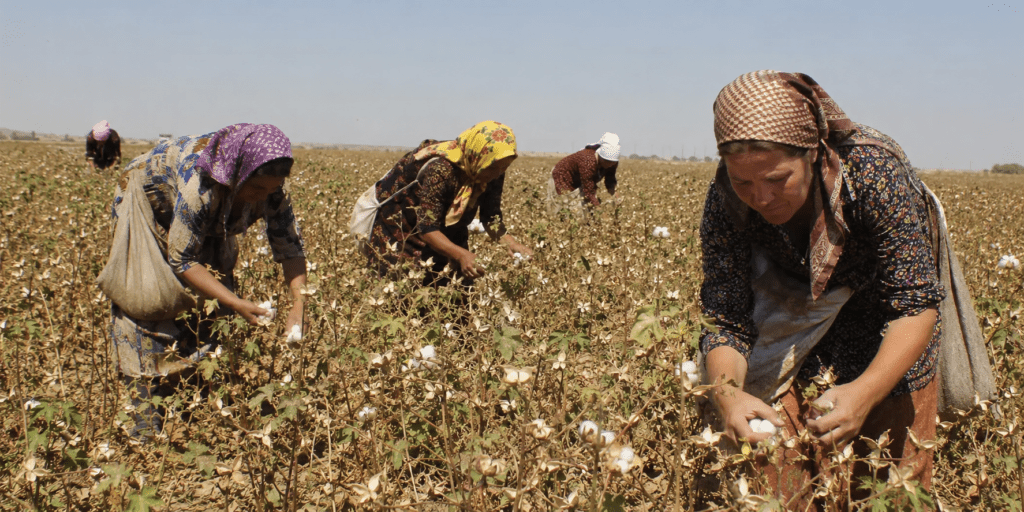
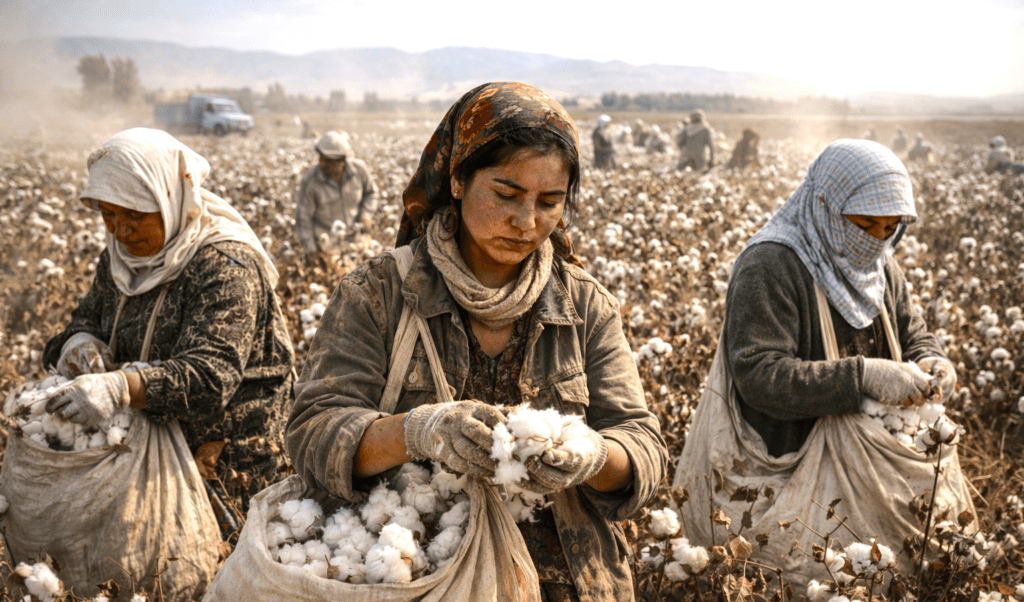
Hospitals and clinics in the Turkmen city of Turkmenabat are facing a growing staffing crisis as doctors and nurses resign en masse in protest over extortionate cash demands, particularly those tied to the annual cotton harvest. Efforts by local authorities to ease the burden have so far proven ineffective. According to sources cited by Chronicles of Turkmenistan, three family nurses recently resigned from Turkmenabat City Clinic No. 2, leaving just 11 nursing staff at the facility. Their responsibilities have since been redistributed among remaining colleagues, nearly doubling individual workloads, while salaries have only risen by 30%. The added pressure has led many remaining staff to consider resigning as well. Similar developments are unfolding at other clinics across the city. One doctor and two nurses have left Polyclinic No. 5, while multiple specialists have exited Polyclinics No. 3 and No. 4. The primary cause, according to local healthcare workers, is systematic extortion, most notably mandatory contributions for cotton harvesting. In September, Turkmenistan’s Ministry of Health reportedly issued a directive requiring medical personnel to participate in the cotton campaign. Employees in the Lebap region were assigned daily quotas to pick 45 kilograms of cotton. At both the new multidisciplinary hospital and the infectious diseases hospital in Turkmenabat, medical staff have been dispatched to the fields immediately after completing night shifts. Those unwilling or unable to comply must pay for a substitute picker, at a rate of 50 manats (approximately $14.30) per day. In practice, the burden of physical labor during this period often falls on staff nearing retirement age. One doctor at the infectious diseases hospital revealed that up to two-thirds of some employees’ monthly salaries are spent hiring replacement pickers during the cotton season. “Not everyone can work in the fields after a full shift, but everyone is expected to pay. That’s why many simply quit,” he said. In an attempt to stem the exodus, clinic administrators reduced the daily contribution for hiring workers from 50 to 30 manats (around $8.50) in mid-October. However, sources told Chronicles of Turkmenistan that the adjustment has done little to stop the resignations. Chief physicians have been trying to rehire former employees and bring retirees back into service, but interest remains low. As workloads increase and staff numbers dwindle, the quality of medical care continues to deteriorate.

U.S. State Department: No Improvement in Turkmenistan’s Human Rights Record

The U.S. State Department’s annual report on Turkmenistan for 2024 concludes that “no significant changes in the human rights situation in the country have been observed.”  Death in Custody and Pressure on Journalists The report cites the death of Allamurat Khudayramov, from Mary region, who reportedly died from torture while in custody. Journalists also remain under pressure. On August 13, former Radio Azatlyk correspondent Khudayberdi Allashov died in Koneurgench. Independent journalist Soltan Achilova reported harassment by authorities in video messages on July 11 and December 10. In November, she was barred from traveling to Geneva for the second time to receive an international award for her human rights work. The government continues to enforce strict media censorship and control of the internet, blocking websites, social media platforms, and VPN services. Security services reportedly summoned citizens who used VPNs for questioning, though more people are finding ways to bypass restrictions. Labor Rights Violations The report details widespread abuses in the workplace. Employers, including state agencies, compelled employees to work 10-hour days or six-day weeks without overtime pay. Many civil servants were required to work Saturdays. Penalties for labor law violations remain light compared with other crimes, and enforcement mechanisms are weak. Only 327 labor inspectors were responsible for monitoring compliance nationwide. The Ministry of Labor reported 2,269 violations as of September 1, 2024. Workers in the cotton industry faced health risks from chemical exposure but could not refuse unsafe tasks without risking dismissal. The report also documents the use of child labor, with children from low-income families engaged in heavy work in markets and agriculture. Restrictions on Freedom and Repression Abroad The organization Show Them Alive! recorded 162 cases of prisoner disappearances. While no new cases were identified in 2024, existing cases remain unresolved. Courts reportedly prevent detainees from challenging their arrest, and families are often unaware of prisoners’ whereabouts. Torture continues to be reported. The State Department also notes Turkmenistan’s involvement in transnational repression. On November 11, Human Rights Watch warned that Turkmen citizens critical of the government face arrest and torture if they return from abroad. Exit bans remain in force: some citizens are prevented from leaving the country even after renewing passports. In August, Turkmen News editor Ruslan Myatiev was denied entry to Turkey, where he was labeled a “threat to national security.” Turkmen activists abroad have also faced detention. Several opposition figures were arrested in Turkey at Ashgabat’s request, with some deported, including Merdan Mukhamedov, who now faces up to 25 years in prison.

State Workers in Turkmenistan Once Again Forced to Fund Cotton Harvest

As the cotton harvest begins in Turkmenistan, reports from the independent outlet turkmen.news indicates that the annual season is once again marred by forced labor practices. Pay or Work the Fields In Lebap and Mary provinces, state employees, including teachers, doctors, and workers from the Turkmenabat silk production association and a local knitwear factory, are being compelled to contribute financially toward the harvest. The daily levy stands at 30 manats (approximately $1.50). Since August 3, similar demands have reportedly extended to medical and educational staff in Mary province. As in previous years, state workers are frequently presented with a coercive “choice”: pay for a replacement harvester or work in the fields themselves. Some avoid field labor by sending their children in their place. Reform Promises Fall Short In 2024, the Turkmen government, in cooperation with the International Labour Organization, unveiled a roadmap for eradicating forced labor in the cotton industry. The plan outlined key measures to safeguard workers’ rights and address systemic abuses. Despite this, rights groups, including the Turkmen Initiative for Human Rights, the Progres Foundation, and the Cotton Campaign, warn that little can change while the state maintains total control over the cotton supply chain, from seed distribution to raw cotton procurement. These organizations argue that genuine reform requires guarantees of free speech and the right to organize, allowing citizens to report abuses and form independent trade unions. In reality, however, workplace union leaders are reportedly tasked with collecting money from employees and organizing labor schedules. Experts note that this top-down mobilization underscores the state-driven nature of the system, perpetuating a cycle of coercion rather than addressing its root causes.

Forced Labor Rampant in Turkmenistan’s 2024 Cotton Harvest, Say Rights Groups

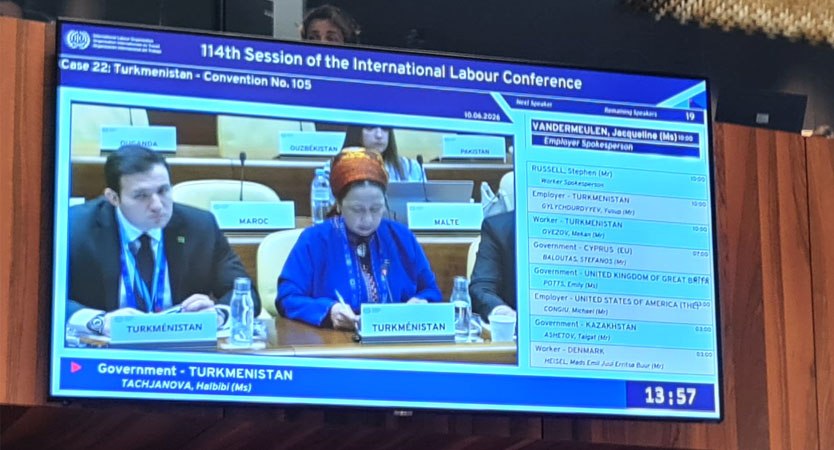
Despite public pledges of reform and cooperation with the International Labor Organization (ILO), Turkmenistan's government continues to enforce widespread forced labor during its annual cotton harvest. This is the core finding of a report released on May 19 by Turkmen.news, the Turkmen Initiative for Human Rights (TIHR), the Progres Foundation, and the Cotton Campaign coalition. Systemic Abuse: The Role of the State The report, titled “State-imposed Forced Labor in the 2024 Harvest and Links to Global Supply Chains,” identifies the Turkmen state as the primary orchestrator of forced labor practices. Observers documented conditions in the country’s key cotton-producing regions, Balkan, Dashoguz, Lebap, and Mary, while withholding personal identifiers to protect sources. Public sector workers, particularly junior staff from schools, healthcare facilities, and utilities, were either compelled to harvest cotton or to finance hired laborers from their own wages. Private entrepreneurs also faced coercive financial pressure. Although child labor remains officially banned, instances were reported, often incentivized by promises of payment. Reforms on Paper, Resistance in Practice While Ashgabat adopted a roadmap in 2024 for eradicating forced labor in coordination with the ILO, human rights defenders report negligible progress. Central to the issue is the state’s monopolistic control over every stage of the cotton supply chain, land allocation, seed distribution, pricing, and collection, enabling local officials to enforce arbitrary quotas and extort farmers. “Boosting productivity or upgrading equipment is futile unless workers are shielded from coercion and can organize to defend their rights,” the report concludes. Women disproportionately bear the burden, as they make up the majority of social sector employees and often lack the financial means to avoid fieldwork by hiring substitutes. Supervised Compliance and Global Implications The report also describes how Turkmen officials obstructed genuine engagement with the ILO. In Mary region, state workers were coached on how to respond to ILO queries, while others were excluded from meetings entirely. International supply chains are not immune. As one of the world’s top 15 cotton producers, Turkmenistan exports textiles primarily to Turkey, Italy, and Pakistan. Turkish-made goods incorporating Turkmen cotton are subsequently sold in the EU, while firms from Germany and Italy supply industrial machinery to Turkmen producers. Recommendations and Global Accountability The report urges the Turkmen government to hold corrupt officials accountable, uphold labor laws, and guarantee fundamental freedoms, including the right to form independent trade unions. International actors are advised to enhance import scrutiny and exclude goods linked to forced labor from supply chains. Foreign diplomats are encouraged to raise the issue during negotiations with Ashgabat and in investment discussions. The ILO, Turkmenistan’s Ombudsman, and international brands are called upon to maintain rigorous oversight and actively prevent labor violations. In a rare move, ILO experts were permitted to monitor the 2024 cotton harvest. Despite limited access, they published critical findings on wage inadequacies, child labor persistence, and repercussions for public employees who resisted field assignments.

Turkmenistan to Ditch Forced Labor in Cotton Harvesting

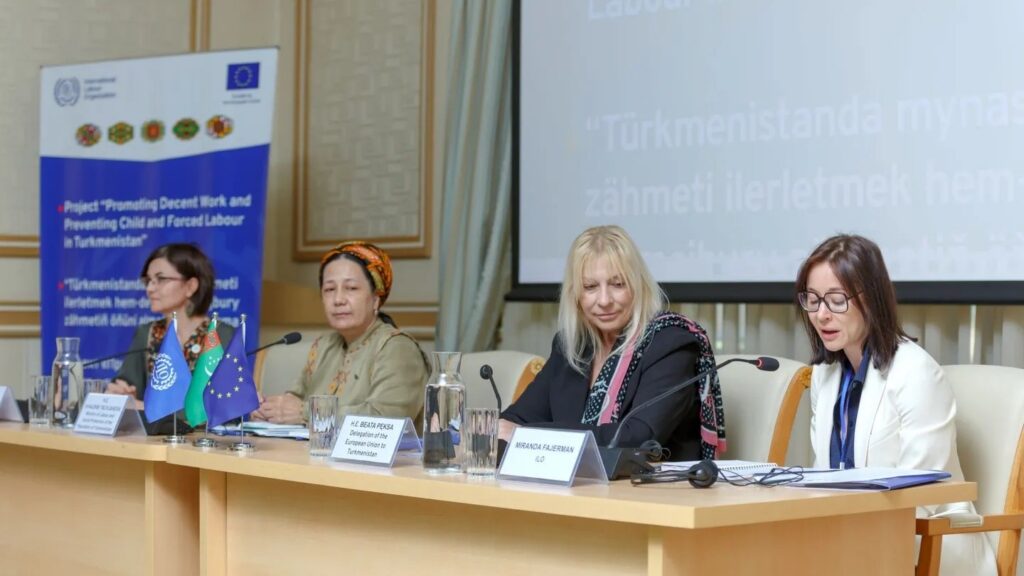
According to reports  published by Turkmen.news, the government of Turkmenistan and the International Labor Organization (ILO) have adopted a roadmap for cooperation for 2024-2025, The document details specific steps to prevent the use of forced labor by adults and children during the cotton harvest. It also provides mechanisms for hired labourers to lodge  complaints regarding coercion or extortion, and sets a minimum wage for pickers. If  all of the conditions and measures outlined in the roadmap are implemented,  significant progress will be made towards eradicating forced labor in Turkmenistan.  The key aim is the legislation of a  presidential decree on measures for organized cotton harvesting to eliminate the use of forced or compulsory  labor. It is expected that a system of prohibitions and penalties will be introduced regarding the  practice of forced mobilization or extortion.  The roadmap stresses the need for a simple and easily accessible  means whereby complaints of coercion can be anonymously filed to prevent officials  retaliating against the complainant. The Ministry of Foreign Affairs, the Supreme Court, the Prosecutor General's Office, the Interior Ministry, the Ministry of Justice, the Ombudsman Institute, and the Ministry of Labor and Social Security are tasked with developing the document's recommendations. “Overall, if the measures in the roadmap are implemented, it will be a big step forward. Although the government has not publicly recognized the problem, such a detailed plan is encouraging,” said Ruslan Myatiev, editor of Turkmen.news.