• KGS/USD = 0.01144 0%
  • KZT/USD = 0.00205 0%
  • TJS/USD = 0.10784 0%
  • UZS/USD = 0.00008 0%
  • TMT/USD = 0.28490 0%
  • KGS/USD = 0.01144 0%
  • KZT/USD = 0.00205 0%
  • TJS/USD = 0.10784 0%
  • UZS/USD = 0.00008 0%
  • TMT/USD = 0.28490 0%
  • KGS/USD = 0.01144 0%
  • KZT/USD = 0.00205 0%
  • TJS/USD = 0.10784 0%
  • UZS/USD = 0.00008 0%
  • TMT/USD = 0.28490 0%
  • KGS/USD = 0.01144 0%
  • KZT/USD = 0.00205 0%
  • TJS/USD = 0.10784 0%
  • UZS/USD = 0.00008 0%
  • TMT/USD = 0.28490 0%
  • KGS/USD = 0.01144 0%
  • KZT/USD = 0.00205 0%
  • TJS/USD = 0.10784 0%
  • UZS/USD = 0.00008 0%
  • TMT/USD = 0.28490 0%
  • KGS/USD = 0.01144 0%
  • KZT/USD = 0.00205 0%
  • TJS/USD = 0.10784 0%
  • UZS/USD = 0.00008 0%
  • TMT/USD = 0.28490 0%
  • KGS/USD = 0.01144 0%
  • KZT/USD = 0.00205 0%
  • TJS/USD = 0.10784 0%
  • UZS/USD = 0.00008 0%
  • TMT/USD = 0.28490 0%
  • KGS/USD = 0.01144 0%
  • KZT/USD = 0.00205 0%
  • TJS/USD = 0.10784 0%
  • UZS/USD = 0.00008 0%
  • TMT/USD = 0.28490 0%

Viewing results 1 - 6 of 172

Kyrgyzstan Cracks Down on Major Religious Extremist Organization

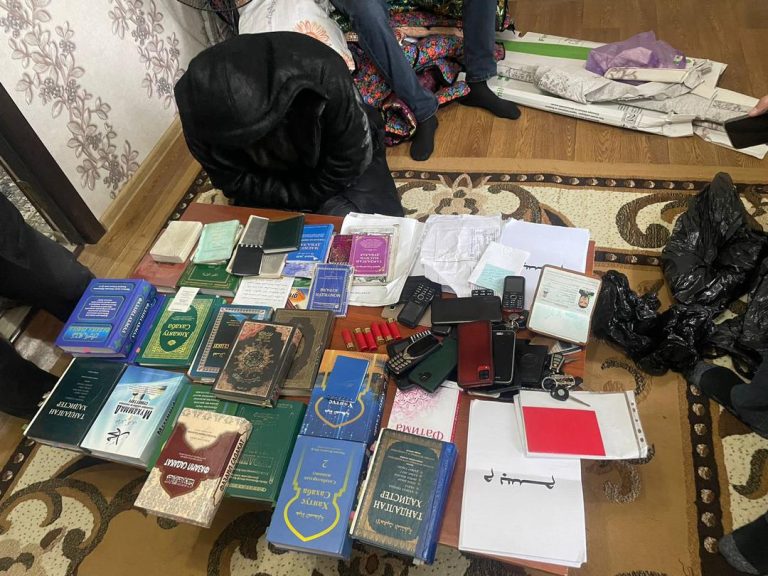
In Jalal-Abad, officers of Kyrgyzstan's State Committee for National Security (SCNS) neutralized one of the largest structural networks of the banned religious extremist organization Hizb ut-Tahrir. According to the SCNS press service, 22 active members of the organization were detained, including the leader (“masul”), five spiritual leaders (“nakibs”), and eight teachers (“mushrifs”) who taught extremist ideology to small groups of 3-5 students in clandestine settings. The SCNS reported that the detainees had been actively spreading destructive ideas, recruiting supporters, and distributing extremist materials for several years. During the operation, authorities discovered an underground printing house where extremist materials were being produced. A large cache of literature, as well as computers and copying equipment, was seized. The SCNS also noted that members of the network used drones to ensure the security of their meetings by detecting possible surveillance by law enforcement agencies. The detainees are currently being held in the SCNS detention center, and investigations are ongoing to identify additional members of the network and their activities. Hizb ut-Tahrir is an international religious extremist organization banned in Kyrgyzstan since 2003. Its goal is to establish a global Islamic caliphate by overthrowing secular governments. The organization is particularly active in Kyrgyzstan's southern regions, where it promotes extremist ideology and recruits new members. Kyrgyz authorities have been proactive in combating Hizb ut-Tahrir, regularly detaining its members and working to suppress its activities.


Killing of Russian General Kirillov: Arrest of Uzbek Suspect Raises Fears Among Central Asians

In the early hours of Tuesday, December 17, an explosion occurred at the entrance of an apartment building in a modest Moscow district, killing two people: Lieutenant General Igor Kirillov and his assistant. Kirillov was the head of the Radiation, Chemical, and Biological Defense (RCBD) troops of the Russian Armed Forces. A briefing by him had reportedly been scheduled for later that day. The Russian Federal Security Service (FSB) announced the arrest of a suspect: a 1995-born citizen of Uzbekistan. According to the FSB, the suspect was identified and detained through joint operations with Russia’s Ministry of Internal Affairs and the Investigative Committee. According to investigators, the explosive device had been attached to an electric scooter parked near the building's entrance. Surveillance was allegedly conducted via a video camera placed inside a carshare vehicle parked nearby for several days. While the Ukrainian side has not officially claimed responsibility for the attack, some sources linked to Ukraine’s Security Service have reportedly done so. Russian officials quickly blamed Ukraine. Kremlin spokesperson Dmitry Peskov stated, “The Kiev regime does not shy away from such methods,” without providing evidence. Soon after, Investigative Committee spokesperson Svetlana Petrenko claimed that the suspect had confessed to being recruited by Ukrainian special services, who allegedly promised him an EU passport and $100,000. However, a video of the confession released by the FSB raises doubts. The suspect, who appears to struggle with Russian, delivers statements that suggest he may not fully understand what he is saying. While the confession's credibility is unclear, the nationality of the suspect - another migrant from Central Asia - is what resonates most in the short term. The incident follows a previous terrorist attack at Moscow’s Crocus City Hall, after which migrants from Central Asia faced intensified scrutiny. Over the past six months, many Central Asian workers living in Russia have felt treated not as second-class but as third-class citizens. Document checks, lengthy detentions, and increasingly restrictive rules for entry and residency in Russia have become commonplace. In August, Russia’s Interior Ministry reported that almost 92,800 foreign citizens were expelled in the first half of 2024 - a 53.2% increase compared to the same period in 2023. In response to the attack, nationalist groups and patriotic public figures are once again urging the Russian government to introduce a visa regime for Central Asian countries, particularly Tajikistan and Uzbekistan. Similar measures have been observed in Turkey after the Crocus incident involving Tajik citizens, and in the UAE following a high-profile crime involving Uzbek nationals. It is highly likely that anti-migrant sentiment in Russia will intensify in the coming months. Coupled with increased security operations, this trend could escalate into new forms of repression targeting migrants. Such measures are likely to strain Russia's relations with Central Asian republics, where the treatment of migrant workers remains a sensitive issue.

Uzbek Teenager Illegally Earned Over $2.5 Million Through Cryptocurrency

A 17-year-old boy has been detained in the Zhondor district of Uzbekistan’s Bukhara region for allegedly conducting illegal cryptocurrency transactions. Authorities claim the teenager engaged in the acquisition, transfer, and exchange of crypto-assets without obtaining the required licenses. Over the course of his activities, he reportedly amassed approximately 34 billion UZS (around $2.6 million). Law enforcement officials have filed a criminal case against the teenager under Article 278-8, Part 3, of Uzbekistan’s Criminal Code. This article addresses violations of laws regulating cryptocurrency transactions. Authorities have seized all of the funds the teenager earned through his alleged activities. A preliminary investigation is ongoing to determine the full extent of the violations and uncover any additional details surrounding the case. Cryptocurrency transactions in Uzbekistan are tightly regulated, with severe penalties for non-compliance. Under the law: Purchasing, selling, or exchanging crypto-assets without a license is punishable by administrative arrest of up to 15 days or a fine of 20–30 Basic Calculation Units (BCUs). Confiscation of both crypto-assets and associated funds is also mandatory. If an individual continues illegal activities after receiving an administrative penalty, they may face criminal charges, including imprisonment of up to 5 years. Unauthorized cryptocurrency mining can result in administrative arrest of up to 5 days or fines ranging from 20 to 30 BCUs. For reference, one BCU currently equates to 330,000 UZS (about $25). To conduct cryptocurrency operations legally in Uzbekistan, individuals and businesses must use licensed service providers. Licensed entities ensure compliance with the country’s strict regulatory framework, minimizing risks for participants in the crypto market.

Uzbek Government Files Criminal Case Against Citizen Over Jihadi Activities in Syria

The Uzbek Ministry of Internal Affairs has instigated a criminal case against Khudoyor Nuriddinov, also known as Abu Walid, who is accused of being a member of an international terrorist organization. The announcement was made via the ministry’s press service. Born in 1994 in the Rishtan district of Ferghana, Nuriddinov faces multiple charges under Uzbekistan’s Criminal Code, including: Article 155-2: Training or travel for the purpose of terrorist activities, Article 159: Undermining the constitutional order of Uzbekistan, Article 223: Illegal travel abroad or entry into Uzbekistan, Article 244-2: Creation, management, or participation in extremist, separatist, or banned organizations. According to the authorities, Nuriddinov left for Russia in 2016 as a labor migrant, where he became influenced by international terrorist ideologies. He later traveled to Idlib, Syria, where he engaged in propaganda activities. The Uzbek authorities report that his actions led to the deaths of several Uzbek citizens who were recruited and killed in fighting in Syria. Nuriddinov continues to promote jihad through social networks and YouTube, giving a religious pretext for his activities. His accounts and pages are banned in Uzbekistan, and those found storing, distributing, or transporting his content face legal action.

Swiss Bank Implicated in Corruption Scheme Linked to Islam Karimov’s Daughter

Swiss bank Banque Lombard Odier & Cie SA faces allegations of violating anti-money laundering regulations concerning funds linked to Gulnara Karimova, the controversial daughter of Uzbekistan’s first president, Islam Karimov. The Swiss Attorney General's Office revealed that the bank managed nine suspicious accounts tied to Karimova’s organization, the "Office," despite clear violations of external regulations and internal policies. A former bank manager was also charged with facilitating the scheme between 2005 and 2012. According to investigators, the "Office" functioned solely as a front to launder funds derived from corruption in Uzbekistan’s telecommunications sector. It reportedly had no legitimate business operations and employed no staff. The investigation found that the banker deliberately provided false information to obscure Karimova’s role as the ultimate beneficiary of the accounts. The individual is also accused of destroying or concealing documents that could have exposed the illegal origins of the funds. From 2011 to 2012, the banker allegedly allowed unauthorized access to a safe linked to the “Office,” enabling the removal of critical evidence supporting fraudulent transactions. Gulnara Karimova was once a prominent figure in her father’s administration, known for her roles as a singer, fashion designer, socialite, businesswoman, and diplomat. At one point, she was even considered a potential successor to Islam Karimov. However, by late 2013, her relationship with her father deteriorated, resulting in her political downfall. By 2014, her residence was raided, and she was implicated in a corruption case involving Swedish telecom giant TeliaSonera. Her legal troubles escalated, with convictions in 2015 for embezzlement, public fund misappropriation, and tax evasion, leading to a five-year sentence. This was extended in 2017, placing her under house arrest alongside her daughter. In 2019, Karimova was moved to a penal colony for violating house arrest conditions. In 2020, she was sentenced to an additional 13 years for crimes including creating a criminal association, extortion, and embezzlement. In September 2023, the Swiss General Prosecutor's Office filed an indictment against Karimova in the Federal Court. Prosecutors allege that foreign companies seeking entry into Uzbekistan’s telecommunications market were coerced into paying bribes through entities within the “Office” structure.' Karimova’s legal troubles extend beyond Uzbekistan. British courts have confiscated properties linked to her, valued at over £20 million. The ongoing investigation into her global operations has drawn attention to her role in one of the largest corruption cases in Uzbekistan’s history. This latest scandal has deepened scrutiny of Karimova’s dealings and raised questions about the accountability of financial institutions enabling such schemes.

Prosecutor General’s Office Issues Statement on Allamjonov Assassination Attempt

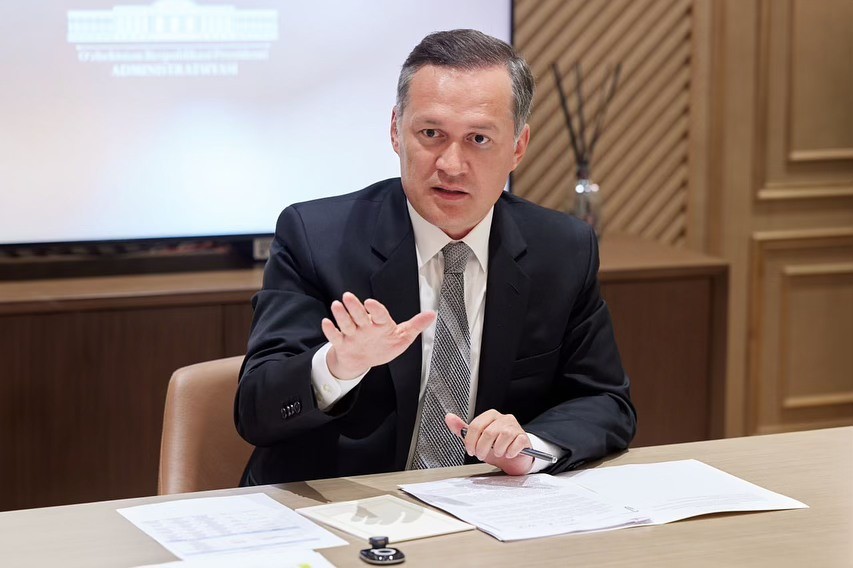
A month ago, reports emerged of an assassination attempt on Komil Allamjonov, the former head of the Presidential Department in Uzbekistan. Some media outlets speculated that Chechen leader Ramzan Kadyrov might be connected to the case. In response, the Prosecutor General’s Office has released an official statement addressing the incident. According to the statement, material evidence linked to the case was discovered during the inspection of the crime scene, searches of vehicles used by the suspects, and investigations at their residences. These findings have been crucial in advancing the case. So far, investigative efforts have identified seven individuals involved in the crime. Five of them have been placed under preventive detention, while two remain wanted by authorities. One suspect, identified as K.S., was located in Kazakhstan, where investigative procedures were carried out. Another suspect, Javlon Yunusov, was arrested in South Korea and subsequently deported to Uzbekistan. The investigation is still ongoing, and further details are expected as the case develops.