• KZT/USD = 0.00223
  • TJS/USD = 0.10800
  • UZS/USD = 0.00009
  • TMT/USD = 0.29760
  • KZT/USD = 0.00223
  • TJS/USD = 0.10800
  • UZS/USD = 0.00009
  • TMT/USD = 0.29760
  • KZT/USD = 0.00223
  • TJS/USD = 0.10800
  • UZS/USD = 0.00009
  • TMT/USD = 0.29760
  • KZT/USD = 0.00223
  • TJS/USD = 0.10800
  • UZS/USD = 0.00009
  • TMT/USD = 0.29760
  • KZT/USD = 0.00223
  • TJS/USD = 0.10800
  • UZS/USD = 0.00009
  • TMT/USD = 0.29760
  • KZT/USD = 0.00223
  • TJS/USD = 0.10800
  • UZS/USD = 0.00009
  • TMT/USD = 0.29760
  • KZT/USD = 0.00223
  • TJS/USD = 0.10800
  • UZS/USD = 0.00009
  • TMT/USD = 0.29760
  • KZT/USD = 0.00223
  • TJS/USD = 0.10800
  • UZS/USD = 0.00009
  • TMT/USD = 0.29760
19 September 2026

Viewing results 1 - 6 of 40

Turkey’s Turkic Gambit: Balancing Influence in Post-Soviet States

Despite its superpower ambitions, which have diminished somewhat since February 24, 2022, Moscow views Turkey’s growing geopolitical influence with increasing concern. The Organization of Turkic States (OTS), which includes several Central Asian republics, is perceived by the Kremlin as a rival to its regional blocs, such as the Eurasian Economic Union (EAEU) and the Collective Security Treaty Organization (CSTO). However, for Central Asian nations, the OTS is not a political or military alliance but rather a framework for economic, cultural, and humanitarian cooperation. The extent of Turkey’s influence remains limited within these parameters.   A Historical Perspective Russia continues to interpret geopolitical dynamics through the lens of century-old concepts, particularly Pan-Slavism and Pan-Turkism, both of which emerged as nationalist movements against the Russian and Ottoman empires. Pan-Turkism gained traction in the Ottoman Empire but lost momentum following its adoption and subsequent rejection by Mustafa Kemal Atatürk. The ideology was later revived during the Cold War, when Turkey’s NATO membership positioned it as a force for destabilizing Soviet Central Asia, Azerbaijan, and Turkic regions within Russia, such as Tatarstan and Bashkortostan. Despite Turkish efforts, Pan-Turkic sentiment found limited success, influencing only Azerbaijan, which aligned closely with Turkey after losing the First Nagorno-Karabakh War. Azerbaijan formalized this relationship in the early 1990s with the doctrine of “Two Countries, One Nation.” Baku only began to see concrete benefits from its alliance with Ankara after winning the Second Karabakh War in 2020. The Organization of Turkic States: Reality vs. Rhetoric Although the first summit of Turkic states was held in 1992, the OTS’s precursor, the Turkic Council, was only founded in 2009. The agreement, signed in Nakhchivan, Azerbaijan, initially included Turkey, Azerbaijan, Kazakhstan, and Kyrgyzstan. Uzbekistan expressed interest in joining in 2018, and officially became a member in 2019, whilst Hungary (2018), Turkmenistan (2021), the Turkish Republic of Northern Cyprus (2022), and the Economic Cooperation Organization (ECO) (2023) hold observer state status. Turkmenistan has frequently been rumored to be considering full membership. Turkey’s geopolitical aspirations in Central Asia have often clashed with the ambitions of Kazakhstan and Uzbekistan. Uzbekistan delayed its membership in the Turkic Council until 2019 due to strained relations with Ankara which dated back to the mid-1990s. Turkey, the first country to recognize the independence of the Central Asian republics, expected to leverage its Cold War victory over the Soviet Union to expand its influence in the region. While Kazakhstan initially welcomed Turkish economic expansion and Pan-Turkic rhetoric, it became increasingly skeptical in the 2000s. Uzbekistan, however, was cautious from the outset and largely resisted Turkish influence. Kazakhstan’s shift in perspective coincided with Ankara’s increased push for deeper Turkic integration. Turkish-backed initiatives in Kazakhstan revealed clear expectations that Ankara would lead such a union, prompting Astana to resist. Kazakhstan, which balances ties with the West, China, and Russia, rejected the notion of falling under Turkish leadership. The Kazakh government neutralized Pan-Turkic voices by integrating key advocates into political positions, redirecting their efforts toward promoting Kazakh nationalism instead. Turkey’s Role in the...
CSTO to Strengthen Tajik-Afghan Border in 2025

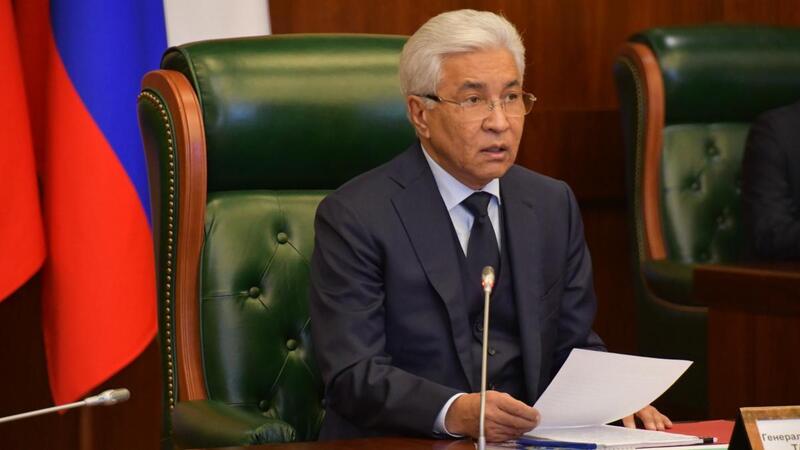
The Collective Security Treaty Organization (CSTO) will begin implementing a program to reinforce the Tajik-Afghan border in 2025, CSTO Secretary General Imangali Tasmagambetov announced during a meeting in Moscow on Thursday, according to Interfax. Tasmagambetov explained that the program outlines concrete measures to enhance security along the southern boundary of the CSTO’s area of responsibility. This announcement was made during a meeting reviewing the CSTO secretariat’s and joint staff’s activities in 2024, as well as outlining objectives for 2025. The meeting was attended by Andrei Serdyukov, head of the CSTO joint staff. In 2024, the CSTO finalized and signed agreements related to equipping its collective forces with modern weapons and military equipment. The organization also conducted joint operational and combat training exercises and actively collaborated with international organizations. As it looks ahead to 2025, the CSTO is drafting an action plan to focus on key priorities, including securing the Tajik-Afghan border, which has long been a source of concern for member states. The organization includes six member countries: Russia, Armenia, Belarus, Kazakhstan, Kyrgyzstan, and Tajikistan, though in December 2024, Armenian Prime Minister Nikol Pashinyan stated that his country’s relations with the CSTO have passed the “point of no return.” The Shamsiddin Shokhin section of the Tajik-Afghan border, spanning more than 100 kilometers, has been particularly problematic for years. This area has witnessed numerous security incidents, including hostage-taking and attacks on Tajik citizens and military personnel. The CSTO’s planned measures aim to address these challenges and bolster the security of this vulnerable region. By strengthening border security, the organization is seeking to reduce the risks posed by cross-border threats, including illegal trafficking and extremist activity.

Russia’s Strategic Posturing and Putin’s November Visit to Kazakhstan

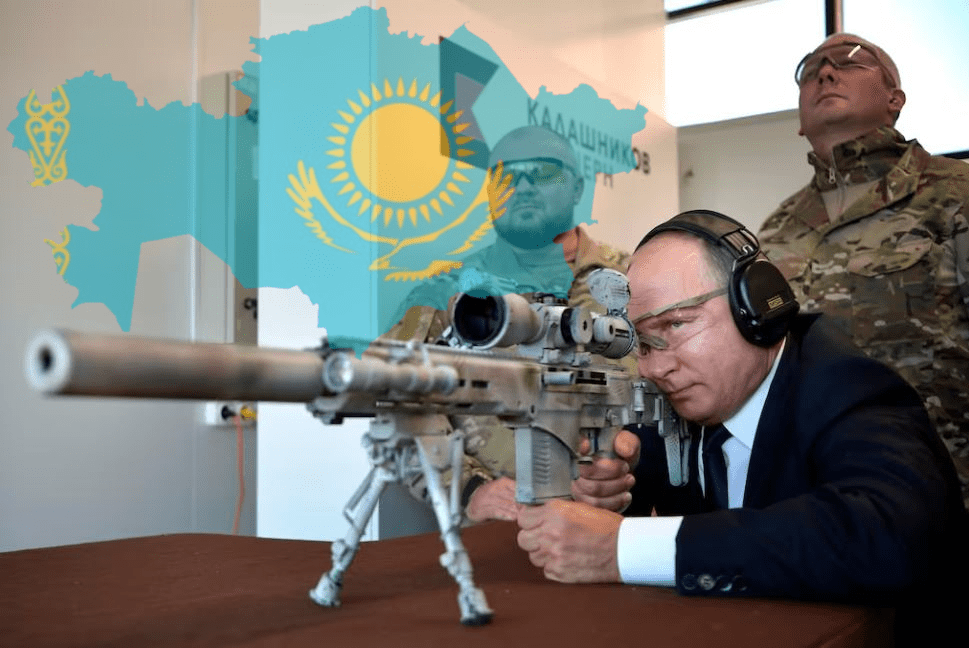
On November 27, 2024, Russian President Vladimir Putin’s state visit to Kazakhstan underscored the complex geopolitical and security challenges facing the region. Hosted by Kazakh President Kassym-Jomart Tokayev in Astana, the visit took place amidst heightened tensions following Russia’s deployment of its Oreshnik hypersonic missile in Ukraine on November 21. This escalation has reshaped the regional security environment, compelling Kazakhstan to confront potential spillover effects of the Ukraine conflict. Energy remained a central focus during the visit. Kazakhstan remains heavily reliant on oil exports through the pipeline of the Caspian Pipeline Consortium (CPC), which passes through southern Russia. This cooperation benefits Kazakhstan economically but, by tying Kazakhstan further into Russian energy networks, it further complicates Astana's efforts to balance relations with Moscow and Western powers. Following periodic closures of the CPC route on various pretexts, Kazakhstan has resolved to diversify its energy export strategy. It has increased shipments by barge across the Caspian Sea to enter the Baku-Tbilisi-Ceyhan (BTC) pipeline, which terminates on Turkey's coast in the eastern Mediterranean. One should not be surprised if ideas about the old Trans-Caspian Oil Pipeline (TCOP) project are taken out of deep storage for reanimation. The TCOP is an undersea link first discussed in the late 2000s between then-Presidents Nursultan Nazarbayev of Kazakhstan and Nicolas Sarkozy of France. It was shelved at the time because it did not seem geoeconomically necessary. Since then, relations between Russia and Kazakhstan have been complicated by the periodic CPC closures that, although they are given technical justification, appear politically motivated by Moscow to squeeze Astana. Kazakhstan's short-term solution, to increase oil shipments by barge across the Caspian Sea to Baku for insertion into the BTC pipeline, simply cannot attain the volumes necessary to provide a strategic alternative to the CPC. The BTC, at present, would be able to accommodate whatever volumes Kazakhstan would be able to transit to Azerbaijan including via a prospective TCOP, for export to world markets from Ceyhan. One would suppose that bilateral discussions also covered the possible participation of Rosatom in the construction and operation of Kazakhstan’s first nuclear power plant (NPP). However, no mention of this topic was made in public statements. Kazakhstan would prefer to escape the vise-like pressure between Russia and China on this matter. That is why Tokayev has discussed participation by the French firms Orano and EDF with France's President Emmanuel Macron. It has recently been suggested that it would be technically feasible for Kazakhstan to find a group of Western companies capable of executing the project. A Western consortium would have no reason to hesitate to include Kazatomprom in an appropriate role, not excluding capacity-building. The Russia-only and China-only options for the NPP's construction would be less welcoming to such a possibility. Kazakhstan's leadership has become properly sensitive to how energy partnerships are not just economic decisions, but strategic calculations in Central Asia's volatile geopolitical landscape. Indeed, Russia’s use of the Oreshnik missile against Ukraine has created an entirely new security situation. It has raised concerns that...

CSTO Leaders Tackle Regional Security, Nuclear Energy, and Afghan Border Concerns

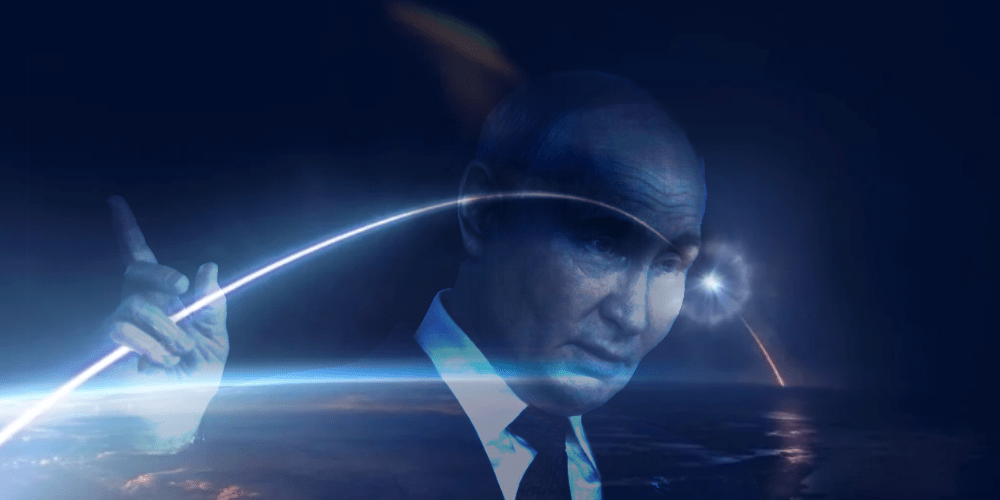
Astana hosted a summit of the Collective Security Treaty Organization (CSTO), gathering heads of member states to discuss pressing regional and international issues. Kazakh President Kassym-Jomart Tokayev chaired the session of the CSTO Collective Security Council. Attendees included Belarusian President Alexander Lukashenko, Kyrgyz President Sadyr Japarov, Russian President Vladimir Putin, Tajik President Emomali Rahmon, and CSTO Secretary-General Imangali Tasmagambetov. In his address, President Tokayev highlighted the CSTO’s pivotal role in maintaining peace and stability in Eurasia. “Amid modern challenges, the CSTO consistently demonstrates its relevance as a guarantor of security for all member states. Our coordinated actions, mutual trust, and support strengthen our collective ability to tackle complex and large-scale tasks. The CSTO is not merely a military partnership but a unique mechanism that unites our efforts and resources to safeguard sovereignty and territorial integrity,” Tokayev stated. CSTO’s Response to Kazakhstan’s 2022 Crisis Tokayev reflected on the CSTO’s rapid deployment in January 2022, when Kazakhstan faced unrest over rising gas prices, which escalated into violent confrontations. Within 24 hours, CSTO forces were deployed to stabilize the situation. Russian troops secured strategic facilities in Almaty, while Kazakh forces restored order, marking a critical demonstration of the organization’s operational capability. Putin Unveils "Oreshnik" Missile System Russian President Vladimir Putin addressed ongoing tensions with Ukraine, signaling the potential use of the Oreshnik medium-range ballistic missile system in response to Western-supplied long-range missiles targeting Russian territory. According to Putin, the Oreshnik has the destructive power of nuclear weapons, and can penetrate heavily fortified targets. “The temperature of the striking elements reaches 4,000 degrees. At the explosion's epicenter, everything is reduced to elementary particles, essentially turning to dust,” he explained. Putin also announced that serial production of the missile had begun, with several units ready for deployment. Kazakhstan’s Nuclear Power Project Discussions also turned to Kazakhstan’s plans to build its first nuclear power plant. Tokayev has proposed an international consortium, and Putin expressed Russia's willingness to participate through Rosatom, emphasizing its extensive experience with international collaborations. “Rosatom is ready to work with specialists from other countries,” Putin remarked, leaving the door open for multilateral cooperation. Armenia’s Absence and CSTO’s Future Noticeably absent from the summit was Armenian Prime Minister Nikol Pashinyan, following Armenia’s decision to freeze its CSTO membership earlier this year. Yerevan cited concerns over its sovereignty as the reason for the suspension. Secretary-General Tasmagambetov remained optimistic about Armenia’s return, calling it a valued ally. “This is the decision of an independent and sovereign state, which no country or organization can influence. Nevertheless, we view Armenia as an ally and hope it will return to full participation in the CSTO in the foreseeable future,” Tasmagambetov stated. Key Summit Outcomes During the session, the Collective Security Treaty Organization (CSTO) also reflected on Kazakhstan's presidency in 2024, highlighting significant milestones achieved under its leadership. President Tokayev reported that approximately 60 activities were conducted within the CSTO's statutory areas of cooperation during Kazakhstan’s presidency. This included advancing coordinated approaches to key international issues in collaboration with member...

On Kazakhstan Trip, Putin Touts Russian Military Power

Russian President Vladimir Putin briefed a regional security group meeting in Kazakhstan on Thursday about Russia’s latest hypersonic missile system and possible plans to strike “decision-making centers” in Kyiv, a step that would represent another escalation after nearly three years of war in Western-backed Ukraine. Putin’s speech to key figures in the Collective Security Treaty Organization, showcased the military might of Russia, which has nevertheless suffered significant losses during the war. It was delivered to an audience that, with the exception of Russian ally Belarus, has largely tried to stay on the sidelines of the conflict. The Russian-led security organization, known by its acronym CSTO, includes five other post-Soviet states – Kazakhstan, Kyrgyzstan, Tajikistan, Belarus and Armenia. However, Armenia has effectively frozen its membership and its representatives were not present at the meeting in Astana, Kazakhstan’s capital. “Some of our colleagues have asked me to report extensively on the latest developments in the zone of conflict in Ukraine, the zone of the special military operation, in view of the recent developments,” Putin said, according to a Kremlin transcript. “Certainly, recognizing the importance of the ongoing events, I will gladly provide an update on the situation today, as I believe it is my duty to inform you about the latest events.” Putin, who launched a full-scale invasion of Ukraine in February 2022, described recent Russian strikes as a response to Ukraine’s use of Western weapon systems, including ATACMS and Storm Shadow missiles, in Russia’s Bryansk and Kursk regions. He referred to a test of the hypersonic Oreshnik missile “in its non-nuclear configuration” in an attack on the Ukrainian city of Dnipro on Nov. 21, a strike that intensified concerns about nuclear escalation by Russia. Some U.S. officials, however, believe the use of nuclear weapons by Russia remains unlikely, even if the situation is dangerous. “Military and technical experts note that when used in a concentrated, massive strike – using several Oreshnik missiles simultaneously – the resulting impact is comparable in power to that of a nuclear weapon,” Putin said. He clarified that the Oreshnik is not deemed to be a weapon of mass destruction because of its “exceptional precision” and because it is not delivering a nuclear warhead, meaning there is no radiation. Production of the Oreshnik system is ongoing and Russia might further use it in combat, Putin said. He also said the Russian military is identifying more strike targets in Ukraine. “These may include military installations, defense industry sites, or decision-making centers” in the Ukrainian capital, he said. There were no immediate public reactions by Kazakh President Kassym-Jomart Tokayev and other regional leaders to Putin’s remarks. Tokayev has previously said that Russia is “militarily invincible” and that negotiations are the only way to end the conflict. A Gallup poll conducted in Ukraine this year concluded that about half of Ukrainians want a negotiated end to the war as soon as possible, an increase since the beginning of the conflict. However, it’s not clear on what exact terms they would accept a deal with Putin, who says Ukraine is part of Russia. There is also uncertainty about how U.S. President-elect Donald Trump will deal with the war when...

Navigating Energy and Diplomacy: Putin’s Visit to Kazakhstan

The Kremlin has confirmed that Russian President Vladimir Putin will visit Kazakhstan on November 27 at the invitation of Kazakh President Kassym-Jomart Tokayev. The visit is expected to focus on several key issues, with the construction of Kazakhstan's first nuclear power plant likely to be high on the agenda. As part of the visit, the two leaders will participate in the 20th Forum of Inter-regional Cooperation between Kazakhstan and Russia via video conference. Additionally, Putin will attend the regular session of the Collective Security Treaty Organization (CSTO) Collective Security Council, chaired by President Tokayev, on November 28. The meeting will involve heads of state from Russia, Kazakhstan, Belarus, Kyrgyzstan, and Tajikistan, as well as CSTO Secretary General Imangali Tasmagambetov. The agenda includes discussions on regional and international security, with a program to strengthen Tajik-Afghan border security set to be adopted. Notably, given its currently tumultuous relationship with Russia in the wake of Azerbaijan's invasion of Nagorno-Karabakh, Armenia will not participate, with its Foreign Minister, Ararat Mirzoyan having opted out of attending. Focus on Nuclear Power and the Role of a Consortium Experts believe that Putin’s visit will include discussions on nuclear energy. This aligns with recent remarks by Kazakh Energy Minister Almasadam Satkaliyev, who stated that Kazakhstan is open to discussing nuclear power plant construction with Russia, among other potential partners. Satkaliyev emphasized that energy issues remain a cornerstone of international cooperation, and Kazakhstan has established an intergovernmental commission to evaluate proposals from various vendors on a competitive basis. Kazakhstan’s First Deputy Prime Minister Roman Sklyar has highlighted the importance of forming an international consortium for the project. Speaking in September, Sklyar noted that political risks and safety concerns would be addressed during the process. He also emphasized the need to incorporate cutting-edge technologies from global leaders in the nuclear energy sector. On November 14, Kazakh Prime Minister Olzhas Bektenov met with Alexei Likhachev, Director General of the Russian State Atomic Energy Corporation, Rosatom. The meeting focused on cooperation in nuclear energy, quantum technologies, digitization, and the development of human resources. Rosatom, a diversified company involved in engineering and construction, currently has 39 nuclear power units in various stages of development across ten countries. Public Support and Future Plans The potential construction of a nuclear power plant in Kazakhstan has garnered significant public support. In an October 2024 referendum, 71.2% of Kazakh voters approved the initiative. Commenting on the result, Tokayev suggested that an international consortium involving global companies with advanced technologies would be the best approach for the project. Kazakhstan’s energy landscape is characterized by a reliance on aging thermal power plants, which are increasingly unable to meet the demands of a growing population and economy, with electricity shortages projected to worsen, particularly in the rapidly developing southern regions. The construction of a nuclear power plant, therefore, is seen as a crucial step toward alleviating these shortages, reducing dependence on overpriced imports from Russia, and achieving carbon neutrality goals. The construction of Kazakhstan’s first nuclear power plant presents both...