Viewing results 1 - 6 of 135
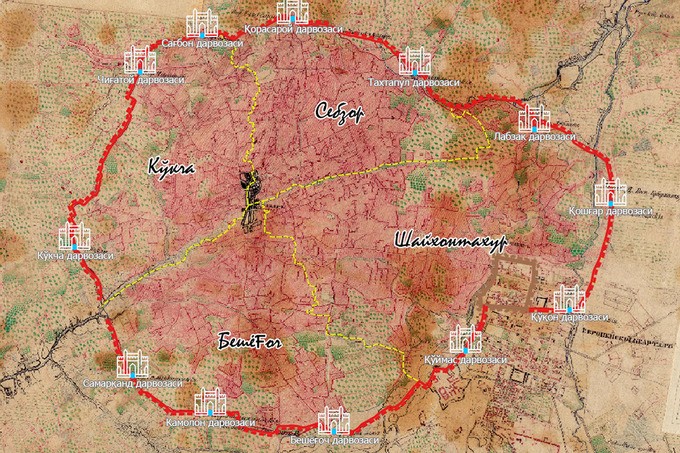
The city authority (hokimiyat) of Tashkent has announced the start of an international competition to develop a sketch concept for four entrance gates to the capital of Uzbekistan. The new gates will be created at the Rohat, Bektemir, Erkin, and Uchkahramon posts. The project should embody modern and traditional ideas, with construction planned to begin by the end of this year. The competition is open to both Uzbek and international participants, and those wishing to participate can submit their works individually or in teams. The three best works will receive cash prizes from 30 to 100 million UZS ($2,350 to $7,800). The winner will be announced on November 30. Until the 19th century, Tashkent was surrounded by a mighty fortress wall divided by 12 gates. At first, the fortress of Binkenta (the former name of Tashkent) had seven gates, but with the city's expansion by 1864, their number reached 12. Since the shape of the city wall coincided with the system of stars, the gates were built according to the location of 12 stars of the Zodiac according to the cycle of Muchal. Thus, 12 gates were the earthly reflection of heavenly luminaries. Tashkent was the only city in the world with such celestial gates. These gates were destroyed, and the fortress wall was demolished in the late 19th century. But in recent years, there have been repeated ideas to restore part of the entrance gates. In June 2022, the Tashkent hokimiyat presented the first sketches for the fortress gates.
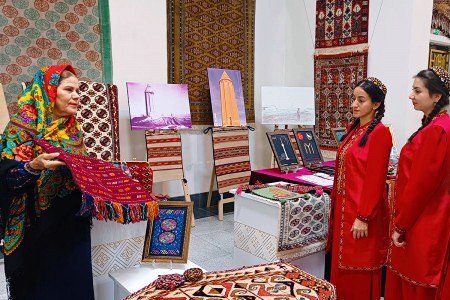
The Second Turkmen-Iranian Tourism Festival united representatives from the two states' tourism industry, cultural figures, and craftsmen. The opening ceremony was held in the Exhibition Hall of the Academy of Arts of Turkmenistan in Ashgabat. During the ceremony, visitors familiarized themselves with Iran's rich tourism potential, saw the works of Iranian craftsmen, and evaluated the proposals of Turkmen tourist companies. The festival's business program included a professional conference. Experts discussed the prospects of bilateral cooperation and new opportunities for increasing tourist flow between the countries. The organizers paid special attention to the cultural component of the event. The festival is designed to strengthen cultural ties between Turkmenistan and Iran and create a platform for the development of joint tourism projects. Earlier, the Academy of Arts of Turkmenistan exhibition hall hosted the opening of the Turkmen-Iranian Specialized Exhibition of Fashion and Clothing. The visitors could experience the latest achievements in Turkmenistan and Iran's fashion and textile industries. The first Turkmen-Iranian Tourism Festival was held in October last year. Visitors familiarized themselves with unique items of traditional folk crafts, handmade art products, national heritage, and modern trends of Turkmen and Iranian art masters.
On October 18-19, leading cultural and literary figures gathered in Ashgabat, to attend a forum of Turkic writers organized within the program “Anau—Cultural Capital of the Turkic World 2024". With a focus on the importance of preserving and developing common cultural heritage, the event attracted representatives of the writers' unions of Turkey, Kyrgyzstan, Uzbekistan, and Kazakhstan, as well as prominent cultural figures of Turkmenistan. Honored guests included Ulugbek Esdevlet, president of the TURKSOY Writers' Union, and Sultan Raev, secretary general of the organization, who in his address, emphasized: “This forum is a unique platform for demonstrating the rich literary heritage of the Turkic world and passing on our common cultural heritage to future generations.” During the forum, the Union of TURKSOY Writers held a meeting to discuss promising projects for developing the literature of Turkic-speaking peoples, including programs to support young authors, the expansion of translation activities, and the organization of international literary contests. In addition to complementary activities such as poetry readings, the forum afforded students from the Turkmen State Institute of Culture, a unique opportunity to engage with prominent writers.
Large-scale archaeological research continues in the Karakum desert at the ancient site of Gonur-Depe. This unique monument, discovered in 1972, is the key to unlocking the mysteries of the ancient civilization Margush, which flourished in the delta of the Murghab River about four millennia ago. The Turkmen-Russian Margush Archaeological Expedition, operating under the international agreement, is nearing the end of another field season. The scientists uniting specialists from the Institute of Ethnology and Anthropology of the Russian Academy of Sciences, the Institute of History of Material Culture of the Russian Academy of Sciences, and Turkmen researchers continue painstaking work to study and describe numerous artifacts found at this ancient settlement. The excavation season brought some interesting findings. Among them, a miniature cylindrical seal made of talc-agalmatolite, a fragment of a clay bulla with imprints of a snake-shaped seal, and a unique clay lid from a vessel with imprints of a rope and a cloisonné seal stands out. Of particular interest are sets of semi-precious stone beads found in five burials. The skill of ancient jewelers has astonished modern researchers—some lapis lazuli beads have a diameter of only 1 millimeter. Archaeologists have also conducted research aimed at studying the technologies of ancient builders. For the first time, a gypsum kiln was described in detail, making it possible to reconstruct the technological process of producing building materials in ancient Gonur-Depe. The results of these studies will be presented at an international scientific conference in Ashgabat, where scientists from different countries will discuss the discoveries and their significance as regards understanding the history of the ancient civilization of Margiana. The discoveries made in Gonur-Depe not only shed light on the life of the ancient inhabitants of these places but also emphasize the importance of international cooperation in archaeology and history. Each discovery brings us closer to understanding the rich cultural heritage left by an ancient civilization in the heart of the Karakum desert.
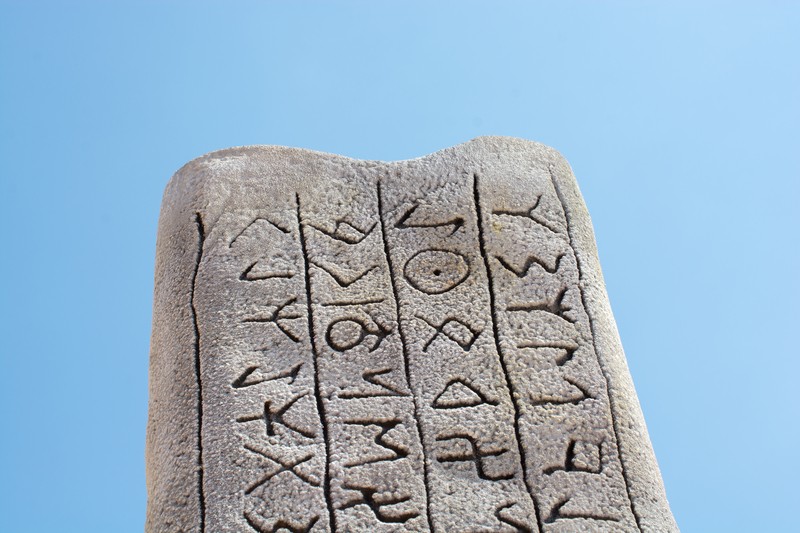
Russian scientists have started deciphering unique Turkic runic inscriptions in Altai, dating back to the VI-X centuries AD. Speaking at the International Conference “Mountain Altai - the ancestral home of the Turks,” Alexander Vasiliev, head of the Oriental History Department of the Institute of Oriental Studies of the Russian Academy of Sciences, reported that whilst some 120 such texts have been identified, a significant number has yet to be deciphered due to a lack of "keys". According to Vasilyev, problems in evaluating inscriptions arise as a result of the different graphic systems used by Turkic peoples in various historical periods. Hence, researchers face a difficult task in making these texts accessible and determining the exact nature of the archaeological objects found. Historians also note that with the emergence of Mongolian vertical writing, the influence of the Turkic writing system began to weaken. Previous attempts to decipher these texts using Iranian and Finno-Ugric languages, proved unsuccessful. Assuming that the key to understanding the inscriptions lies in one of the ancient Turkic languages, scientists are now focusing on the Chuvash language, which retains ancient features, or the Kypchak language group. The decipherment of Turkic runic inscriptions began with the discovery of the famous Orkhon-Yenisei texts in Mongolia in the 19th century. In 1893, Danish scholar Wilhelm Thomsen was the first to successfully decipher these ancient texts using analogies to ancient Turkic words such as “tengri” (sky). These inscriptions, dating from the 7th to 10th centuries, recount the lives of the Turkic kagans and their victories. In addition to the Orkhon texts, significant inscriptions have been found in the Yenisei Valley and the Altai Mountains. An international conference in Manzherok, in the Altai Republic, brought together scholars to discuss not only the problems of deciphering the Turkic script but also the formation of the Turkic civilization and the history of cultural interaction between the Turks and other peoples, including Slavic cultures.
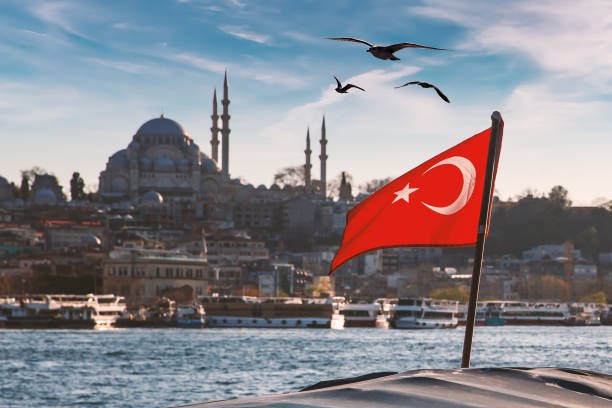
Turkey’s Ministry of National Education has unveiled significant changes to its history curriculum, replacing the phrase “Central Asia” with “Turkestan.” Experts say this shift reinforces national identity and instills stronger patriotism in future generations. President Recep Tayyip Erdogan stressed the importance of the unity of the Turkic world: “We will work shoulder to shoulder to make the coming period the era of the Turks by extending our vision of the ‘Turkish Century’ to the Organization of Turkic States.” Professor Ahmet Taşagıl explained the historical meaning of the term Turkestan to TRT Haber. “The word Turkestan, meaning ‘homeland of the Turks’, has been used since the earliest periods of history. In the second half of the 19th century, due to the Russian invasion, the concept of Central Asia was introduced and spread instead of the name Turkestan,” he mentions. Associate Professor Ramin Sadık commented on the decision of the Ministry of Education for TRT Haber. “Our appeal to the concept of Turkestan and its inclusion in textbooks by the Ministry of National Education is a very correct decision. Both Turkey and Turkestan mean a region where the Turks predominantly live,” Sadık said. The expert notes that during efforts to create a shared history, geography, literature, maps, and alphabet for the Turkic world, the Ministry of National Education’s decision to use “Turkestan” in textbooks, even for children, is a significant step. He believes this change is a crucial start and a valuable contribution to Turkey, the entire Turkic world, and its partner countries. Experts say the change is part of a broader strategy to strengthen ties in the Turkic world, including creating a shared history, literature, maps, and alphabet.