• KGS/USD = 0.01144 0%
  • KZT/USD = 0.00215 0%
  • TJS/USD = 0.10691 0.09%
  • UZS/USD = 0.00008 0%
  • TMT/USD = 0.28530 0%
  • KGS/USD = 0.01144 0%
  • KZT/USD = 0.00215 0%
  • TJS/USD = 0.10691 0.09%
  • UZS/USD = 0.00008 0%
  • TMT/USD = 0.28530 0%
  • KGS/USD = 0.01144 0%
  • KZT/USD = 0.00215 0%
  • TJS/USD = 0.10691 0.09%
  • UZS/USD = 0.00008 0%
  • TMT/USD = 0.28530 0%
  • KGS/USD = 0.01144 0%
  • KZT/USD = 0.00215 0%
  • TJS/USD = 0.10691 0.09%
  • UZS/USD = 0.00008 0%
  • TMT/USD = 0.28530 0%
  • KGS/USD = 0.01144 0%
  • KZT/USD = 0.00215 0%
  • TJS/USD = 0.10691 0.09%
  • UZS/USD = 0.00008 0%
  • TMT/USD = 0.28530 0%
  • KGS/USD = 0.01144 0%
  • KZT/USD = 0.00215 0%
  • TJS/USD = 0.10691 0.09%
  • UZS/USD = 0.00008 0%
  • TMT/USD = 0.28530 0%
  • KGS/USD = 0.01144 0%
  • KZT/USD = 0.00215 0%
  • TJS/USD = 0.10691 0.09%
  • UZS/USD = 0.00008 0%
  • TMT/USD = 0.28530 0%
  • KGS/USD = 0.01144 0%
  • KZT/USD = 0.00215 0%
  • TJS/USD = 0.10691 0.09%
  • UZS/USD = 0.00008 0%
  • TMT/USD = 0.28530 0%

Viewing results 1 - 6 of 135

Anniversary of the Ashgabat Earthquake Tragedy

In every city's history, there are events that forever change its image and the fate of its inhabitants. The night of October 5-6, 1948, marked a turning point for Ashgabat, with a tragic event which still resonates in the hearts of those who lived through it. On that warm October evening, no one in Ashgabat could ever have predicted that the next few hours would forever change the fates of tens of thousands of people. Life in the city continued as usual, music played in the parks, lovers strolled along the streets, and students prepared for classes. The starry sky promised a peaceful night... Founded in 1881, when seismology was still young, Ashgabat grew and developed, oblivious to any impending danger. Traditional adobe construction —a mixture of clay and straw—seemed ideal for the dry climate. Year on year, residents renewed their clay roofs, adding new layers without considering that the increasing weight could be a death trap. “Only the stone building of the Central Committee of the Communist Party of Turkmenistan and a few other important buildings were made of quality bricks,” recalled one eyewitness. “It was these buildings, though damaged, that survived, while virtually the rest of the city was reduced to rubble.” [caption id="attachment_24231" align="aligncenter" width="300"] @mchs.gov.ru[/caption] “In the middle of the night - we heard- a menacing rumble, then rumbling and cracking as the ground shook and shimmered...” said one of the survivors, recalling the beginning of the tragedy. At 1.14 am on October 6, 1948, something happened that many Ashgabat residents believed was the start of a new war. Within but a few seconds, the city was a ruin. Academician Dmitry Nalivkin, who was at the epicenter of events, describes the harrowing event: “There was something incredible, impossible outside the window. Instead of a dark transparent starry night, there was an impenetrable milky-white wall in front of me, and behind it - horrible moans, screams, cries for help.” [caption id="attachment_24232" align="aligncenter" width="300"] @mchs.gov.ru[/caption] According to Nalivakin, the city was completely paralyzed. Telephone communications were interrupted, the train station turned into a pile of rubble, and the airfield was destroyed. Overnight, the capital of the republic was cut off from the outside world. In a matter of seconds, 98% of the city was rubble. Lieutenant Colonel of Medical Service Tikhon Boldyrev describes the first minutes after the catastrophe: “A deafening noise like a deep sigh swept through the city, and immediately there was dead silence. The air was filled with thick, suffocating dust. There was no sound, no cries for help, no animal sounds; it was as if every living thing had perished beneath the ruins.” In the darkness, in a dense veil of dust, survivors raked through the rubble with their bare hands, trying to save their loved ones. Alevtina Dubrovskaya, a resident of Ashgabat, recalls, “I found myself covered from head to toe with a mat hanging over my bed, but there was some space with air under it, which saved me from suffocation...” [caption...
Uzbekistan Aims to Attract 15 Million Foreign Tourists by 2030

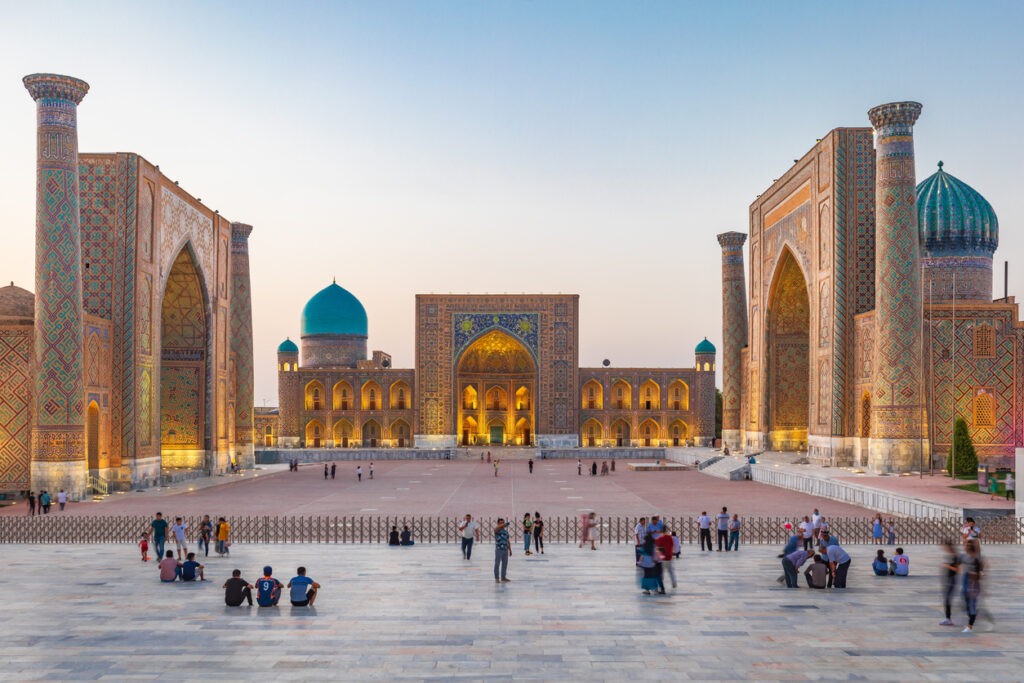
In an article, “Uzbekistan Attracts More and More Foreign Tourists to the Country”, published on the popular online portal Tiger’s Media in Poland, Dunyo reports that Uzbekistan plans to increase the number of foreign tourists to 15 million by 2030. As stated by Tiger's Media, “this number is twice as much as the 6.6 million tourists who came to the country in 2023. In 2023, tourism brought about $2.1 billion to the economy and created about 70 thousand new jobs." The portal adds that “to attract the attention of young travelers, Uzbekistan is also attracting bloggers and social network activists with more than 10 million subscribers,” Uzbekistan is located on an important part of the ancient Silk Road. Cities of the republic, such as Samarkand, Bukhara, and Khiva, important trade centers in ancient times, are UNESCO World Heritage Sites, known for their architecture, including madrasahs, mosques, and bazaars. The Times of Central Asia previously reported that tourism revenue made up 2.35% of Uzbekistan’s GDP last year. Other countries in Central Asia are likewise looking to boost their tourism industry. In June, Kazakh President Kassym-Jomart Tokayev spoke bluntly about infrastructure weaknesses that must be fixed. Kyrgyzstan, meanwhile, is focusing on its rugged, mountainous landscape, citing riding and hiking and “hunting with eagles” among its main attractions.

Qatar To Help Restore Uzbekistan’s UNESCO World Heritage Site, Bibi-Khanym Mosque

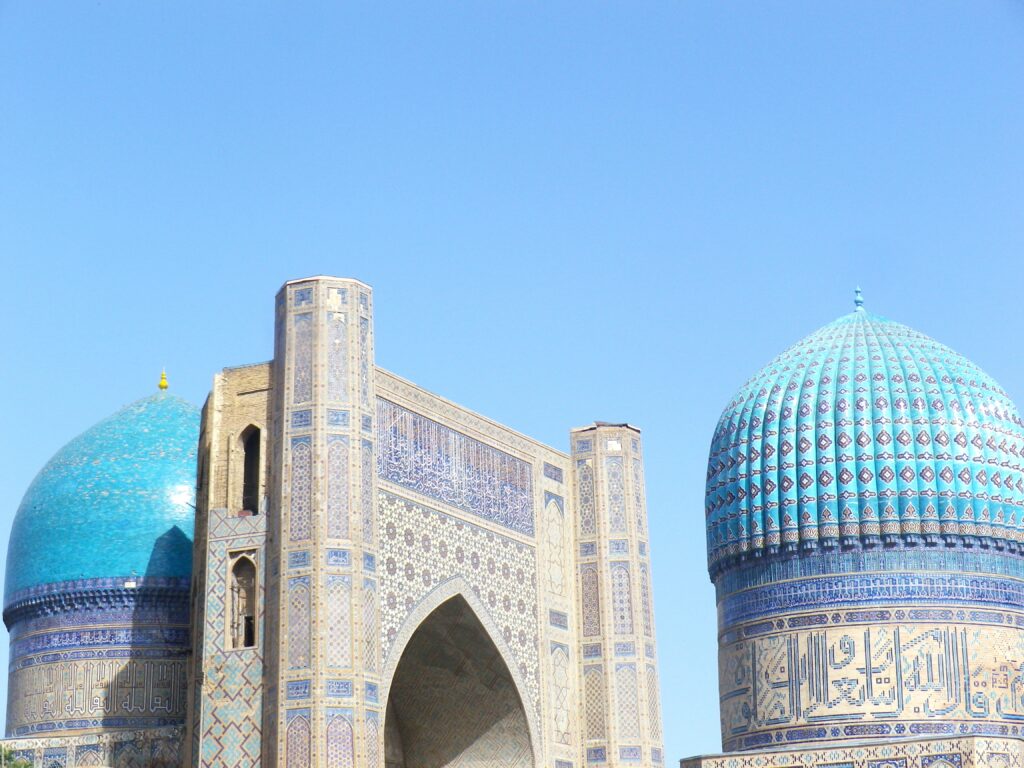
During a recent meeting between the Assistant to the President of Uzbekistan Saida Mirziyoyeva and Sheikha Al Mayassa bint Hamad bin Khalifa Al Thani, bilateral cooperation agreements were signed between the Foundation for the Development of Culture and Arts of Uzbekistan, the Aga Khan Trust, and the Qatar Development Foundation. These agreements envisage not only financial support, but also the exchange of experience in the field of restoration of cultural monuments. In particular, the talks focused on restoring the Bibi-Khanym Mosque, built in the 15th century by Timur and a UNESCO World Heritage Site. According to local media reports, Qatar will actively revitalize this important monument, which attracts tourists from all over the world. Although details of the funding have not yet been disclosed, the work is expected to restore the mosque to its historic appearance, preserving its uniqueness for future generations. The Bibi-Khanym Mosque in Samarkand was built on the orders of Timur (Tamerlane) after his victorious campaign to India in 1399. The construction used 95 elephants to transport materials. Its high tympanum coated in cobalt blue tile-work, the Mosque stands in a grassy courtyard around a large marble carving of the Quran. Named after Timur's Chinese wife, local folklore tells how the architect fell in love with her and stole a kiss. Escaping the wrath of Timur by jumping from the minaret, he sprouted wings and flew to Mecca. At its peak, the mosque could hold up to 10,000 worshipers and became a symbol of Timur's greatness; however, due to its enormous size, the structure began to deteriorate before it was completed. Since then, the building has undergone numerous restorations, especially during the Soviet era.

Turkmen Designers Present Their Works at an Evening of Art in Brussels

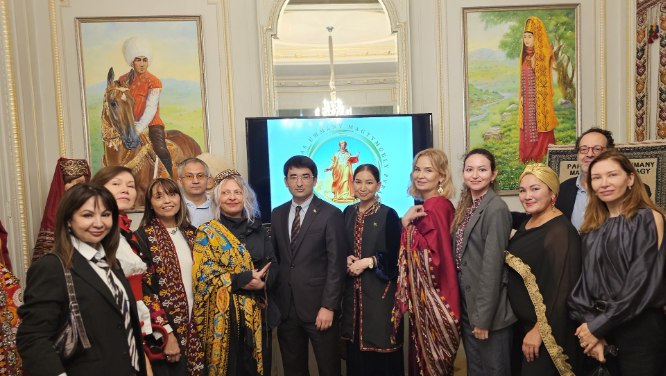
An evening dedicated to Turkmen art and traditions, organized by the Embassy of Turkmenistan within the framework of cultural exchange, was held in Brussels. The event brought together cultural sector representatives from Central Asia and Europe, including fashion and art figures. The Ambassador of Turkmenistan to Belgium, Sapar Palvanov, opened the meeting, noting that Turkmen culture is a heritage that needs to be protected and passed on to new generations. The diplomat emphasized the role of cultural diplomacy as a means of strengthening ties between peoples. “Culture has always been a neutral sphere that unites people," Palvanov stated. An essential part of the program was a speech dedicated to the 300th anniversary of the great poet, Makhtumkuli. The Ambassador spoke about how his ideas continue to inspire not only Turkmen, but people of other nations, influencing Turkmenistan's cultural ties with Europe. The evening's guests were presented with the works of talented Turkmen designers, Sheker Akiniyazova, Shemshat Tachmammedova, and Ogulbeg Berdimiradov. Their collections combined traditional elements with modern fashion. The designers also participated in the Brussels cultural program and presented at European institutions. Elena Kharitonova, founder of Caravan Cultura CreArt Agency in the Netherlands who co-organized the event emphasized the preservation of cultural values through modern projects and her support for young Turkmen designers.

The First-Ever Audio Recording of Kazakh Music

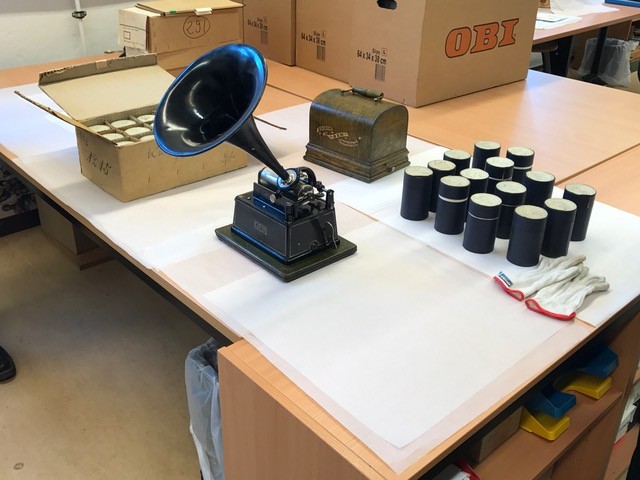
It was long believed that the world's first audio recording of Kazakh music was made in 1925 during the performance of singer, Amre Kashaubaev, at the Exposition Internationale des Arts Decoratifs et Industriels Modernes in France. However, the Berlin Museum of Visual Anthropology and Ethnology has recordings of Kazakh folk music, voices, and ritual chants, which were made in western Kazakhstan twenty years earlier. These recordings were made during the Acoustic Era, when sound waves were still recorded through analog methods. In 1857, Frenchman, Édouard-Léon Scott de Martinville invented the so-called phonautograph. Three years later, the world's first song was recorded. It was a French folk song, “By the Light of the Moon”. In 1877, Thomas Edison invented the phonograph. This invention could both record and playback audio and marked the start of the Acoustic Era. Later, in 1900, Carl Stumpf, a professor of psychology at the University of Berlin, established a phonogram archive in Berlin, where, at the same time, an orchestra from Thailand was touring. Stumpf recorded the Thai music, which was considered exotic to Europeans at that time. This recording became the first in the rich Ethnomusicology collection of the Ethnological Museum of Berlin. These recordings were originally discovered at the Institute of Russian Literature, also known as Pushkin House, which is part of the network that is affiliated with the Russian Academy of Sciences. Dr. Efim Rezvan, a well-known scholar of Turkology, showed the TCA team the wax rollers - cylindrical wax containers that can be played using Edison's phonograph. The first-ever audio recordings of Kazakh music were made using these devices. The German scientist Richard Karutz recorded them in the early 20th century when he organized an expedition to the steppes of Turkestan. As a result of his expedition, he wrote a book called Among the Kirghiz and Turkmens in Mangyshlak. During his expedition, Karutz took many photos and collected audio recordings of the local peoples' art. In addition to his scientific research, Karutz pursued other goals; for instance, he wrote about the health benefits of tea, which the locals consumed in large quantities. He claimed that drinking tea in large quantities when the air temperature was over 40 degrees Celsius helped them to bear the heat. Karutz wrote that, “It is necessary for our troops to weigh the importance of tea consumption during summer maneuvers and campaigns.” Richard Karutz was born into a mercantile family. In 1886, he went to study medicine at the University of Jena 1891. Completing his studies and receiving his doctorate in 1891, he then worked as a doctor aboard a ship. Whilst on working as a surgeon on a ship, Karutz traveled to South America and West Africa. After these trips, Karutz became interested in ethnography. In 1896, he was appointed head of the ethnographic collection of the Museum of Ethnology in Lübeck. Karutz enriched the museum's collection with artifacts from his travels, and encouraged other merchants and travelers to bring items from other countries for the collection. The...

Rejuvenating Kyrgyzstan’s Traditional Performing Arts: Razia Syrdybaeva on the Ustatshakirt Ensemble

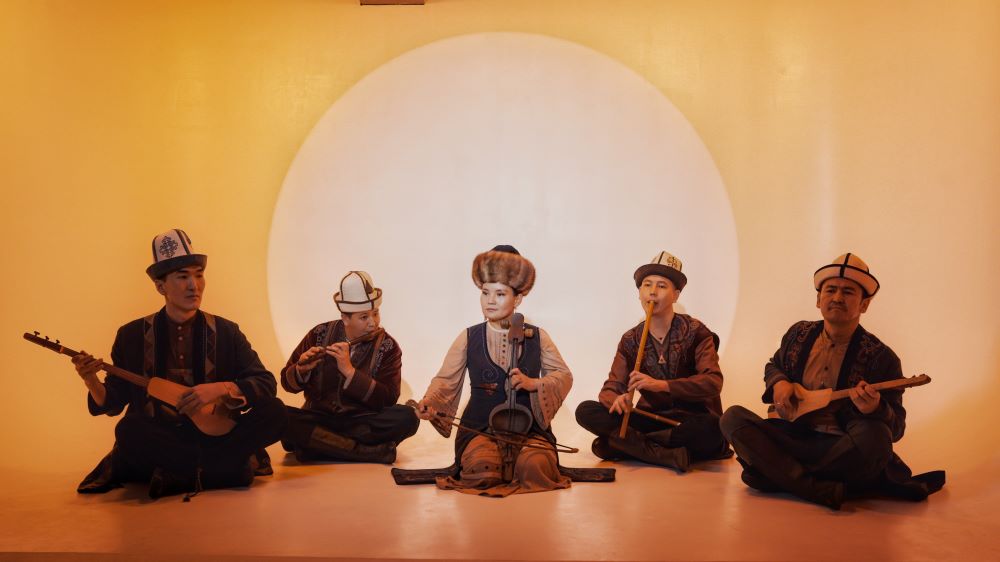
On August 13, Kyrgyzstan’s Ustatshakirt Ensemble, a five-piece group of traditional musicians, gave its first ever performance at Edinburgh’s International Festival. Following a mesmerizing, sell- out concert, Kyrgyz author Shahsanem Murray spoke on behalf of TCA, to musicologist Razia Syrdybaeva about Ustatshakirt , its origins, aims and future plans. [caption id="attachment_23314" align="aligncenter" width="1665"] Photo: TCA Razia Syrdybaeva and the Ustatshakirt Ensemble[/caption]   TCA:  Razia, please tell us a little about yourself and the Ustatshakirt Ensemble. I am a musicologist, producer, and researcher of Kyrgyz culture, and hold a PhD in Philology. Twenty years ago, I established Ustatshakirt; an NGO educational organization with a mission to preserve Kyrgyzstan’s centuries-old musical heritage. The name Ustatshakrit - Ustat meaning master, and shakirt, student - embodies our aim to serve as a bridge between old masters and young musicians. Founded in 2003, with support from the Aga Khan Music Programme (AKA) the Ustatshakrit Center now has branches offering tuition in music, literature, and theatre to pupils in 41 primary & secondary schools across Kyrgyzstan. Over the past twenty years, through the development of faster and more effective methodology, we have taught over 10,000 children to play traditional Kyrgyz instruments such as the komuz and temir ooz komuz. We also provide tuition in other performing art forms including basic theater skills in our ‘dramalab’, and singing epics. The key goal of our work is to introduce children to their native music and help them appreciate and fall in love with their ancient culture. This is very important, especially in the present climate where exposed to external influences and technology, young people are increasingly moving away from their roots, their native language, and music. Attracted by modern rhythms and gadgets, they have little time and few opportunities to listen to their ancestral music. To more effectively engage both our pupils and audiences, we are constantly implementing the development of special methodological textbooks, music notation programs, etc. Authored by our teachers, musicians and prominent figures in the Arts, our now comprehensive collection of publications is used by Kyrgyzstan’s music educational institutions, from children's art schools to universities and conservatories. TCA: Concerts of traditional Kyrgyz music accompanied by excerpts from the great Manas epic are rarely performed in the UK, and especially, Scotland. What challenges did you face in securing a venue at the Edinburgh Festival? We heard about the festival several years ago. Getting to Edinburgh involved a lot of planning and expense and was only made possible thanks to the generous support of the Aga Khan Trust for Culture, the Aga Khan Music Program and its director Fairouz Nishanova, and our sponsors Sir Ewan & Lady Brown together with Flure Gossart. Work on repertoires for international audiences has now been ongoing for two years, and over many months prior to playing at Edinburgh, we focused on creating a program that would embrace the rich traditions of Kyrgyzstan’s music and culture. TCA: What were your impressions of the Edinburgh audience? We were all delighted by the high...