• KZT/USD = 0.00215
  • TJS/USD = 0.10810
  • UZS/USD = 0.00009
  • TMT/USD = 0.29760
  • KZT/USD = 0.00215
  • TJS/USD = 0.10810
  • UZS/USD = 0.00009
  • TMT/USD = 0.29760
  • KZT/USD = 0.00215
  • TJS/USD = 0.10810
  • UZS/USD = 0.00009
  • TMT/USD = 0.29760
  • KZT/USD = 0.00215
  • TJS/USD = 0.10810
  • UZS/USD = 0.00009
  • TMT/USD = 0.29760
  • KZT/USD = 0.00215
  • TJS/USD = 0.10810
  • UZS/USD = 0.00009
  • TMT/USD = 0.29760
  • KZT/USD = 0.00215
  • TJS/USD = 0.10810
  • UZS/USD = 0.00009
  • TMT/USD = 0.29760
  • KZT/USD = 0.00215
  • TJS/USD = 0.10810
  • UZS/USD = 0.00009
  • TMT/USD = 0.29760
  • KZT/USD = 0.00215
  • TJS/USD = 0.10810
  • UZS/USD = 0.00009
  • TMT/USD = 0.29760
31 August 2026

Viewing results 1 - 6 of 184

Animal Protection Activists’ Voice Concern Over Dog Meat Dishes in Uzbek Cafes

Uzbekistan’s animal protection society, Mehr va Oqibat, has raised concerns after receiving numerous complaints from locals and foreign visitors about cafes and restaurants in Uzbekistan offering dog meat dishes on their menus. Controversial Supply and Health Concerns According to Mehr va Oqibat, Uzbekistan lacks specialized farms for raising dogs for meat, unlike some other Asian countries. The organization suggests that state services responsible for capturing stray animals might be the primary suppliers of dog meat. Activists argue that the purported medicinal benefits of dog meat remain scientifically unproven. Additionally, they warn that dog meat can transmit viruses during preparation and consumption, posing potential health risks. Mehr va Oqibat has officially contacted Uzbekistan’s State Veterinary Committee and the Sanitary-Epidemiological Service to clarify whether dog meat consumption is permitted in Uzbekistan. The organization has also inquired as to whether cafes and restaurants have obtained official authorization to serve dog meat dishes. Cultural and Historical Context The consumption of dog meat in Uzbekistan, as well as in neighboring Kazakhstan and Kyrgyzstan, is primarily linked to the Korean minorities residing in these countries. This practice is not widespread and is generally followed by small groups of ethnic Koreans and others, including Russians, Uzbeks, Kazakhs, and Kyrgyz, who consider it an “exotic” culinary choice. Ethnic Koreans were forcibly deported to Central Asia from the Russian Far East in the late 1930s under Joseph Stalin’s regime. Uzbekistan is now home to the largest Korean minority in Central Asia. As of 2023, over 200,000 ethnic Koreans lived in the country, according to the Uzbek Embassy in South Korea, making it the fifth-largest Korean diaspora in the world after the United States, China, Japan, and Canada. A Shift in Perspective The issue of dog meat consumption has garnered increasing attention globally. In January 2024, South Korea’s National Assembly passed a law banning the production and sale of dog meat, with the ban set to take effect in 2027. While dog meat consumption remains a niche practice in Uzbekistan, activists hope that raising awareness about ethical and health implications will encourage the authorities to address the issue comprehensively.
Kyrgyzstan Unveils Record-Breaking Collector Coin

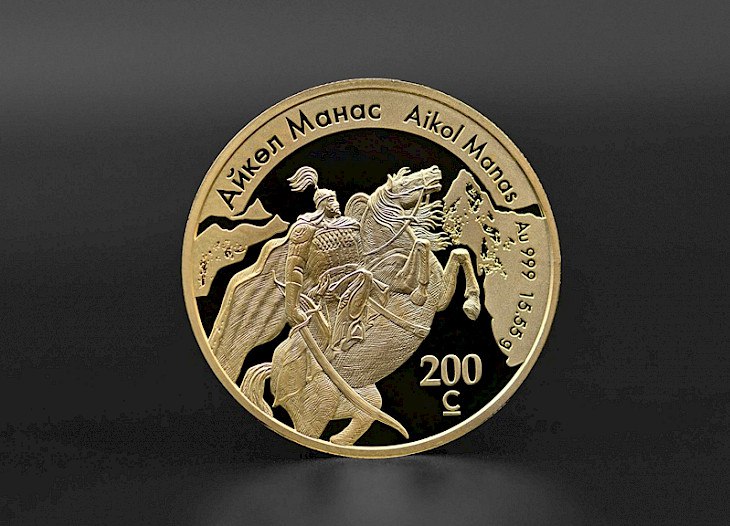
The National Bank of Kyrgyzstan has unveiled the most expensive collector coin in its history - a gold coin titled “Aikol Manas.” The initiative aims to promote oral folk traditions and preserve the cultural heritage of the Kyrgyz people. The coin was officially released on December 2. The National Bank emphasized the cultural significance of the epic Manas, which holds a central place in Kyrgyz's spiritual life and is recognized as a global masterpiece of oral folk art. The epic narrates the story of the legendary warrior Manas, who, through his courage and leadership, united the Kyrgyz tribes to secure independence and freedom for their native land. The coin's obverse features an intricate depiction of Manas in battle armor astride his horse, Akkula, set against the snowy peaks of the Ala-Too mountains. Above, the inscription “Aikol Manas” is engraved, with details of the gold's purity (Au 999) and weight (15.55g) on the right. At the bottom are the coin’s face value (200 KGS) and the symbol of the Kyrgyz currency. On the reverse, the coat of arms of the Kyrgyz Republic is framed by traditional national ornaments symbolizing Kyrgyz warriors. Along the circumference, the text “National Bank of the Kyrgyz Republic” is engraved, with the year of issue, 2024, displayed at the bottom. The coin is an official means of payment in Kyrgyzstan, packaged in an acrylic capsule within a protective case and accompanied by a certificate of authenticity. Priced at 123,400 KGS ($1,420), it is available for purchase at the National Bank’s cash desks. Since gaining independence, Kyrgyzstan has issued several gold collector coins celebrating its cultural heritage. The first was released in 1995 to honor the 1,000th anniversary of the Manas epic. In 2015, the National Bank introduced the “Snow Leopard” coin, featuring diamond inlays. For the 30th anniversary of independence in 2021, a gold coin with a face value of 100 KGS was issued.

XVII Eurasia International Film Festival Kicks Off in Kazakhstan

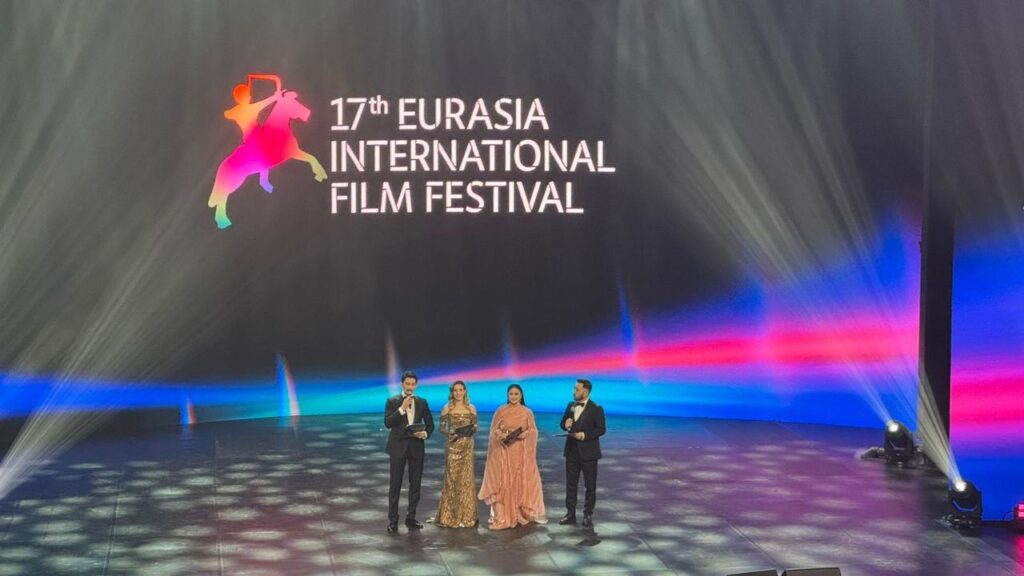
On November 24, Almaty hosted the opening ceremony of the XVII Eurasia International Film Festival, which will run until November 30. The event brings together representatives from more than 15 countries, highlighting its global significance. As part of the competition, audiences will enjoy 12 films from around the world, including entries from Bangladesh, South Korea, Austria, and Qatar. Participants from Europe, Asia, and the Middle East will showcase their works, delving into universal themes through a regional lens. Kazakhstan's President, Kassym-Jomart Tokayev, addressed festival participants in a congratulatory letter. “This year's event coincides with two significant anniversaries: the 110th birthday of Shaken Aimanov, a pioneer of Kazakhstani cinema, and the 90th anniversary of the Kazakh film studio. This is symbolic, as cinematography unites society, fosters creativity, and strengthens intercultural ties,” the letter stated. Tokayev emphasized the growing recognition of Kazakhstani cinema on the international stage. “I am confident that the Eurasia Festival will provide a platform for outstanding projects that will resonate deeply with audiences and inspire reflection on important topics,” Tokayev concluded. The Eurasia International Film Festival is Central Asia's largest film forum and holds accreditation from the International Federation of Film Producers Associations (FIAPF). Established in 1998 with support from the Government of Kazakhstan, the festival was initially hosted in Almaty before moving to Astana in 2018. This year, the festival returns to Almaty, providing a rich program designed to serve as a cultural bridge between East and West. It also includes retrospectives of works by celebrated directors.

Asia Now Creating a Market for Central Asian Art in Paris

When we think about spreading knowledge of Central Asian art in Europe, we might think of exhibitions, of festivals, of panels and talks, not necessarily of an art fair. However, in the contemporary art world, it is today the market, more than art critics, which dictates the emergence of certain art scenes as a whole. For the historically underrepresented Central Asian art market, smaller fairs represent today an important alley, more than the big fairs such as Art Basel – which just had its second Paris iteration this October. Smaller “boutique fairs,” as they are called, often present curated programming which allow a wide public – not just collectors and buyers – to enjoy the art as it was an exhibition. A selling one, of course.  In Paris, the most relevant fair which has historically presented Central Asian artists to the European public is called Asia Now, and it took place in Paris from October 17 to 20. Entirely dedicated to Asian art, the fair has historically tried to fill the gap for Central Asian art in the European market in the past ten years of its existence. The fair has selected more than 70 leading and emerging contemporary art galleries from all over the world, presenting more than 220 artists coming from 26 territories from all over Asia and its diaspora, stretching from Central Asia to the Asia-Pacific, including West, South, South-East, and East Asia. Their commitment to expanding knowledge of Central Asian art in Europe culminated last year in a show which was indeed focused on Central Asia, and curated by the artist group Slav and Tatars. While seminal Central Asian galleries such as the Aspan Gallery from Almaty and Pygmalion Gallery from Astana didn’t return to Asia Now this year, the fair still presented a number of Central Asian artists and practices, interspersed between the main show, and the booths.    Central Asian Artists in the Radicant’s Main Show The main exhibition of Asia Now was curated by Radicants, a collective founded by art critic Nicolas Bourriaud, and it was centered on sacred ceremonies seen as a powerful tool for re-examining societal structures and reconnecting with ancestral roots. Called “Ceremony,” the main show was co-curated by Nicolas Bourriaud and Alexander Burenkov, a curator of Russian origins who has been working for a long time with Central Asian narratives, which are also featured prominently in the show. [caption id="attachment_25510" align="aligncenter" width="2560"] Image: TCA, Naima Morelli[/caption] The idea of ceremony ties to the tenth anniversary of the art fair, but at the same time the curators opted to explore the nuances of ritual as both a "celebration of ancestral wisdom" and a "critical tool for interrogating and redefining established traditions and power dynamics." As Burenkov noted, the decision to use the theme of ceremony emerged after conversations with Asia Now director Alexandra Fain. “The choice fell on ‘ceremony’ in all its variability and polysemy [was used] to explore the non-obvious meanings of ritual through the eyes of contemporary artists...

Turkmenistan Pays Tribute to the Founder of Modern Turkey in Ashgabat Ceremony

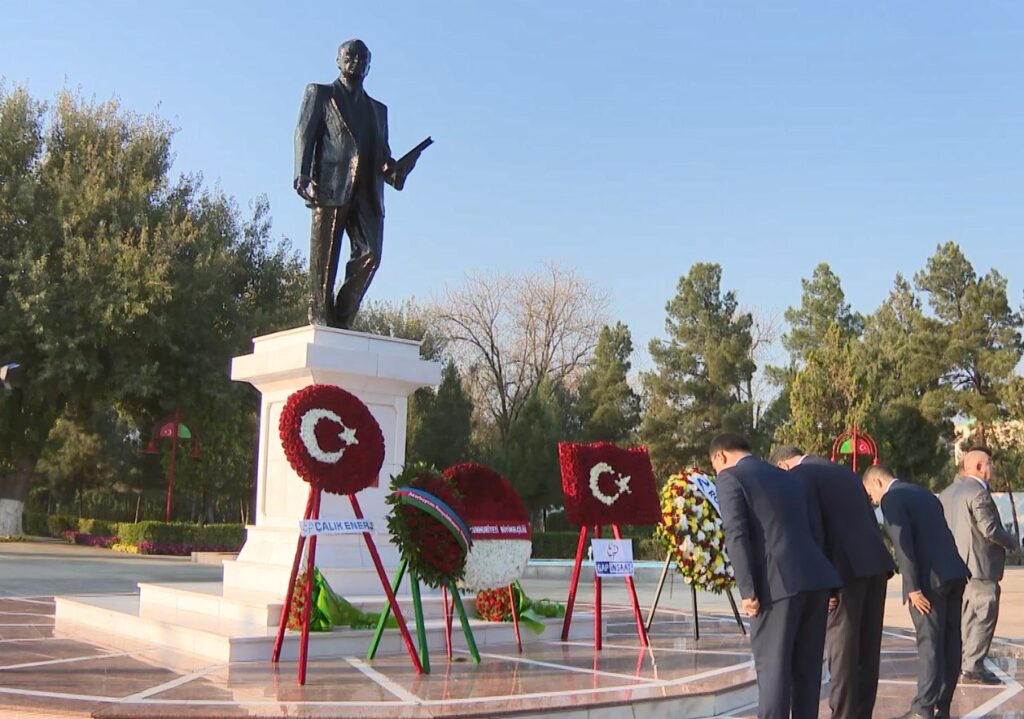
On November 10, Ashgabatex, Turkmenistan’s capital, hosted a memorial event to honor Mustafa Kemal Atatürk, the founder and first president of the Republic of Turkey. Held at the park named in his memory, the ceremony was attended by Turkish Ambassador to Ashgabat, Togan Oral; Deputy Head of the Ashgabat Municipality, Bayrammurat Gurbanov; teachers and students from the Turkmen-Turkish School; Turkish citizens residing in Turkmenistan; and members of the media. The Turkish diplomatic mission organized the event, beginning with a moment of silence and followed by the playing of the national anthems of Turkmenistan and Turkey. A wreath-laying ceremony at the Atatürk Monument provided an opportunity for diplomats and distinguished guests to pay tribute to Atatürk’s profound impact on modernizing Turkey. Mustafa Kemal Atatürk’s leadership led to the establishment of the Republic of Turkey in 1923. His sweeping reforms transformed key sectors of Turkish society, including education and the economy. November 10 marks the anniversary of his passing in 1938.

85-Million-Year-Old Dinosaur Fossils Discovered in Tajikistan’s Sughd Region

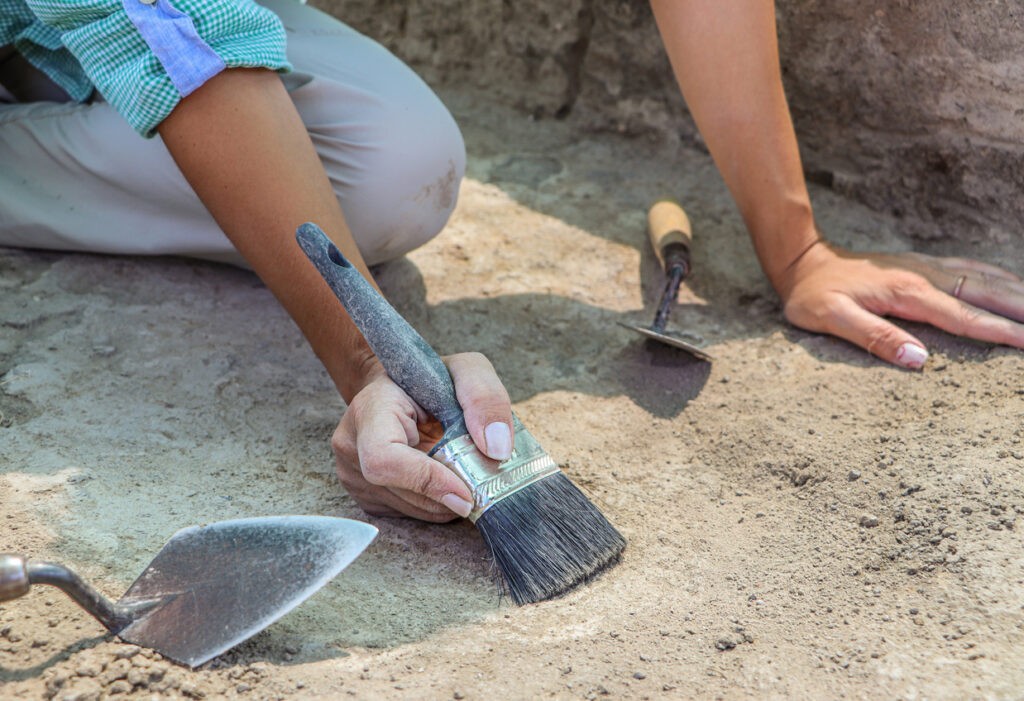
Dinosaur fossils estimated to be 85 million years old have been discovered in Tajikistan's Sughd region. The excavation took place in the village of Kansai, a renowned paleontological site known for its rich array of prehistoric animals, including ancient lizards, turtles, crocodiles, amphibians, and fish from the Cretaceous period. The expedition, organized by Russian and Tajik scientists, builds on Kansai’s long-standing significance in paleontology. In the 1960s, Soviet scientist Anatoly Rozhdestvensky and his team uncovered numerous dinosaur remains, including a therizinosaur femur. In the 1980s, Lev Nesov identified traces of mammals from the Cretaceous period. This year, a team led by Associate Professor Pavel Skuchas from St. Petersburg State University has expanded research in Kansai, focusing on smaller vertebrates. Tajik researchers, including Umed Nabiev, a master’s student in paleontology, and ecologist Gafurjon Karimov, joined the excavation. The fossils were excavated from the walls of a large canyon containing Upper Cretaceous sediment layers, where the team found remains of lizards, salamanders, frogs, and fish. “We used a washing technique to carefully extract even the smallest bones and teeth,” Nabiev explained, noting that a special adhesive was applied to the rock to protect these fragile finds. Among the larger discoveries were crocodile and turtle shells, as well as the bones of an 85 million-year-old dinosaur. Further research will determine which parts of the dinosaur’s body these bones belonged to. The excavation is set to resume next May, and scientists plan to explore new canyon sections previously mined for cement production. “Previously, the remains of large animals have been studied quite well, while the remains of smaller animals, such as amphibians and reptiles, have been neglected. In our next expedition, we will also search for small vertebrates,” Nabiev added. Tajikistan has seen several significant archaeological discoveries in recent years. In 2023, artifacts unearthed at the Oshkhon site in the Eastern Pamirs indicated human presence dating back about 14,000 years. In 2021, a joint Tajik-German expedition in the village of Khushdilon (Torbulak) near Danghara district uncovered the remains of a Hellenistic sanctuary dating from the 3rd to 1st centuries B.C. These findings continue to expand the historical and cultural understanding of the region.