
• KGS/USD = 0.01144 0%
  • KZT/USD = 0.00211 0%
  • TJS/USD = 0.10803 0.09%
  • UZS/USD = 0.00008 0%
  • TMT/USD = 0.28571 0%
  • KGS/USD = 0.01144 0%
  • KZT/USD = 0.00211 0%
  • TJS/USD = 0.10803 0.09%
  • UZS/USD = 0.00008 0%
  • TMT/USD = 0.28571 0%
  • KGS/USD = 0.01144 0%
  • KZT/USD = 0.00211 0%
  • TJS/USD = 0.10803 0.09%
  • UZS/USD = 0.00008 0%
  • TMT/USD = 0.28571 0%
  • KGS/USD = 0.01144 0%
  • KZT/USD = 0.00211 0%
  • TJS/USD = 0.10803 0.09%
  • UZS/USD = 0.00008 0%
  • TMT/USD = 0.28571 0%
  • KGS/USD = 0.01144 0%
  • KZT/USD = 0.00211 0%
  • TJS/USD = 0.10803 0.09%
  • UZS/USD = 0.00008 0%
  • TMT/USD = 0.28571 0%
  • KGS/USD = 0.01144 0%
  • KZT/USD = 0.00211 0%
  • TJS/USD = 0.10803 0.09%
  • UZS/USD = 0.00008 0%
  • TMT/USD = 0.28571 0%
  • KGS/USD = 0.01144 0%
  • KZT/USD = 0.00211 0%
  • TJS/USD = 0.10803 0.09%
  • UZS/USD = 0.00008 0%
  • TMT/USD = 0.28571 0%
  • KGS/USD = 0.01144 0%
  • KZT/USD = 0.00211 0%
  • TJS/USD = 0.10803 0.09%
  • UZS/USD = 0.00008 0%
  • TMT/USD = 0.28571 0%

Viewing results 1 - 6 of 2

Opinion: Kazakhstan’s Demining Expertise Could Provide Boost to Afghanistan

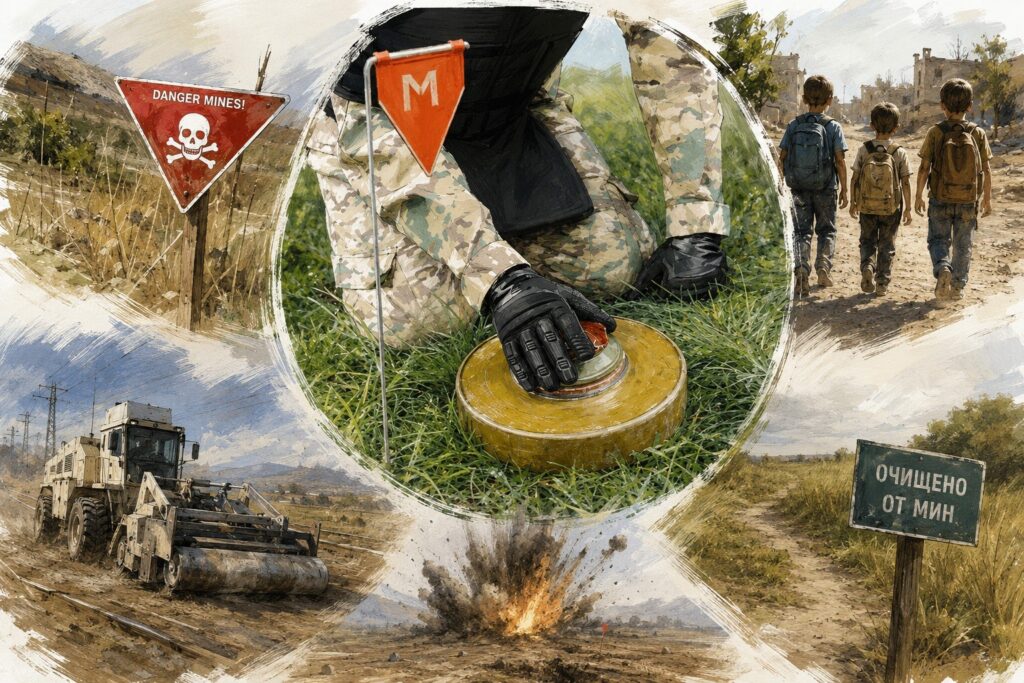
According to the United Nations Office for the Coordination of Humanitarian Affairs (OCHA), Afghanistan remains one of the most heavily mined countries in the world. During the first five months of 2026 alone, 175 people were killed or injured by landmines and unexploded ordnance, with children accounting for approximately 75% of the victims. Behind these figures lies a daily reality of fear: farmers cannot safely cultivate their fields, children cannot walk to school without risk, and road construction equipment cannot reach critical transport routes. In practice, this continues to hinder the development of the entire region. Mine-contaminated land prevents the recovery of agriculture, blocks the construction of roads, complicates the return of displaced populations, and significantly increases the cost of infrastructure projects. According to the Landmine and Cluster Munition Monitor, Afghanistan ranks among the world’s most heavily mined territories, alongside Bosnia and Herzegovina, Cambodia, Ethiopia, Iraq, and Ukraine.  A Barrier to Central and South Asian Integration For Kazakhstan and the other countries of Central Asia, this issue also carries  strategic significance. Without stability in Afghanistan, the implementation of Eurasian transport projects and the expansion of trade links with South Asia become increasingly difficult. Globally, humanitarian demining is no longer viewed simply as a charitable activity. Today, it represents the starting point of any major infrastructure project. Railways cannot be laid, nor can high-voltage transmission lines be built, where the ground itself remains hostile to human activity. Virtually every prospective transport corridor connecting Central Asia with ports on the Indian Ocean passes through Afghan territory, including major projects such as the development of the Trans-Afghan Corridor and the CASA-1000 project electricity project. International experience demonstrates that humanitarian demining in Cambodia, Bosnia and Herzegovina, Croatia, and Azerbaijan created the conditions for economic recovery, the return of displaced populations, and the attraction of foreign investment. From Kazbat’s Experience to a New Humanitarian Mission Unlike most countries in the region, Kazakhstan possesses substantial practical experience in conducting mine-clearance operations. Between 2003 and 2008, Kazakhstan’s military engineering unit, Kazbat, participated in the international mission in Iraq, destroying approximately 4.5 million explosive devices. Initially, Kazakh sappers cleared residential neighborhoods and agricultural land of unexploded ordnance. Later, they expanded their operations to locating and destroying underground and above-ground weapons depots abandoned after the conflict. These operations prevented millions of rounds of ammunition from falling into the hands of terrorist organizations. The mission came at a cost. In January 2005, 29-year-old Captain Kairat Kudabayev was killed when munitions detonated during preparations for disposal, while several other Kazakh servicemen were injured. Kazakh specialists also supplied local communities with purified drinking water and provided medical assistance, demonstrating a comprehensive approach to post-conflict recovery. More than 5,000 Iraqi civilians received medical treatment, while approximately 7,000 cubic meters of drinking water were purified. The expertise Kazakhstan accumulated could now evolve into a civilian-focused mission centered on protecting civilian populations and supporting Afghanistan’s long-term economic recovery. How a New Regional Platform Could Operate Kazakhstan’s international development agency, KazAID, could serve as the national...


Road Deaths of Demining Team Are Remembered in Tajikistan

This week, a Swiss humanitarian group with a leading role in the disposal of unexploded ordnance in Tajikistan is commemorating the deaths of five of its Tajik workers in a 2016 vehicle accident in the Central Asian country. “On this day, we take a moment to honour their memory,” the Geneva-based FSD group said on X on Monday. The five members of FSD’s demining team in Tajikistan – deminers Abdurozik Kurbonov, Gulmurod Choriev and Ilkhomjon Safarov, as well as medic Mashraf Abdurahmonov and driver Ghafor Soliev - died on June 30, 2016 were killed in the accident while on their way to a minefield. The vehicle they were in plunged into the torrents of the River Panj, which forms part of the border between Tajikistan and Afghanistan. Two people in the vehicle survived. The acronym FSD stands for Fondation Suisse de Déminage, or Swiss Federation for Mine Clearance. It has worked to clear landmines and other unexploded ordnance in Tajikistan, where a civil war in the 1990s killed several tens of thousands of people, according to a number of estimates, and displaced many more from their homes. The demining group says much of the explosive material that must be cleared was left behind after the civil war, and that landmines laid by Russian forces along the Tajikistan-Afghanistan border as well as by Uzbek forces along the Tajikistan-Uzbekistan border in the early 2000s has posed concerns for the security of civilians. FSD, which first got involved in Tajikistan in the early 2000s, has also worked to rehabilitate areas affected by Soviet-era pesticides that have caused pollution and health problems. “While the Tajik government is aware of the risks of such substances on health, the environment and the economy, it lacks the legal, financial and institutional resources to solve the problem,” said FSD, which was founded in 1997. The group has received private and public funding. The humanitarian organization had 60 staff members in Tajikistan at the beginning of 2025. Its teams are working to working to clear the remaining 12.5 square kilometers of hazardous land in the country. In a step toward self-sufficiency in demining, 14 officers from Tajikistan’s Ministry of Defense and Border Troops agency completed a two-week training in explosive ordnance disposal in Gharm, Tajikistan in March this year. The training was conducted by Dushanbe-based officers from the Organization for Security and Co-operation in Europe and defense ministry specialists. Following that course, OSCE said expert instructors from Tajikistan led an OSCE-funded regional course in disposal of unexploded ordnance in April and May, “marking a significant step in enhancing Central Asia’s capabilities in mitigating explosive threats.”