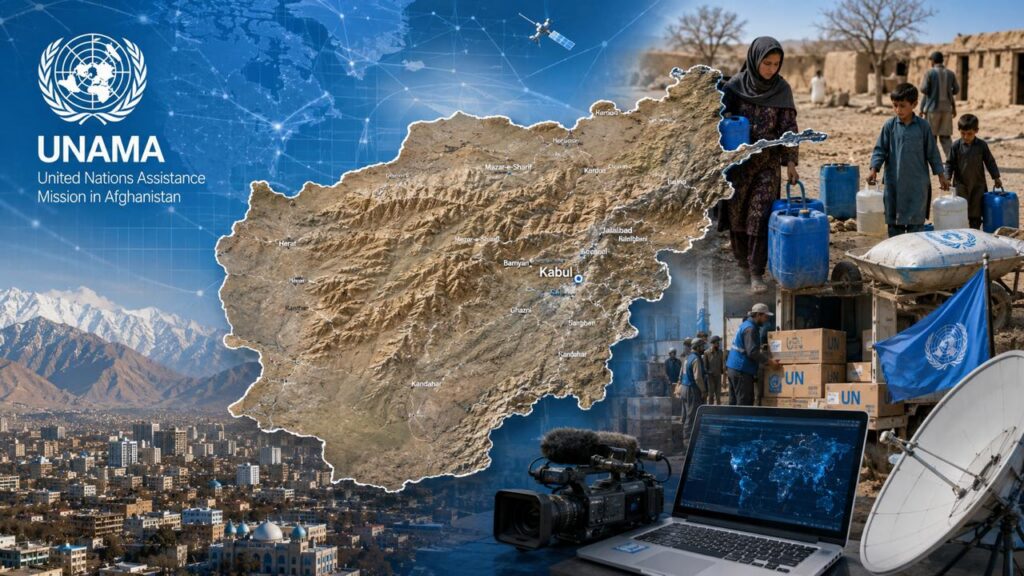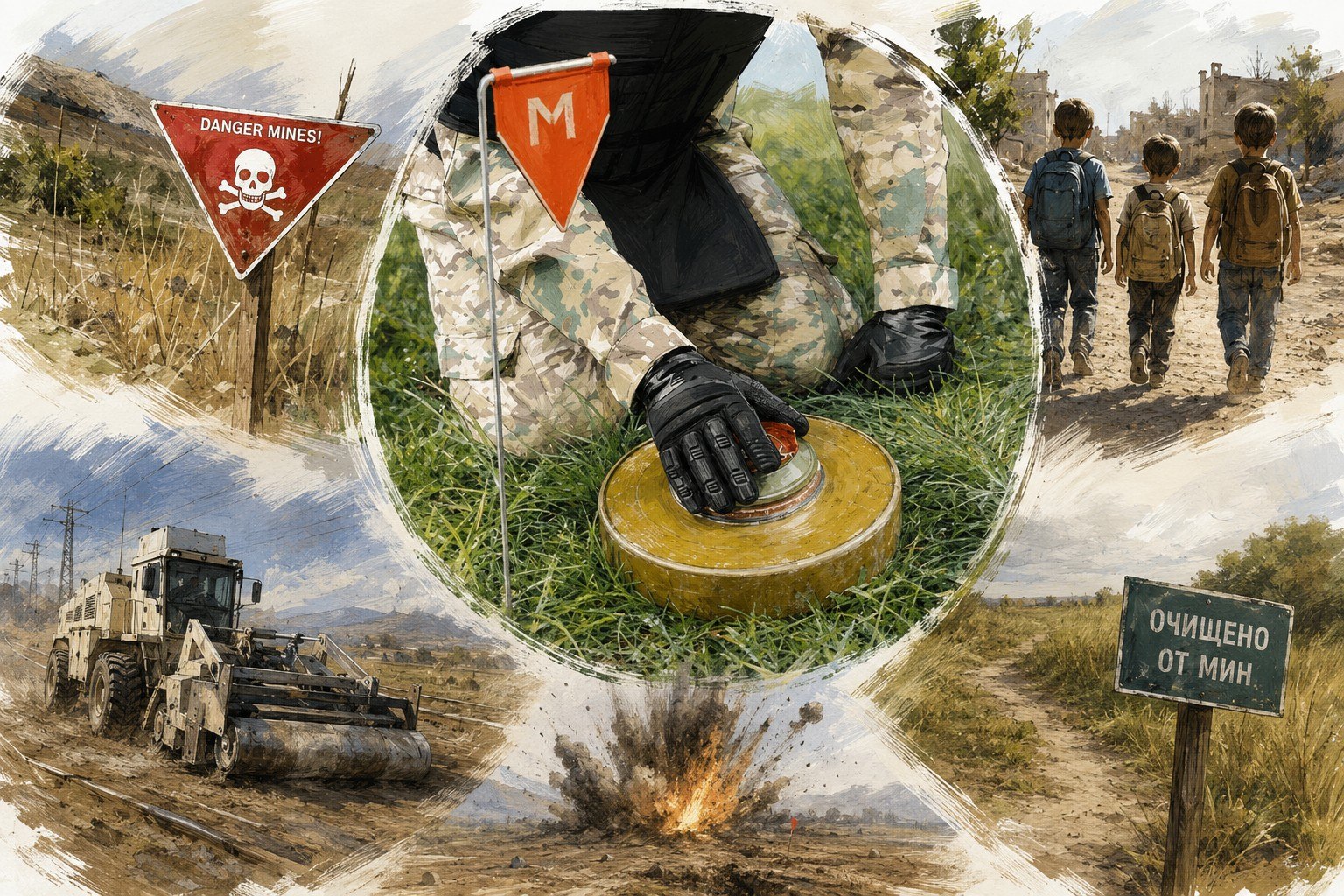
According to the United Nations Office for the Coordination of Humanitarian Affairs (OCHA), Afghanistan remains one of the most heavily mined countries in the world. During the first five months of 2026 alone, 175 people were killed or injured by landmines and unexploded ordnance, with children accounting for approximately 75% of the victims.
Behind these figures lies a daily reality of fear: farmers cannot safely cultivate their fields, children cannot walk to school without risk, and road construction equipment cannot reach critical transport routes. In practice, this continues to hinder the development of the entire region. Mine-contaminated land prevents the recovery of agriculture, blocks the construction of roads, complicates the return of displaced populations, and significantly increases the cost of infrastructure projects.
According to the Landmine and Cluster Munition Monitor, Afghanistan ranks among the world’s most heavily mined territories, alongside Bosnia and Herzegovina, Cambodia, Ethiopia, Iraq, and Ukraine.
A Barrier to Central and South Asian Integration
For Kazakhstan and the other countries of Central Asia, this issue also carries strategic significance. Without stability in Afghanistan, the implementation of Eurasian transport projects and the expansion of trade links with South Asia become increasingly difficult.
Globally, humanitarian demining is no longer viewed simply as a charitable activity. Today, it represents the starting point of any major infrastructure project. Railways cannot be laid, nor can high-voltage transmission lines be built, where the ground itself remains hostile to human activity.
Virtually every prospective transport corridor connecting Central Asia with ports on the Indian Ocean passes through Afghan territory, including major projects such as the development of the Trans-Afghan Corridor and the CASA-1000 project electricity project.
International experience demonstrates that humanitarian demining in Cambodia, Bosnia and Herzegovina, Croatia, and Azerbaijan created the conditions for economic recovery, the return of displaced populations, and the attraction of foreign investment.
From Kazbat’s Experience to a New Humanitarian Mission
Unlike most countries in the region, Kazakhstan possesses substantial practical experience in conducting mine-clearance operations.
Between 2003 and 2008, Kazakhstan’s military engineering unit, Kazbat, participated in the international mission in Iraq, destroying approximately 4.5 million explosive devices. Initially, Kazakh sappers cleared residential neighborhoods and agricultural land of unexploded ordnance. Later, they expanded their operations to locating and destroying underground and above-ground weapons depots abandoned after the conflict. These operations prevented millions of rounds of ammunition from falling into the hands of terrorist organizations.
The mission came at a cost. In January 2005, 29-year-old Captain Kairat Kudabayev was killed when munitions detonated during preparations for disposal, while several other Kazakh servicemen were injured.
Kazakh specialists also supplied local communities with purified drinking water and provided medical assistance, demonstrating a comprehensive approach to post-conflict recovery. More than 5,000 Iraqi civilians received medical treatment, while approximately 7,000 cubic meters of drinking water were purified.
The expertise Kazakhstan accumulated could now evolve into a civilian-focused mission centered on protecting civilian populations and supporting Afghanistan’s long-term economic recovery.
How a New Regional Platform Could Operate
Kazakhstan’s international development agency, KazAID, could serve as the national operator for such initiatives. As the country’s official international development assistance agency, KazAID is well positioned to coordinate projects transparently while meeting international management standards and the requirements of donor organizations.
Another promising initiative would be the establishment of a Regional Humanitarian Security Platform for Central Asia and Afghanistan. Integrating its work with the new UN Regional Centre for the Sustainable Development Goals, currently being established in Almaty, would connect post-conflict recovery efforts with broader objectives related to food security and climate resilience.
The proposed platform could focus on three interconnected areas, all aimed at eliminating mine-related threats and creating a safer environment for post-conflict development.
The first would involve practical humanitarian demining around infrastructure projects, along with independent pre-construction safety assessments for transport and energy corridors.
A second priority would be educational assistance. During its mission in Iraq, Kazbat instructors trained 572 cadets at the Iraqi Military Academy in mine-clearance techniques. Expanding this experience into a permanent program could create a regional training center for civilian specialists in humanitarian demining, engineering support, and emergency response, serving both Afghanistan and the countries of Central Asia.
Humanitarian demining has historically been a slow, costly, and highly dangerous process. Today, however, technology has the potential to transform it. Computer vision algorithms, drones developed through Astana Hub, and satellite imagery could accomplish in years what previously required decades, identifying hazardous areas from the air, reducing risks for demining personnel, and significantly lowering the cost of clearing contaminated land.
The views expressed in this article are those of the author and do not necessarily reflect the official policy or position of the publication, its affiliates, or any other organizations mentioned.