
• KGS/USD = 0.01144 0%
  • KZT/USD = 0.00212 0%
  • TJS/USD = 0.10841 -0.46%
  • UZS/USD = 0.00008 0%
  • TMT/USD = 0.28490 0%
  • KGS/USD = 0.01144 0%
  • KZT/USD = 0.00212 0%
  • TJS/USD = 0.10841 -0.46%
  • UZS/USD = 0.00008 0%
  • TMT/USD = 0.28490 0%
  • KGS/USD = 0.01144 0%
  • KZT/USD = 0.00212 0%
  • TJS/USD = 0.10841 -0.46%
  • UZS/USD = 0.00008 0%
  • TMT/USD = 0.28490 0%
  • KGS/USD = 0.01144 0%
  • KZT/USD = 0.00212 0%
  • TJS/USD = 0.10841 -0.46%
  • UZS/USD = 0.00008 0%
  • TMT/USD = 0.28490 0%
  • KGS/USD = 0.01144 0%
  • KZT/USD = 0.00212 0%
  • TJS/USD = 0.10841 -0.46%
  • UZS/USD = 0.00008 0%
  • TMT/USD = 0.28490 0%
  • KGS/USD = 0.01144 0%
  • KZT/USD = 0.00212 0%
  • TJS/USD = 0.10841 -0.46%
  • UZS/USD = 0.00008 0%
  • TMT/USD = 0.28490 0%
  • KGS/USD = 0.01144 0%
  • KZT/USD = 0.00212 0%
  • TJS/USD = 0.10841 -0.46%
  • UZS/USD = 0.00008 0%
  • TMT/USD = 0.28490 0%
  • KGS/USD = 0.01144 0%
  • KZT/USD = 0.00212 0%
  • TJS/USD = 0.10841 -0.46%
  • UZS/USD = 0.00008 0%
  • TMT/USD = 0.28490 0%

Viewing results 1 - 6 of 2

From Controllers to Courts: Kazakhstan Prepares for Games of the Future

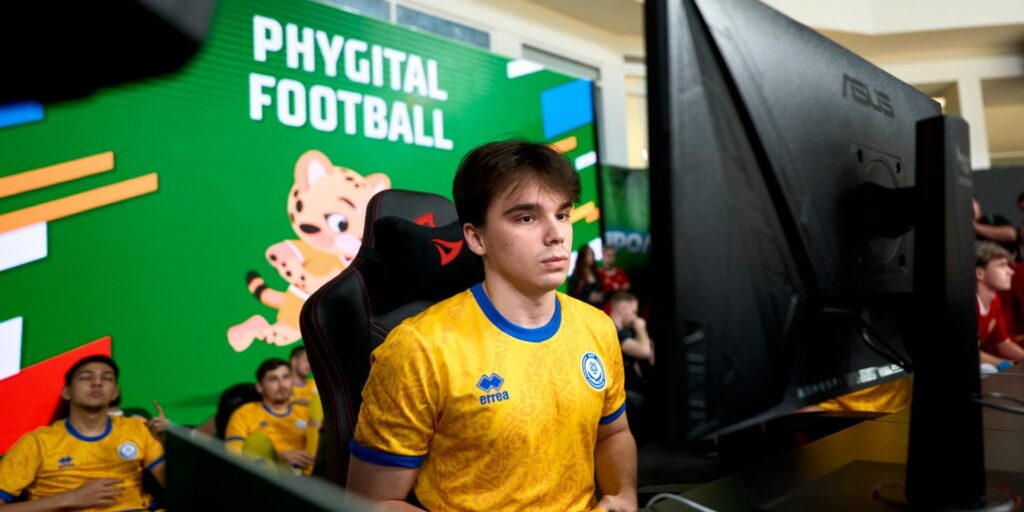
When the basketball begins in Astana on July 29, two players from each team will sit at screens and chase 19 digital points. After that stage, they will take the score onto a real 2-on-2 court. The physical game continues until one side reaches 39, meaning a lead earned with a controller can disappear beneath the rim. That switch gives the Games of the Future its human appeal. The format asks athletes to handle screen timing, then contact and fatigue on the court. It also creates an unfamiliar training problem. A gifted basketball player can fall behind before reaching the court, while a strong gamer still has to run, defend, and rebound. Before June’s Astana qualifier, Uzbek under-23 basketball player Tolegen Ismatov explained what first drew him to the faster 3x3 game. “I was immediately drawn to the speed, the emotions, and the responsibility for every moment on the court,” he said. The main Games will run from July 29 to August 9. More than 800 competitors from over 50 nationalities are due to contest eight disciplines for a prize pool which stands above $4 million. The events will use four Astana venues, including the Barys Arena and the Qazaqstan Athletics Sports Complex. For local spectators, the event is priced more like a day out than a global championship. Standard tickets start at 4,000 tenge (about $8.50), while phygital fighting starts at 7,500 tenge. Admission to the dance competition at the 12,000-seat Barys Arena is free. The Score Carries Onto the Court Basketball opens the program on July 29. Four players make up each team, with two competing at a time. The digital stage ends when one side reaches 19 points. Play then moves to the court, where the first team to reach a combined score of 39 wins. A tie leads to a free-throw shootout. Football follows the same basic logic. Teams play two short halves in the UFL video game, then move to a five-a-side pitch. In the shooter event, clubs begin with Counter-Strike 2, then move into laser tag, where players must communicate while running through a physical space. The field mixes famous club badges with esports names. Boca Juniors and Valencia Basket are in the basketball draw. Peñarol and Los Troncos FC will meet in football. Dota 2 and PUBG each carry a $1 million prize pool, the largest shares of the total. Kazakh teams also appear throughout the draw, giving home crowds someone to follow in several arenas. GTB KZ opens its basketball campaign against qualifier champion Zagrebacki malisani NITUI. Team KZ begins the shooter competition against Mirage Team. Astana’s PBC Astana is also in the basketball field, while ACF x Allur represents the host country in football. Uzbekistan has a visible place in the regional cast. Dancer Sogdiana Abdukhalikova opens against Lala Gevorgyan on August 6. Her performance will be measured by automated scoring for timing and movement accuracy, rather than a panel holding up cards. A Smaller Event Than First Promised The Astana...

The Battle to Keep Kazakhstan Reading

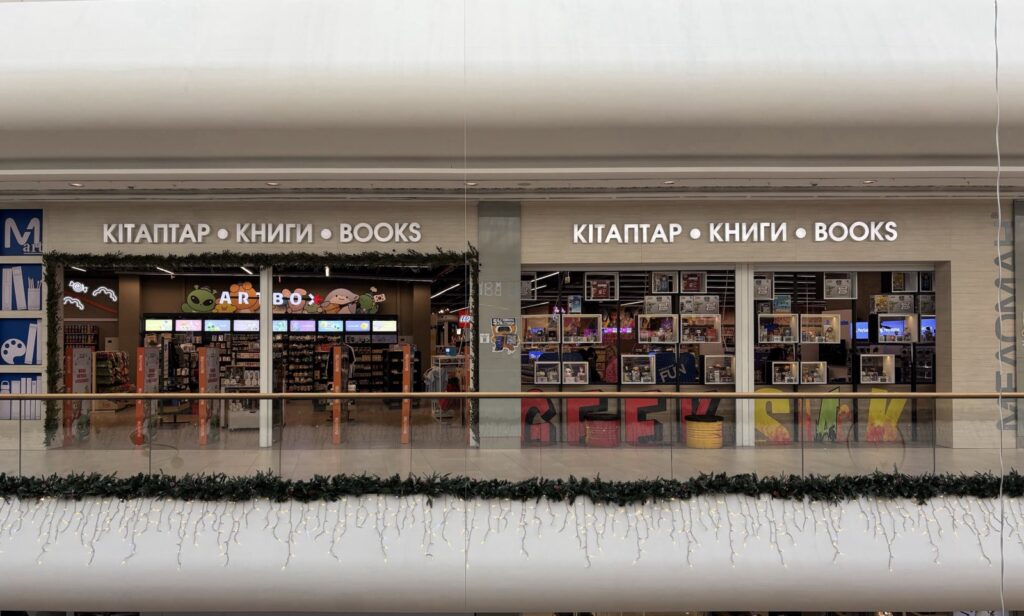
Mika’s Books and Pencils was a hole-in-the-wall bookstore in Almaty, but in December 2025, it was forced to vacate its former premises in the center of the city. “The rent was simply too high,” the store’s owner, Elmira Kireyeva, told The Times of Central Asia. Mika’s is not Kazakhstan’s only struggling bookseller. Kireyeva describes the situation for bookstores across the country as “extremely difficult,” even for the large chains. Physical bookstores are firstly threatened by the growth of e-commerce. In 2024, Kazakhstanis purchased over 2.3 million books on Wildberries, a Russian site similar to Amazon. This represented a 52% increase from 2023. But the economic situation is also having an effect. “Taxes have increased, including VAT on books. At the same time, people’s incomes are shrinking, so books are becoming a luxury,” Kireyeva said, noting that books are often printed abroad, which has seen them become a victim of the falling purchasing power of the national currency, the tenge. More worryingly for booksellers is that people are reading less than they once did. This is part of a global phenomenon, particularly among the young. A large share of undergraduate students in the United States claim to have never read a book. British historian Sir Niall Ferguson has recently argued that this decline is evident across the West, while the number of Russians who read at least once a week fell from 49% to 28% between 1994 and 2019. Many believe technology is to blame. “In the age of social media, human attention faces unprecedented competition,” Shyngys Muqan, founder of Mazmundama, a Kazakh-language publisher, told TCA. “Platforms built around short-form video are especially effective because they exploit a basic neurological tendency: the pursuit of dopamine with minimal cognitive effort. Compared to reading, scrolling requires little concentration, imagination, or sustained mental work, yet it delivers immediate emotional reward.” Kireyeva agrees that screens have certainly had an effect. “It’s not just phones; it’s also information overload. People can’t read long texts anymore – social media has trained us to read only short fragments,” she said. [caption id="attachment_42613" align="aligncenter" width="1600"] The classic literature section in Meloman, one of Kazakhstan's largest book chains; image: Joe Luc Barnes[/caption] Kazakhstan has been affected worse than most. According to CEOWorld’s Book Reading Index 2024, Kazakhstanis read less than almost every country in the world. Of the 102 countries surveyed, Kazakhstan ranked 95th, with the average Kazakhstani reading just 2.77 books a year. This was behind every other Central Asian country surveyed (Kyrgyzstan – 3.96; Turkmenistan – 3.18; Tajikistan – 4.01), and far behind Russia (11). The results led one local newspaper to quip that, at this rate, it would take the average Kazakhstani 2.5 years to read the entire Harry Potter series. There are various structural factors which make Kazakhstan a particularly barren zone for readers. The first is geography – people in rural areas are very poorly served, and library collections are small. While Almaty residents spend an average of 2,300 tenge ($4.50) per family per quarter...