• KGS/USD = 0.01144 0%
  • KZT/USD = 0.00203 0%
  • TJS/USD = 0.10650 -0.09%
  • UZS/USD = 0.00008 0%
  • TMT/USD = 0.28490 0%
  • KGS/USD = 0.01144 0%
  • KZT/USD = 0.00203 0%
  • TJS/USD = 0.10650 -0.09%
  • UZS/USD = 0.00008 0%
  • TMT/USD = 0.28490 0%
  • KGS/USD = 0.01144 0%
  • KZT/USD = 0.00203 0%
  • TJS/USD = 0.10650 -0.09%
  • UZS/USD = 0.00008 0%
  • TMT/USD = 0.28490 0%
  • KGS/USD = 0.01144 0%
  • KZT/USD = 0.00203 0%
  • TJS/USD = 0.10650 -0.09%
  • UZS/USD = 0.00008 0%
  • TMT/USD = 0.28490 0%
  • KGS/USD = 0.01144 0%
  • KZT/USD = 0.00203 0%
  • TJS/USD = 0.10650 -0.09%
  • UZS/USD = 0.00008 0%
  • TMT/USD = 0.28490 0%
  • KGS/USD = 0.01144 0%
  • KZT/USD = 0.00203 0%
  • TJS/USD = 0.10650 -0.09%
  • UZS/USD = 0.00008 0%
  • TMT/USD = 0.28490 0%
  • KGS/USD = 0.01144 0%
  • KZT/USD = 0.00203 0%
  • TJS/USD = 0.10650 -0.09%
  • UZS/USD = 0.00008 0%
  • TMT/USD = 0.28490 0%
  • KGS/USD = 0.01144 0%
  • KZT/USD = 0.00203 0%
  • TJS/USD = 0.10650 -0.09%
  • UZS/USD = 0.00008 0%
  • TMT/USD = 0.28490 0%
11 February 2026

Viewing results 1 - 6 of 9

The Battle to Keep Kazakhstan Reading

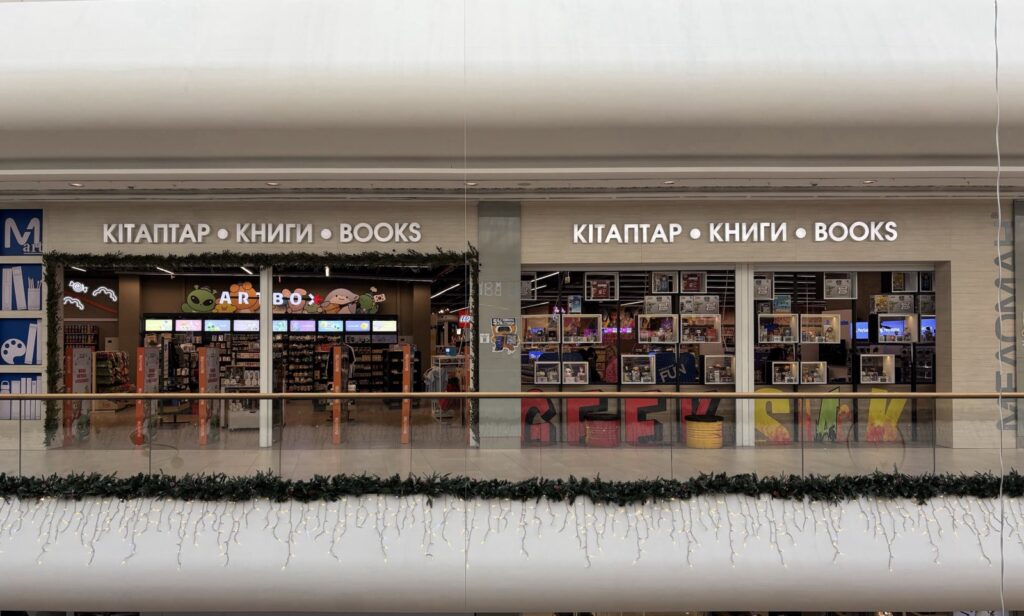
Mika’s Books and Pencils was a hole-in-the-wall bookstore in Almaty, but in December 2025, it was forced to vacate its former premises in the center of the city. “The rent was simply too high,” the store’s owner, Elmira Kireyeva, told The Times of Central Asia. Mika’s is not Kazakhstan’s only struggling bookseller. Kireyeva describes the situation for bookstores across the country as “extremely difficult,” even for the large chains. Physical bookstores are firstly threatened by the growth of e-commerce. In 2024, Kazakhstanis purchased over 2.3 million books on Wildberries, a Russian site similar to Amazon. This represented a 52% increase from 2023. But the economic situation is also having an effect. “Taxes have increased, including VAT on books. At the same time, people’s incomes are shrinking, so books are becoming a luxury,” Kireyeva said, noting that books are often printed abroad, which has seen them become a victim of the falling purchasing power of the national currency, the tenge. More worryingly for booksellers is that people are reading less than they once did. This is part of a global phenomenon, particularly among the young. A large share of undergraduate students in the United States claim to have never read a book. British historian Sir Niall Ferguson has recently argued that this decline is evident across the West, while the number of Russians who read at least once a week fell from 49% to 28% between 1994 and 2019. Many believe technology is to blame. “In the age of social media, human attention faces unprecedented competition,” Shyngys Muqan, founder of Mazmundama, a Kazakh-language publisher, told TCA. “Platforms built around short-form video are especially effective because they exploit a basic neurological tendency: the pursuit of dopamine with minimal cognitive effort. Compared to reading, scrolling requires little concentration, imagination, or sustained mental work, yet it delivers immediate emotional reward.” Kireyeva agrees that screens have certainly had an effect. “It’s not just phones; it’s also information overload. People can’t read long texts anymore – social media has trained us to read only short fragments,” she said. [caption id="attachment_42613" align="aligncenter" width="1600"] The classic literature section in Meloman, one of Kazakhstan's largest book chains; image: Joe Luc Barnes[/caption] Kazakhstan has been affected worse than most. According to CEOWorld’s Book Reading Index 2024, Kazakhstanis read less than almost every country in the world. Of the 102 countries surveyed, Kazakhstan ranked 95th, with the average Kazakhstani reading just 2.77 books a year. This was behind every other Central Asian country surveyed (Kyrgyzstan – 3.96; Turkmenistan – 3.18; Tajikistan – 4.01), and far behind Russia (11). The results led one local newspaper to quip that, at this rate, it would take the average Kazakhstani 2.5 years to read the entire Harry Potter series. There are various structural factors which make Kazakhstan a particularly barren zone for readers. The first is geography – people in rural areas are very poorly served, and library collections are small. While Almaty residents spend an average of 2,300 tenge ($4.50) per family per quarter...

Russia Expands Soft Power Through New Cultural Center in Kyrgyzstan

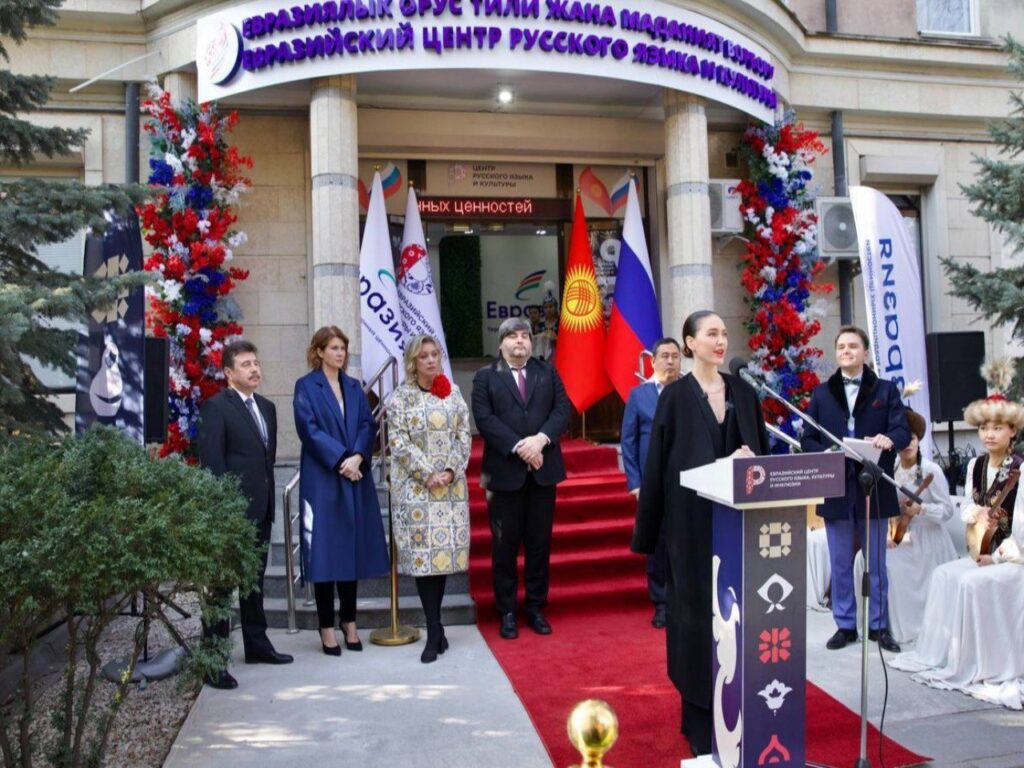
Russia’s international cooperation organization Evraziya has launched Kyrgyzstan’s first Eurasian Center for Russian Language and Culture in Bishkek. The initiative aims to promote the Russian language, support local educators, and advance bilateral humanitarian projects. The center’s opening came just days before Russian President Vladimir Putin’s state visit to Kyrgyzstan, which begins today on November 25. Evraziya, a Russian non-profit, presents itself as a vehicle for deeper integration in the post-Soviet space and is widely viewed as a key instrument of Moscow’s soft power strategy in Central Asia. High-Level Delegation at Launch The opening ceremony was attended by Russian Ambassador to Kyrgyzstan Sergey Vakunov, Russian Foreign Ministry spokesperson Maria Zakharova, Head of the Presidential Executive Office for Strategic Partnership and Cooperation Vadim Titov, State Duma Deputy and Chair of Eurasia’s Coordination Council Alyona Arshinova, and Kyrgyz Deputy Minister of Education and Science Albert Makhmetkulov. Arshinova noted that Evraziya had spent the past year enhancing cooperation with Kyrgyz institutions by offering teacher support, organizing educational forums, and providing professional development programs. “Kyrgyzstan is not just a partner; it is a country with which we share common values and a strategic vision,” she said. “The Russian language remains a foundation that connects our countries and opens opportunities for new educational and cultural initiatives.” Cultural and Educational Programming The new center will run a range of initiatives for schoolchildren and adolescents, including a theater studio, workshops in art and media, digital culture and programming courses, and the "Unboring Russian" project. For adults, the center will offer film clubs, discussion platforms, and a literary lounge. It will also serve as a training center for local teachers and coordinate bloggers focused on language and culture, reinforcing the Russian-language educational and cultural environment in Kyrgyzstan. Deputy Minister Makhmetkulov called the opening “a strategic step for education and interethnic dialogue,” describing the center as a space for both promoting Russian and fostering cultural exchange and professional growth. Evraziya plans to expand its network to other regions in Kyrgyzstan and eventually to other countries in the region. Wider Engagement Strategy Since 2024, Evraziya has intensified its presence in Kyrgyzstan through education, social, and humanitarian projects. In partnership with Russia’s Ministry of Education, the organization has dispatched young Russian teachers to Kyrgyz schools to teach various subjects in Russian. It has also donated 100 school buses to rural areas and financed renovations at schools in Bishkek and Kyzyl-Kyya. On August 28, in cooperation with Kyrgyzstan’s Cabinet of Ministers, Evraziya opened a $35 million amusement park in Bishkek. Two days earlier, the group launched its first social store in the capital, offering discounted essential goods to pensioners, veterans, large families, and people with disabilities. Russian Language as a Strategic Link The Russian language continues to be a central element in Moscow-Bishkek relations. During a July meeting at the Kremlin, Putin praised Kyrgyzstan’s decision to retain Russian as an official language. Russian remains one of Kyrgyzstan’s official languages and is widely used in public administration, education, and interethnic communication. As part of...

UNESCO Conference in Samarkand Highlights Uzbekistan’s Heritage

At the opening ceremony of the 43rd session of the UNESCO General Conference in Samarkand, Uzbek President Shavkat Mirziyoyev highlighted Uzbekistan’s growing role in global cultural dialogue and its expanding cooperation with UNESCO. Held on October 30, the event marked the first time in four decades that the conference had convened outside UNESCO’s headquarters in Paris. The ceremony welcomed high-level participants, including UNESCO Director-General Audrey Azoulay, Serbian President Aleksandar Vučić, Slovak President Peter Pellegrini, and representatives from UNESCO member states. In his address, Mirziyoyev said that hosting such a prominent international forum reflects global recognition of Uzbekistan’s reform efforts and its active role in cultural and educational cooperation. He commended UNESCO’s decades-long contributions to education, science, culture, and media, noting Samarkand’s symbolic importance as one of the world’s oldest cities. “Samarkand has always been a crossroads of civilizations, science, and tolerance,” Mirziyoyev said. The president highlighted the 2023–2027 cooperation program between Uzbekistan and UNESCO, which focuses on cultural heritage preservation, educational reform, and digital innovation. He also noted that Khiva, Bukhara, Shahrisabz, and Samarkand are inscribed on UNESCO’s World Heritage List, and that the Zarafshan-Karakum Corridor was recently added as part of the Silk Roads network. Uzbekistan’s rich intangible heritage, including Shashmaqom music, the Lazgi dance, Navruz celebrations, and traditional crafts such as embroidery and ceramics, has also earned UNESCO recognition, strengthening the country’s identity as a cultural hub in Central Asia. During the session, Mirziyoyev proposed several initiatives for UNESCO’s consideration: Establishing a UNESCO Platform for Inclusive Education with AI-integrated learning tools; Organizing a Global Summit on Vocational Education to prepare youth for future professions; Declaring November 19 as the International Day of Documentary Heritage; Creating an International Digital Heritage Institute under UNESCO auspices; Launching a UNESCO Academy for Women Leaders to advance women’s participation in science, culture, and education; and Hosting a World Forum of Women Researchers and Artists in Samarkand. Addressing global challenges, the president called for stronger international cooperation on climate issues and proposed designating a “UNESCO Ecological Capital” each year to recognize cities promoting sustainable environmental practices. Mirziyoyev also spoke about the dangers of misinformation, calling for improved media literacy among young people and greater support for responsible journalism and intercultural dialogue. Concluding his speech, the president reaffirmed Uzbekistan’s readiness to serve as a bridge between East and West and to actively support UNESCO’s mission to promote peace, sustainable development, and mutual understanding around the world.