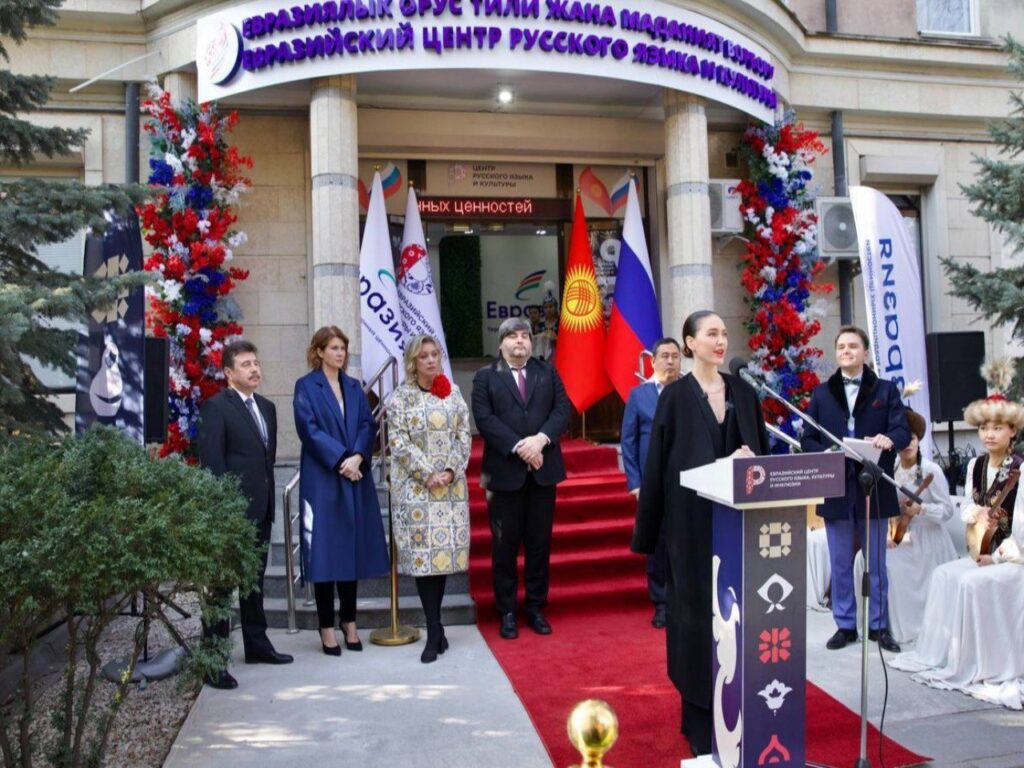
Mika’s Books and Pencils was a hole-in-the-wall bookstore in Almaty, but in December 2025, it was forced to vacate its former premises in the center of the city.
“The rent was simply too high,” the store’s owner, Elmira Kireyeva, told The Times of Central Asia.
Mika’s is not Kazakhstan’s only struggling bookseller. Kireyeva describes the situation for bookstores across the country as “extremely difficult,” even for the large chains.
Physical bookstores are firstly threatened by the growth of e-commerce. In 2024, Kazakhstanis purchased over 2.3 million books on Wildberries, a Russian site similar to Amazon. This represented a 52% increase from 2023.
But the economic situation is also having an effect.
“Taxes have increased, including VAT on books. At the same time, people’s incomes are shrinking, so books are becoming a luxury,” Kireyeva said, noting that books are often printed abroad, which has seen them become a victim of the falling purchasing power of the national currency, the tenge.
More worryingly for booksellers is that people are reading less than they once did. This is part of a global phenomenon, particularly among the young. A large share of undergraduate students in the United States claim to have never read a book. British historian Sir Niall Ferguson has recently argued that this decline is evident across the West, while the number of Russians who read at least once a week fell from 49% to 28% between 1994 and 2019.
Many believe technology is to blame.
“In the age of social media, human attention faces unprecedented competition,” Shyngys Muqan, founder of Mazmundama, a Kazakh-language publisher, told TCA. “Platforms built around short-form video are especially effective because they exploit a basic neurological tendency: the pursuit of dopamine with minimal cognitive effort. Compared to reading, scrolling requires little concentration, imagination, or sustained mental work, yet it delivers immediate emotional reward.”
Kireyeva agrees that screens have certainly had an effect. “It’s not just phones; it’s also information overload. People can’t read long texts anymore – social media has trained us to read only short fragments,” she said.
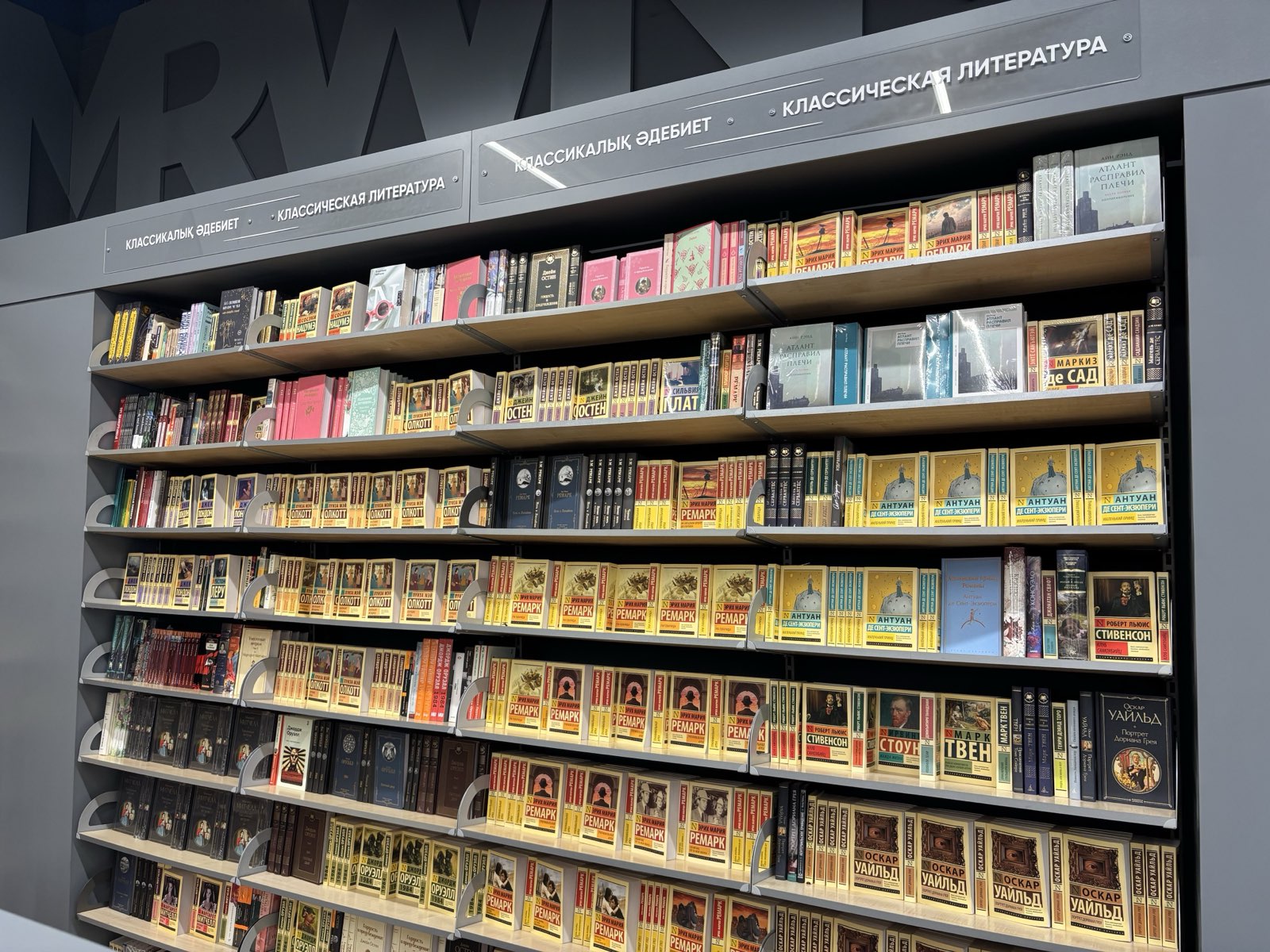
The classic literature section in Meloman, one of Kazakhstan’s largest book chains; image: Joe Luc Barnes
Kazakhstan has been affected worse than most. According to CEOWorld’s Book Reading Index 2024, Kazakhstanis read less than almost every country in the world. Of the 102 countries surveyed, Kazakhstan ranked 95th, with the average Kazakhstani reading just 2.77 books a year. This was behind every other Central Asian country surveyed (Kyrgyzstan – 3.96; Turkmenistan – 3.18; Tajikistan – 4.01), and far behind Russia (11).
The results led one local newspaper to quip that, at this rate, it would take the average Kazakhstani 2.5 years to read the entire Harry Potter series.
There are various structural factors which make Kazakhstan a particularly barren zone for readers. The first is geography – people in rural areas are very poorly served, and library collections are small. While Almaty residents spend an average of 2,300 tenge ($4.50) per family per quarter on books, an average family in Mangystau spends just a quarter of that, and Shymkent barely 10%.
Then there is the language issue.
“In Soviet times, literacy and education in general were emphasized as a priority,” said Kireyeva, noting a strong focus on Russian classics. “Now, Kazakhstan is gradually moving away from the Russian language and culture for various reasons, including what Russia is currently doing to Ukraine. There is a sense of rejection.”
However, the gap left by this growing rejection of Russian culture has not been filled by Kazakh language texts.
Muqan tells of how he grew up in a Kazakh-speaking village and studied at Kazakh speaking school, only to arrive at university to find that all of his study materials were in Russian.
“Russian functioned as a bridge between Kazakh and other foreign languages. Without strong Russian, it was genuinely difficult to access global knowledge,” he said. It was this that inspired him to found Mazmundama.
Research at the Eurasian National University in Astana in 2023 found that the higher one goes up the educational ladder, the more Russian predominates. While 64% of students read books in Russian and 33% in Kazakh, the figure reading in Kazakh drops to just 15% amongst doctoral students.
In the classic literature section of Meloman, one of Kazakhstan’s largest book chains, the vast majority of the books are in Russian. Even in the Kazakh section, many of the novels are translations of Russian classics.
This is largely down to a lack of resources, says Muqan. Accurate translation remains painstakingly slow and expensive.
“On average, a translator may produce 4–6 finished pages per day, and often fewer for complex philosophical, economic, or scientific texts,” he said. “If you combine translation, editing, and proofreading, a single serious book can easily represent 800 to 1,200 hours of human labor.”
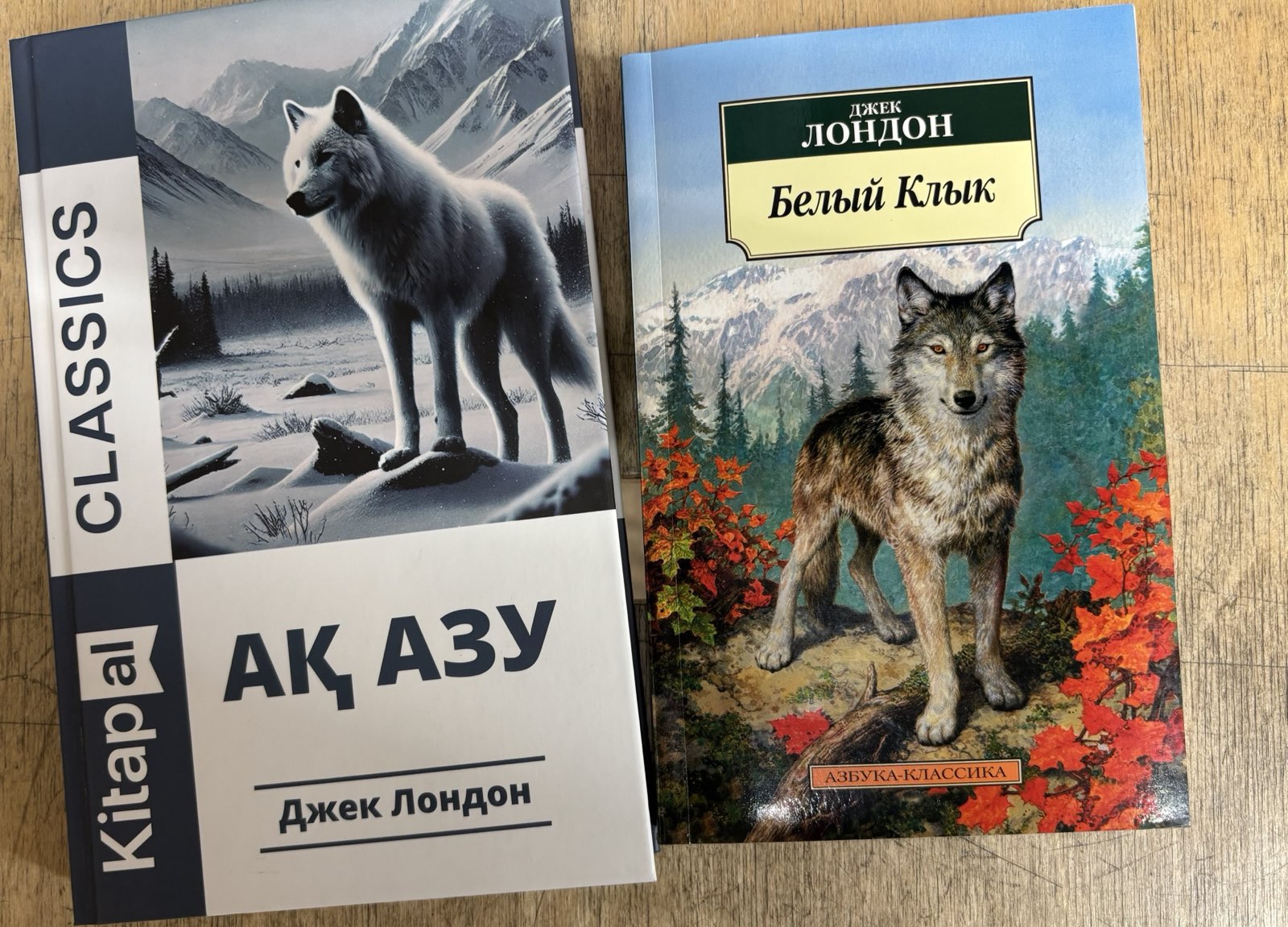
A Kazakh and Russian version of Jack London’s White Fang. The latter is 30% cheaper; image: Joe Luc Barnes
The shift away from reading longer texts has side effects that are becoming increasingly pronounced in schools.
“Only a third of students read the books included in the curriculum in any given grade,” Zhandos Duisebay, a teacher at an Almaty High School, told TCA. “As a teacher, I can clearly see the difference between those who read and those who don’t.”
He notes that those who read absorb knowledge better and faster due to their ability to concentrate. “They are also more goal-oriented, can articulate their thoughts better, and use less profanity,” he added.
Other studies warn about the political effects. A detailed survey in May 2023 noted the profound role that sites such as Facebook, YouTube, and Instagram play in the dissemination of news across Central Asia. On all of these platforms, news is often curated by individual vloggers. Research points to information disseminated in video format being more emotional and less likely to be fact-checked, leading to a less well-informed and potentially angrier public.
“There’s definitely a danger of radicalization,” noted Kireyeva. While Muqan believes there is a growing realization of the benefits of reading in combating this.
“Long-form reading is not only a way to consume information or enjoy aesthetic pleasure, but also a form of mental training,” he said.
The government has slowly begun to support such initiatives. In 2024, Kazakhstan declared its first National Book Day – April 23 – as well as an initiative called Reading Nation, which aims to foster a culture of reading in the country.
The situation is improving. At the turn of the century, only around 1% of books were in Kazakh; now that figure is closer to 10% and rising.
Muqan sees a growing appetite in the 25-45 age cohort who have begun purchasing books for self-education or professional development. Meanwhile, parents are increasingly buying Mazmumdama’s books for their children.
“Many of them grew up reading in other languages and are now deliberately rebuilding a Kazakh-language reading habit,” he said.
Kireyeva notes that it is still early days. “There isn’t yet a critical mass,” she said, “for people to read in their own language, and for there to be a sufficient amount of high-quality literature.”
Another positive trend is the proliferation of books in the major cities, particularly since the pandemic.
“Maybe it’s fatigue from technology, from constant gadgets,” Kireyeva said. Her own book club, Joyce Club, focuses on the slow reading of classic texts, and she relishes the different interpretations that a book club can bring. “The art of discussion is something we’re not very good at. We tend to fight immediately instead of listening,” she said.
Kazakhstan’s national statistics bureau, when contacted for this article, also noted that library use across the country has sharply risen, with over 37 million visits to libraries across the country between January and October 2025. They noted a “notable increase” in Kazakh classics and philosophy.
But these are small steps. Duisebay is not impressed by the apparent growth in library users. He notes that the majority are young people between 17 and 25 who go there because they have to complete projects. “We have a greater number of students now, so naturally we’ve seen more people going to libraries,” he said.
He believes that any growth in readership is mainly concentrated in large cities. “Unfortunately, in smaller towns, the older generation lacks interest in any kind of personal growth, which negatively impacts their children,” he said.
Kireyeva agrees – “I wish I could say everyone will read. But realistically, there will be two groups: a small reading group and a larger group focused on survival,” she told TCA.
For Muqan, the importance of reading cannot be overstated. He sees reading as the “basis of lifelong learning, which modern societies cannot function without. When authors write, human knowledge and culture continue to expand,” he said. “Without it, meaningful development – whether scientific, cultural, or civic – becomes impossible.”