
• KGS/USD = 0.01144 0%
  • KZT/USD = 0.00215 0%
  • TJS/USD = 0.10599 -0.28%
  • UZS/USD = 0.00008 0%
  • TMT/USD = 0.28571 0%
  • KGS/USD = 0.01144 0%
  • KZT/USD = 0.00215 0%
  • TJS/USD = 0.10599 -0.28%
  • UZS/USD = 0.00008 0%
  • TMT/USD = 0.28571 0%
  • KGS/USD = 0.01144 0%
  • KZT/USD = 0.00215 0%
  • TJS/USD = 0.10599 -0.28%
  • UZS/USD = 0.00008 0%
  • TMT/USD = 0.28571 0%
  • KGS/USD = 0.01144 0%
  • KZT/USD = 0.00215 0%
  • TJS/USD = 0.10599 -0.28%
  • UZS/USD = 0.00008 0%
  • TMT/USD = 0.28571 0%
  • KGS/USD = 0.01144 0%
  • KZT/USD = 0.00215 0%
  • TJS/USD = 0.10599 -0.28%
  • UZS/USD = 0.00008 0%
  • TMT/USD = 0.28571 0%
  • KGS/USD = 0.01144 0%
  • KZT/USD = 0.00215 0%
  • TJS/USD = 0.10599 -0.28%
  • UZS/USD = 0.00008 0%
  • TMT/USD = 0.28571 0%
  • KGS/USD = 0.01144 0%
  • KZT/USD = 0.00215 0%
  • TJS/USD = 0.10599 -0.28%
  • UZS/USD = 0.00008 0%
  • TMT/USD = 0.28571 0%
  • KGS/USD = 0.01144 0%
  • KZT/USD = 0.00215 0%
  • TJS/USD = 0.10599 -0.28%
  • UZS/USD = 0.00008 0%
  • TMT/USD = 0.28571 0%

Viewing results 1 - 6 of 39

Kyrgyz Schools Face Persistent Shortages of Teachers and Textbooks

Kyrgyzstan continues to face serious shortages of qualified teachers and school textbooks, according to Deputy Minister of Education Nadira Jusupbekova, who addressed the issue during a recent press conference in Bishkek. Teacher Deficit in Key Subjects As of the end of the last academic year, schools across the country were short 947 teachers, Jusupbekova reported. The most acute gaps are in mathematics, Russian language, and history, though a shortage of history teachers is a more recent development. “The lack of mathematics teachers is particularly severe, especially in Bishkek,” she said. “Russian language comes next. We currently have teachers from Russia assisting us, and we’ve requested universities to increase training for mathematics and Russian language specialists.” Ongoing Textbook Shortage In addition to staffing challenges, many schools still lack adequate textbook supplies. Last year, the Ministry of Education admitted that general education schools were only 50% stocked with textbooks, forcing many students to rent materials. This year, 744 million KGS (approximately $8.5 million) was allocated from the national budget for textbook production. These funds have been used to publish new English language textbooks for grades 3-9, with a total print run exceeding 1.9 million copies. Among them are 158,700 textbooks for grade 4, printed with support from the British Embassy. Mathematics and science textbooks for grades 1-2 (over 1.2 million copies) have already been printed, with additional sets for grades 5 and 7 scheduled for release soon. Textbooks for Russian language and literature, adapted by a working group in Kyrgyzstan, will be printed in Russia. They are expected to be delivered by October 2025. Digital Platform Offers Interim Relief To address the immediate textbook shortage, the Ministry has launched the Okuu Kitebi online platform, which provides access to all school textbooks in digital format. Future updates will integrate the platform with other educational systems, enabling students and teachers to download and use materials offline. According to Okuu Kitebi Publishing House, the goal is to meet 110% of textbook demand in schools by 2030, with funding to continue coming from the national budget.
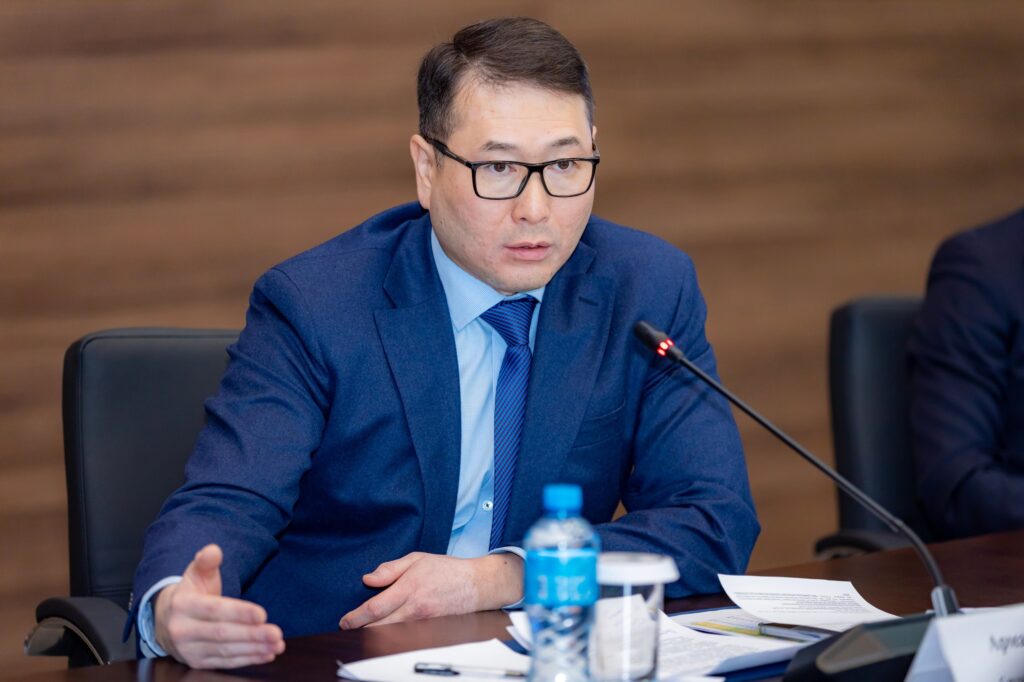
Kazakhstan to Launch Agricultural Marketplace for Businesses

Kazakhstan’s Ministry of Trade and Integration is developing a domestic digital platform aimed at streamlining the purchase of agricultural products, reducing their cost, and enhancing government oversight of the agricultural sector. Speaking at a government meeting on August 5, Minister of Trade and Integration Arman Shakkaliev said a pilot project is currently underway to introduce a nationwide information system for tracking goods, implemented in partnership with the national telecom operator, Kazakhtelecom JSC. The goal is to ensure a transparent and accessible supply of socially important food products to the population. “This project aggregates real-time data on the stock and volume of such goods, based on invoices across the supply chain,” Shakkaliev stated. “Using this system, we are creating an innovative agri-marketplace that will provide digital connectivity between producers, retail chains, and government agencies, eliminating intermediaries and opaque schemes.” The ministry is also preparing to launch a domestic B2B platform to facilitate wholesale imports, primarily from China, and support small and medium-sized enterprises. Plans include the introduction of digital tools, streamlined procedures, and integration with suppliers via direct channels, including JD.com and Alibaba. Full implementation will require removing technical certification barriers with the Chinese side. According to Shakkaliev, over 25 million fiscal receipts are generated daily in Kazakhstan. In response, the ministry will launch a dedicated module to monitor trade markups by analyzing electronic invoices and cash register receipts. “The system will enable monitoring of purchase and retail prices, identifying price anomalies, assessing markup levels by category, region, and supplier, and detecting potential shortages in a timely manner,” he explained. Further digital initiatives include expanding Kazakhstan’s product labeling system. By the end of 2025, motor oils will be subject to digital labeling, followed by beer in February 2026, light industry goods in March, and jewelry by December. From 2027, biologically active supplements (BAS) will also be included. Shakkaliev said these reforms are expected to boost trade volumes, reduce the shadow economy, and increase labor productivity in the retail sector. As previously reported by The Times of Central Asia, Kazakhstan launched a domestic online marketplace, Teez, in December 2024, offering next-day delivery and opening pick-up points in 24 cities across the country.

Kazakhstan Proposes Digital Platform for SCO Agricultural Trade

At a recent gathering of agricultural ministry officials from Shanghai Cooperation Organization (SCO) member states in Beijing, Kazakhstan’s Deputy Minister of Agriculture, Yermek Kenzhekhanuly, proposed establishing a unified digital platform to streamline and enhance agricultural trade across the bloc. According to the Ministry of Agriculture of the Republic of Kazakhstan, the country exported $5.1 billion worth of agricultural products in 2024, a 3.9% year-on-year increase to 16.1 million tons. Notably, 69% of this trade involved nine SCO member countries, underscoring both regional interdependence and the potential for expanded agricultural cooperation. The SCO includes Kazakhstan, China, Russia, Belarus, India, Iran, Kyrgyzstan, Pakistan, Tajikistan, and Uzbekistan. “We view the agricultural sector as an area for strategic partnership, not competition,” Kenzhekhanuly stated. He emphasized Kazakhstan's readiness to help develop a unified agricultural space grounded in trust, coordination, and complementarity. The proposed digital platform would incorporate tools for electronic certification, logistics tracking, and product traceability. The Kazakh delegation also stressed the importance of harmonizing technical regulations and phytosanitary standards to facilitate mutual trade and eliminate non-tariff barriers. The meeting concluded with the signing of the Protocol of the Tenth Meeting of SCO Ministers of Agriculture, reaffirming the member states' commitment to deepening cooperation in the agricultural sector. As previously reported by The Times of Central Asia, Kazakhstan is also working to diversify its agricultural export markets, including recent wheat shipments to North Africa.
