• KGS/USD = 0.01144 0%
  • KZT/USD = 0.00196 -0%
  • TJS/USD = 0.10899 -0%
  • UZS/USD = 0.00008 -0%
  • TMT/USD = 0.28490 0%
  • KGS/USD = 0.01144 0%
  • KZT/USD = 0.00196 -0%
  • TJS/USD = 0.10899 -0%
  • UZS/USD = 0.00008 -0%
  • TMT/USD = 0.28490 0%
  • KGS/USD = 0.01144 0%
  • KZT/USD = 0.00196 -0%
  • TJS/USD = 0.10899 -0%
  • UZS/USD = 0.00008 -0%
  • TMT/USD = 0.28490 0%
  • KGS/USD = 0.01144 0%
  • KZT/USD = 0.00196 -0%
  • TJS/USD = 0.10899 -0%
  • UZS/USD = 0.00008 -0%
  • TMT/USD = 0.28490 0%
  • KGS/USD = 0.01144 0%
  • KZT/USD = 0.00196 -0%
  • TJS/USD = 0.10899 -0%
  • UZS/USD = 0.00008 -0%
  • TMT/USD = 0.28490 0%
  • KGS/USD = 0.01144 0%
  • KZT/USD = 0.00196 -0%
  • TJS/USD = 0.10899 -0%
  • UZS/USD = 0.00008 -0%
  • TMT/USD = 0.28490 0%
  • KGS/USD = 0.01144 0%
  • KZT/USD = 0.00196 -0%
  • TJS/USD = 0.10899 -0%
  • UZS/USD = 0.00008 -0%
  • TMT/USD = 0.28490 0%
  • KGS/USD = 0.01144 0%
  • KZT/USD = 0.00196 -0%
  • TJS/USD = 0.10899 -0%
  • UZS/USD = 0.00008 -0%
  • TMT/USD = 0.28490 0%
08 December 2025

Viewing results 1 - 6 of 74

Uzbekistan Sets Sights on $1.5 Billion AI Industry by 2030

Uzbekistan’s Permanent Mission to the United Nations has hosted a presentation at the UN headquarters in New York, unveiling the country’s strategy for developing artificial intelligence (AI) technologies by 2030. The event, organized in collaboration with the UN Counter-Terrorism Office and Interpol, drew attendance from UN officials, experts, and members of the diplomatic corps accredited in New York. Ambitious AI Goals Participants were introduced to the key directions outlined in Uzbekistan’s AI Strategy, along with the country’s ongoing reforms and achievements in the field. Emphasis was placed on President Shavkat Mirziyoyev’s commitment to advancing information technologies and fostering innovation. The presentation highlighted Uzbekistan’s plans to grow its AI-based software products and services sector to $1.5 billion by 2030. This strategy also includes establishing ten scientific laboratories specializing in AI and strengthening the regulatory framework to support technological advancements. Leadership in Responsible AI As previously reported by The Times of Central Asia, Uzbekistan leads Central Asia in responsibly adopting AI, according to the Global Center on AI Governance. The nation’s AI initiatives prioritize cultural and linguistic diversity, foster international partnerships, enhance public sector skills, and promote transparency.

Kazakhstan Tops Central Asia in Global E-Governance Rankings

Kazakhstan has risen to 24th place out of 193 countries in the 2024 UN E-Government Development Index, up from 28th in 2022. This achievement reaffirms Kazakhstan’s position as the regional leader in e-governance, surpassing its Central Asian neighbors. Globally, Denmark, Estonia, and Singapore secured the top three spots. Legislative Advances in Digital Transformation To further bolster its digital transformation, President Kassym-Jomart Tokayev signed a landmark law on July 5, focusing on digitizing statistics and improving data management systems. This legislation is set to reduce statistical reporting requirements by 40-50% through amendments to various laws concerning state control, statistics, and data management. Regional Comparisons Other Central Asian countries also demonstrated progress in e-governance, albeit at different rates: • Uzbekistan rose to 63rd place from 69th, exceeding the 2025 targets outlined in its “Digital Uzbekistan 2030” strategy, according to Minister of Digital Technologies Sherzod Shermatov. • Kyrgyzstan improved to 78th place from 81st. • Tajikistan made significant strides, climbing from 141st to 123rd place. • Turkmenistan, however, experienced a decline, dropping to 145th place from 137th in 2022.

Kazakhstan’s Evolving IT Sector and the Rise of AI

Kazakhstan is witnessing a surge in IT talent as specialists from Ukraine, Russia, and Belarus flock to the country. While this has intensified competition for local professionals, many Kazakh IT specialists are also seeking opportunities abroad. To better understand the current landscape, The Times of Central Asia spoke with Mazhit Berniyazov, founder of the travel startup Mego.tours, about the development of Kazakhstan’s IT industry. TCA: How long have you been working in IT, and how in-demand is this sector in Kazakhstan? Mazhit Berniyazov: My 16 years of experience in IT and related fields has given me a front-row seat to the sector's rapid development and transformation. I’ve worked in both dynamic startups and large companies, experiencing the benefits and challenges of each. Globally, IT is one of the most sought-after sectors, and its popularity continues to grow. In Kazakhstan, the demand for IT professionals has surged in recent years, driven by several factors. First, IT offers a wide range of career paths, making it appealing to people with diverse skills and interests—whether it’s software development, web design, cybersecurity, or data analytics. Second, training opportunities have expanded significantly, with numerous online courses, schools, and academies offering accessible and high-quality education, often bypassing the need for traditional higher education. Third, the IT industry’s dynamic and ever-evolving nature ensures constant demand for skilled professionals, adding to its appeal. The COVID-19 pandemic has also transformed the IT market. The rise of hybrid work models—combining remote and in-office work—has given professionals greater flexibility and freedom. This shift has broadened hiring pools, enabling Kazakh companies to recruit international talent, which, in turn, has heightened competition in the local labor market. TCA: What steps are needed to further develop Kazakhstan’s IT industry? Mazhit Berniyazov: Over the past two years, Kazakhstan has seen a significant influx of IT professionals from Russia, Belarus, and Ukraine. While many bring high levels of expertise, this migration has intensified competition for local specialists. Additionally, some migrant professionals accept lower salaries due to their circumstances, creating further challenges for Kazakh IT workers. This influx has a dual impact: it raises the overall level of the IT industry in Kazakhstan while also pushing local specialists to enhance their skills and adapt to the evolving landscape. Government support is crucial for the growth of the IT sector, yet Kazakhstan still lacks a clear strategy for leveraging its potential, especially in areas like artificial intelligence (AI). While initiatives exist to support IT development, there is no comprehensive roadmap for AI integration or sufficiently effective programs to attract investment and nurture startups in this field. Globally, AI is advancing rapidly, transforming industries such as healthcare, finance, logistics, and marketing. However, Kazakhstan is still in the early stages of crafting a national AI strategy. Challenges include limited public investment, a shortage of qualified specialists, and the absence of a robust regulatory framework. To compete internationally, Kazakhstan must implement a targeted program for AI development, including: • Encouraging scientific research and innovation • Supporting education and training initiatives •...

Kazakhstan Launches New Online Marketplace

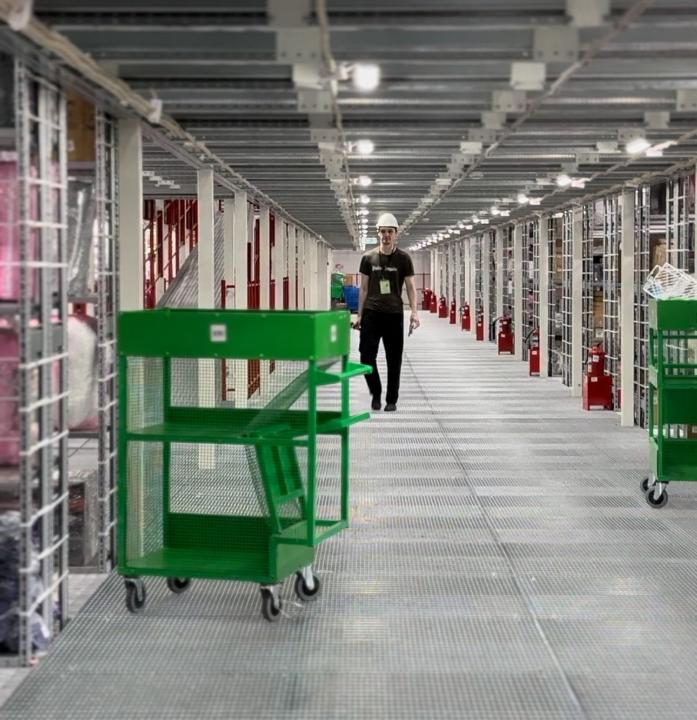
A new domestic online marketplace, Teez, has commenced operations in Karaganda, the central city of Kazakhstan’s Karaganda region. The platform, offering next-day delivery, has opened pick-up points in 24 cities nationwide. On November 29, Kazakhstan’s Minister of Trade and Integration, Arman Shakkaliyev, visited the marketplace's main warehouse. Teez co-founder Linar Khusnullin informed the minister that the platform currently operates 40 pick-up points and plans to expand this network to 127. The marketplace offers 50,000 product types, and its customer application has already been downloaded by 170,000 users. The company’s warehouse spans 25,000 square meters, but by 2030, it aims to expand to a 120,000-square-meter facility. Teez aspires to become Kazakhstan’s leading e-commerce platform. Shakkaliyev highlighted the rapid growth of e-commerce in Kazakhstan, noting a 20% increase in electronic trade volume from January to October 2024 compared to the same period in 2023. He emphasized that Karaganda, with its central location and developed infrastructure, has the potential to become a vital trade and logistics hub not just for Kazakhstan but for the entire Central Asian region. The Times of Central Asia reported that in 2023, the volume of e-commerce in Kazakhstan exceeded 2.2 trillion KZT ($4.8 billion), accounting for 13% of all retail trade, a 0.5% increase from the previous year. The country aims to raise its share of e-commerce to 20% by 2030.

Redefining Work and Innovation: The Impact of AI and Its Rise in Kazakhstan

Will artificial intelligence be able to replace humans? What professions will disappear in the future, and will mankind face an “aggressive” neural network? Aigerim Abdenbayeva, head of educational programs at the Institute of Smart Systems and Artificial Intelligence (ISSAI) at Nazarbayev University (NU), answers these questions and discusses how AI is developing in Kazakhstan. TCA: Most people have heard the term “artificial intelligence” in one way or another, but only a small proportion know about the practical possibilities of AI. In your view, what is artificial intelligence? Artificial intelligence can be characterized as the ability of machines to perform tasks that traditionally require human intelligence. This includes recognizing images, understanding language, making decisions, and solving complex problems. In everyday life, we encounter AI in many different forms, from voice assistants like Siri and Google Assistant to recommendations on streaming platforms like Netflix, which suggests movies based on your preferences. The term “artificial intelligence” was coined in 1956 by American scientist John McCarthy, who is considered one of the field's founders. Although the concept of AI was proposed more than half a century ago, its modern form only began to develop in the 1980s, when so-called expert systems emerged. These systems used rules and knowledge bases to solve specific problems, such as disease diagnosis or financial forecasting. Since then, AI has gone through several stages of development. The 2010s saw a significant breakthrough with the emergence of deep learning and big data technologies. Based on neural networks, deep learning has allowed computers to process and analyze vast amounts of information, dramatically improving their ability to recognize patterns and understand speech. This progress has made AI more accessible to a broader audience and has become an integral part of our daily lives. Several trends in the field of artificial intelligence can be distinguished: "Narrow AI"  is a specialized system for specific tasks. For example, algorithms are used to recognize faces or diagnose diseases. They outperform humans in a narrow domain, but cannot perform functions outside their specialization. “General AI” involves creating machines that can perform any intellectual task at a level comparable to humans. General AI remains a theoretical concept and has not been achieved in reality. "Generative AI" is a field that deals with creating new data based on existing data. Examples include generating text, images, and music. Algorithms such as GPT (Generative Pre-trained Transformer) can create text that looks like a human wrote it, and they are already being used extensively in various applications. Generative AI, in particular, has become popular due to its ability to make human life more manageable. For example, platforms like ChatGPT can help with writing articles, creating content for social media, and automating routine tasks, saving users a lot of time and effort. Other AI applications have already become part of our daily lives. For example, in medicine, AI is used to analyze medical images, which helps doctors in diagnosis and treatment selection. In finance, AI helps analyze market data and predict trends, allowing investors...

Kazakh AI Startup Enters U.S. and Japanese Transportation Markets

Astana-based startup Call2action.ai, a resident of the Astana Hub International Technology Park, is making strides in the US market. Currently, over 40 transportation companies in the United States have expressed an interest in the startup’s product. Two companies have already become commercial clients, and three others are engaged in pilot projects. Call2action.ai has developed the world’s first SaaS solution based on Generative Artificial Intelligence for automating hiring in the transportation and logistics sectors. This innovative platform streamlines the hiring process, making it more efficient and cost-effective. Following the successful validation of its project hypotheses, Call2action.ai has launched an investment round and entered negotiations with venture capital funds and business angels, some of whom are already supporting the startup and planning investments. “The American market is vastly different from the Kazakh market, but its potential for revolutionizing hiring processes is enormous,” said Ersultan Dzhusakinov, CEO and co-founder of Call2action.ai. “Participation in the Silicon Valley Residency Program, supported by Astana Hub and the Ministry of Digitalization, has allowed us to accelerate our progress in Silicon Valley. Within a few months, we’ve secured contracts with two companies, three pilot projects, and attracted interest from major Japanese corporations like Persol Group and Mitsui Group. We expect our product to reach a valuation of $1 billion in the coming years.” The startup collaborates with US innovation hubs, including the Silkroad Innovation Hub, and actively participates in international trade shows such as TechCrunch Disrupt and CESV 2024. Additionally, Call2action.ai has been selected to join Mitsui Group’s accelerator program, which begins in 2025. Call2action.ai is among 22 Central Asian startups that participated in accelerator programs in Silicon Valley under the AlchemistX and Silicon Valley Residency Program initiatives. These programs were organized by Astana Hub and Silkroad Innovation Hub, with support from the World Bank and FPIP projects. Kazakhstani startups are becoming competitive on global markets. For example: •  ZebraEye project, led by Yana Ten, specializes in diagnosing ophthalmic diseases using artificial intelligence and attracted investor attention at Web Summit Qatar 2024. • ClickLog, which develops freight optimization software, has established companies in Estonia and Poland to target European markets. • Dereknet plans to expand into the Middle East and Europe, including Kuwait, Qatar, Norway, the UK, and the US.