• KGS/USD = 0.01144 0%
  • KZT/USD = 0.00212 0%
  • TJS/USD = 0.10456 0.19%
  • UZS/USD = 0.00008 0%
  • TMT/USD = 0.28490 0%
  • KGS/USD = 0.01144 0%
  • KZT/USD = 0.00212 0%
  • TJS/USD = 0.10456 0.19%
  • UZS/USD = 0.00008 0%
  • TMT/USD = 0.28490 0%
  • KGS/USD = 0.01144 0%
  • KZT/USD = 0.00212 0%
  • TJS/USD = 0.10456 0.19%
  • UZS/USD = 0.00008 0%
  • TMT/USD = 0.28490 0%
  • KGS/USD = 0.01144 0%
  • KZT/USD = 0.00212 0%
  • TJS/USD = 0.10456 0.19%
  • UZS/USD = 0.00008 0%
  • TMT/USD = 0.28490 0%
  • KGS/USD = 0.01144 0%
  • KZT/USD = 0.00212 0%
  • TJS/USD = 0.10456 0.19%
  • UZS/USD = 0.00008 0%
  • TMT/USD = 0.28490 0%
  • KGS/USD = 0.01144 0%
  • KZT/USD = 0.00212 0%
  • TJS/USD = 0.10456 0.19%
  • UZS/USD = 0.00008 0%
  • TMT/USD = 0.28490 0%
  • KGS/USD = 0.01144 0%
  • KZT/USD = 0.00212 0%
  • TJS/USD = 0.10456 0.19%
  • UZS/USD = 0.00008 0%
  • TMT/USD = 0.28490 0%
  • KGS/USD = 0.01144 0%
  • KZT/USD = 0.00212 0%
  • TJS/USD = 0.10456 0.19%
  • UZS/USD = 0.00008 0%
  • TMT/USD = 0.28490 0%

Viewing results 1 - 6 of 188

U.S. Ambassador to Kazakhstan Daniel Rosenblum Resigns

U.S. Ambassador to Kazakhstan Daniel Rosenblum has announced his resignation, effective January 20, 2025. His departure coincides with similar resignations by U.S. Ambassadors Philip Goldberg in South Korea and Mark Libby in Azerbaijan, all stepping down from diplomatic service. The timing of these resignations has sparked speculation, as it aligns with the start of a new presidential term for Donald Trump. End of a Distinguished Career Rosenblum informed the Kazakh government of his decision on November 26, concluding a nearly 28-year career with the U.S. State Department. He has served as Chief of Mission in Kazakhstan since November 2022, representing the United States through five presidential administrations and eight secretaries of state. “It has been a tremendous honor to serve as U.S. Ambassador to Kazakhstan. I have developed a deep respect for the country’s culture, traditions, and people,” Rosenblum said. Under his tenure, bilateral relations flourished, with progress in trade, investment, cultural exchange, university partnerships, and security cooperation. Rosenblum also emphasized his admiration for Kazakhstan’s family-oriented values and expressed optimism about its future: “Kazakhstan’s future is bright, and its opportunities are virtually limitless because the country is built on strong family traditions,” he remarked. While Rosenblum plans to retire from the State Department, he expressed a desire to return to Central Asia, possibly as a tourist or in another capacity. Transition at the U.S. Embassy Deputy Chief of Mission Deborah Robinson will serve as Chargé d’Affaires until a new ambassador is appointed and confirmed. The U.S. Consul General in Almaty, Michelle Erkin, will also continue her work. Rosenblum’s predecessor, William Moser, ended his term in September 2021, preceding Rosenblum’s appointment in late 2022. Resignations in South Korea and Azerbaijan Rosenblum’s resignation coincides with similar announcements by Philip Goldberg, U.S. Ambassador to South Korea, and Mark Libby, U.S. Ambassador to Azerbaijan. Goldberg, who has served in diplomatic roles for nearly 35 years, plans to step down in January 2025. His tenure in South Korea began in July 2022, during the administration of President Yoon Suk-Yeol, and was marked by efforts to strengthen the U.S.-Korea alliance and enhance trilateral cooperation with Japan. Mark Libby’s resignation reflects similar timing, with discussions focusing on the alignment of these departures with the return of Donald Trump to the U.S. presidency. A Broader Diplomatic Crisis? These resignations occur against the backdrop of challenges in the U.S. diplomatic service, highlighted in a report by the Senate Foreign Relations Committee. The report detailed staffing issues during Trump’s first term, with several key State Department positions either unfilled or held by interim appointees. The conclusion of Rosenblum’s distinguished career marks the end of a productive chapter in U.S.-Kazakh relations, leaving his successor with the task of continuing to foster this important bilateral partnership.

Kazakhstan’s Middle Power Strategy Captures U.S. Focus in Trump-Tokayev Talks

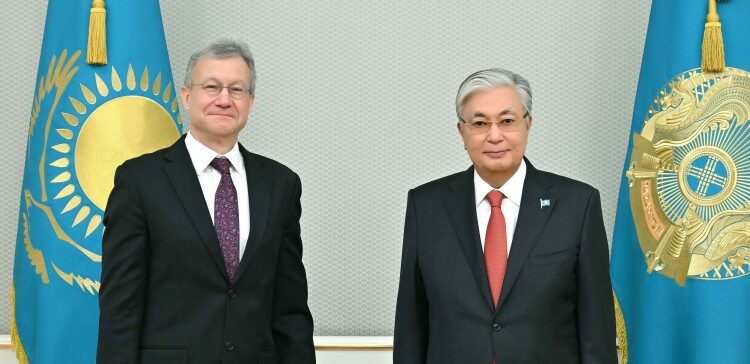
On December 5, a telephone conversation took place between Kazakhstan's President Kassym-Jomart Tokayev and U.S. President-elect Donald Trump. According to Akorda, the official residence of the Kazakh president, Tokayev congratulated Trump on his election and both leaders expressed a commitment to strengthening their strategic partnership in trade, investment, and nuclear non-proliferation. They also agreed to maintain regular contact to sustain the momentum of bilateral cooperation. Kazakhstan as a Mediator This brief but significant interaction has fueled speculation that Trump may view Kazakhstan as a potential mediator in negotiations between Russia and Ukraine. International expert Arkady Dubnov has suggested that Astana could become a platform for dialogue involving Trump, Vladimir Putin, and Volodymyr Zelensky, or other high level representatives. This aligns with Kazakhstan’s diplomatic efforts to promote mediation and its firm belief that the ongoing conflict can only be resolved at the negotiating table. Tokayev and the Role of Middle Powers Under Tokayev’s leadership, Kazakhstan has consolidated its status as a “Middle Power.” The term gained prominence in May during Tokayev’s Singapore Lecture, part of a prestigious series organized by the Yusof Ishak Institute (ISEAS). In his speech, “Kazakhstan and the Role of Middle Powers: Promoting Security, Stability, and Sustainable Development,” Tokayev emphasized the risks of global polarization and the need for middle powers to act against a new Cold War. Tokayev revisited this concept in an article for the French newspaper Figaro, highlighting the growing influence of middle powers amidst the deadlock faced by global superpowers, such as the United States and China. Tokayev wrote, “The economic and political importance of these countries is growing, and their balanced and constructive position is becoming an advantage in the face of global uncertainty.” At the Astana Think Tank Forum in October, Tokayev reiterated this idea, calling for the reform of the UN Security Council to amplify the voices of regional and middle powers. “The Security Council is in a deadlock, and we need to find a way out,” Tokayev stated. Trump's Strategy Trump’s outreach to Tokayev appears to validate these concepts. Following his election, Trump has engaged with the leaders of regional and middle powers, including India, Israel, Canada, and South Korea, signaling a possible strategy to build a coalition of such nations for his proposed reforms to the global security architecture. Kazakhstan's balanced and constructive foreign policy, combined with its emphasis on multilateralism, positions it as an effective interlocutor in global conflicts. Tokayev’s vision of middle powers as mediators may prove instrumental in shaping a more inclusive and cooperative international order.

Tracing Ties: Donald Trump’s Diplomatic Legacy with Kazakhstan

Away from his business dealings, the official relationship between U.S. President-elect Donald Trump and the Central Asian republic began under the first president of Kazakhstan, Nursultan Nazarbayev. On January 17, 2018, Trump received Nazarbayev at the White House on an official visit, praising the existing relations between the two nations. “I’m thrilled that you’re here. Everyone deeply respects you. We have a wonderful relationship between our countries. Now, Kazakhstan is in a perfect situation. It is a great honor for us to receive you. What you have done for your country is truly remarkable,” Trump stated. It is widely-believed that during this visit, Nazarbayev warned Trump of the upcoming transition of power in Kazakhstan, naming Kassym-Jomart Tokayev as his successor. On June 25, 2019, following Kazakhstan’s presidential election, Trump sent a congratulatory telegram to Tokayev. “We have made great progress in our bilateral relations over the years, and I am confident that the spirit of our cooperation will continue to strengthen. It is gratifying that American businesses continue to open new opportunities to expand economic cooperation with Kazakhstan,” Trump wrote. According to the Akorda press service, the White House head noted that the U.S. intended to continue collaborating to promote an expanded strategic partnership with Kazakhstan. “I look forward to working with you to advance our deepened strategic partnership to counter common challenges; the United States values a strong partnership with Kazakhstan. It will continue to work with you and the people of Kazakhstan to advance our shared interests in Central Asia and globally. I wish you every success in your work,” Trump said in his message. Summarizing the Trump presidency’s impact on Central Asia in February 2021, renowned Kazakh economist, Zhandos Temirgali, emphasized his opinion that the “Trump administration has been prudent enough to maintain and develop the C5+1 format for cooperation with Central Asia, initiated in 2015 by the Obama administration, which was established in response to China’s One Belt, One Road initiative, and soon proposed a more global alternative: the Blue Dot Network. Over the years of Trump’s presidency, the C5+1 format has established itself as a reliable platform that unites the region’s states at the highest level in their pursuit of strategic cooperation with the leader of the [United States.].”

Kyrgyz, Tajik Delegations Finalize Border Deal After Long Dispute

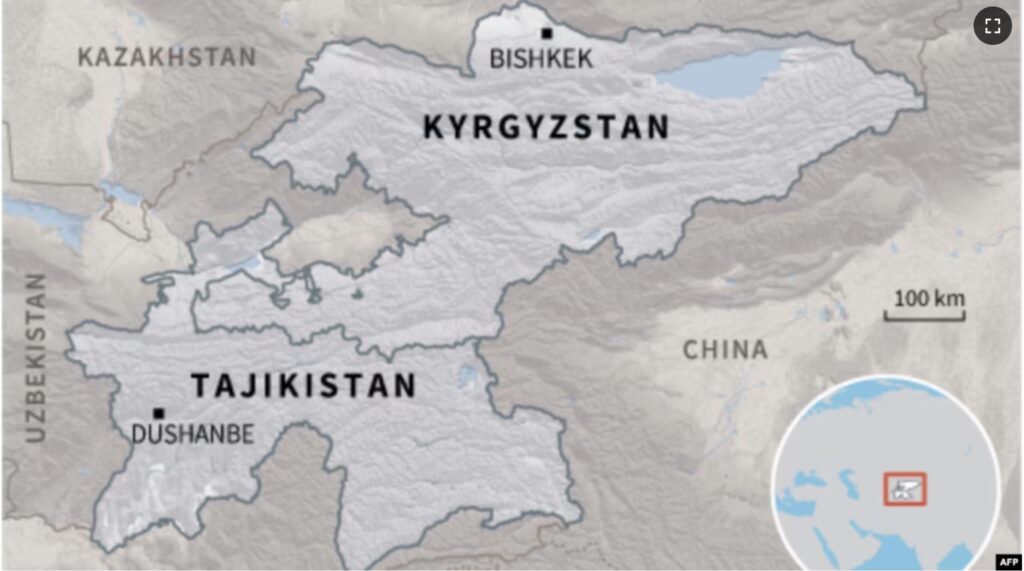
Kyrgyzstan and Tajikistan have fully agreed on the demarcation of their border, Kyrgyz officials said Wednesday, in a major step toward ending the conflict between the two Central Asian countries that spilled into violence as recently as 2022.  Delegations from the two nations “reached agreements and fully completed the description of the remaining sections of the Kyrgyz-Tajik state border,” Kyrgyzstan’s state-run Kabar news agency reported. It cited the press service of the Cabinet of Ministers of Kyrgyzstan. The delegation chiefs of the two sides ordered working groups to finalize documents on the border agreement, Kabar said. It published photos of the meeting in the Kyrgyz town of Batken, including an image of the delegation chiefs in military uniform and shaking hands with each other.  The Kyrgyz-Tajik border is nearly 1,000 kilometers long and the agreement followed months of negotiations over various stretches of the mountainous territory.  In 2014, the border between the two countries was closed to Kyrgyz and Tajik citizens following clashes over a bypass road in disputed territory; mortars were fired and both armies suffered casualties. Violence broke out again in 2021 and 2022, resulting in more casualties and the evacuation of more than 100,000 civilians. 

Trump’s Bid for Ukraine-Russia Peace: Could Kazakhstan Be the Key Mediator?

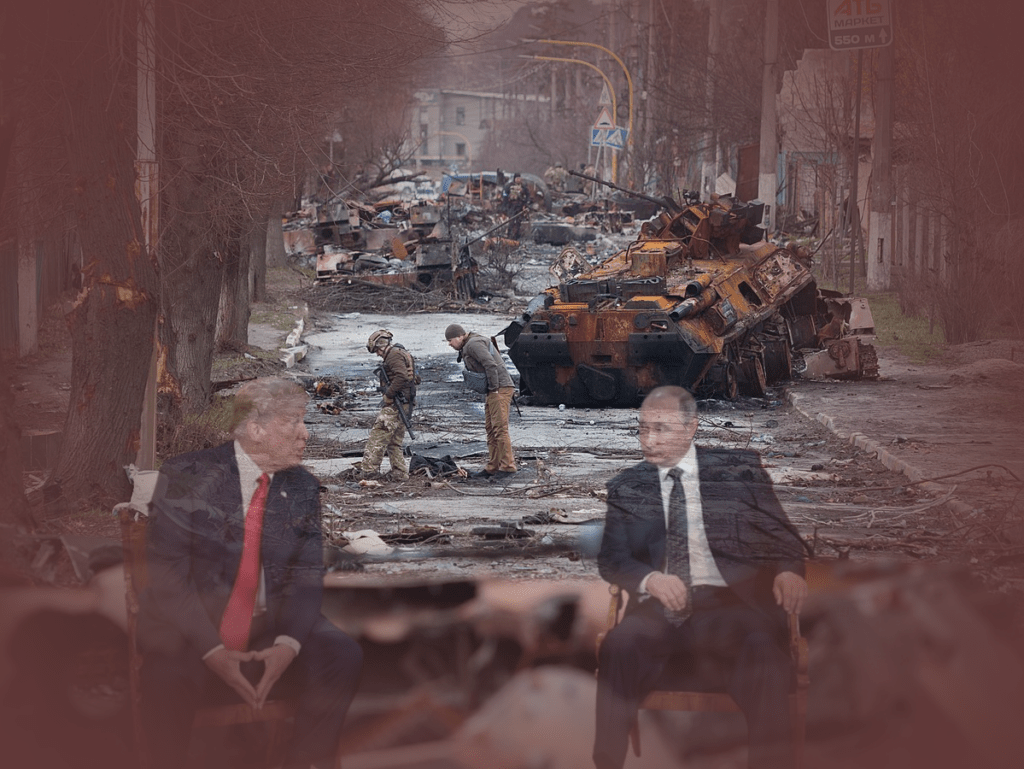
One of the anticipated top priorities of Donald Trump’s presidency is ending Russia's war in Ukraine while normalizing relations with Moscow. Writing on his Truth Social channel, Trump stated that, “Together, we will secure PEACE THROUGH STRENGTH, and Make America, and the World, SAFE AGAIN!” Trump’s nominee to serve as Special Envoy for Ukraine and Russia, 80-year-old former national security advisor, General Keith Kellogg, laid out his plan in writing for the America First policy institute, whilst focusing on characterizing the war “an avoidable crisis that, due to the Biden Administration’s incompetent policies [which] has entangled America in an endless war.” There are fears, however, that Kellogg’s proposal to reach a ceasefire by freezing the frontlines and forcing both sides the negotiating table will lead to a tumultuously violent period as Moscow seeks to swallow up territory. Meanwhile, NATO’s new secretary-general, Mark Rutte, has warned that compelling Ukraine into a “bad peace” would pose a “dire threat” to the U.S. itself. Whilst the framework for bringing a pause to hostilities is becoming clearer, it appears that Trump (or his representative) will need to meet with Vladimir Putin, and Kazakhstan has emerged as a potential venue for this high-stakes meeting. Kazakhstan's Role as Mediator Russian political analyst, Arkady Dubnov, has argued that Putin’s recent state visit to Astana may be an indication that Kazakhstan could play a pivotal role, and that given Putin’s limited travel options due to the International Criminal Court’s arrest warrant against him, Kazakhstan, with its reputation for diplomacy, would be a logical choice. “Putin is essentially restricted from visiting most of the Western Hemisphere,” Dubnov explained. “This leaves the Eurasian East, and among its cities, Astana stands out. Kazakhstan has hosted OSCE and CICA summits, mediated in the Syrian conflict, and facilitated peace talks over the future of the South Caucasus.” Dubnov sees Putin’s visit to Astana as indirectly tied to a possible meeting with Trump. “The Kremlin trusts Kazakhstan as an ally while respecting its constructive relations with the U.S. and the broader West,” he stated. Kazakhstan has long been recognized as a neutral ground where East and West can find commonality. The Astana process on Syria, initiated in 2017, helped prevent the escalation of hostilities for years, whilst Kazakhstan has mediated in other long-standing disputes, such as the conflict between Armenian and Azerbaijan. Given this history, it is conceivable that a reconciliation process between Russia and Ukraine could start in Astana. Neither the Minsk agreements of 2014, nor discussions in Istanbul in 2022 achieved lasting peace, but Kazakhstan’s diplomatic efforts could provide fresh impetus. Early Peace Efforts In March 2022, Kazakh President Kassym-Jomart Tokayev spoke with Ukrainian President Volodymyr Zelensky, emphasized the urgency of negotiations to bring a halt to hostilities, a stance that has since gained momentum as the war drags on. By 2024, the validity of Tokayev’s view — that negotiations are the only viable path to end the bloodshed — has become increasingly apparent. Kazakhstan’s diplomatic corps has actively pushed for peace....

Navigating Energy and Diplomacy: Putin’s Visit to Kazakhstan

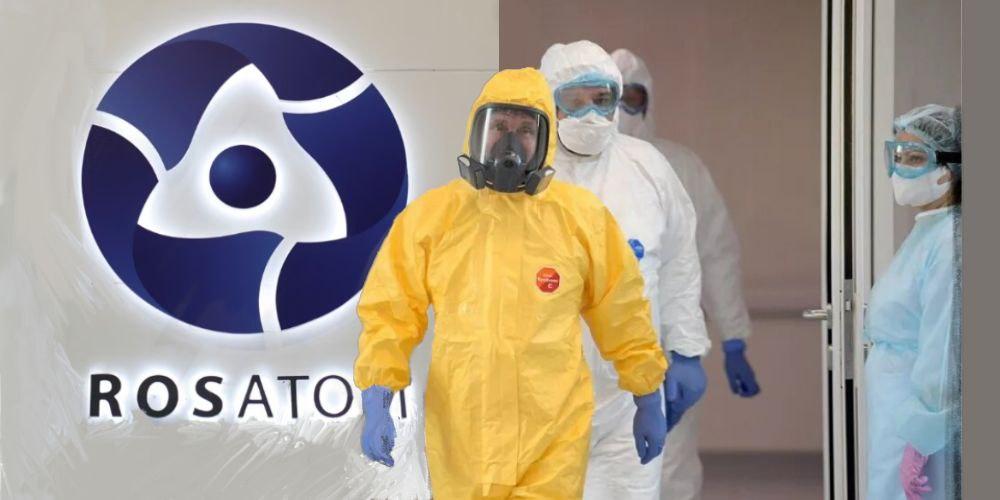
The Kremlin has confirmed that Russian President Vladimir Putin will visit Kazakhstan on November 27 at the invitation of Kazakh President Kassym-Jomart Tokayev. The visit is expected to focus on several key issues, with the construction of Kazakhstan's first nuclear power plant likely to be high on the agenda. As part of the visit, the two leaders will participate in the 20th Forum of Inter-regional Cooperation between Kazakhstan and Russia via video conference. Additionally, Putin will attend the regular session of the Collective Security Treaty Organization (CSTO) Collective Security Council, chaired by President Tokayev, on November 28. The meeting will involve heads of state from Russia, Kazakhstan, Belarus, Kyrgyzstan, and Tajikistan, as well as CSTO Secretary General Imangali Tasmagambetov. The agenda includes discussions on regional and international security, with a program to strengthen Tajik-Afghan border security set to be adopted. Notably, given its currently tumultuous relationship with Russia in the wake of Azerbaijan's invasion of Nagorno-Karabakh, Armenia will not participate, with its Foreign Minister, Ararat Mirzoyan having opted out of attending. Focus on Nuclear Power and the Role of a Consortium Experts believe that Putin’s visit will include discussions on nuclear energy. This aligns with recent remarks by Kazakh Energy Minister Almasadam Satkaliyev, who stated that Kazakhstan is open to discussing nuclear power plant construction with Russia, among other potential partners. Satkaliyev emphasized that energy issues remain a cornerstone of international cooperation, and Kazakhstan has established an intergovernmental commission to evaluate proposals from various vendors on a competitive basis. Kazakhstan’s First Deputy Prime Minister Roman Sklyar has highlighted the importance of forming an international consortium for the project. Speaking in September, Sklyar noted that political risks and safety concerns would be addressed during the process. He also emphasized the need to incorporate cutting-edge technologies from global leaders in the nuclear energy sector. On November 14, Kazakh Prime Minister Olzhas Bektenov met with Alexei Likhachev, Director General of the Russian State Atomic Energy Corporation, Rosatom. The meeting focused on cooperation in nuclear energy, quantum technologies, digitization, and the development of human resources. Rosatom, a diversified company involved in engineering and construction, currently has 39 nuclear power units in various stages of development across ten countries. Public Support and Future Plans The potential construction of a nuclear power plant in Kazakhstan has garnered significant public support. In an October 2024 referendum, 71.2% of Kazakh voters approved the initiative. Commenting on the result, Tokayev suggested that an international consortium involving global companies with advanced technologies would be the best approach for the project. Kazakhstan’s energy landscape is characterized by a reliance on aging thermal power plants, which are increasingly unable to meet the demands of a growing population and economy, with electricity shortages projected to worsen, particularly in the rapidly developing southern regions. The construction of a nuclear power plant, therefore, is seen as a crucial step toward alleviating these shortages, reducing dependence on overpriced imports from Russia, and achieving carbon neutrality goals. The construction of Kazakhstan’s first nuclear power plant presents both...