• KGS/USD = 0.01144 0%
  • KZT/USD = 0.00208 0%
  • TJS/USD = 0.10439 0%
  • UZS/USD = 0.00008 0%
  • TMT/USD = 0.28571 0%
  • KGS/USD = 0.01144 0%
  • KZT/USD = 0.00208 0%
  • TJS/USD = 0.10439 0%
  • UZS/USD = 0.00008 0%
  • TMT/USD = 0.28571 0%
  • KGS/USD = 0.01144 0%
  • KZT/USD = 0.00208 0%
  • TJS/USD = 0.10439 0%
  • UZS/USD = 0.00008 0%
  • TMT/USD = 0.28571 0%
  • KGS/USD = 0.01144 0%
  • KZT/USD = 0.00208 0%
  • TJS/USD = 0.10439 0%
  • UZS/USD = 0.00008 0%
  • TMT/USD = 0.28571 0%
  • KGS/USD = 0.01144 0%
  • KZT/USD = 0.00208 0%
  • TJS/USD = 0.10439 0%
  • UZS/USD = 0.00008 0%
  • TMT/USD = 0.28571 0%
  • KGS/USD = 0.01144 0%
  • KZT/USD = 0.00208 0%
  • TJS/USD = 0.10439 0%
  • UZS/USD = 0.00008 0%
  • TMT/USD = 0.28571 0%
  • KGS/USD = 0.01144 0%
  • KZT/USD = 0.00208 0%
  • TJS/USD = 0.10439 0%
  • UZS/USD = 0.00008 0%
  • TMT/USD = 0.28571 0%
  • KGS/USD = 0.01144 0%
  • KZT/USD = 0.00208 0%
  • TJS/USD = 0.10439 0%
  • UZS/USD = 0.00008 0%
  • TMT/USD = 0.28571 0%

Viewing results 1 - 6 of 8

Tajik Schoolboy Killed in Moscow Area Sparks Central Asian Outrage

The fatal stabbing of a 10-year-old Tajik boy at a school in the Moscow area has sparked widespread condemnation across Central Asia. Russia’s Foreign Ministry extended “deep condolences” to Tajikistan following the killing. Ministry spokesperson Maria Zakharova said Moscow offered immediate assistance to the Tajik Embassy in Russia after the incident was reported by the press on December 16. She confirmed that the embassy sent a diplomatic note requesting an objective investigation. Official requests were subsequently forwarded to Russia’s Investigative Committee and the Interior Ministry to clarify the circumstances and support the Tajik side. The attack occurred at Uspensky School, where a 15-year-old ninth-grade student, identified as Timofey Kulyamov, allegedly stabbed and killed the victim, Qobiljon Aliyev. Witnesses reported that the suspect asked the child about his nationality before launching the fatal attack. On the day of the incident, he was reportedly wearing a shirt bearing the phrase “No lives matter.” Qobiljon’s family moved to Russia from the Hisor region of Tajikistan four years ago. His father passed away three years prior, and his mother has been working as a cleaner at the same school to support her three children. Journalists, civil society leaders, and public figures in Tajikistan and Uzbekistan condemned the killing, linking it to rising hostility toward Central Asian migrants in Russia. Tajik political analyst Muhammad Shamsuddinov took to social media to denounce what he described as systemic discrimination. “Who killed Qobiljon? The system,” he wrote. Shamsuddinov accused Russian public discourse and policies of fueling an environment of xenophobia, referencing remarks by State Duma members, law enforcement actions, and state-run media coverage. “Qobiljon was killed by Mironov’s constant statements. By Bastrykin’s speeches. By the State Duma’s draft laws. By Russian state television. By nationalist Telegram channels. By the constant and very public raids against migrants. By hours-long detentions at airports,” he wrote. He also criticized the Russian Embassy in Tajikistan for its silence, noting that while it continued to post routine updates and commemorative messages, it had not acknowledged the boy’s death. “As a society, where is the sympathy? The condolences? Nothing,” he wrote. Sherzodkhon Kudratkhuja, Chairman of the Supervisory Board of the Uzbekistan National Media Association and Rector of the University of Journalism and Mass Communications, also voiced his outrage. “No mother should ever go through this. None,” he said, after reportedly watching a video of the incident. He called the murder of a child based on national identity “impossible to describe in words.” Kudratkhuja urged Russia to introduce formal education on national tolerance in its schools and criticized the normalization of ethnic slurs among adults. “Children learn from adults, and this is the mirror of today’s society,” he said. He emphasized the need to foster values of tolerance, adding that all people “descended from Adam and Eve and are equal in dignity.”

Ashgabat Police Intensify Crackdown on Internal Migrants Ahead of Neutrality Day

Security forces in Turkmenistan’s capital Ashgabat have stepped up operations targeting visitors from other regions in the lead-up to the country’s 30th anniversary of neutrality. Witnesses report harsh interrogations at checkpoints, physical abuse, ethnic slurs, and widespread raids in areas where day laborers gather. Systematic Interrogations and Raids Recent media reports highlighting police crackdowns on non-resident workers appear to represent only a fraction of a broader campaign against internal migrants. According to residents, anyone arriving in Ashgabat now faces multi-stage inspections at all major entry points, including from the Gokdepe, Dashoguz, Mary, and Lebap regions. Checkpoint officers question travelers in detail, asking where they are going, who they are visiting, the length of their stay, and their purpose. Those suspected of seeking work are often forced to return to their regions of origin. Within Ashgabat, authorities continue searches at the Gurtly bus station and expand checks to markets, construction sites, and agricultural outlets, any location where day laborers might be found. The raids extend to suburban areas, including the city of Arkadag. Ethnic Discrimination and Unofficial Policies Longstanding unofficial policies appear to disproportionately affect ethnic Uzbeks. Residents of Dashoguz and Lebap regions report that career advancement in government is often limited for Uzbeks, with many being encouraged to change their names from childhood to improve their prospects. Even in districts where Uzbeks form the majority, leadership roles are predominantly held by ethnic Turkmen. According to Turkmen.news, the surge in pressure on non-residents coincides with preparations for high-profile events. In the summer, similar measures were observed in the resort town of Avaza before a United Nations forum. Now, authorities appear focused on “cleaning up” Ashgabat and Arkadag ahead of Neutrality Day. Eyewitnesses believe the government aims to present an idealized image of the capital as Turkmenistan prepares to mark 30 years of neutrality. Gurbanguly Berdymuhamedov, the previous president and current Chairman of the country's People's Council, is reportedly placing significant emphasis on the celebrations. High-ranking international delegations are expected to attend. Institutionalized Control Since 2022 The origins of the current policy trace back to January 2022, when Berdymuhamedov, during a Security Council meeting, directed the head of the migration service, Nazar Atagaraev, to increase controls on internal movement. Since then, raids have become routine, with enforcement intensifying ahead of state events.

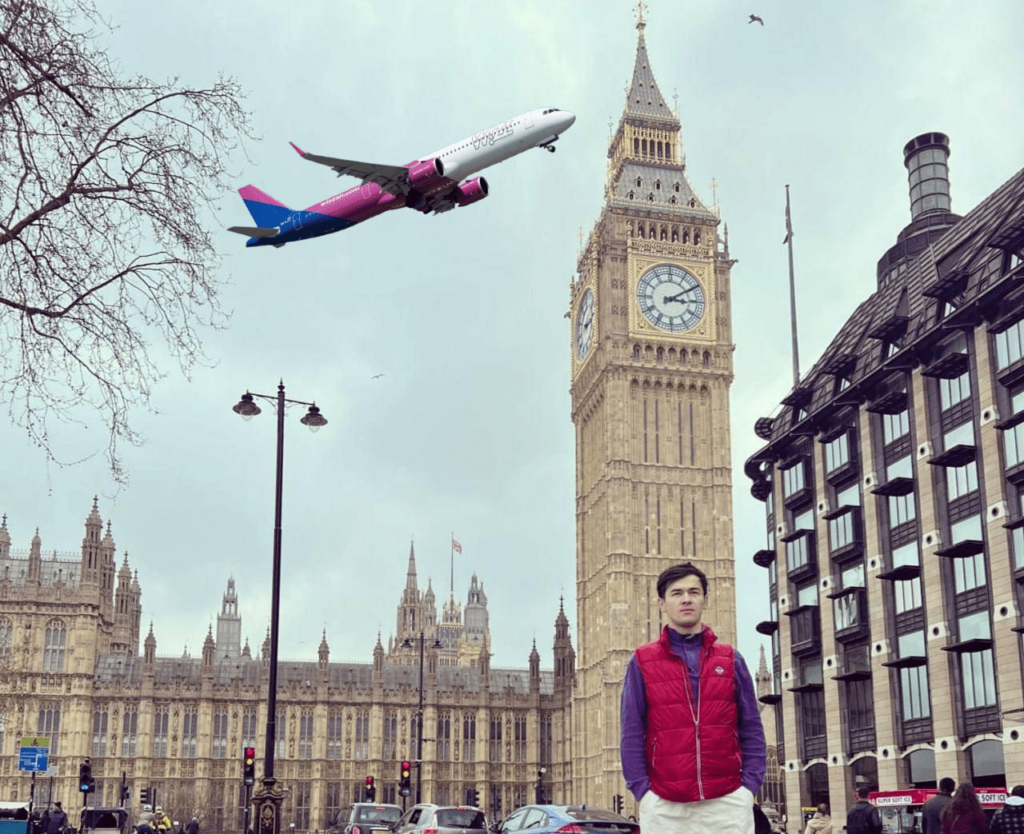
Uzbek Student Accuses Wizz Air of Discrimination After Being Denied Boarding without Explanation

Earlier this year, Uzbekistan’s Competition Committee took action against Wizz Air following complaints about the airline’s failure to offer safety instructions in the Uzbek language on a flight from Samarkand to Abu Dhabi. Now, another troubling incident has come to light, this time, involving an Uzbek student who claims he was denied boarding without explanation, possibly due to his nationality. ------- Suhrob Ubaydullayev, a University of World Languages student in Uzbekistan, was returning home after completing a Work and Travel program in Europe. He had booked a Wizz Air flight from Rome to Abu Dhabi, with a connection onward to Samarkand. According to Ubaydullayev, despite having all required travel documents — including a valid passport, visa, and certificates from Germany’s Federal Employment Agency — he was inexplicably denied boarding at the gate. “I had all my documents in order,” Ubaydullayev told The Times of Central Asia. “The staff checked them and gave them back to me, but when I reached the gate, they suddenly said I couldn’t fly. No reason. No explanation.” He claims the airline staff asked him a single question — “Are you from Uzbekistan?” — and upon hearing his affirmative response, refused to let him on board. What followed, he says, was a humiliating and deeply distressing ordeal: threats of calling the police, warnings that his embassy wouldn’t be able to assist him, and a refusal to provide any written explanation. “I was speaking English clearly — communication wasn’t an issue,” he told TCA, “but they treated me like a criminal. I believe it was simply because I’m from Uzbekistan.” Ubaydullayev says that this incident occurred on 31 August 2023. He has repeatedly sent emails to the company requesting compensation. However, most emails went unanswered, or he was told to wait. ------- After being left behind in Rome, Ubaydullayev’s troubles worsened. Because he was denied boarding on August 31, Ubaydullayev was at immediate risk of overstaying his visa, which expired on the same day. This meant that any further stay in the Schengen area would make his presence technically illegal under EU immigration law. He scraped together borrowed funds to fly to Istanbul, where he found himself sleeping on the streets. “I met some Uzbek guys near the Sultan Ahmed Mosque who offered help,” he said. “But they ended up taking my money and disappearing.” His eventual return home took him through Kazan, Russia, and Osh, Kyrgyzstan, before finally reaching Namangan — emotionally drained, physically exhausted, and over $2,000 in debt. Now, Ubaydullayev has accused Wizz Air of discrimination, human rights violations, and consumer protection breaches. He has filed a complaint with the European Court of Human Rights and says his lawyers are currently working through the pre-trial phase. “This is about more than me,” he said. “This is a fight for justice — for every Uzbek passenger who deserves to be treated with dignity.” ------- In giving a legal assessment of Ubaydullayev’s case to TCA, legal expert Azizbek Odilov says the airline’s actions amount to a...

Kyrgyzstan Again Tells Citizens: For Now, Don’t Go to Russia

Kyrgyzstan has again urged its citizens to avoid travel to Russia if possible, citing media reports of “the mass refusal of entry” and saying people should wait until Russia lifts tighter security measures at its border points. Kyrgyzstan’s Ministry of Foreign Affairs “recommends that fellow citizens who do not have compelling reasons to travel to the Russian Federation temporarily refrain from traveling to its territory until the previously introduced additional security measures and the regime of enhanced control of entry across the state border are lifted, and if they need to leave, check in advance for any restrictions on entry to the Russian Federation,” according to a ministry statement on Thursday. The ministry issued a similar call to delay trips to Russia days after gunmen killed more than 140 people at the Crocus City Hall on the outskirts of Moscow on March 22, leading to a backlash of suspicion, harassment and violence in Russia towards Central Asian migrants. Several of the detained subjects were from Tajikistan, which last weekend urged its own citizens to skip travel to Russia “unless absolutely necessary,” amid concerns about hundreds of Tajik nationals who were being held in unsanitary conditions at detention facilities in Moscow airports. Russia has sought to ease tension with Tajikistan, saying anti-terrorism measures were being implemented and that Tajik citizens had not been targeted for mistreatment. Fissures in its relationship with Tajikistan are extremely rare. Russia has also tried to mollify Kyrgyzstan over a Russian police search of the Moscow apartment of a Kyrgyz diplomat last month.