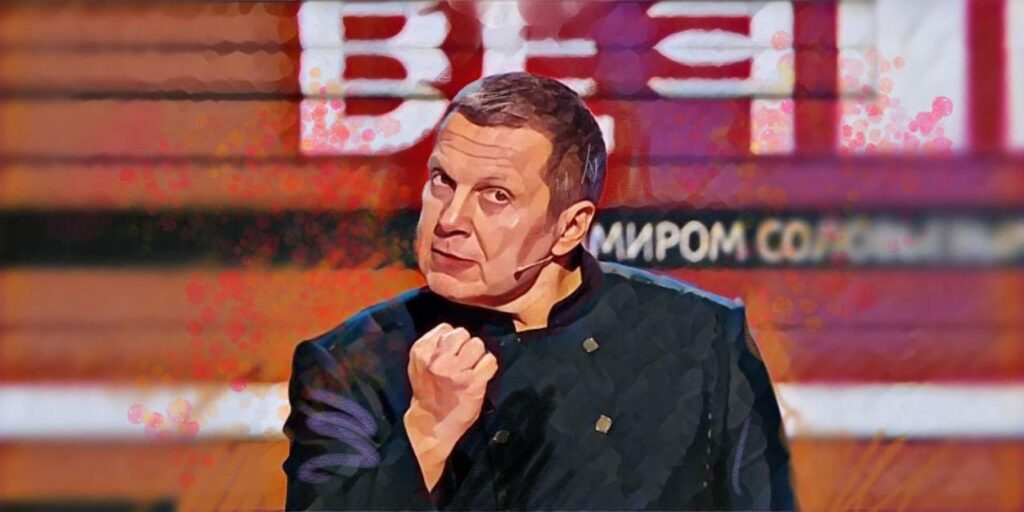
In recent months, a series of sharp and at times openly threatening statements circulating within the Russian media space have drawn growing attention in Central Asia. As previously reported by The Times of Central Asia, rhetoric targeting several Central Asian states has become increasingly frequent on Russian television and social platforms, raising concern among analysts and the public over issues of sovereignty, coercive tactics, and broader regional security.
Russian officials have repeatedly stressed that commentary aired on television talk shows or circulated on social media does not necessarily reflect official state policy. Moscow has, on several occasions, distanced itself from provocative remarks made by media personalities, emphasizing that Russia’s foreign policy is articulated only through formal government channels.
Analysts note that such episodes unfold within a highly polarized information environment, where sensational or confrontational statements can spread rapidly online, often detached from their original context or intent. Even when later denied or debunked, these narratives can contribute to heightened tensions by reinforcing existing anxieties and testing political and societal reactions in neighboring states.
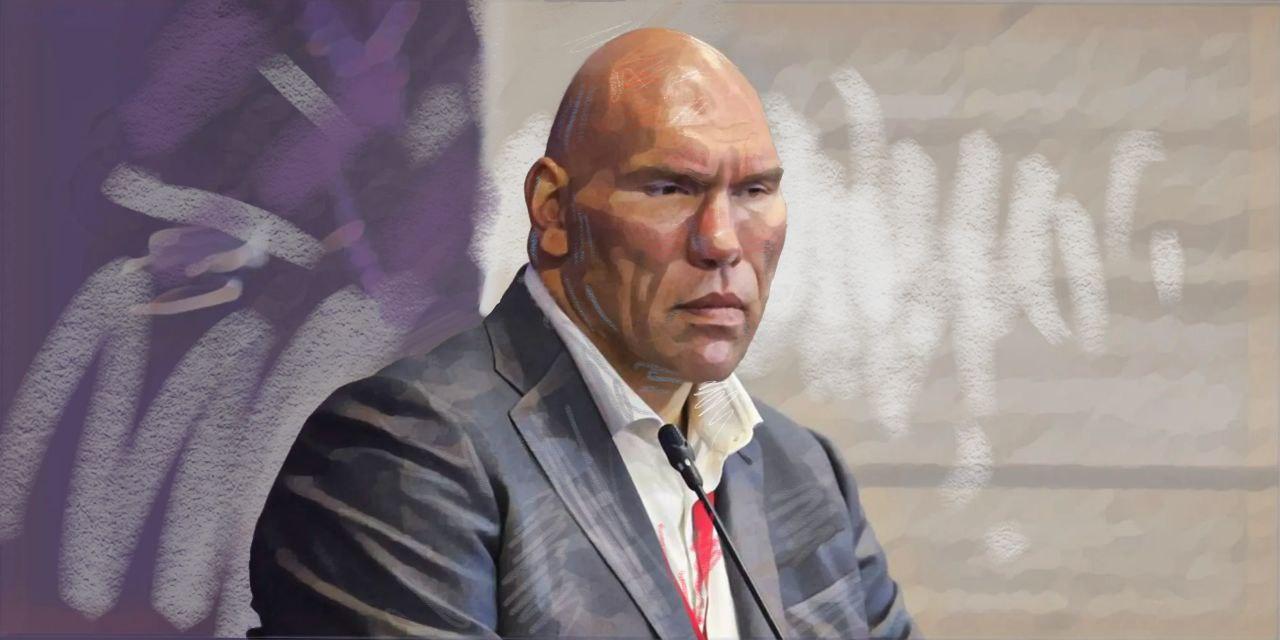
One recent and widely discussed episode involved a video that went viral on social media, allegedly showing Russian State Duma deputy and former heavyweight boxing champion Nikolai Valuev calling for a shift in Russia’s approach toward former Soviet republics from “carrots” to “sticks”, while also hinting at the possibility of a “special operation” in Central Asia. The footage sparked an immediate backlash and skepticism, particularly in Uzbekistan.
According to RIA Novosti, Valuev later publicly denied the authenticity of the video, asserting that it was a deepfake. The Russian news agency quoted him as saying the video “has nothing to do with me” and had been produced using AI. “I’m glad that technologies are developing so fast, but this was done with artificial intelligence,” he said, noting that he often discusses AI and deepfakes and that “apparently, AI has taken offense at me.”
Doubts about the video’s authenticity emerged almost immediately. Among those questioning it was Ruslan Chagaev, the former world boxing champion from Uzbekistan and one of Valuev’s former opponents, who publicly expressed his disbelief that the statements reflected Valuev’s actual views. Nonetheless, the incident fueled broader discussions in Central Asia about information manipulation, the role of deepfakes, and how aggressive narratives can gain traction, even when later debunked.
These concerns were echoed at a recent session of the analytical forum “Fikrat,” held in Tashkent under the theme National Interest and Global Pressure. The gathering brought together political scientists, economists, and historians to assess the growing volume of inflammatory rhetoric emerging from Russia and its implications for Central Asia. Participants stressed that, even when such narratives do not reflect or translate directly into policy, they can shape public perception and test societal and governmental responses.
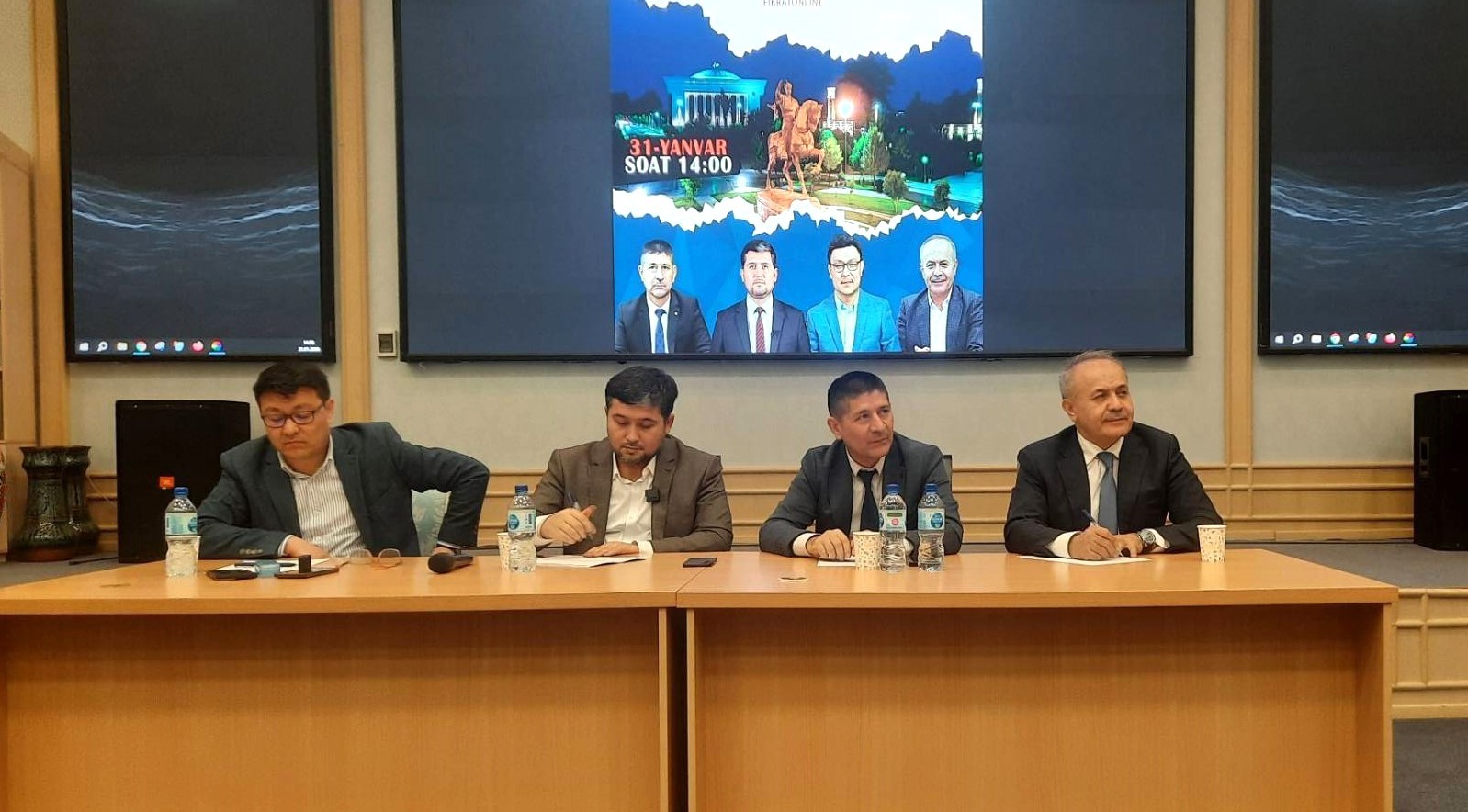
The Firkat Forum in Tashkent; image: TCA, Sadokat Jalolova.
Economist Abdulla Abdukadirov, First Deputy Director General of Uzbekistan’s Agency for Strategic Reforms under the President, addressed the ideological underpinnings of these narratives, identifying Russian nationalist figure Alexander Dugin as a central figure promoting imperialist ideas. “Dugin is an ideologue of Russian imperialism and a creator of narratives,” Abdukadirov stated. “It is not necessary that this narrative will be adopted by the authorities in Russia as a guide to action. But a narrative is a harbinger of popular and state ideology. It lays the groundwork and tests reactions.”
Abdukadirov emphasized that Central Asia’s response should be direct and unequivocal. “Enough talk about our sovereignty. You did not give it to us, and it is not for you to take it away,” he declared. Referencing the war in Ukraine, he called it a “hard and unambiguous lesson,” cautioning that reliance on coercion and violence would only provoke greater resistance. He further warned that external pressure could eventually backfire due to the strong centrifugal forces within the Russian Federation itself.
When asked by The Times of Central Asia whether Russia holds significant economic leverage over Uzbekistan, Abdukadirov identified labor migration as a key vulnerability. “First of all, migrants are our biggest vulnerability,” he said. He also noted that by 2022, Russian companies had acquired substantial assets in Uzbekistan’s energy, telecommunications, and media sectors. “They have very large control,” he said, though he added that their influence should not be exaggerated.
At the same time, Abdukadirov argued that control of assets alone is not decisive if market dynamics shift. “If the state manages the market correctly, a thousand assets can turn into nothing in one day,” he said. He pointed to China as a country that understands how market conditions determine asset value. “The market environment is more important than assets. The state creates that environment together with society,” he said, underscoring the need for continued dialogue.
Political scientist Hamid Sodiq focused on how the tone of external pressure has evolved, observing that rhetoric once limited to fringe voices has become mainstream. “Today, it has taken a naked form. No one is ashamed anymore,” he said, recalling that in earlier years, even provocative commentators were more cautious when discussing Uzbekistan’s sovereignty. According to Sodiq, this change reflects a shift in the nature of geopolitical discourse and heightens the need for internal resilience.
Sodiq warned that mounting external pressure can result in internal consequences, including the risk of political tightening if societies are unprepared. In such an environment, he argued, it is vital to maintain a balance, defending sovereignty while preserving the relationship between the state and society. “This is the time when we must join hands and act together,” he said, urging solidarity and open discourse.
The discussion in Tashkent also reflected on regional and global dynamics. Abdukadirov cited remarks by Canada’s prime minister at the World Economic Forum in Davos: “The middle powers must act together, because if we’re not at the table, we’re on the menu.” He added that when Central Asian nations act collectively, “we will not be on the menu, but among those placing the order.”