• KGS/USD = 0.01143 -0%
  • KZT/USD = 0.00191 0%
  • TJS/USD = 0.10833 0.28%
  • UZS/USD = 0.00008 0%
  • TMT/USD = 0.28575 0%
  • KGS/USD = 0.01143 -0%
  • KZT/USD = 0.00191 0%
  • TJS/USD = 0.10833 0.28%
  • UZS/USD = 0.00008 0%
  • TMT/USD = 0.28575 0%
  • KGS/USD = 0.01143 -0%
  • KZT/USD = 0.00191 0%
  • TJS/USD = 0.10833 0.28%
  • UZS/USD = 0.00008 0%
  • TMT/USD = 0.28575 0%
  • KGS/USD = 0.01143 -0%
  • KZT/USD = 0.00191 0%
  • TJS/USD = 0.10833 0.28%
  • UZS/USD = 0.00008 0%
  • TMT/USD = 0.28575 0%
  • KGS/USD = 0.01143 -0%
  • KZT/USD = 0.00191 0%
  • TJS/USD = 0.10833 0.28%
  • UZS/USD = 0.00008 0%
  • TMT/USD = 0.28575 0%
  • KGS/USD = 0.01143 -0%
  • KZT/USD = 0.00191 0%
  • TJS/USD = 0.10833 0.28%
  • UZS/USD = 0.00008 0%
  • TMT/USD = 0.28575 0%
  • KGS/USD = 0.01143 -0%
  • KZT/USD = 0.00191 0%
  • TJS/USD = 0.10833 0.28%
  • UZS/USD = 0.00008 0%
  • TMT/USD = 0.28575 0%
  • KGS/USD = 0.01143 -0%
  • KZT/USD = 0.00191 0%
  • TJS/USD = 0.10833 0.28%
  • UZS/USD = 0.00008 0%
  • TMT/USD = 0.28575 0%
09 November 2025

Viewing results 1 - 6 of 14

TikTok to Boost Support for Kazakhstani Entrepreneurs

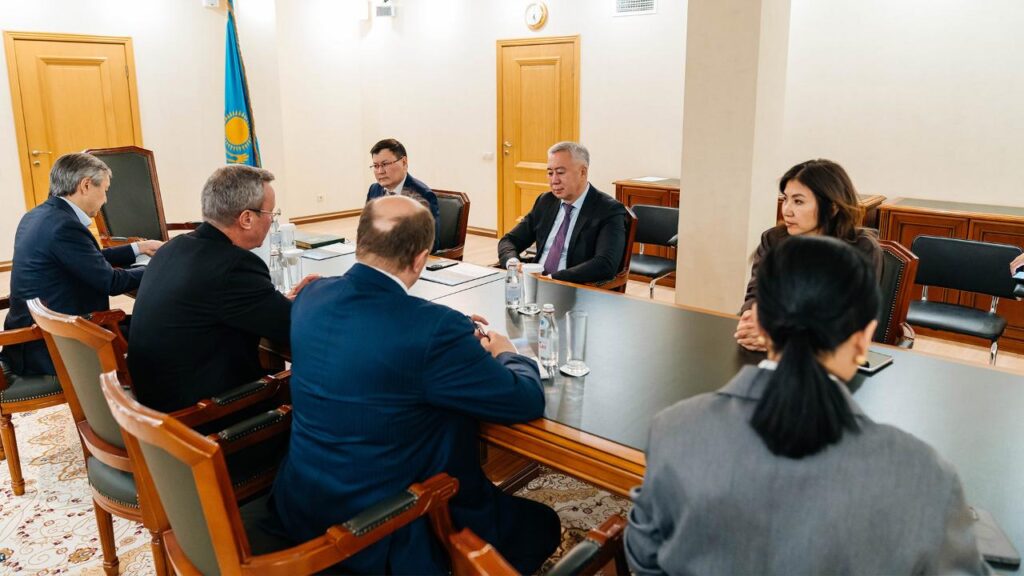
Kazakhstan’s Deputy Prime Minister and Minister of National Economy, Serik Zhumangarin, met with Sergey Sokolov, Director of Government Relations and Corporate Affairs for TikTok in Russia, Eastern Europe, Central Asia, and Mongolia, to discuss the platform’s tools for promoting local businesses. During the meeting, TikTok representatives presented findings from a joint study conducted with the Atameken National Chamber of Entrepreneurs on the platform’s impact on entrepreneurship in Kazakhstan. The survey included over 300 micro and small business owners from 20 regions across the country. According to Raimbek Batalov, Chairman of Atameken, the partnership with TikTok is already producing tangible results. As part of the “One Village, One Product” initiative, entrepreneurs have received training on using digital tools to market their products and grow their sales. “Among companies that post content weekly, one in eight earns more than half of its revenue through the platform. Overall, 63% of businesses report that at least 5% of their annual income is directly tied to TikTok,” Batalov said. In collaboration with the state-backed Damu Fund, plans are underway to expand training programs on TikTok’s digital tools. Batalov noted that the integration of digital solutions remains a key area for the development of small businesses in Kazakhstan. Sergey Sokolov described Kazakhstan as one of the region’s fastest-growing markets and emphasized the platform’s untapped potential in advancing digital entrepreneurship. “We are ready to collaborate with Atameken and state authorities to elevate digital business tools to a new level,” he said. The study highlighted that companies in the creative and service sectors, including hospitality, entertainment, beauty, and wellness, have experienced the strongest results from their TikTok presence. Educational and tourism-related content also shows high growth potential, with Kazakhstani teachers and cultural projects attracting millions of views. Previously, Kazakh officials and TikTok representatives explored opportunities to promote Kazakhstan’s tourism potential to international audiences via the platform.
Kyrgyz Startup Designs ‘Growave’, an E-Commerce Tool to Retain Customers on Shopify

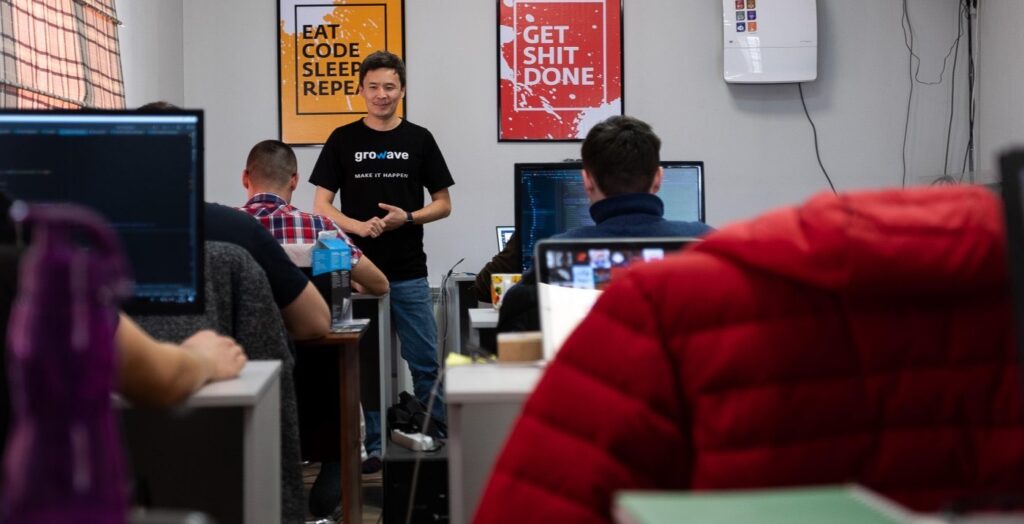
Eldar Galiev is the CEO and Co-Founder of Growave, a Kyrgyz startup that helps companies retain customers on the retail platform Shopify.  “There were times in my life when I seriously thought about moving abroad. The deciding factor [in staying] was the realisation that many people close to me live in the Kyrgyz Republic. That is something to be cherished. That is why I stayed here”, explained Galiev in 2020. Success after several failures Galiev started his career early. During his sophomore year, he started working for the software company Skalfa. Like many talented founders, he left university during his senior year to focus on building his own products. Growave was not the first company Galiev started. “My first serious project, Hire-Experts, came after three years of working at a product company. At that point, I decided to start my own business and found a startup. The first two attempts failed. The third one, Hire-Experts, turned out to be more or less successful — it later became a company that develops software solutions for online communities,” Galiev said in 2021. This experience helped Galiev when he decided to build Growave in 2014. Growave is a family startup; Galiev created the company with his wife, Munara, and brother Ermek. Their skillsets complement each other, with Galiev overtaking business development, Munara handling HR and finance, and Ermek leading on the tech side.  Galiev and his co-founders saw an opportunity when they couldn’t find products focusing on relationships between brands and their customers. Galiev understood that the local markets were too small and went straight to building a global product from scratch. The team did not have experience of being sellers themselves, so the first iterations of the product did not perform very well.  Soon, they came up with a free plan for customers, which helped them gain their first 500 clients. And with feedback collected from them, they managed to build something that customers actually needed. Now, Growave is a marketing platform for e-commerce, helping companies to retain their customers with an all-in-one solution including loyalty, referrals, wishlists, reviews, and Instagram UGC. Galiev believes that it is not only advertising that is important, but also building long-term relationships with customers. This, in turn, prompts customers to stay loyal to certain Shopify sellers. [caption id="attachment_38510" align="aligncenter" width="1280"] Image: Growave[/caption] 'Bootstrapping' ninjas Unlike many global startups, Growave has not raised any external funding from VCs to date, making the company an amazing example of bootstrapping -- growing a business without external funding. In 2017, three years after its launch, Growave became profitable. Before that, Growave had gone through a turbulent time when the co-founders had to invest their income from other projects.  This great example of bootstrapping now has 60+ employees. Still, Galiev is talking to VCs to get their feedback about the startup and to pitch Growave as a solution for their portfolio companies. Now Growave can boast a customer base of over 15,000 companies from more than 150 countries. Over half of...

EBRD Launches Online Mentoring Platform for Entrepreneurs in Tajikistan

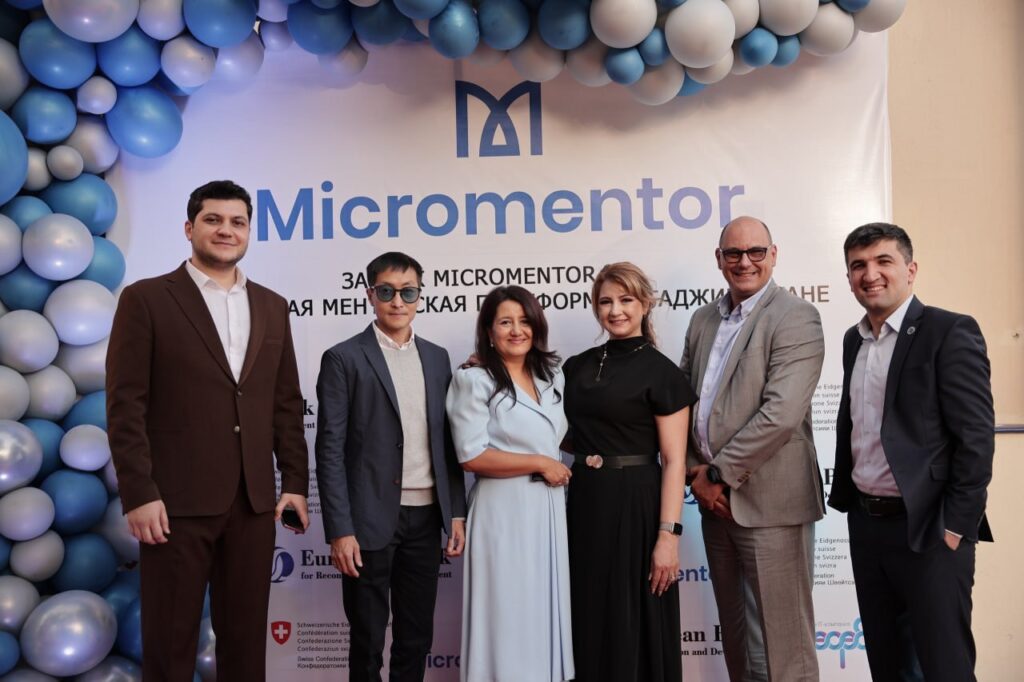
Small and medium-sized enterprises (SMEs) in Tajikistan have a new avenue of support: the European Bank for Reconstruction and Development (EBRD) has launched an online platform offering mentoring and professional consultations. The initiative is funded by the Government of Switzerland. A Global Community for Tajik Entrepreneurs The new platform, MicroMentor.tj, connects Tajik business owners with a global network of more than 420,000 entrepreneurs and 120,000 mentors across 180 countries. Available in six languages, including Russian, the service is free and accessible to entrepreneurs even in remote regions of Tajikistan. The platform aims to expand opportunities for SMEs, foster innovation, support business development, and generate employment. Promotion of the platform within the country is supported by local partner Shedevr, headed by Muboriz Subkhonov. Mentoring as a Growth Tool The EBRD has long supported SMEs not only through financial instruments but also via non-financial services such as mentoring, sector-specific consultations, training, and educational events. According to the bank, 77% of entrepreneurs who engaged actively with mentors reported increased revenues. The new platform builds on the Mentoring for Women Entrepreneurs program, which supported more than 100 participants from Dushanbe, Khatlon, Sughd, and Gorno-Badakhshan Autonomous Oblast (GBAO), with guidance from 50 mentors from Kazakhstan, Kyrgyzstan, and Armenia. Over a nine-month period, 108 mentor-mentee pairs were formed. Nearly all participants reported tangible outcomes: 95% improved their business skills 93% expanded their businesses 90% created new jobs EBRD Updates Strategy for Tajikistan Coinciding with the platform’s launch, the EBRD approved a new country strategy for Tajikistan through 2030, prioritizing structural reforms, private sector development, and sustainable growth in energy, transport, and urban infrastructure. “The new strategy reflects our commitment to supporting Tajikistan’s economic development through a comprehensive approach combining financial resources, policy dialogue, and technical assistance,” the EBRD press service stated. The bank plans to support projects that enhance competitiveness and foster technological independence. To date, the EBRD has invested more than €1 billion in Tajikistan’s economy across 185 projects. According to the latest Regional Economic Prospects report, the EBRD forecasts Tajikistan’s GDP growth at 7% in 2025 and 5.7% in 2026. Key drivers include infrastructure investments, private sector expansion, and advancements in digital technologies and energy. The new strategy integrates investment, advisory support, and regulatory reform to create a more favorable business environment for Tajikistan’s growing economy.

Small Firms Power Kyrgyz Construction Surge

The turnover of small and medium-sized enterprises (SMEs) in Kyrgyzstan’s construction sector has increased 2.5 times over the past five years, according to national statistics. Medium-sized and small businesses have become key drivers of growth in one of the country’s most important economic sectors. In 2020, the volume of work performed by SMEs in construction amounted to 70 billion KGS ($802 million). By the end of 2024, this figure had risen to 185 billion KGS ($2.1 billion). Role of Individual Entrepreneurs More than half of total construction output in 2024 was attributed to individual entrepreneurs. Their main advantage lies in the ability to respond quickly to shifting demand in the housing and infrastructure markets. Their contribution was estimated at 95 billion KGS ($1.08 billion). Small construction firms also recorded substantial growth, tripling their output to 65 billion KGS ($745 million) in 2024. Medium-sized companies posted the fastest expansion: in 2022, they delivered projects worth 7.8 billion KGS ($90 million), rising to 25.2 billion KGS ($289 million) in 2024. Sector Growth Outpaces the Economy The Eurasian Economic Commission previously reported a 40% increase in Kyrgyzstan’s construction sector during the first half of 2025. In the first five months of the year alone, construction volumes nearly doubled compared to the same period in 2024. As previously reported by The Times of Central Asia, Kyrgyz authorities have designated construction as a strategic priority for national development. Investment in residential housing, infrastructure, and social facilities quadrupled in the first five months of 2025, reaching $800 million. Kyrgyzstan’s GDP grew by 11.5% in the first seven months of 2025, with construction contributing 3 percentage points and the services sector accounting for approximately 5 percentage points.

Kyrgyzstan Launches Registry of Reliable Entrepreneurs

The Ministry of Economy and Commerce of Kyrgyzstan has opened applications for a newly established Registry of Reliable Entrepreneurs, aimed at promoting transparent and responsible business practices. According to officials, companies listed in the registry will receive a range of incentives and benefits from the state. The registry is open to all eligible businesses, including large companies and individual entrepreneurs operating under patent regimes. To qualify, applicants must meet several criteria: At least three years of operational history No outstanding debts related to taxes or social contributions Timely payment of wages at or above the industry average Compliance with labor laws and standards A clean criminal record for company leadership in relation to economic offenses An Official “White List” of Trusted Businesses The Chamber of Commerce and Industry (CCI) of Kyrgyzstan, which has experience in compiling similar business listings, has been tasked with managing the registry. “The Registry of Reliable Entrepreneurs is an official list of companies and individual business owners recognized by the state as trustworthy, honest, and socially responsible. In other words, it serves as a white list of the best representatives of business operating transparently and legally,” the CCI stated. Applications must be submitted by August 5, 2025. A joint commission comprising representatives from the Ministry of Economy and the CCI will review applications and issue decisions accordingly. Incentives for Registered Businesses Business leaders say inclusion in the registry will enhance corporate reputation, foster trust among customers and government agencies, and encourage ethical business practices. “The registry encourages businesses to operate honestly, comply with laws, and contribute to the country’s economic development,” noted one participant. In addition to reputational benefits, companies listed in the registry will enjoy several practical advantages: Exemption from government inspections for up to three years Priority service at tax offices Free advertising slots on national television during designated times Complimentary participation in international exhibitions, trade fairs, and forums organized by the Kyrgyz government Moving from Private to State-Backed Recognition Previously, similar registries were compiled only by private initiatives. Business associations, including the CCI itself, created so-called “elite lists” funded through membership fees and shared with potential foreign partners to facilitate business cooperation. Unlike those earlier efforts, the new government-backed registry is free of charge and formally recognizes businesses that operate transparently and in full compliance with Kyrgyz law.

UNDP Helps Entrepreneurs in Kyrgyzstan Master E-Commerce

More than 50 entrepreneurs from Kyrgyzstan are learning about e-commerce through the "Janyration Sanarip" program, an initiative aimed at supporting micro, small, and medium-sized enterprises in the country, jointly implemented by the government of Kyrgyzstan and the United Nations Development Programme (UNDP), UNDP Kyrgyzstan reports. According to Nazarbek Malayev, Kyrgyzstan’s Deputy Minister of Economy and Commerce, "E-commerce opens up unique opportunities for domestic entrepreneurs to enter international markets, expand their customer base, and improve the competitiveness of their products. The Government of the Kyrgyz Republic is trying to create a favorable ecosystem where digital technologies contribute to business development and improve citizens' quality of life." Since 2019, e-commerce in Kyrgyzstan has been experiencing rapid growth, driven by the development of internet infrastructure and an increase in mobile payment users. However, the sector faces several challenges, such as a lack of consumer trust in online shopping and limited internet access in rural areas, where 60% of the population lives. In response to these challenges, the government launched the E-Commerce Development Program for 2023-2026, aimed at enhancing the competitiveness of local products in international markets and attracting investments. Within this initiative, UNDP provides comprehensive support to entrepreneurs, helping them acquire e-commerce skills and work effectively on global marketplaces. UNDP Resident Representative in Kyrgyzstan, Alexandra Solovieva, commented: "Digitalization is a key factor in bridging the digital divide and accelerating Kyrgyzstan's economic development. E-commerce improves access to services and creates new opportunities for local entrepreneurs. We are confident that the joint efforts of the Government and UNDP will contribute to sustainable and inclusive economic growth, particularly in rural areas where internet access remains limited.” Five hundred forty-two applications were submitted for the program, and entrepreneurs were selected based on several criteria, including having an existing business in Kyrgyzstan and a personal investment of at least 80,000 KGS (almost $1,000). These entrepreneurs, representing key sectors such as garment manufacturing, tourism, honey production, light industry, services, and trade, were selected from all regions of the country. Kyrgyzstan is the world's 96th largest market for e-commerce, with a predicted revenue of more than $359 million in 2024, placing it ahead of Uzbekistan. The country’s e-commerce revenue is expected to grow at a compound annual rate of 13.5% from 2024 to 2028, resulting in a projected market volume of $595.7 million by 2028.