• KZT/USD = 0.00221
  • TJS/USD = 0.10830
  • UZS/USD = 0.00008
  • TMT/USD = 0.29760
  • KZT/USD = 0.00221
  • TJS/USD = 0.10830
  • UZS/USD = 0.00008
  • TMT/USD = 0.29760
  • KZT/USD = 0.00221
  • TJS/USD = 0.10830
  • UZS/USD = 0.00008
  • TMT/USD = 0.29760
  • KZT/USD = 0.00221
  • TJS/USD = 0.10830
  • UZS/USD = 0.00008
  • TMT/USD = 0.29760
  • KZT/USD = 0.00221
  • TJS/USD = 0.10830
  • UZS/USD = 0.00008
  • TMT/USD = 0.29760
  • KZT/USD = 0.00221
  • TJS/USD = 0.10830
  • UZS/USD = 0.00008
  • TMT/USD = 0.29760
  • KZT/USD = 0.00221
  • TJS/USD = 0.10830
  • UZS/USD = 0.00008
  • TMT/USD = 0.29760
  • KZT/USD = 0.00221
  • TJS/USD = 0.10830
  • UZS/USD = 0.00008
  • TMT/USD = 0.29760
18 October 2026

Viewing results 1 - 6 of 159

Kazakhstan and Israel Deepen Cooperation in Astana

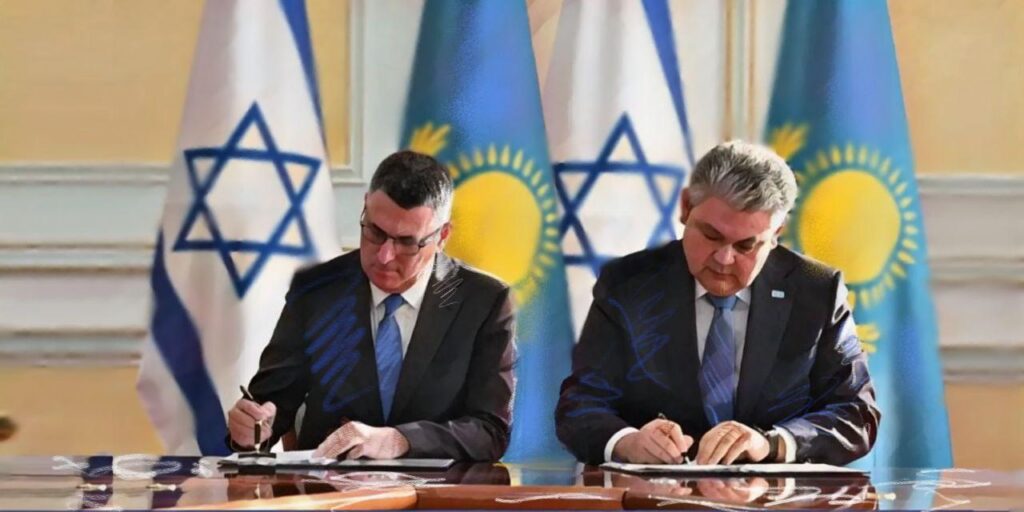
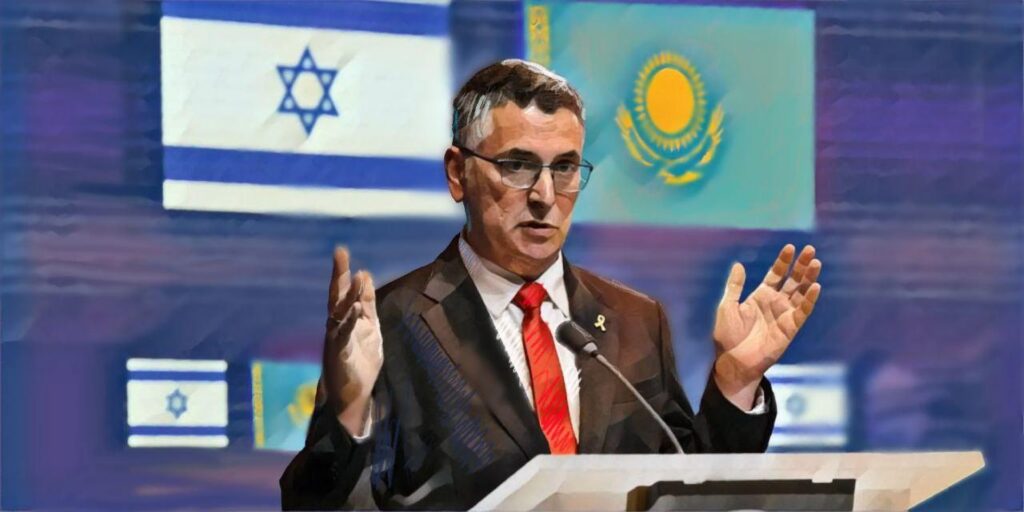
Israeli Foreign Minister Gideon Sa’ar’s official visit to Astana on January 27, 2026, was the first by an Israeli foreign minister to Kazakhstan in 16 years, and it yielded a package of institutional and economic steps. President Kassym-Jomart Tokayev received Sa’ar and Foreign Minister Yermek Kosherbayev, holding talks that both sides framed as elevating cooperation to a new level. The two foreign ministries signed documents on diplomatic training and public diplomacy, and agreed to pursue visa-free travel for holders of ordinary passports. A Kazakhstan–Israel business forum convened in parallel, with January–November 2025 trade of about US$162.4 million cited as the baseline for expansion. The visit’s value lay in its forward-looking measures to deepen cooperation. The sides agreed to convene the Kazakhstan–Israel Joint Economic Commission at a ministerial level. This move creates a regular venue where sector priorities can be translated into specific workstreams. The Kazakhstan–Israel business forum was framed as the practical feeder for that process, as both sides publicly identified a project map running from high-tech agriculture and water-resource management through digital technologies (including artificial intelligence) to infrastructure and logistics, energy efficiency and renewables, and healthcare and pharmaceuticals. In parallel, the two foreign ministries’ political consultations, in their twelfth round, covered wider international and regional agendas, including Middle East confidence-building and peaceful-settlement initiatives. Regularizing Cooperation Channels The documents signed in Astana were narrow-gauge instruments designed to regularize contacts. The memorandum on diplomatic training provides for structured interaction in the preparation of diplomatic personnel. What this means in practice is that exchanges between the two foreign-policy services will be routinized through their training institutions rather than on an ad hoc basis. The memorandum on public diplomacy set a framework for coordinated outreach, providing an agreed approach to presenting their cooperation. Taken together, these instruments are the administrative layer that will operationalize joint political intent. The visa initiative was narrowly framed as a statement of intent to conclude a visa-exemption agreement for holders of ordinary passports, not as an agreement already in force. In practice, such a regime would lead to higher tourism flows and denser business travel. The latter development would widen the base of commercial contacts, which could in turn be carried into ministerial-level economic follow-up. The visa track is thus an enabling measure for the economic agenda. At the leadership level, Sa’ar publicly invited President Tokayev to visit Israel. This move signals an intent to sustain momentum beyond merely ministerial channels. The visit coincided with International Holocaust Remembrance Day in Kazakhstan, and Sa’ar participated in a state ceremony in Astana connected to the commemoration. The ceremony included senior officials and diplomatic representatives, with official messaging from Tokayev to Israel’s president on the occasion. The civic and humanitarian nature of this event complemented a visit that otherwise concentrated on governance mechanisms, economic priorities, and institutionalizing diplomatic follow-through. First Steps Toward Joint Projects Beyond merely listing priority sectors, the business forum also surfaced first-step commercial and quasi-commercial documents providing a basis for follow-through. Kazakhstan’s investment agency reported three signed items:...
Astana–Israel Talks Span Technology, Trade, and Holocaust Remembrance

Kazakh President Kassym-Jomart Tokayev met Israeli Foreign Minister Gideon Sa’ar in Astana on January 27, marking the first official visit by an Israeli foreign minister to Kazakhstan in almost 16 years, and underscoring Astana’s stated interest in deepening economic and technological cooperation with Israel as it continues to recalibrate its foreign policy. According to the Kazakh presidential administration, the talks focused on expanding bilateral relations across trade, investment, science, and technology, with both sides emphasizing practical areas of cooperation. The visit came as Kazakhstan seeks to diversify its economy beyond hydrocarbons and strengthen partnerships with countries at the forefront of applied innovation. Tokayev said the visit demonstrated Israel’s commitment to strengthening comprehensive cooperation with Kazakhstan, while discussions highlighted concrete sectors for collaboration, including artificial intelligence, agrotechnology, water resource management, and digital governance. These areas align closely with Kazakhstan’s national development priorities, particularly its focus on digital transformation, public-sector reform, and productivity-driven growth. Economic cooperation featured prominently throughout the visit. A Kazakh-Israeli business forum was held alongside the high-level talks, aimed at translating diplomatic engagement into commercial outcomes. Kazakhstan’s Foreign Ministry said the forum is expected to support new investment partnerships and initiate joint projects in high-value sectors, with a focus on technology transfer and localized projects. Kazakh officials said bilateral trade reached $162.4 million between January and November 2025, with exports totaling $92.1 million and imports $70.3 million. While modest in absolute terms, the figures were cited as evidence of untapped potential, particularly in non-resource sectors where Israeli companies have global expertise. As part of the discussions, Kazakhstan invited Israeli firms to participate in national digital transformation initiatives, including projects related to e-government, data-driven public services, and digital infrastructure. Officials cited Kazakhstan’s recent progress in digital governance and public-sector innovation as a foundation for expanded cooperation. Kazakhstan and Israel established diplomatic relations in 1992, shortly after Kazakhstan gained independence. Israel opened its embassy in Almaty in 1996, while Kazakhstan inaugurated its embassy in Tel Aviv in 2000, laying the groundwork for steady but largely low-profile bilateral ties. Political relations have traditionally been pragmatic, with cooperation focused on trade, agriculture, healthcare, and education rather than formal alliances. Bilateral trade has remained modest, reflecting limited commercial engagement beyond specific sectors such as agrotechnology, pharmaceuticals, and water management. In recent years, Astana has shown growing interest in Israel’s applied innovation ecosystem, particularly in areas aligned with Kazakhstan’s domestic reform agenda, including digital governance, artificial intelligence, and public-sector modernization. Israeli firms have previously participated in pilot projects and advisory initiatives in Kazakhstan, though large-scale joint ventures have been limited. Kazakhstan has also positioned itself as a neutral diplomatic actor in the Middle East, maintaining relations with Israel while emphasizing interfaith dialogue and mediation. Beyond economic ties, the talks also addressed regional and international issues, including developments in the Middle East and Kazakhstan’s diplomatic positioning in support of the objectives underpinning the Abraham Accords framework. Sa’ar welcomed Kazakhstan’s engagement, describing it as a constructive contribution to dialogue and cooperation between Israel and Muslim-majority countries. Sa’ar...

Uzbekistan Hosts 336 U.S. Companies

As of December 1, 2025, Uzbekistan is home to 336 enterprises with U.S. capital participation, according to data released by the National Statistics Committee. The figures reflect the growing presence of American businesses in Uzbekistan amid ongoing efforts to strengthen bilateral economic ties. Of the total, 146 are joint ventures, while 190 are fully foreign-owned enterprises. Tashkent city accounts for the majority, hosting 237 companies, a testament to its role as Uzbekistan’s primary financial and commercial hub. Tashkent region follows with 31 companies, while Samarkand region hosts 19. Other regions with U.S.-capital enterprises include Bukhara (8), Kashkadarya and Navoi (6 each), Fergana and Jizzakh (5 each), Andijan, Syrdarya, and the Republic of Karakalpakstan (4 each), Namangan and Khorezm (3 each), and Surkhandarya (1). The latest data comes amid a broader institutional push to enhance Uzbekistan-U.S. economic cooperation. In November 2025, the government launched the Uzbekistan-U.S. Business and Investment Council, a new platform aimed at deepening trade and investment ties. The initiative was formalized by presidential decree on November 12, following agreements reached during President Shavkat Mirziyoyev’s official visit to Washington for the C5+1 summit. In a further step to facilitate business and tourism links, Uzbekistan introduced a visa-free regime for U.S. citizens starting January 1, 2026, allowing stays of up to 30 days.

Japan Steps Out of the Shadows With First Central Asia Leaders’ Summit

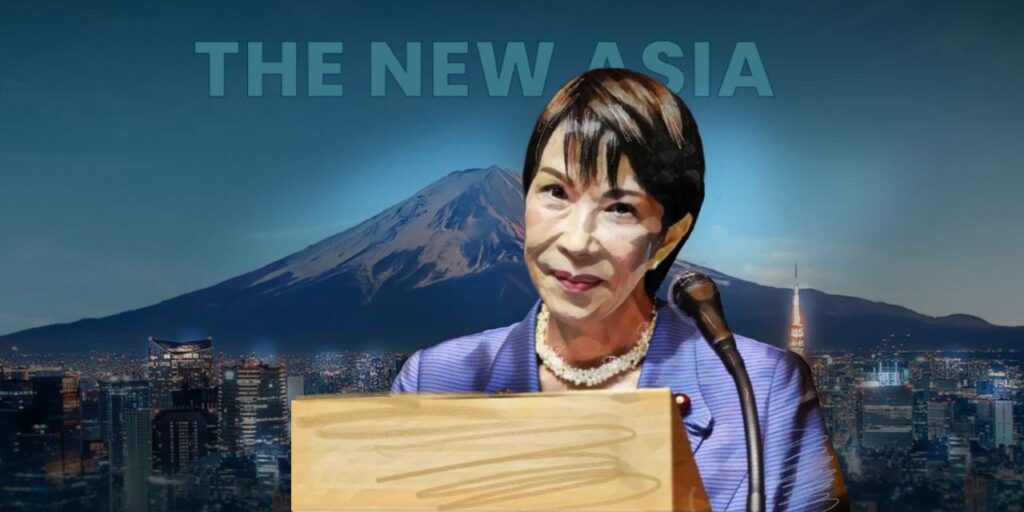
On December 19-20, Tokyo will host a landmark summit poised to reshape Eurasian cooperation. For the first time in the 20-year history of the “Central Asia + Japan” format, the dialogue is being elevated to the level of heads of state. For Japan, this represents more than a diplomatic gesture; it signals a shift from what analysts often describe as cautious “silk diplomacy” to a more substantive political and economic partnership with a region increasingly central to global competition over resources and trade routes. The summit will be chaired by Japanese Prime Minister Sanae Takaichi. The leaders of all five Central Asian states, Kazakhstan, Kyrgyzstan, Tajikistan, Turkmenistan, and Uzbekistan, have confirmed their participation. Alongside the plenary session, bilateral meetings and a parallel business forum are scheduled to take place. Why Now? Established in 2004, the “Central Asia + Japan” format has largely functioned as a platform for foreign ministers and technical cooperation. According to Esbul Sartayev, assistant professor at the Center for Global Risks at Nagasaki University, raising the dialogue to the head-of-state level marks a deliberate step by Japan to abandon its traditionally “secondary” role in a region historically dominated by Russia and China. This shift comes amid a changing geopolitical context: disrupted global supply chains, intensifying competition for critical and rare earth resources, and a growing U.S. and EU presence in Central Asia. In this environment, Tokyo is promoting a coordinated approach to global order “based on the rule of law”, a neutral-sounding phrase with clear geopolitical resonance. Unlike other external actors in Central Asia, Japan has historically emphasized long-term development financing, technology transfer, and institutional capacity-building rather than security alliances or resource extraction. Japanese engagement has focused on infrastructure quality, human capital, and governance standards, allowing Tokyo to position itself as a complementary partner rather than a rival power in the region. Economy, Logistics, and AI The summit agenda encompasses a range of priorities: sustainable development, trade and investment expansion, infrastructure and logistics, and digital technology. Notably, the summit is expected to include a new framework for artificial intelligence cooperation aimed at strengthening economic security and supply chain development. It is also likely to reference expanded infrastructure cooperation, including transport routes linking Central Asia to Europe. As a resource-dependent country, Japan sees Central Asia as part of its evolving “resource and technological realism” strategy. For the Central Asian states, this presents a chance to integrate into new global value chains without being relegated to the role of raw material suppliers. Kazakhstan: Deals Worth Billions The summit coincides with Kazakh President Kassym-Jomart Tokayev’s official visit to Japan from December 18-20. During the visit, more than 40 agreements totaling over $3.7 billion are expected to be signed. These span energy, renewables, digitalization, mining, and transport. Participants include Samruk-Kazyna, KEGOC, Kazatomprom, KTZ, and major Japanese corporations such as Marubeni, Mitsubishi Heavy Industries, Toshiba, and JOGMEC. Japan’s ambassador to Kazakhstan, Yasumasa Iijima, has referred to Kazakhstan as a future Eurasian transport and logistics hub, highlighting its strategic role in developing the Trans-Caspian...

Uzbekistan, Paraguay Deepen Ties During First-Ever Presidential Visit

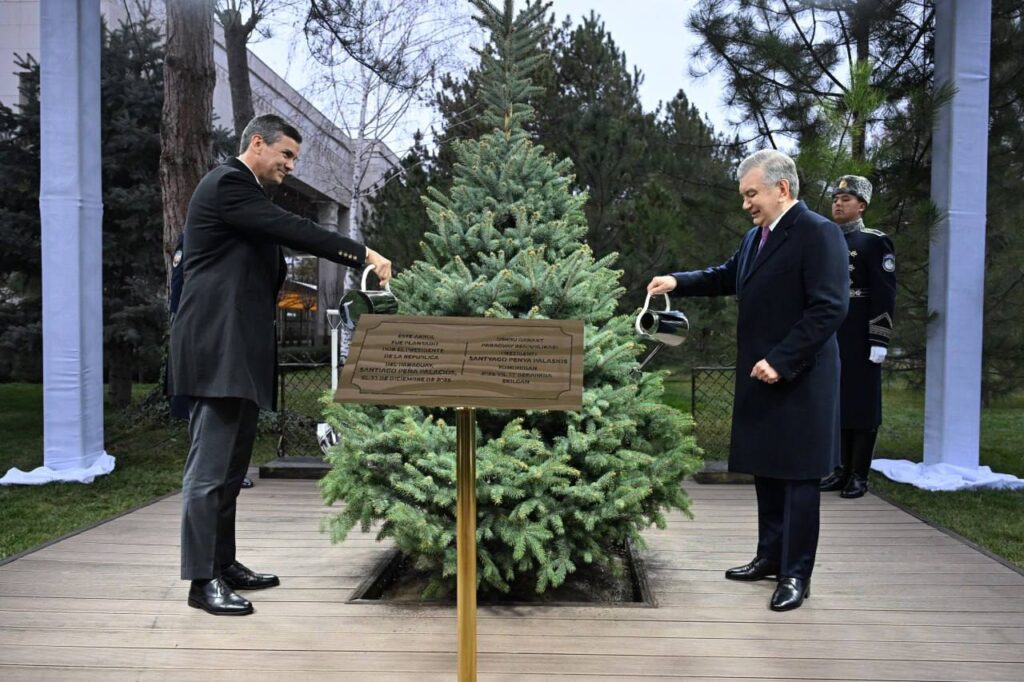
Uzbekistan and Paraguay have agreed to enhance political and economic cooperation following high-level talks in Tashkent, according to the presidential press service. The meeting between Uzbek President Shavkat Mirziyoyev and Paraguayan President Santiago Peña took place at the Kuksaroy residence, with participation from both countries’ official delegations. Mirziyoyev welcomed his counterpart and highlighted the historical significance of the visit, noting it as the first time a president from a Latin American country has traveled to Uzbekistan. The visit is expected to usher in a new era of bilateral relations. The two leaders discussed expanding cooperation across several sectors. Talks focused on increasing mutual trade, strengthening business contacts, and initiating joint projects in agriculture, food production, the chemical industry, digital technologies, tourism, and sports. Cultural, educational, and humanitarian collaboration were also emphasized as priority areas. The sides also exchanged views on international and regional developments. Following the talks, Mirziyoyev and Peña signed a joint statement reaffirming their commitment to strengthening political dialogue and expanding practical cooperation. Uzbek media reported that two additional documents were signed in the presence of the presidents: a protocol concluding bilateral market-access negotiations related to Uzbekistan’s accession to the World Trade Organization, and a memorandum between the foreign ministries to establish a mechanism for political consultations. The meeting concluded with a symbolic gesture. The two presidents planted a tree on the Alley of Honored Guests at the Kuksaroy residence, symbolizing their intention to open a new chapter in Uzbekistan-Paraguay relations.

Turkic Investment Fund to Launch Operations in Early 2026

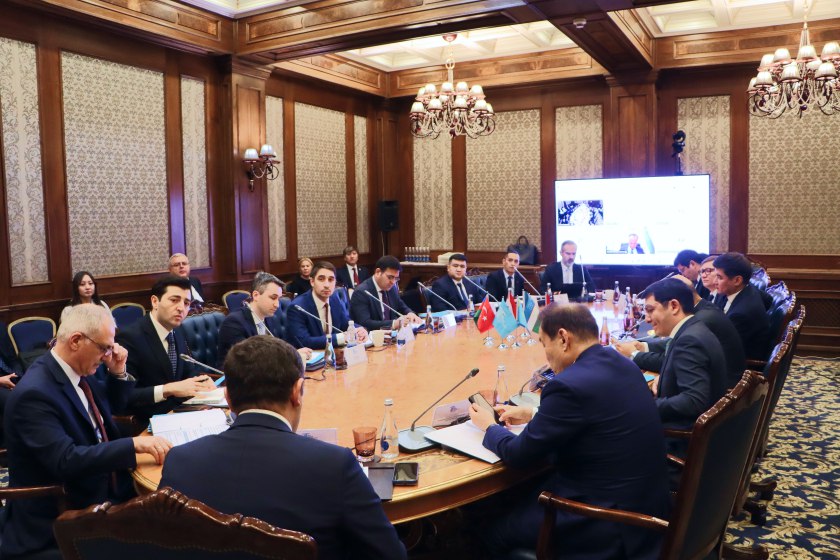
At a meeting held in Bishkek on December 5, the Board of Governors of the Turkic Investment Fund (TIF) announced that the Fund will begin its operational activities in the first quarter of 2026. With an initial authorized capital of 500 million dollars and a potential increase to 1.5 billion dollars, the TIF is the first dedicated financial institution jointly established by the Turkic states. Its mission is to enhance economic cooperation, boost intra-regional trade, and support sustainable development across the Turkic world. Headquartered in Istanbul, the Fund will finance major joint projects among member states of the Organization of Turkic States (OTS). The OTS, founded in 2009, includes Azerbaijan, Kazakhstan, Kyrgyzstan, Turkey, Uzbekistan, and Turkmenistan. Hungary and the Turkish Republic of Northern Cyprus participate as observer states. The TIF was officially established during an extraordinary OTS summit in Ankara in March 2023, with Azerbaijan, Kazakhstan, Kyrgyzstan, Turkey, and Uzbekistan as founding members. Hungary joined in June 2024, while Turkmenistan maintains observer status. According to the Board of Governors, the institutional infrastructure required for TIF operations was largely completed in 2025, and preparatory work on a pipeline of investment projects is currently underway. The Board emphasized that the decision to initiate operations reflects growing expectations among member states for the Fund to begin allocating resources and advancing strategic initiatives. During the Bishkek meeting, Uzbekistan’s representative, Laziz Kudratov, Minister of Investment, Industry and Trade, was elected Chairman of the TIF Board of Governors. The Fund will pursue its mandate by offering preferential loans, co-financing projects alongside international financial institutions, and attracting private investment into key sectors of the region’s economies. Following the inaugural meeting of the TIF Board in Istanbul in May 2024, the Turkish Ministry of Finance projected that the combined economic output of the Turkic states would reach $1.9 trillion by the end of 2024, with a population of approximately 178 million.