• KGS/USD = 0.01143 0%
  • KZT/USD = 0.00205 0%
  • TJS/USD = 0.10724 0.09%
  • UZS/USD = 0.00008 0%
  • TMT/USD = 0.28571 0%
  • KGS/USD = 0.01143 0%
  • KZT/USD = 0.00205 0%
  • TJS/USD = 0.10724 0.09%
  • UZS/USD = 0.00008 0%
  • TMT/USD = 0.28571 0%
  • KGS/USD = 0.01143 0%
  • KZT/USD = 0.00205 0%
  • TJS/USD = 0.10724 0.09%
  • UZS/USD = 0.00008 0%
  • TMT/USD = 0.28571 0%
  • KGS/USD = 0.01143 0%
  • KZT/USD = 0.00205 0%
  • TJS/USD = 0.10724 0.09%
  • UZS/USD = 0.00008 0%
  • TMT/USD = 0.28571 0%
  • KGS/USD = 0.01143 0%
  • KZT/USD = 0.00205 0%
  • TJS/USD = 0.10724 0.09%
  • UZS/USD = 0.00008 0%
  • TMT/USD = 0.28571 0%
  • KGS/USD = 0.01143 0%
  • KZT/USD = 0.00205 0%
  • TJS/USD = 0.10724 0.09%
  • UZS/USD = 0.00008 0%
  • TMT/USD = 0.28571 0%
  • KGS/USD = 0.01143 0%
  • KZT/USD = 0.00205 0%
  • TJS/USD = 0.10724 0.09%
  • UZS/USD = 0.00008 0%
  • TMT/USD = 0.28571 0%
  • KGS/USD = 0.01143 0%
  • KZT/USD = 0.00205 0%
  • TJS/USD = 0.10724 0.09%
  • UZS/USD = 0.00008 0%
  • TMT/USD = 0.28571 0%

Viewing results 1 - 6 of 216

Uzbekistan and U.S. to Create Joint Business and Investment Council

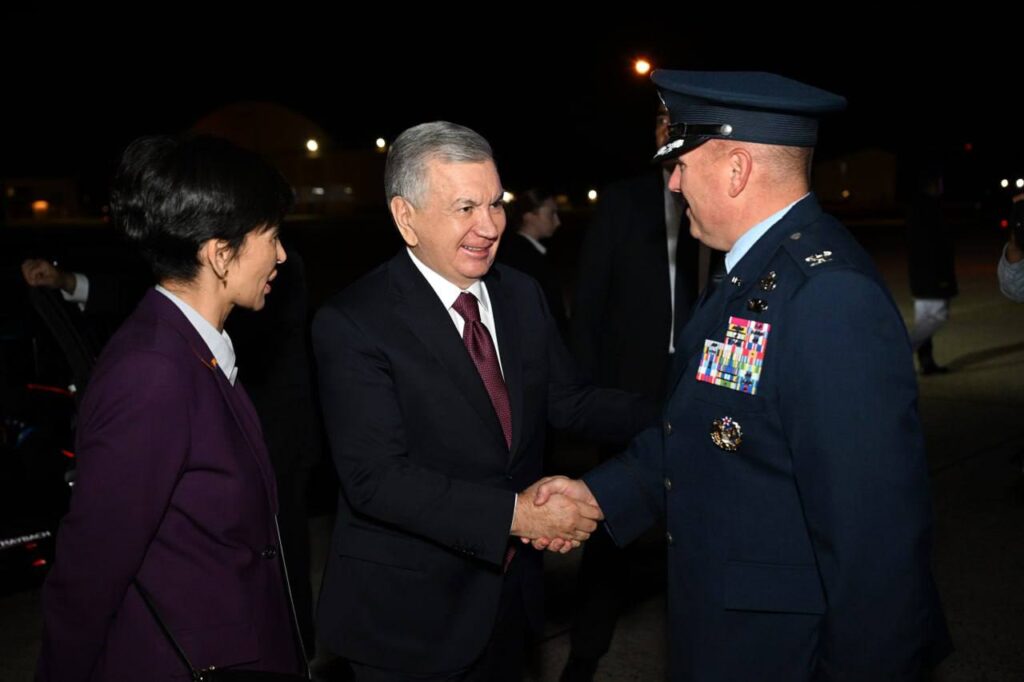
Uzbekistan has announced the establishment of the Uzbekistan-U.S. Business and Investment Council, a new institutional platform aimed at deepening trade, investment, and commercial cooperation between the two countries. The initiative was formalized by a presidential decree signed by President Shavkat Mirziyoyev on November 12. The council will be jointly chaired by the Head of the Presidential Administration of Uzbekistan and a representative appointed by the President of the United States. It follows agreements reached during President Mirziyoyev’s official visit to Washington from November 4–6, held within the framework of the “C5+1” summit. The council’s primary objective is to coordinate the development and implementation of strategic business initiatives and major investment and trade projects, while ensuring continuous monitoring of their progress. It will also work to attract new foreign investment through the creation of a dedicated investment fund, with participation expected from institutions including the U.S. International Development Finance Corporation (DFC), the European Bank for Reconstruction and Development (EBRD), and the Asian Development Bank (ADB). Uzbekistan will also expand cooperation in the IT sector by promoting the products and services of companies based in its national IT Park. Broader plans include diversifying the country’s investment portfolio and foreign currency reserves. To further strengthen diplomatic and economic engagement, a new position titled Adviser-Envoy of the Presidential Administration in the United States will be established at Uzbekistan’s Embassy in Washington beginning January 1, 2026. The envoy will oversee strategic investment initiatives and coordinate the work of the Business and Investment Council. The Foreign Ministry has also been instructed to expand Uzbekistan’s diplomatic presence across the United States, with preparations underway to open new consulates in Philadelphia, Chicago, Orlando, and Seattle, cities with significant Uzbek diaspora communities. Oversight of the council’s operations and implementation of the decree will be led by Saida Mirziyoyeva, Head of the Presidential Administration, who will serve as the Uzbek co-chair of the new council. The initiative forms part of Uzbekistan’s broader strategy to deepen cooperation with the United States, expand economic engagement, and build stronger institutional ties ahead of the planned visa-free regime for U.S. citizens in 2026. Uzbekistan currently maintains an embassy in Washington and a Consulate General in New York. As previously reported by The Times of Central Asia, Uzbekistan will introduce a visa-free regime for U.S. citizens starting January 1, 2026, allowing stays of up to 30 days. The change is intended to broaden engagement between the two countries.

Tajikistan and the U.S. Sign Agreements Worth Over $3.2 Billion

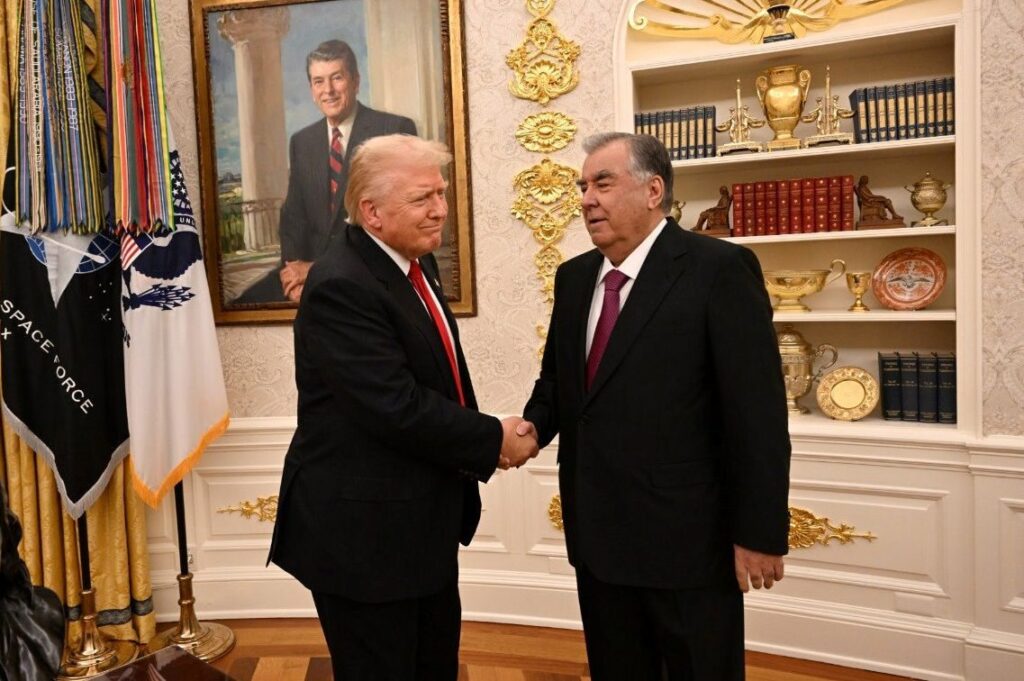
On the sidelines of the second Central Asia-U.S. Summit (C5+1) held in Washington, Tajikistan signed a series of agreements with American companies totaling more than $3.2 billion. The deals span the aviation, digital technology, artificial intelligence, energy, and manufacturing sectors. Landmark Agreement with Boeing The largest deal involves Tajik airline Somon Air, which plans to purchase 14 Boeing aircraft and aviation systems valued at $3.2 billion. The U.S. State Department described the agreement as a milestone that will “strengthen confidence in American aerospace technology” and noted it as the most significant aviation contract ever signed between the two countries. The second largest agreement was concluded with U.S. based Transparent Earth. The $32.5 million deal includes remote sensing technologies and technical assistance to improve efficiency in Tajikistan’s mining and agricultural sectors. In the digital sphere, Tajikistan reached an agreement with Starlink to expand satellite internet access. The initiative aims to enhance connectivity in the country’s remote mountainous. regions, facilitating digital inclusion and expanding online services. Artificial Intelligence, Infrastructure, and Industry A separate set of agreements focuses on artificial intelligence. U.S. tech firm Perplexity AI and Tajik startup zypl.ai signed a landmark agreement to develop the world’s first AI-based agent browser tailored for government use. According to the developers, this innovation is designed to boost the efficiency of public administration and solidify Tajikistan’s emerging role in digital governance. Additionally, SuperMicro, Cerebris, and zypl.ai will collaborate on the development of AI-powered data centers. To support this infrastructure, Tajikistan plans to build 1 GW of hydroelectric capacity, laying the groundwork for the country to evolve into a regional IT hub. In the manufacturing sector, Coca-Cola will invest $9 million in expanding its Dushanbe plant, boosting production and strengthening its market position in Tajikistan. According to the U.S. State Department, these agreements are expected to generate thousands of jobs and stimulate “billions of dollars in U.S. exports.” A New Chapter in Tajik-U.S. Relations On November 6, President Emomali Rahmon met with U.S. President Donald Trump in Washington. The two leaders discussed cooperation in critical minerals, digital technology, and aviation modernization, with a particular focus on boosting trade and investment. More than 70 U.S. affiliated companies are currently operating in Tajikistan. The summit also featured a C5+1 business conference, during which Tajikistan showcased its investment projects and export potential to an international audience. Following the forum, President Trump described the gathering as the start of “a wonderful new relationship between the United States and the countries of Central Asia,” and reiterated the strategic importance of the region, stating the U.S. is ready to “actively engage in Eurasia”.

U.S. and Uzbekistan Sign Landmark Economic and Strategic Agreements

The United States and Uzbekistan are deepening their economic and technological partnership. Following President Shavkat Mirziyoyev’s meeting with U.S. President Donald Trump in Washington, the U.S. State Department announced a sweeping package of agreements, described as among the most significant in the history of bilateral relations in both investment and strategic scope. High-Level Business Engagements During his Washington visit, President Mirziyoyev held talks with representatives from major American corporations, investment funds, and financial institutions. The meeting was attended by U.S. Secretary of Commerce Howard Lutnick, Special Assistant to the President Ricky Gill, Special Assistant to the President Ricky Gill, Deputy Secretary of Agriculture Stephen Vaden, and executives from companies such as Traxys, FLSmidth, McKinsey, Meta, Google, Amazon, Boeing, Air Products, Axiom Space, Cove Capital, Freeport-McMoRan, Orion CMC, Cargill Cotton, John Deere, Honeywell, Valmont Industries, and Flowserve Corporation. Opening the event, Mirziyoyev highlighted that trade between Uzbekistan and the U.S. has quadrupled over the past eight years, and more than 300 American companies are now operating in the country. He added that this is just the beginning of a new era in economic cooperation. Key strategic goals were outlined: by 2030, Uzbekistan aims to develop a new-generation energy system with 18-20 GW of renewable capacity, more than half of it sourced from solar and wind. In this context, the two countries plan to jointly develop and process critical minerals such as uranium, copper, tungsten, molybdenum, and graphite, establishing resilient supply chains and leveraging U.S. processing technologies. Infrastructure is another major focus. Uzbekistan intends to invest over $12 billion by 2030 to modernize roads, railways, terminals, and airports. Digital cooperation is also expanding. Projects with Google, Meta, and NVIDIA include the launch of Apple Pay and Google Pay, the creation of a Digital Academy, and the development of startup hubs. These initiatives are expected to be supported by the U.S. International Development Finance Corporation (DFC) and the U.S. Exim Bank. Mirziyoyev reaffirmed his personal commitment to supporting American investment, stressing that Uzbekistan remains a stable and favorable destination for foreign businesses. Securing Access to Strategic Raw Materials Washington’s primary interest lies in critical minerals. The U.S. will gain priority access to joint mining projects and exclusive access to geological data on rare earth and other strategically significant elements. This move is part of a broader U.S. effort to diversify global sources of inputs vital to defense, green energy, and other high-tech sectors. The two countries are also preparing a $400 million investment package to develop sustainable supply chains for critical and rare earth minerals. For Uzbekistan, this represents a key step toward integration into global value chains and reduced reliance on limited partners. Energy Cooperation: A Role for Small Modular Reactors Uzbekistan plans to acquire American small modular reactors (SMRs), a technology increasingly favored by emerging economies for its scalability and relatively low upfront costs. Interest in SMRs has grown following the 2025 approval of the upgraded NuScale Power Module (77 MW), and Uzbekistan may become one of the first countries in...

Tokayev Secures $17B in U.S. Deals, Trump Hints at Kazakhstan Visit

The summit between the leaders of the United States and the five countries of Central Asia was the primary focus of Kazakh President Kassym-Jomart Tokayev’s visit to Washington. But even before the summit began, the Kazakh delegation secured a series of high-level meetings with U.S. political leaders and business executives, culminating in the signing of 29 bilateral agreements, valued at approximately $17 billion. Tokayev’s program in Washington began with meetings with Secretary of State Marco Rubio, Secretary of Commerce Howard Lutnick, and U.S. Special Representative for South and Central Asia Sergio Gor. Kazakhstan, Tokayev noted, maintains active political ties with the United States at multiple levels, and remains committed to a constructive dialogue to deepen its multifaceted cooperation with Washington. During the meeting, Kazakhstan and the United States signed a memorandum of understanding on cooperation in the field of critical minerals. The document was signed by Kazakhstan’s Minister of Industry and Construction, Yersayin Nagaspayev, and U.S. Secretary of Commerce Howard Lutnick. The agreement took immediate shape: Tau-Ken Samruk, a subsidiary of the sovereign wealth fund Samruk-Kazyna, and U.S. based Cove Capital agreed to jointly develop tungsten deposits in Kazakhstan’s Karaganda region. The investment is expected to total around $1.1 billion. Preparatory work on a final feasibility study for one of the projects is already underway. Kazakhstan’s tungsten reserves, estimated at 410,000 tons, are among the largest in the world. Tokayev later met with U.S. Representatives Jimmy Panetta, Carol Miller, Bill Huizenga, and Sydney Kamlager-Dove. Tokayev highlighted the role of the U.S. - Kazakhstan Friendship Group, chaired by Panetta, in deepening political dialogue, boosting economic ties, and strengthening bilateral relations. During the meeting, it was noted that the U.S. is one of Kazakhstan’s largest economic partners, accounting for $100 billion in cumulative investment, roughly 80% of all investment in Central Asia. Tokayev invited U.S. lawmakers to visit Kazakhstan to foster further cooperation. A similar invitation was extended to Senator Steve Daines, whom Tokayev described as “a true friend of Kazakhstan.” The senator is set to receive the Order of Dostyk (Friendship), First Class, for his contributions to bilateral relations. The Kazakh president also met with Chevron Chair and CEO Michael Wirth and Chaboy Leiko, President for the CIS and Central Asia at John Deere. Tokayev praised Chevron’s long-standing role in Kazakhstan’s oil and gas sector, including its projects at the Tengiz and Karachaganak fields. He confirmed Kazakhstan’s commitment to ongoing cooperation. John Deere was also lauded for its decision to localize production of agricultural machinery through a partnership with AgromashHolding KZ. Since production began in May, over 290 units have been assembled, with another 100 expected by year’s end. John Deere has signed a $2.5 billion strategic partnership agreement with Kazakhstan to produce at least 3,000 agricultural machines over five years. The agreement includes plans to establish at least three service centers and develop a workforce training system. Separately, Kazakhstan’s national carrier, Air Astana, signed a contract with Boeing for the purchase of up to 15 Boeing 787-9 Dreamliner aircraft. According...

Kazakhstan Strengthens Role as U.S. Key Trade Partner in Central Asia

Kazakhstan has emerged as the United States’ primary economic partner in Central Asia, accounting for the vast majority of regional exports to the U.S. and serving as the leading destination for American imports, according to Finprom.kz. While Central Asia’s share of total U.S. trade remains small, Kazakhstan’s role within the region is increasingly dominant. Kazakhstan Accounts for Over 96% of Central Asia’s U.S. Exports In 2024, Kazakhstan was responsible for 96.7% of Central Asia’s exports to the United States, totaling approximately $2.4 billion out of a regional total of $2.5 billion. Uzbekistan, the next largest exporter, contributed just $44.4 million. The trend is similar for U.S. goods entering the region. Kazakhstan imported $1.1 billion worth of U.S. goods in 2024, or 62.3% of all American exports to Central Asia. Uzbekistan followed with $380.8 million, while Turkmenistan and Tajikistan imported $82.2 million and $56.8 million, respectively. Despite this strong bilateral exchange, Central Asia remains a small player in U.S. global trade. In 2024, the U.S. recorded $3.27 trillion in goods imports and $2.06 trillion in exports, according to U.S. Census Bureau data. Even so, U.S.–Kazakhstan trade has grown meaningfully in recent years. Between 2019 and 2024, the U.S. share of Kazakhstan’s total trade rose from 2.3%  to around 3%. Bilateral trade peaked in 2024 at $4.2 billion, the highest level in six years, with U.S. exports to Kazakhstan accounting for 53.2% of the total. Trade Growth and 2025 Downturn That growth slowed sharply in 2025. From January to August, total trade between the two countries fell to $2.1 billion, a 25.8% drop compared to the same period in 2024. Kazakhstan’s exports to the U.S. accounted for much of the decline, falling to $749.7 million in the first nine months of the year - about half the level recorded the previous year. Oil and oil products saw the steepest drop, falling 3.5 times to $269.1 million. Exports of uranium, silver, ferroalloys, tantalum, and titanium also declined, though these remain important categories. By contrast, U.S. exports to Kazakhstan remained relatively stable. Goods shipments fell just 4.8% year-on-year, totaling approximately $1.7 billion from January through September. U.S. exports to Kazakhstan continue to consist primarily of high-value manufactured goods, including vehicles, aircraft, agricultural machinery, computers, telecommunications equipment, and medical devices. Pharmaceuticals stood out in 2025, with American shipments of medicines and vaccines more than doubling to $249.3 million in the first nine months of the year. Investment and Business Cooperation Deepen Alongside trade, investment, and business cooperation between the two countries is also deepening. According to the Kazakh Prime Minister’s office, more than 600 companies with U.S. capital were operating in the country as of late 2025 – a large increase over the previous year. The number of Kazakh-American joint ventures rose by 5.6% over the same period. U.S. companies are active in a range of sectors, including IT, manufacturing, education, consulting, and trade. While the United States is not among Kazakhstan’s top trading partners by volume, the relationship is seen as strategically important. Amid...

Tokayev Proposes Regional Nuclear Council in Kazakhstan

At the second Central Asia-Russia summit in Dushanbe, Kazakh President Kassym-Jomart Tokayev proposed establishing a regional council in Kazakhstan focused on nuclear fuel cycle expertise and radioactive waste management. The proposal follows last year’s national referendum in which over 70% of voters supported building a nuclear power plant (NPP) in Kazakhstan. Since then, the government has selected a site for the first plant and announced plans to construct at least two additional facilities. This summer, Rosatom began construction of the first NPP in the Almaty region in southern Kazakhstan. Tokayev has previously emphasized the need for Kazakhstan to develop domestic expertise in the peaceful use of nuclear energy, citing international best practices. He expanded on this vision during the Dushanbe summit. “Cooperation in the nuclear industry will ensure the development of a number of related industries, which is critically important for us,” Tokayev stated. “We propose to establish a Regional Council of Competencies in the field of the nuclear fuel cycle and radioactive waste management in Kazakhstan. It is important to strengthen the modern research base and the system for training qualified personnel. The first step in this direction has already been taken: a branch of the National Research Nuclear University MEPhI has opened in Almaty,” Tokayev said, referring to the Moscow-based institute that has conducted nuclear research since 1953. He added that Kazakhstan intends to continue developing this sector in cooperation with research institutions from both countries. Tokayev also highlighted recent progress in regional energy integration, citing the trilateral gas union between Russia, Kazakhstan, and Uzbekistan as a key development in ensuring stable gas supplies for both citizens and industry. “An important document on cooperation in the gas sector between Kazakhstan and Russia was signed recently in St. Petersburg,” he said, referencing a memorandum with Gazprom on the construction of a new gas pipeline from Russia to Kazakhstan to support domestic gasification. The president also underscored the strategic role of the Caspian Pipeline Consortium, which transported approximately 63 million tons of Kazakh oil to Europe in 2024. He noted the increasing significance of the so-called eastern vector for hydrocarbon exports. “Kazakhstan serves as a transit corridor for Russian oil to China, with volumes reaching up to 10 million tons per year. In 2024, deliveries have already surpassed this level. Given this momentum, there is potential to further increase capacity,” Tokayev said. As previously reported by The Times of Central Asia, the China National Nuclear Corporation (CNNC) has been awarded contracts to build the second and third nuclear power plants in Kazakhstan.