• KGS/USD = 0.01144 0%
  • KZT/USD = 0.00205 0%
  • TJS/USD = 0.10784 0%
  • UZS/USD = 0.00008 0%
  • TMT/USD = 0.28490 0%
  • KGS/USD = 0.01144 0%
  • KZT/USD = 0.00205 0%
  • TJS/USD = 0.10784 0%
  • UZS/USD = 0.00008 0%
  • TMT/USD = 0.28490 0%
  • KGS/USD = 0.01144 0%
  • KZT/USD = 0.00205 0%
  • TJS/USD = 0.10784 0%
  • UZS/USD = 0.00008 0%
  • TMT/USD = 0.28490 0%
  • KGS/USD = 0.01144 0%
  • KZT/USD = 0.00205 0%
  • TJS/USD = 0.10784 0%
  • UZS/USD = 0.00008 0%
  • TMT/USD = 0.28490 0%
  • KGS/USD = 0.01144 0%
  • KZT/USD = 0.00205 0%
  • TJS/USD = 0.10784 0%
  • UZS/USD = 0.00008 0%
  • TMT/USD = 0.28490 0%
  • KGS/USD = 0.01144 0%
  • KZT/USD = 0.00205 0%
  • TJS/USD = 0.10784 0%
  • UZS/USD = 0.00008 0%
  • TMT/USD = 0.28490 0%
  • KGS/USD = 0.01144 0%
  • KZT/USD = 0.00205 0%
  • TJS/USD = 0.10784 0%
  • UZS/USD = 0.00008 0%
  • TMT/USD = 0.28490 0%
  • KGS/USD = 0.01144 0%
  • KZT/USD = 0.00205 0%
  • TJS/USD = 0.10784 0%
  • UZS/USD = 0.00008 0%
  • TMT/USD = 0.28490 0%

Viewing results 1 - 6 of 94

Uzbek Migrants Send Home $4.8 Billion in Q2 2025

Uzbekistan’s Central Bank has reported that migrant workers sent home $4.8 billion in remittances during the second quarter of 2025. This marks a 21.4% increase compared to the same period last year, although it represents a slowdown from the 38.6% recorded in 2024. The Central Bank attributed the increase to stable exchange rates in host countries, higher wages, and continued economic activity. However, the report also noted varied growth by region. Remittances from the Baltic states saw the sharpest rise, up 65.6% year-on-year, while transfers from the United States, Russia, and Europe increased more modestly by 10.3%, 23.7%, and 26.9%, respectively. Inflows from Asia remained relatively unchanged. At the start of the year, Uzbekistan’s Embassy in Russia urged its citizens working abroad to consider returning home to participate in the construction of New Tashkent, an ambitious capital expansion project, according to Podrobno.uz. The embassy noted that companies involved in the project could offer jobs to approximately 10,000 workers across 38 professions. Demand is especially high for concrete workers, plasterers, plumbers, electricians, and bricklayers. Officials emphasized that the project provides an opportunity to earn decent wages while contributing to national development. Since the collapse of the Soviet Union in 1991, Russia has remained the primary destination for labor migrants from Central Asia. Official Russian data suggests nearly four million citizens from Kazakhstan, Kyrgyzstan, Uzbekistan, Tajikistan, and Turkmenistan currently reside in Russia, alongside an estimated 670,000 undocumented migrants. Anti-migrant sentiment has intensified in Russia following the terrorist attack at Moscow’s Crocus City Hall on March 22, 2024. In response, the Russian authorities have tightened migration regulations and increased enforcement.

World Bank Warns of Slowing Tajikistan Economy

Tajikistan’s economic growth may slow in the coming years due to mounting foreign policy and regional risks, according to a new report from the World Bank.  Vulnerability to External Shocks The report highlights several external vulnerabilities that could impact Tajikistan’s economy. These include shifts in Russia’s migration policies, heightened global instability, and ongoing armed conflicts.  “Tighter migration policies and restrictions on Tajik workers in Russia threaten to significantly reduce remittance flows, leading to lower economic growth, increased poverty, and worsening fiscal and external balances,” the World Bank stated. Growing global protectionism is also expected to raise Tajikistan’s foreign trade costs. The report notes that recent U.S. tariff increases on imports from several of Dushanbe’s key trading partners have triggered retaliatory measures from countries like China. These developments could drive up import costs and intensify logistical pressures. Additionally, volatility in global commodity prices is expected to impact Tajik exports. While falling oil and raw material prices could reduce export earnings, especially for aluminum, zinc, and ores, high global gold prices in 2025 may provide a partial offset through increased revenues. Impact of Regional Conflicts The World Bank also warns that ongoing conflicts in Ukraine and the Middle East could further disrupt global supply chains, raising energy and logistics costs. These challenges would translate into higher import prices for Tajikistan. Conversely, the report suggests that a potential easing of sanctions and normalization of relations between the U.S. and Russia could destabilize Central Asian economies. However, the implications of such a shift remain uncertain and difficult to forecast. Medium-Term Outlook Despite these headwinds, the World Bank expects Tajikistan’s economy to remain stable, albeit with a decelerating growth trajectory: 8.4% in 2024 7.0% in 2025 4.9% in 2026 4.7% in 2027 The projected slowdown is gradual and not expected to result in a recession. Similar concerns have been echoed by other institutions. The Asian Development Bank and the Eurasian Fund for Stabilization and Development have also forecast a gradual slowdown in Tajikistan’s economic growth over the medium term.

Opinion: Over the Past Eight Years, New Uzbekistan Has Absorbed Over $113 Billion in Foreign Investments

On the eve of the 34th anniversary of our country’s independence, the Executive Board of the International Monetary Fund finalized the 2025 consultations under Article IV of the IMF Agreement. The Fund’s main conclusion is that Uzbekistan’s economic outlook remains positive amid continued progress in the transition to a market economy. According to the published document, headline indicators are strong, including sustained growth, a reduced consolidated budget deficit, a narrower current account deficit, and an adequate level of international reserves. IMF staff note that the successful implementation of structural reforms supports a favorable baseline. Despite a high degree of uncertainty in global trade policy, the IMF projects real GDP growth will remain robust in the coming years. These trends reflect greater economic openness, ongoing industrialization, active investment policy, and measures designed to build the export potential of promising industries. The reform package - and the decisions already put into effect - aligns with available domestic resources and reserves, supporting long-term, sustainable development across the country and its regions. The commitment to irreversible market transformation allows Uzbekistan to combine targeted state support with space for private entrepreneurial initiative on the path to building a “New Uzbekistan.” In recent years, rising openness and growing investor confidence have driven a steady increase in capital formation. From 2017 to 2024, total foreign investment exceeded $113 billion, more than 80% of which comprised foreign direct investment and loans. Financing activity has been particularly strong in leading industries and the fuel and energy complex, accelerating industrialization in virtually every region. Deepening investment links with China, Russia, Germany, Turkey, Saudi Arabia, the Netherlands, the United States, the United Kingdom, and others is bringing advanced technologies and expertise, modern management practices, expanded localization, and stronger export capacity to priority sectors and regions. These resources are primarily directed to technological upgrades and modernization of existing facilities, as well as the creation of new production sites. Over the past eight years, investment programs have launched more than 96,000 projects worth about $100 billion, creating 1.8 million jobs. In 2024 alone, the value of commissioned projects was nearly eight times higher than in 2017, while the number of jobs increased by 2.6 times. Active involvement by the Head of State has been pivotal. Since the start of this year, visits and high-level events have produced 366 investment agreements totaling $75 billion. Roadmaps have also been approved for 222 projects worth about $45 billion. At the IV Tashkent International Investment Forum held in June, agreements were reached on investments exceeding $30 billion for 144 joint projects. In April 2025, on the sidelines of the 5th International Industrial Exhibition “INNOPROM. Central Asia” in Tashkent, 43 additional investment agreements were signed, with plans to attract a further $1 billion to the industrial sector. Uzbekistan has also intensified outreach to the international community about project opportunities. This year, Investors’ Day events took place in 13 foreign countries, drawing representatives of 700 well-known companies. More than 200 investment projects worth $6 billion were presented to potential...

Kyrgyzstan and Russia Sign $270 Million in Agreements at Issyk-Kul Forum

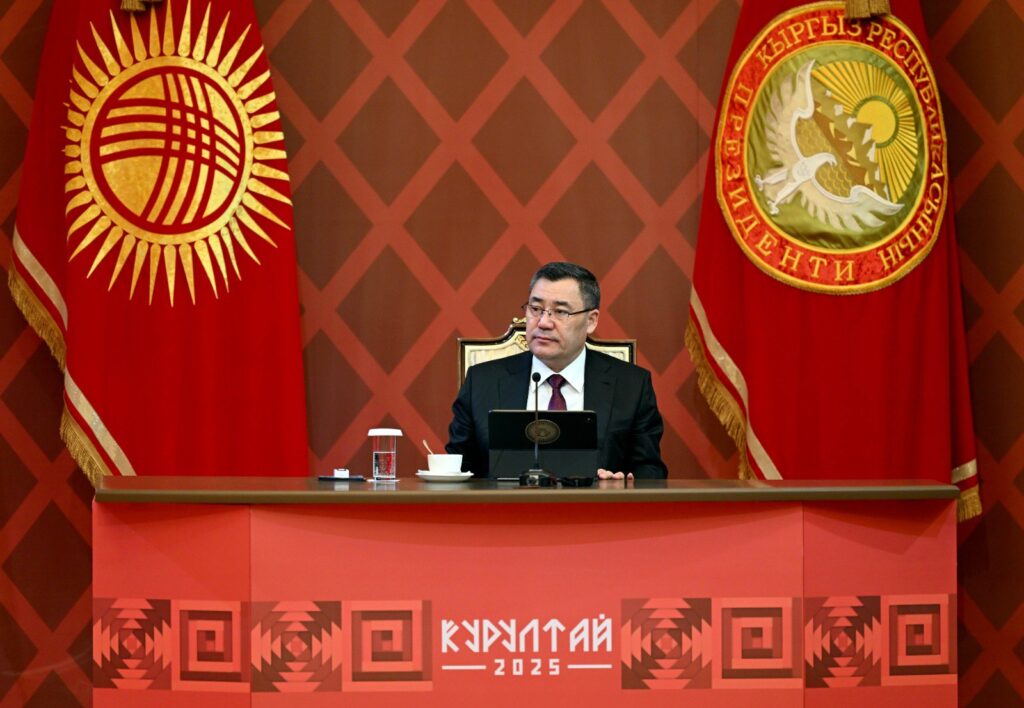
At the seventh Kyrgyz-Russian Economic Forum on the shores of Issyk-Kul, Kyrgyzstan and Russia signed nearly 30 agreements worth about US $270 million. The forum brought together around 1,000 representatives from government agencies, investment funds, businesses, and public organizations across member states of the Eurasian Economic Union (EAEU). In his address, President Sadyr Japarov said Kyrgyzstan has maintained average annual economic growth of 9 per cent since 2022, the highest rate among countries in the Commonwealth of Independent States and the EAEU. He described the forum as a vital platform for strengthening cooperation, exchanging experience, and fostering direct business ties. He also stressed the importance of technological independence, protection of digital data, and the development of national IT infrastructure. The agreements span energy, industry, transport, aviation, agriculture, the digital economy, education, and logistics. They include a US $55 million contract for Airports of Kyrgyzstan to acquire aircraft from a Russian manufacturer, a US $2.8 million memorandum for the purchase of an electric cruise ship, supply agreements for tractors, trucks, metal products, and machine tools, and plans for a milk processing complex. Additional deals cover financing arrangements for Kyrgyz companies to issue securities on the Russian market, an investment agreement with the Eurasian Development Bank to support projects through the Russian-Kyrgyz Development Fund, and a commitment by the Kyrgyz Green Energy Fund to purchase electricity from Russian suppliers. Roscosmos and the Kyrgyz Ministry of Digital Development also signed a memorandum on the peaceful exploration of space. First Deputy Prime Minister Daniyar Amangeldiev noted that during Kyrgyzstan’s decade as an EAEU member, the country has seen improvements in socioeconomic indicators, a decline in unemployment, and continued growth in priority sectors.

World Bank: Central Asia’s Growth to Slow but Remain Resilient

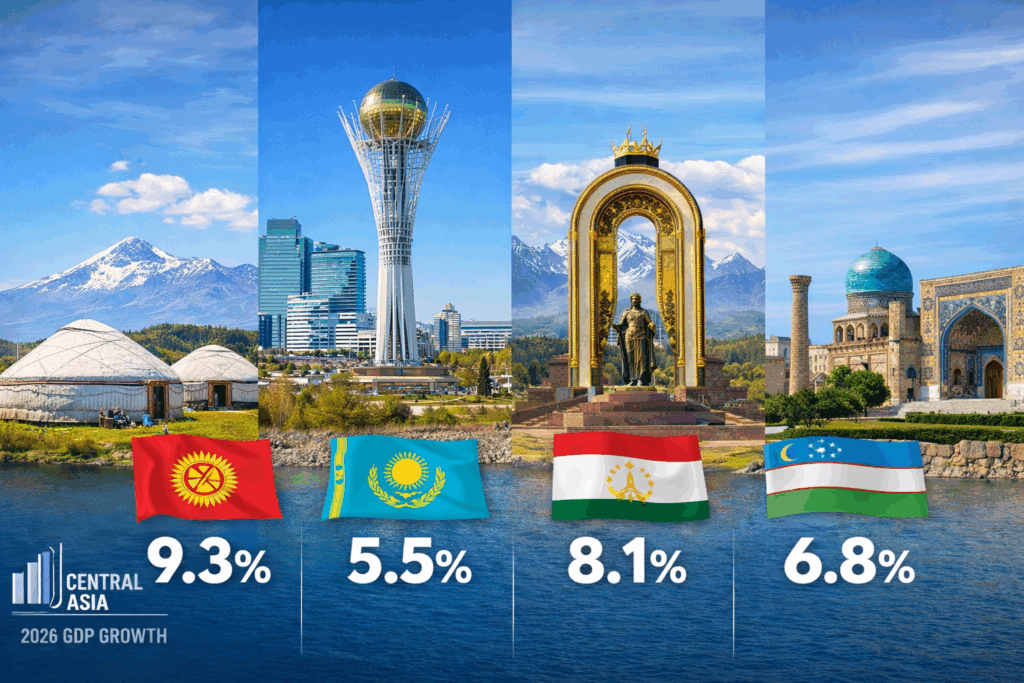
Central Asia is set to remain one of the world’s fastest-growing regions, although its economic momentum is expected to moderate in the coming years, according to the World Bank’s Spring 2025 Europe & Central Asia Economic Update. The region posted a growth rate of 5.5% in 2024, with projections of 5.0% for 2025 and 4.4% for 2026 as oil output normalizes in Kazakhstan, re-exports fade, and remittance inflows settle. The World Bank also revised its 2024 forecast upward by 0.8 percentage points, citing stronger-than-anticipated domestic demand. The forecasts incorporate data available through April 10, 2025. Country-Level Outlook Uzbekistan is forecast to grow by 6.5% in 2024, followed by 5.9% in both 2025 and 2026. Kyrgyzstan is expected to expand by 9.0% in 2024 and 6.8% in 2025. Tajikistan will grow by 8.4% in 2024 and 6.5% in 2025. Kazakhstan’s growth is projected to be more moderate, at 4.8% in 2024 and 4.5% in 2025. The World Bank attributes much of the region’s expansion to robust domestic demand, including household consumption, investment, and government spending, rather than export performance. Remittances continue to play a vital role in economic stability: they account for nearly 40% of GDP in Tajikistan, over 20% in Kyrgyzstan, and are critical in reducing poverty in Uzbekistan, where poverty rates would nearly double in their absence. Investment and Long-Term Prospects With investment comprising about 26% of GDP, Central Asia boasts one of the highest investment-to-GDP ratios among developing regions. This is largely driven by construction and large-scale infrastructure projects, particularly in the energy and transport sectors. However, the road to high-income status remains long. According to the Bank, based on current trajectories, it would take Kazakhstan and Turkmenistan approximately 40 years, Kyrgyzstan 70 years, and Uzbekistan and Tajikistan over 100 years to reach the high-income threshold of $14,005 in per capita income, a benchmark set for 2023. Risks and Policy Recommendations These forecasts are based on data available through April 10, 2025, and reflect persistent challenges stemming from the COVID-19 pandemic, ongoing cost-of-living pressures, and regional trade disruptions since 2022. To sustain momentum, the World Bank urges policymakers to pursue structural reforms and channel investment into productivity enhancements, technology adoption, and innovation. Without such efforts, growth could fall below potential in the years ahead.

ADB Raises Kazakhstan’s Economic Growth Forecast, Warns of Higher Inflation

The Asian Development Bank (ADB) has revised upward its economic growth forecast for Kazakhstan for both 2025 and 2026, while also raising its inflation projections. The updated outlook was published in the July edition of the Asian Development Outlook. Growth Outlook Strengthened According to the ADB’s latest report, Kazakhstan’s GDP is now expected to grow by 5.1% in 2025, up from the 4.9% forecast issued in April. The projection for 2026 has also been increased from 4.1% to 4.3%. Key growth sectors include: Transport: +21% Construction: +16.9% Manufacturing: +8.7% Mining: +6.1% Particular emphasis is placed on the early expansion of oil production at the Tengiz field, which launched ahead of schedule. This, combined with Kazakhstan’s increasing oil exports within the framework of OPEC+ quotas, has bolstered the growth outlook. As previously reported by The Times of Central Asia, in June, Kazakhstan raised production for the third consecutive month, contributing positively to GDP growth. "Growth in tax revenues has allowed for increased government investment in capital projects and the social sector," the ADB commented. "The early launch of the Tengiz expansion has strengthened prospects for the extractive industry. OPEC+'s May 31 decision to continue raising production supports this trend, as Kazakhstan is utilizing its full capacity." Inflation Pressures Intensify Despite the improved growth outlook, the ADB now expects inflation to reach 10.2% by the end of 2025, up from the 8.2% forecast in April. For 2026, inflation is projected at 8.4% (previously 6.5%). Data from Kazakhstan’s National Statistics Bureau indicates that annual inflation reached 11.3% in May and 11.8% in June. Paid services remain the primary inflation driver, though monthly price increases slowed modestly from 0.9% in May to 0.8% in June. The ADB notes rising inflationary pressure across the broader Caucasus and Central Asia subregion. The regional average is now expected to hit 7.8% in 2025 and 6.7% in 2026 both higher than the previous forecasts of 6.9% and 5.9%, respectively. Supporting Forecasts The Eurasian Development Bank (EDB) also anticipates robust economic expansion in Kazakhstan, projecting GDP growth of 5.5% in 2025, up from 4.8% in 2024, with sustained momentum through 2026-2027. However, the EDB likewise foresees persistent inflation, expecting it to reach 11.9% by year-end. Earlier, Deputy Prime Minister Serik Zhumangarin reported that the Kazakh economy grew by 6.2% in the first half of 2025, the country’s fastest growth rate since 2011.