• KGS/USD = 0.01144 0%
  • KZT/USD = 0.00205 0%
  • TJS/USD = 0.10771 0%
  • UZS/USD = 0.00009 0%
  • TMT/USD = 0.28571 0.28%
  • KGS/USD = 0.01144 0%
  • KZT/USD = 0.00205 0%
  • TJS/USD = 0.10771 0%
  • UZS/USD = 0.00009 0%
  • TMT/USD = 0.28571 0.28%
  • KGS/USD = 0.01144 0%
  • KZT/USD = 0.00205 0%
  • TJS/USD = 0.10771 0%
  • UZS/USD = 0.00009 0%
  • TMT/USD = 0.28571 0.28%
  • KGS/USD = 0.01144 0%
  • KZT/USD = 0.00205 0%
  • TJS/USD = 0.10771 0%
  • UZS/USD = 0.00009 0%
  • TMT/USD = 0.28571 0.28%
  • KGS/USD = 0.01144 0%
  • KZT/USD = 0.00205 0%
  • TJS/USD = 0.10771 0%
  • UZS/USD = 0.00009 0%
  • TMT/USD = 0.28571 0.28%
  • KGS/USD = 0.01144 0%
  • KZT/USD = 0.00205 0%
  • TJS/USD = 0.10771 0%
  • UZS/USD = 0.00009 0%
  • TMT/USD = 0.28571 0.28%
  • KGS/USD = 0.01144 0%
  • KZT/USD = 0.00205 0%
  • TJS/USD = 0.10771 0%
  • UZS/USD = 0.00009 0%
  • TMT/USD = 0.28571 0.28%
  • KGS/USD = 0.01144 0%
  • KZT/USD = 0.00205 0%
  • TJS/USD = 0.10771 0%
  • UZS/USD = 0.00009 0%
  • TMT/USD = 0.28571 0.28%

Viewing results 1 - 6 of 1871

Mirziyoyev Proposes Regional Investment Concept as Trade Hits $13 Billion

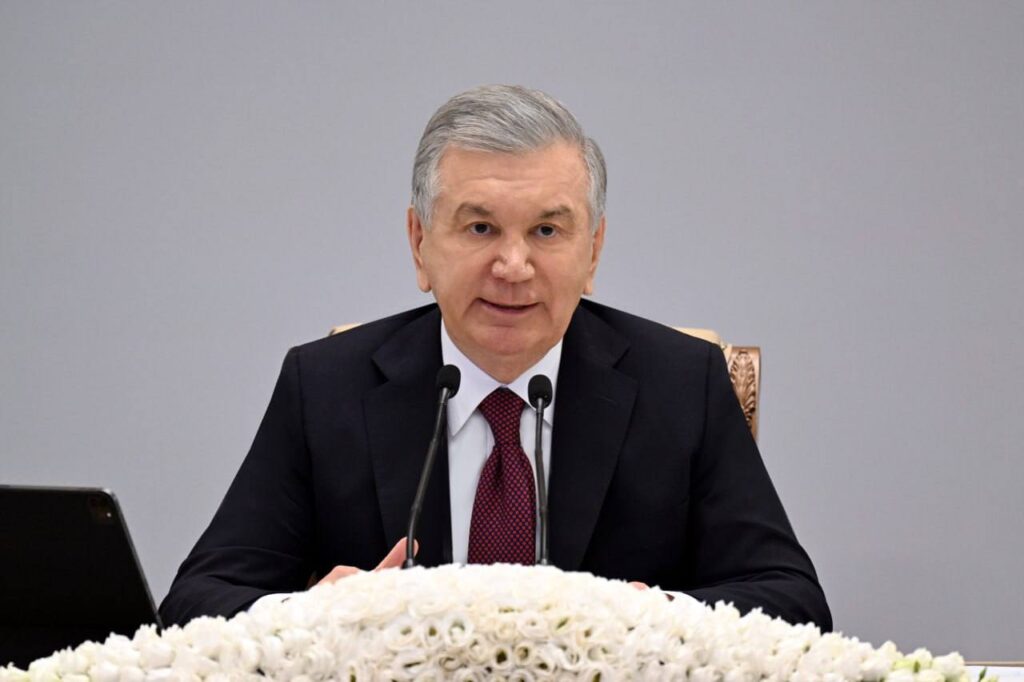
President Shavkat Mirziyoyev opened the Fourth Tashkent International Investment Forum on June 10 with a wide-ranging address emphasizing deeper global cooperation, peaceful conflict resolution, and renewed investment in green energy, digital transformation, and regional integration. His remarks underscored Uzbekistan’s economic ambitions and its aspiration to be a constructive global actor, according to the presidential press service. “We welcome more than 7,500 delegates today, including nearly 3,000 foreign guests from around 100 countries,” Mirziyoyev said. “This is a true expression of respect for our country and a sign of mutual trust.” Dignitaries included presidents and prime ministers from Bulgaria, Slovakia, Kazakhstan, Kyrgyzstan, Tajikistan, Azerbaijan, and senior officials from Russia and Turkmenistan. Also in attendance were leaders of major financial institutions such as the European Bank for Reconstruction and Development and the New Development Bank. Addressing Global Challenges Mirziyoyev painted a sobering picture of current global instability. “The global arms race is intensifying,” he noted, citing a 50% increase in military spending since 2010, now totaling $2.5 trillion. He criticized the erosion of international law and diplomacy, citing food insecurity, poverty, and climate change as growing threats. He also condemned the humanitarian crisis in Gaza: “In the 21st century, the death of so many innocent people before our eyes cannot be justified,” he said, urging a fair resolution in line with international law. On Ukraine, he reiterated Uzbekistan’s position that the conflict must be resolved through diplomacy. Mirziyoyev also advocated for continued engagement with Afghanistan, stressing that “stability and economic development in Afghanistan are key factors for long-term progress in the entire region.” Economic Vision and Sustainability Turning to economic progress, Mirziyoyev highlighted that Uzbekistan’s GDP has doubled over the past eight years and is on track to reach $200 billion by 2030. In 2023 alone, Uzbekistan attracted $35 billion in investment and exported goods worth $27 billion. He pointed to major improvements in global rankings: a 48-place rise in the Index of Economic Freedom, a 28-spot climb in Harvard’s Economic Complexity Index, and a recent S&P credit rating upgrade from “stable” to “positive.” He outlined four strategic priorities for sustainable growth: 1. Green Energy Transition Uzbekistan has attracted $6 billion in foreign direct investment in renewable energy, with electricity production rising from 59 to 82 billion kilowatt-hours and projected to exceed 120 billion by 2030. Green energy will make up 54% of the total by then. New measures include privatizing power grids, issuing green certificates and carbon credits, and joining international carbon markets. A new climate investment platform, “Green Uzbekistan”, will be launched this year. 2. Digital Transformation and Artificial Intelligence Mirziyoyev said IT exports are expected to reach $1 billion in 2025, with plans to increase fivefold by 2030. Uzbekistan has climbed 17 spots in the International AI Readiness Index and is developing a national AI model reflecting its cultural identity. Infrastructure plans include 20 new data centers and a national cloud platform, alongside the “One Million AI Leaders” initiative to build future digital skills. 3. Financial Sector Modernization Uzbekistan...

Kazakhstan Establishes New Special Economic Zone in Kyzylorda Region

Kazakhstan has launched a new special economic zone (SEZ) named "Korkyt Ata", located in the Kyzylorda region. Spanning 550 hectares, the SEZ is strategically positioned near the international transport corridor Western Europe-Western China, enhancing its potential as a hub for industrial growth and regional trade. According to the project’s developers, the SEZ aims to foster competitive industrial production, attract both domestic and foreign investment, and facilitate the introduction of advanced technologies. Its proximity to the major transport artery is expected to improve access to Central Asian markets and beyond. Korkyt Ata will operate under a special legal regime offering tax and customs incentives to investors. By 2049, it is projected to attract over 150 billion KZT ($290 million) in investment, including 80 billion KZT ($155 million) in foreign capital. Currently, Kazakhstan hosts 15 special economic zones, each with distinct industrial priorities. These include the Aktau Seaport SEZ, strategically located along the Trans-Caspian International Transport Route (TITR), also known as the Middle Corridor, which connects China to Europe through Kazakhstan. Additionally, two key SEZs are positioned along the Kazakh-Chinese border: Khorgos International Center for Border Cooperation (ICBC), facilitating cross-border trade and joint ventures; Khorgos-Eastern Gate SEZ, a logistics hub featuring industrial complexes and a dry port that links China with Central Asia and the Middle East. The establishment of Korkyt Ata underscores Kazakhstan’s ongoing strategy to strengthen its economic infrastructure through diversified SEZs. By leveraging its geographic advantages and investor-friendly policies, the country aims to solidify its role as a vital link in Eurasian trade and industrial networks.

Tajikistan Has the Harshest Fines Relative to Income in Central Asia

Tajikistan ranks first among Central Asian countries in the ratio of maximum fines to average salaries, a disparity that has sparked growing dissatisfaction among the population. Structure and Scale of Fines Fines in Tajikistan fall into two categories: administrative and criminal. Administrative fines apply to less serious infractions, such as traffic violations, breaches of sanitary rules, and disorderly conduct. Criminal fines, by contrast, target serious offenses including fraud, tax evasion, and property crimes. Administrative penalties are more common and tend to disproportionately impact ordinary citizens. As of January 1, 2025, the minimum administrative fine for individuals and sole proprietors is 75 Tajikistani somoni (TJS), or approximately $7.20. For government officials, the minimum fine is 225 TJS ($21), and for legal entities it is 750 TJS ($72). The upper threshold for administrative fines is capped at $780 for individuals, $1,400 for officials, $2,120 for entrepreneurs, and $7,200 for legal entities. Regional Comparisons Compared to its neighbors, Tajikistan's fine-to-salary ratio is starkly higher. In Kazakhstan, the maximum fine for individuals is roughly $1,537, or about 80.5% of the average monthly salary ($851 as of January 2025). In Kyrgyzstan, the maximum individual fine of approximately $229 represents just 50.9% of the average salary ($450). In Uzbekistan, where the maximum individual fine is limited to $145, it amounts to about 35% of the average salary of $414. In contrast, the maximum administrative fine in Tajikistan for individuals exceeds the country’s average monthly income by more than 2.8 times, placing it at the bottom of the regional ranking in terms of fairness and affordability. Calls for Reform Experts have proposed that Tajikistan consider adopting a proportional system of fines based on the offender’s income. Such systems, already implemented in various European countries, aim to ensure that penalties are equitable across income groups. In Finland, traffic fines are linked to annual income; in Sweden and Norway, they depend on monthly earnings. Other countries, including Germany, Switzerland, Austria, and France, also tailor financial penalties to income. Estonia and Latvia have initiated similar reforms, signaling a broader European trend. Adopting such a model in Tajikistan could improve perceptions of justice and encourage compliance with laws, particularly among higher-income groups. However, experts caution that successful implementation would require sweeping legal reforms, along with mechanisms to accurately monitor and verify income levels.

China and Russia Remain Kyrgyzstan’s Largest Foreign Investors

The National Statistical Committee of Kyrgyzstan has released updated figures on foreign direct investment (FDI), revealing that China and Russia remained the country’s largest investors in 2024. According to the data published on April 15, Kyrgyzstan received $872.6 million in FDI in 2024, marking an increase from $844.9 million in 2023. China accounted for 23.9% of total FDI, followed by Russia with 22.7%, Turkey (10.2%), Luxembourg (8.8%), Kazakhstan (5.7%), the Netherlands (4.9%), and Azerbaijan (3.4%). The remaining 20.4% came from a mix of other countries. Compared to the previous year, Kyrgyzstan saw increased investment from Azerbaijan, Luxembourg, Germany, Turkey, the Netherlands, and Russia, while inflows from the UK, UAE, Kazakhstan, and China declined. Sector Breakdown The manufacturing sector attracted the largest share of foreign investment, receiving 33.2% of total FDI. This was followed by the financial sector (20.6%), wholesale and retail trade (18.7%), the mining industry (11.3%), and geological exploration (8.3%). Sharp Rise in Overall Investment The total volume of investments in fixed assets from all sources in the first quarter of 2025 reached 56.8 billion Kyrgyz som, reflecting a 90.6% increase year-on-year. This marks a significant acceleration compared to the 63.9% growth recorded during the same period in 2024. Officials attribute the sharp rise primarily to a 2.1-fold increase in domestic financing, while the volume of foreign investment in fixed assets during the same period decreased by 1.5 times compared to the first quarter of 2024.

Opinion: Kazakhstan’s Tax Reform May Come as an Unpleasant Surprise

Kazakhstan's tax reform has reached a critical juncture. This week, the Mazhilis, the lower house of parliament, approved the draft of the new Tax Code in its first reading. The sweeping document, comprising 822 articles, proposes the repeal of the current Tax Code along with the accompanying implementation law. While the reform fulfils directives issued by President Kassym-Jomart Tokayev in his 2022 and 2023 state-of-the-nation addresses, skepticism abounds. Experts and business leaders have voiced concerns, and lawmakers themselves have offered mixed reviews, with many adopting a critical stance. Concerns About Scope and Timing Though tax professionals broadly agree on the need for tax reform, some warn that the current version may be the most stringent in over two decades. Critics argue that without addressing structural inefficiencies in government spending, raising taxes alone will not yield the desired outcomes. They emphasize the need for a balanced approach that supports both fiscal sustainability and economic resilience. Adding to the unease is the timing. Kazakhstan, like many economies, faces mounting global pressures. The threat of a financial downturn, exacerbated by falling energy prices and international tariff disputes, has prompted urgent consultations at the highest level. Tokayev recently convened a closed-door meeting with the prime minister and the head of the National Bank, instructing them to finalize a government action plan to mitigate potential economic fallout and maintain investment flows. A Mixed Bag of Reactions Some analysts acknowledge that the existing Tax Code, adopted in 2008, is outdated. They argue that reforms are essential to address digitalization, evolving business models, and new global challenges. Calls for improved tax administration, especially the simplification of procedures and adoption of risk-based oversight, aim to ease pressure on law-abiding businesses while better targeting the informal sector. The draft law also seeks to limit inefficient tax exemptions and make incentives more focused and transparent. These changes are framed as part of Tokayev's broader economic transformation agenda, which prioritizes fair taxation, industrial processing, and innovation. Nonetheless, many entrepreneurs remain uneasy. Economic instability, lingering post-pandemic effects, geopolitical risks, and sanctions-related supply disruptions have left businesses vulnerable. Critics worry that introducing a more demanding tax regime now may fuel uncertainty and discourage investment. Additional concerns center on governance. Persistent issues of corruption, selective enforcement, and administrative overreach have eroded public trust. Without parallel reforms in public administration, experts argue that changes to tax policy alone may fall short. Divided Political Reception The draft Tax Code’s passage through its first reading does not guarantee smooth sailing. Even the ruling Amanat party, while supporting the bill, has voiced reservations. Its members have called for safeguarding small and medium-sized enterprises and enhancing investment incentives. The opposition Ak Zhol party has been the most vocal critic. Its leader, Azat Peruashev, characterized the proposal as a fiscal crackdown rather than genuine reform. The faction demands greater transparency, public consultations, and a reconsideration of proposed VAT hikes and lower registration thresholds. Meanwhile, the pro-business Respublica party supports the reform in principle but insists on greater simplification in business-tax...

EU-Central Asia Summit Opens New Opportunities for Kazakhstan

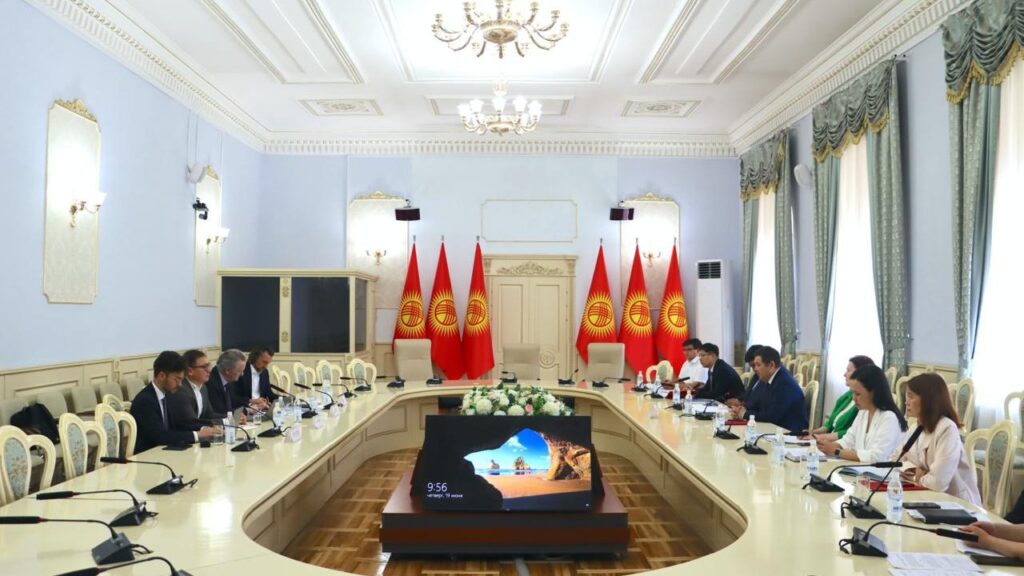
The first-ever summit between the European Union and the five Central Asian countries opened on April 3 in Samarkand, Uzbekistan. The meeting marks a milestone in regional diplomacy, as both sides seek to deepen cooperation amid growing geopolitical shifts. Kazakhstan, in particular, is entering the summit with growing international clout, thanks to its stable economic performance and balanced foreign policy approach. European Council President António Costa and European Commission President Ursula von der Leyen are representing the EU at the summit, which is being chaired by Uzbek President Shavkat Mirziyoyev. According to official sources, the summit aims to demonstrate mutual geopolitical interest and expand collaboration between Europe and Central Asia across key areas. The agenda includes strengthening multilateral ties, addressing shared security threats, enhancing economic and investment cooperation, and advancing collaboration under the EU’s Global Gateway initiative. Focus areas also include energy, climate neutrality, connectivity, and green transition, along with mobility and cultural exchange. The EU is already the region’s second-largest trading partner, accounting for 22.6% of Central Asia’s total foreign trade in 2023. It is also the largest source of foreign investment, responsible for over 40% of the region’s total inflows. Kazakhstan's President Kassym-Jomart Tokayev is attending the summit, following a bilateral meeting with President Mirziyoyev in Almaty on March 29. Also expected to participate are Kyrgyz President Sadyr Japarov, Tajik President Emomali Rahmon, and Turkmen President Serdar Berdimuhamedov. At the summit, the EU is set to unveil a substantial investment package for Central Asia, with priority sectors including transportation infrastructure, critical raw materials, energy transmission, and digitalization. European Commission President von der Leyen emphasized that Central Asia’s significant natural resources and industrial potential align with Europe’s sustainability goals. “Europe aims to create a complete value chain, not merely purchase raw materials. This is vital for generating local employment and upholding high environmental and social standards,” she said. Additional EU funding will be directed toward green energy projects and improvements to Uzbekistan’s water infrastructure. According to Tair Nigmanov, an international relations expert, the EU’s increased engagement stems from heightened geopolitical rivalry. “We are situated between major powers like Russia and China. The EU, as another global player, wants Central Asia to remain neutral and not gravitate toward any single power center,” Nigmanov told Inform.kz. “To that end, it is offering investment, trade opportunities, and political assurances.” For Kazakhstan, the summit presents a strategic platform to attract investment, reinforce its non-aligned stance, and leverage its growing geopolitical relevance in an increasingly multipolar world.