• KZT/USD = 0.00212
  • TJS/USD = 0.10810
  • UZS/USD = 0.00008
  • TMT/USD = 0.29760
  • KZT/USD = 0.00212
  • TJS/USD = 0.10810
  • UZS/USD = 0.00008
  • TMT/USD = 0.29760
  • KZT/USD = 0.00212
  • TJS/USD = 0.10810
  • UZS/USD = 0.00008
  • TMT/USD = 0.29760
  • KZT/USD = 0.00212
  • TJS/USD = 0.10810
  • UZS/USD = 0.00008
  • TMT/USD = 0.29760
  • KZT/USD = 0.00212
  • TJS/USD = 0.10810
  • UZS/USD = 0.00008
  • TMT/USD = 0.29760
  • KZT/USD = 0.00212
  • TJS/USD = 0.10810
  • UZS/USD = 0.00008
  • TMT/USD = 0.29760
  • KZT/USD = 0.00212
  • TJS/USD = 0.10810
  • UZS/USD = 0.00008
  • TMT/USD = 0.29760
  • KZT/USD = 0.00212
  • TJS/USD = 0.10810
  • UZS/USD = 0.00008
  • TMT/USD = 0.29760

Viewing results 1 - 6 of 345

Tashkent Medical University Accused of Forcing Students to Study in Russian City Reportedly Under Drone Attacks

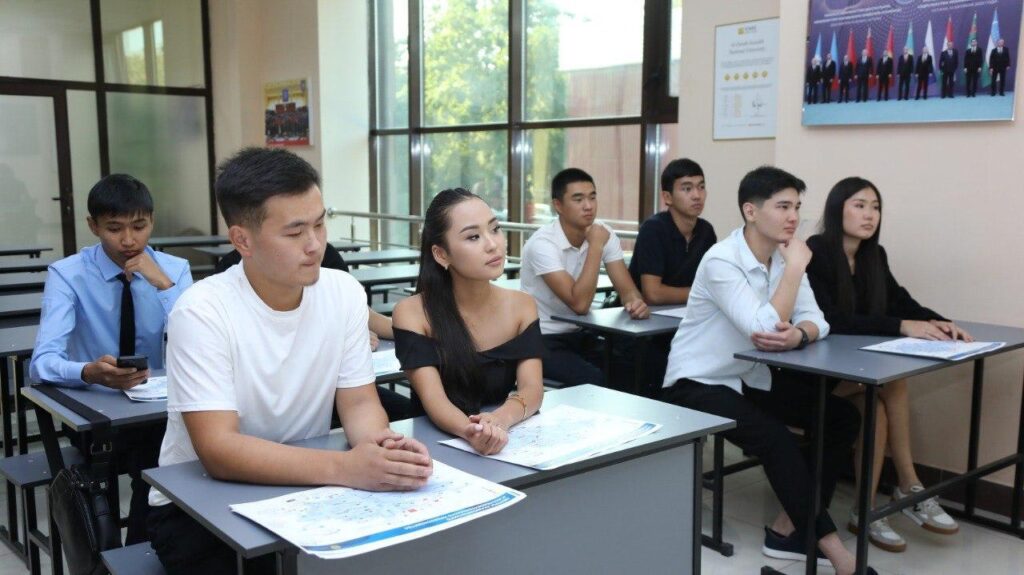
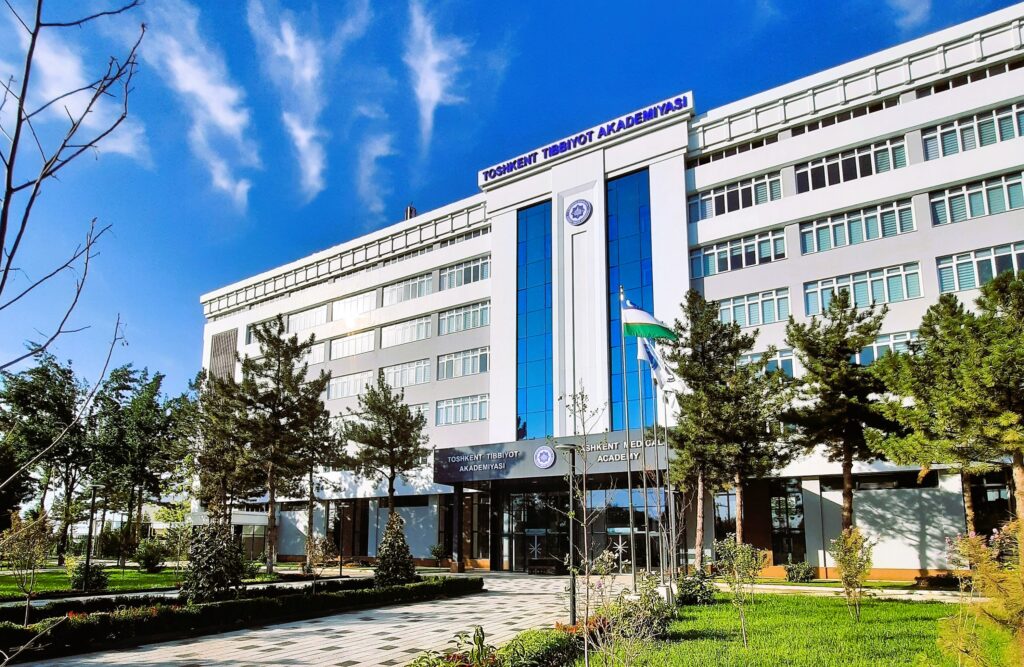
Tashkent State Medical University (TSMU) has rejected social media allegations that its students are being forced to study in Nizhny Novgorod, Russia, a city some reports claim is “under Ukrainian drone attacks.” The university called the reports “baseless and false,” stressing that the students are enrolled in a joint degree program requiring them to complete the final two years at a partner institution abroad. Videos shared by local media this week showed students opposing the move, citing recent drone strikes in the region that reportedly killed one person and injured several others. They claimed a previous rector had promised to transfer the program to Kazakhstan, but the current rector, Shukhrat Boymuradov, reversed that decision. Students alleged they were given an ultimatum: go to Russia or take academic leave and request to finish their fifth year in Uzbekistan. TSMU said all the students in question had signed contracts under a joint education program with Privolzhsky Research Medical University (PRMU) in Nizhny Novgorod, as stipulated by Uzbekistan’s Cabinet of Ministers Resolution No. 421 of July 6, 2021. The agreement requires participants to complete their fourth and fifth years at PRMU. According to the university, PRMU runs 12 joint programs with five Uzbek universities and currently hosts more than 400 Uzbek students. To ensure suitable conditions, TSMU and PRMU agreed on dedicated dormitories, a special dean’s office to help with administrative matters, and re-enrollment opportunities for students previously expelled from PRMU. The administration dismissed claims that Nizhny Novgorod is under martial law, noting that the city hosts active academic partnerships and that no state of war has been declared there. On August 11, Boymuradov met with students and parents to discuss the program, living arrangements, and support services. TSMU reported that most students expressed readiness to continue studies at PRMU, while a minority sought to remain in Tashkent, allegedly relying on “deliberately false information.” The university warned that spreading misinformation intended to mislead the public and damage its reputation could result in legal action under Uzbek law.

Kyrgyzstan Eases Licensing Rules to Expand Private School Sector

The Kyrgyz government is taking steps to simplify the licensing process for private schools in response to a growing shortage of student places in the country’s public education system, particularly in urban centers such as Bishkek and Osh. On August 4, Chairman of the Cabinet of Ministers Adylbek Kasymaliyev announced a reform initiative aimed at easing regulatory requirements for licensing private institutions offering primary education. The goal, he stated, is to expand access to quality education and alleviate pressure on the overburdened public school network. Kasymaliyev noted that rapid population growth has led to severe overcrowding in schools in major cities, where students are often taught in three shifts instead of the standard two, negatively affecting learning outcomes. “Addressing the shortage of school places is a key priority for the government,” Kasymaliyev said. While new public schools are under construction, he emphasized that the private sector plays an important role in meeting rising demand. Kyrgyzstan currently has 219 private schools, with 108 located in Bishkek and 54 in Osh. In 2024, 33 licenses were issued to private education providers, and 21 more have been granted since the beginning of 2025. “We see strong interest from the private sector in the education field, particularly in large cities,” Kasymaliyev said. “Creating real opportunities for opening high-quality private schools is one of our tasks.” The reform is part of a broader initiative to improve educational access and quality amid demographic expansion and urbanization. Class sizes in Bishkek far exceed recommended limits, according to educators. “The average class size in Bishkek is 36 to 45 students, while the sanitary norm is up to 35,” a deputy director of a public school in the capital told The Times of Central Asia. “In some popular schools, the number exceeds 50.”

Tajikistan to Introduce 10-Point Grading System in Schools

Beginning September 1, secondary schools in Tajikistan will adopt a new 10-point grading system, the country’s Minister of Education and Science, Rahim Saidzoda, announced at a press conference today, according to Khovar. Saidzoda stated that preparations are already underway for the system’s implementation, including the development of new grade books. The reform is part of a broader effort to align Tajikistan’s educational standards with international practices. Experts emphasize that one of the key objectives is to standardize national grading in line with global benchmarks, making Tajik school diplomas more readily accepted abroad. This change is expected to facilitate Tajik students’ admission to universities in both neighboring and more distant countries. The ministry noted that the new 10-point scale will enhance classroom assessments and examinations by introducing clearer and more consistent evaluation criteria, aligned with advanced education systems. Multi-point grading systems are already widely used in developed nations such as Japan, South Korea, the United States, and France, where 10, 12, or even 20-point scales are standard. In contrast, neighboring Central Asian countries continue to rely on the traditional five-point grading model. For instance, Kyrgyzstan has confirmed that it will retain the five-point scale, according to 24.kg. Uzbekistan also maintains a system ranging from “5” (excellent) to “1” (poor).

OCA Magazine Shines Spotlight on Education in Eurasia

The latest edition of OCA Magazine (UK) focuses on the challenges and opportunities facing education in Central Asia, the CIS, and neighbouring regions. The special issue, OCA Magazine: Education, explores digital transformation, women’s access to higher education, and the drive to modernise universities in a fast-changing global environment. The special edition includes success stories from Kazakhstan’s Al-Farabi Kazakh National University and Saken Seifullin Kazakh Agrotechnical Research University, where AI, digital campuses, and international double-degree programmes are reshaping learning. The issue also features insights from British tourism expert, Sophie Ibbotson, who predicts that by 2033, tourism in Uzbekistan could generate over 290,000 direct jobs, making hospitality and creative education a national priority. The Methodica School and Tashkent International School, pioneers of innovative and multicultural learning, are also in the spotlight, as well as Tajikistan’s cultural renaissance, where music education and the work of composer Tolibkhon Shakhidi exemplify the fusion of tradition and modernisation. The edition, supported by Hertfordshire Press and the Eurasian Creative Guild (London), is distributed to universities, diplomatic missions, and cultural institutions worldwide. A digital version is available at ocamagazine.com.

Experts Warn of Rights Violations in Kyrgyzstan’s Language Reform Push

The Jogorku Kenesh, Kyrgyzstan’s parliament, has adopted a sweeping package of 18 bills that overhaul the country’s language policy. The new measures significantly curtail the use of Russian, the official language, across key sectors including education, healthcare, the judiciary, and administrative processes. The legislation has drawn sharp criticism from both experts and the wider public. According to the government, the changes are necessary to align existing laws with the constitutional provisions on the state language, Kyrgyz. All 18 bills passed through parliament in a single session comprising three readings. They now await the signature of President Sadyr Japarov. Parliament Speaker Nurlanbek Turgunbek uulu emphasized the urgency of the reforms, warning that the Kyrgyz language is in a “dangerous” state. “Many of us have children and grandchildren who do not speak Kyrgyz. This is shameful. If we continue to neglect our state language, we risk losing our national identity,” he said. Sweeping Language Reforms The adopted laws stipulate that individuals who do not speak Kyrgyz will be barred from holding a wide range of public positions, including parliamentary seats, government posts, judicial and prosecutorial roles, and employment at the National Bank. The legislation mandates Kyrgyz-language proficiency exams for students at the point of admission and grade-level advancement in schools and kindergartens. Public signage, geographic names, and announcements must now appear in Kyrgyz first, with Russian and other languages allowed only as supplementary. All notarized contracts must be drafted in Kyrgyz, with translation into other languages permitted only when necessary. State institutions, including medical facilities, must maintain records exclusively in Kyrgyz. Mounting Concerns Some lawmakers have voiced concerns over the practicality of these reforms. The deputy Gulya Kozhokulova cautioned that insufficient development of medical terminology in Kyrgyz could jeopardize patient safety due to potential errors in diagnoses and prescriptions. MP Dastan Bekeshev highlighted risks to citizens unfamiliar with Kyrgyz when handling legally binding documents, such as loan agreements. Under the new regulations, initial violations of language norms will result in warnings, with repeat offenses drawing fines of up to 17,000 KGS (approximately $200). Public Backlash The legislation has triggered a wave of criticism on social media and among civil society groups. At a roundtable hosted by the Oi Ordo Center for Expert Initiatives, participants asserted that the measures infringe on the rights of at least 1.5 million citizens. An open letter urging President Japarov to reject the legislation was submitted by members of the public, academia, and Bishkek City Council. “Most of the amendments initiated by the National Commission on the State Language lack public backing and have sparked criticism for sharply limiting the use of Russian in socially vital sectors,” the letter stated. Expert Commentary Speaking to The Times of Central Asia, Igor Shestakov, director of the Oi Ordo Center, warned that the amendments contain internal contradictions and ultimately undermine the Kyrgyz language’s development. “These measures primarily restrict the use of Russian. If implemented, they will have far-reaching consequences for banking, legal services, and education, affecting daily life and bureaucratic procedures....

Opinion: Uzbekistan Shows the World How Distance Education Can Work in a Crisis

A new study from Uzbekistan offers a powerful counter-narrative to the global trend of learning losses during the COVID-19 pandemic. While many countries struggled to maintain academic progress amid widespread school closures, Uzbekistan managed to not only sustain but improve learning outcomes — a feat made possible through swift and innovative education responses. In our latest paper, we draw on unique longitudinal data to evaluate the impact of pandemic-induced school closures. The findings are striking. Key Findings • Grade 5 mathematics scores improved by 0.29 standard deviations during the pandemic. • Students tested in both 2019 and 2021 gained 0.72 standard deviations, indicating continued learning. • Uzbekistan maintained learning continuity despite massive disruptions to traditional schooling. It was with some trepidation that I looked towards distance education done right to alleviate the situation. I am glad I was proven right, but, of course, this is all due to the students, families, teachers, administrators, and the Ministry of Education of Uzbekistan. The Uzbekistan Model: Distance Learning via TV What made this success possible? We credit Uzbekistan’s rapid deployment of daily televised lessons, taught by the country's best teachers, ensuring nationwide coverage even where internet access was limited. Despite limited internet access in rural areas, 100% digital TV penetration made broadcasting the most viable mass learning platform. By April 2020, over 350 video lessons were airing nationally and uploaded online for supplementary access. Implications for Global Education Policy Uzbekistan’s experience illustrates that learning loss is not inevitable. With well-designed, inclusive, and adaptive policies, countries can maintain — and even accelerate — learning during crises. The study contributes to the growing body of evidence on educational resilience and can inform crisis responses worldwide.