• KZT/USD = 0.00212
  • TJS/USD = 0.10810
  • UZS/USD = 0.00008
  • TMT/USD = 0.29760
  • KZT/USD = 0.00212
  • TJS/USD = 0.10810
  • UZS/USD = 0.00008
  • TMT/USD = 0.29760
  • KZT/USD = 0.00212
  • TJS/USD = 0.10810
  • UZS/USD = 0.00008
  • TMT/USD = 0.29760
  • KZT/USD = 0.00212
  • TJS/USD = 0.10810
  • UZS/USD = 0.00008
  • TMT/USD = 0.29760
  • KZT/USD = 0.00212
  • TJS/USD = 0.10810
  • UZS/USD = 0.00008
  • TMT/USD = 0.29760
  • KZT/USD = 0.00212
  • TJS/USD = 0.10810
  • UZS/USD = 0.00008
  • TMT/USD = 0.29760
  • KZT/USD = 0.00212
  • TJS/USD = 0.10810
  • UZS/USD = 0.00008
  • TMT/USD = 0.29760
  • KZT/USD = 0.00212
  • TJS/USD = 0.10810
  • UZS/USD = 0.00008
  • TMT/USD = 0.29760

Viewing results 1 - 6 of 345

Kyrgyz Schools Face Persistent Shortages of Teachers and Textbooks

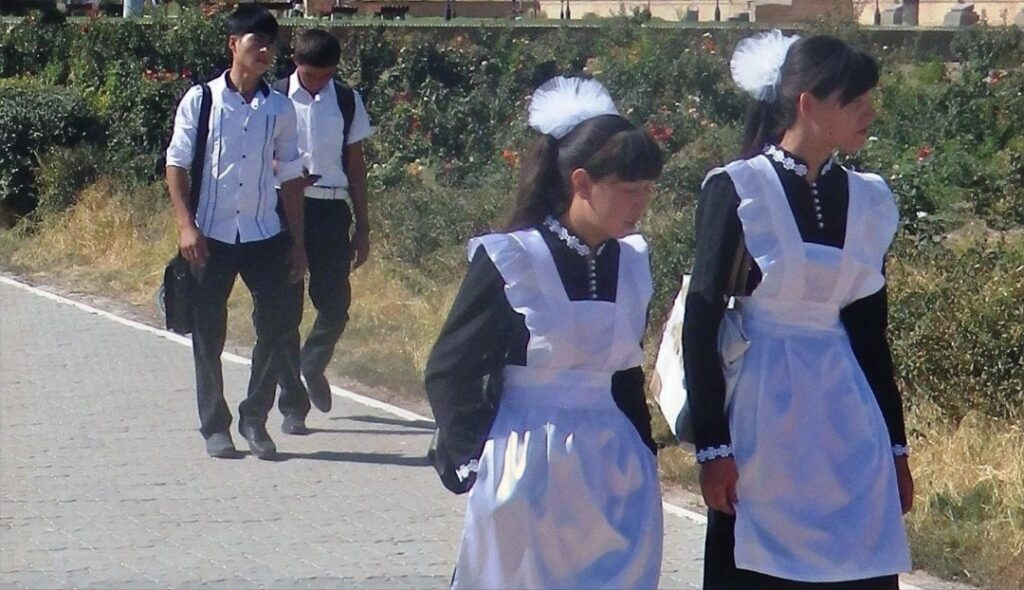
Kyrgyzstan continues to face serious shortages of qualified teachers and school textbooks, according to Deputy Minister of Education Nadira Jusupbekova, who addressed the issue during a recent press conference in Bishkek. Teacher Deficit in Key Subjects As of the end of the last academic year, schools across the country were short 947 teachers, Jusupbekova reported. The most acute gaps are in mathematics, Russian language, and history, though a shortage of history teachers is a more recent development. “The lack of mathematics teachers is particularly severe, especially in Bishkek,” she said. “Russian language comes next. We currently have teachers from Russia assisting us, and we’ve requested universities to increase training for mathematics and Russian language specialists.” Ongoing Textbook Shortage In addition to staffing challenges, many schools still lack adequate textbook supplies. Last year, the Ministry of Education admitted that general education schools were only 50% stocked with textbooks, forcing many students to rent materials. This year, 744 million KGS (approximately $8.5 million) was allocated from the national budget for textbook production. These funds have been used to publish new English language textbooks for grades 3-9, with a total print run exceeding 1.9 million copies. Among them are 158,700 textbooks for grade 4, printed with support from the British Embassy. Mathematics and science textbooks for grades 1-2 (over 1.2 million copies) have already been printed, with additional sets for grades 5 and 7 scheduled for release soon. Textbooks for Russian language and literature, adapted by a working group in Kyrgyzstan, will be printed in Russia. They are expected to be delivered by October 2025. Digital Platform Offers Interim Relief To address the immediate textbook shortage, the Ministry has launched the Okuu Kitebi online platform, which provides access to all school textbooks in digital format. Future updates will integrate the platform with other educational systems, enabling students and teachers to download and use materials offline. According to Okuu Kitebi Publishing House, the goal is to meet 110% of textbook demand in schools by 2030, with funding to continue coming from the national budget.

South Korea to Support Health and Nutrition in Kyrgyz Schools

The Korea International Cooperation Agency (KOICA), in partnership with Kyrgyzstan’s Ministry of Education, has launched a new initiative aimed at improving health and nutrition in schools by incorporating locally produced agricultural products into school meals. According to KOICA’s Kyrgyzstan office, the project will directly benefit approximately 16,000 students and local farmers across the regions of Osh, Jalal-Abad, Chui, Naryn, and Batken. The project aims to enhance children’s health through fortified school meals, upgraded school infrastructure, and capacity-building programs for school personnel. With a total budget of $10 million, the program will run until 2028. It will support the renovation of kitchens and dining areas, the construction of toilets, the installation of handwashing stations, and the delivery of educational programs on healthy eating, meal procurement, health, and hygiene in approximately 40 schools. In addition, the project includes training for local agricultural cooperatives on crop cultivation, post-harvest handling, and operational management, alongside the development of model farms. A key component of the initiative is expanding access to clean water and ensuring that hygiene and sanitation services are adequate, inclusive, and gender-sensitive. This is not KOICA’s first investment in Kyrgyzstan’s development. Earlier, The Times of Central Asia reported on a separate $10 million project launched by KOICA to improve air quality in the country, with a particular focus on Bishkek.

Kazakhstan’s Gumilyov Eurasian National University Opens Branch in Kyrgyzstan’s Osh

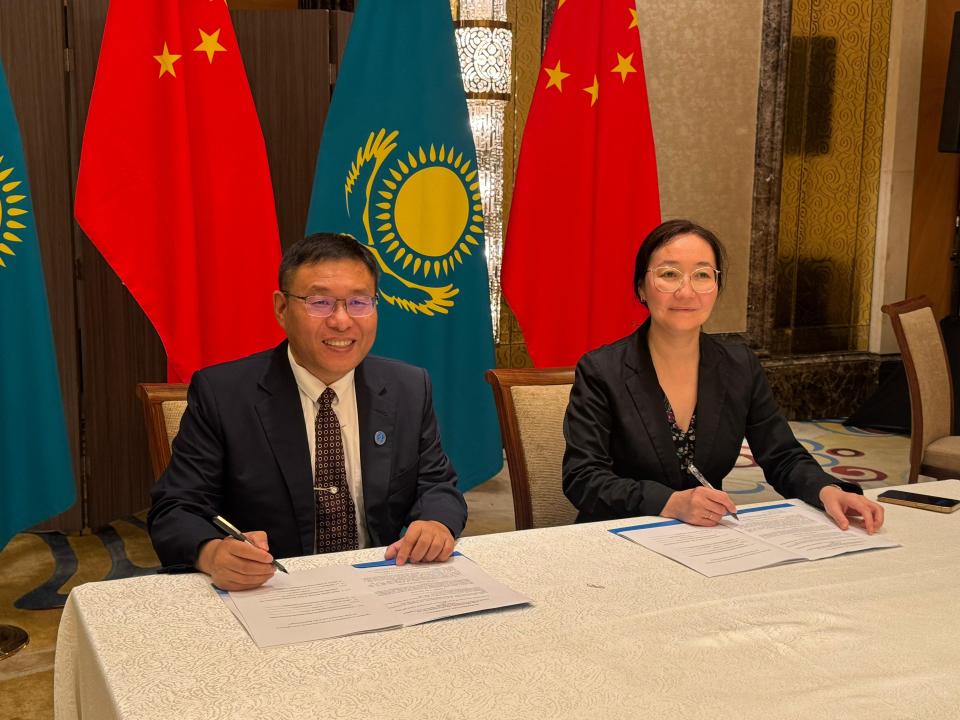
Kazakhstan’s L.N. Gumilyov Eurasian National University (ENU) has opened a new branch at Osh State University in Kyrgyzstan’s second-largest city, Osh. The new branch will offer training in ecology, information and communications technology (ICT), and the service sector. Students will also study Russian language and literature, translation, foreign languages, journalism, and physics, earning dual diplomas from both ENU and Osh State University. ENU Rector Yerlan Sydykov said that the new branch would help strengthen regional human capital and “create a strong intellectual foundation for the sustainable development of Central Asia.” ENU currently collaborates with 16 Kyrgyz universities through academic mobility initiatives and dual-degree programs.

From Kazakhstan to Arizona: First Student Cohort Marks Nation’s Education Hub Ambitions

On August 23, 2025, 29 students from Kozybayev University in Petropavlovsk arrived at the University of Arizona. Their journey marks the start of a dual-degree program that allows Kazakh students to spend a semester in the U.S. while completing the rest of their studies at home. Graduates will receive two diplomas, one from each institution. The program, launched under President Kassym-Jomart Tokayev’s directive, is Kazakhstan’s first large-scale partnership with a U.S. university. Fully funded by the state, it covers tuition, housing, visas, and travel expenses. Courses are offered in biotechnology, information systems, and inclusive education - fields aligned with Kazakhstan’s development priorities. Part of a Broader Strategy This initiative is not just about Kozybayev University. It is part of a broader government strategy to internationalize higher education and transform Kazakhstan into an academic hub for Central Asia. In 2022, Tokayev set a goal of opening five foreign university branches by 2025. Since then, partnerships have multiplied: De Montfort University (UK) in Almaty, MEPhI and Gubkin University (Russia) in Almaty and Atyrau, and the University of Arizona in Petropavlovsk. Others are in development, including Heriot-Watt University (Scotland), SeoulTech (South Korea), and Tianjin University (China). These ventures come with incentives. The government treats foreign universities as “strategic investors,” offering land, tax breaks, and simplified bureaucracy. In return, Kazakhstan gains access to advanced curricula and English-language teaching, while local universities benefit from joint research and faculty exchanges. Building Domestic Capacity Kozybayev University has expanded rapidly to accommodate the Arizona program: a new academic laboratory, dormitories, and upgraded infrastructure are in place. The university is also hosting students from 16 countries, including a hundred from Türkiye. This signals a shift - Petropavlovsk, once peripheral in academic terms, is now a point of attraction for international students. The government’s long-term aim is to convert more domestic universities into research-intensive institutions. By embedding foreign collaborations into the national strategy, Kazakhstan hopes to ensure lasting benefits rather than temporary prestige projects. Rising Student Mobility Kazakhstan’s pivot to become an education destination reflects changing regional dynamics. More than 31,000 foreign students now study in Kazakhstan, including over 12,000 from India in medical programs. This is a sharp rise from a few years ago and a reversal of the trend where most Kazakh students went abroad, often to Russia. The Ministry of Science and Higher Education is actively promoting the country under the “Study in Kazakhstan” campaign, targeting markets like Pakistan, China, and Azerbaijan. For many students, Kazakhstan offers lower costs than the West and the chance to earn dual degrees with reputable foreign institutions. For many international students, Kazakhstan is becoming an appealing study destination. Tuition fees are comparatively low - ranging from US $1,500 to $5,000 per year - while monthly living costs are in the U.S. $550–$750 range, encompassing accommodation, food, transport, and essentials. These financial benefits, along with government scholarships, English-taught programs, and dual-degree opportunities, make Kazakhstan an increasingly attractive option. Lessons from Abroad Kazakhstan’s ambition echoes strategies pursued by the UAE and Singapore. Dubai, for example,...

Kazakhstan Aims to Redefine the Role and Status of Teachers

Kazakhstan is preparing sweeping changes to the role of teachers, aiming to significantly strengthen their legal protections and professional autonomy. The proposals, announced at an educators' conference in August, are being described by experts as revolutionary for the country’s education system. Protecting Teachers' Rights President Kassym-Jomart Tokayev participated in the conference and proposed amendments to the Law on the Status of Teachers to shield educators from non-core responsibilities. “The issue of protecting teachers' rights should always be a priority,” said Tokayev. “Teachers must be exempt from tasks unrelated to their primary duties. Unfortunately, local authorities often grossly violate the law in this regard. The Prosecutor’s Office must take strict action against such violations.” In many post-Soviet countries, it has been common for teachers to be assigned duties unrelated to education. In Kazakhstan, for instance, teachers are often tasked with running polling stations during elections or referendums, ensuring voter turnout, cleaning school premises, organizing community celebrations, and more. Tokayev also spoke out against holding teachers accountable for incidents outside school grounds. “It is inappropriate to immediately punish teachers for any accident involving children,” he stated. “If an incident occurs outside school or due to parental negligence, the teacher should not be held responsible.” He referred to a recent case in the Almaty region, where a graduate died in a fight at a private residence. The school’s principal and teachers were dismissed, but the Ministry of Education later intervened on their behalf. Responsibility Within the School While calling for greater protections, Tokayev also emphasized the critical role of teachers within school walls. He urged educators to take active roles in combating social issues such as drug and gambling addiction, domestic violence, bullying, vandalism, and dependency. Teaching has long been one of Kazakhstan’s least attractive professions due to high workloads and low pay. However, since 2019, the education budget has tripled, 1,200 new schools have opened, and teacher salaries have doubled. More than 500,000 teachers now receive performance-based bonuses. Fighting Dependency and Exploitation Kazakh political analyst Marat Shibutov emphasized the importance of ending the exploitation of teachers and addressing broader societal issues such as dependency. “At a meeting with teachers, the president spoke out against parasitism, which has become widespread, especially in rural areas, where social benefits discourage work and promote idleness,” Shibutov said. “Some families even avoid treating disabled children to retain their benefits.” He added that around 60 children had fallen from windows in Astana since the start of the year, yet the blame is often shifted to the state rather than to parents, who bear responsibility for safety at home. “Dependency is more than just a lifestyle, it’s an ideology of aggressive laziness eating away at youth,” he said. On the issue of non-core assignments, Shibutov remarked: “It’s time to get rid of Soviet relics, teachers are not free labor or child supervisors”. A Remedy in Mathematics Political analyst Gaziz Abishev called for deeper educational reforms to address the psychological and cognitive vulnerabilities of young people in the digital age....

Tokayev Urges Equal Education Standards Across Urban and Rural Kazakhstan

Kazakhstan's President Kassym-Jomart Tokayev has called for narrowing the gap in education quality between urban and rural schools and accelerating the integration of digital technologies and artificial intelligence (AI) into the country's education system. Speaking at the annual August Teachers' Conference, Tokayev emphasized that building a modern, inclusive nation requires equal opportunities for all children, regardless of geography. “All children must have equal opportunities. Therefore, an important task is to eliminate inequality in the quality of education in cities and villages,” he stated. Over the past four years, the material and technical infrastructure of more than 4,000 rural schools has been upgraded. Still, Tokayev stressed that this progress must be complemented by digital transformation, including the introduction of AI into the curriculum. “The concepts of ‘progressive nation’ and ‘technological nation’ are synonymous today,” he said, adding that digitalization is central to improving educational outcomes. Currently, over 95% of schools in Kazakhstan are connected to high-speed internet. Tokayev has instructed that this figure reach 100%, potentially through the use of Starlink satellite technology. “This is not just a technical issue, but a principle of social justice,” he added. The president also noted that advanced technologies will support the development of an inclusive education environment, particularly benefiting children with special needs. Several core educational services in Kazakhstan have already been digitized, including school and college admissions, inter-school transfers, and the Bilim service on the eGov mobile platform. However, Tokayev underscored the need to further equip schools with interactive tools and ensure universal access to digital platforms and electronic textbooks. The president placed particular emphasis on early instruction in AI technologies and continuous professional development for teachers. “Teachers must not only know their subject, but also be able to apply new technologies,” he said. As previously reported by The Times of Central Asia, the latest PISA assessment noted improvements in education access across Central Asia but highlighted a decline in academic performance among students in the region.