• KGS/USD = 0.01144 0%
  • KZT/USD = 0.00204 0%
  • TJS/USD = 0.10422 -0.1%
  • UZS/USD = 0.00008 0%
  • TMT/USD = 0.28571 0%
  • KGS/USD = 0.01144 0%
  • KZT/USD = 0.00204 0%
  • TJS/USD = 0.10422 -0.1%
  • UZS/USD = 0.00008 0%
  • TMT/USD = 0.28571 0%
  • KGS/USD = 0.01144 0%
  • KZT/USD = 0.00204 0%
  • TJS/USD = 0.10422 -0.1%
  • UZS/USD = 0.00008 0%
  • TMT/USD = 0.28571 0%
  • KGS/USD = 0.01144 0%
  • KZT/USD = 0.00204 0%
  • TJS/USD = 0.10422 -0.1%
  • UZS/USD = 0.00008 0%
  • TMT/USD = 0.28571 0%
  • KGS/USD = 0.01144 0%
  • KZT/USD = 0.00204 0%
  • TJS/USD = 0.10422 -0.1%
  • UZS/USD = 0.00008 0%
  • TMT/USD = 0.28571 0%
  • KGS/USD = 0.01144 0%
  • KZT/USD = 0.00204 0%
  • TJS/USD = 0.10422 -0.1%
  • UZS/USD = 0.00008 0%
  • TMT/USD = 0.28571 0%
  • KGS/USD = 0.01144 0%
  • KZT/USD = 0.00204 0%
  • TJS/USD = 0.10422 -0.1%
  • UZS/USD = 0.00008 0%
  • TMT/USD = 0.28571 0%
  • KGS/USD = 0.01144 0%
  • KZT/USD = 0.00204 0%
  • TJS/USD = 0.10422 -0.1%
  • UZS/USD = 0.00008 0%
  • TMT/USD = 0.28571 0%

Viewing results 1 - 6 of 9

World Bank Approves $250 Million Loan to Expand Student Financing in Uzbekistan

The World Bank has approved a $250 million loan to support Uzbekistan’s ambitious reform of its student financing system, the institution announced on December 11. The funding will back the Edulmkon Program, a three-year initiative aimed at expanding equitable access to higher and vocational education across the country. Scheduled for implementation between 2026 and 2028, the program is expected to benefit approximately 600,000 young people. Roughly 80% of the loan will be allocated to tuition loans for students from low-income families and for women, groups that continue to face significant barriers to accessing higher education. Uzbekistan, home to around 10 million people aged 14 to 30, has made educational reform a national priority in recent years. This push has led to a surge in the number of universities and vocational institutions, as well as a dramatic rise in enrollment. Between 2017 and 2024, youth participation in higher education increased from 8% to 48%. However, the rapid expansion has exposed weaknesses in the country’s student loan system, which is based on state subsidized loans issued through commercial banks. The World Bank has noted that the current model is not well aligned with labor market needs, as loans are not directed toward high demand fields such as science, technology, engineering, and mathematics (STEM), as well as information and communication technology (ICT). This misalignment has contributed to graduate underemployment, while gender disparities persist. Although women represent more than half of all university students and are the primary recipients of tuition loans, only one-third of female students are enrolled in STEM disciplines. The Edulmkon Program, to be led by the Ministry of Economy and Finance, will address these challenges through a series of reforms. These include modernizing tuition loan management, improving inter-agency coordination, and launching a centralized digital platform to streamline loan processing and improve transparency. The program will also revise eligibility and subsidy criteria to better serve vulnerable students. A cornerstone of the reform is the introduction of an income-contingent loan system, where repayments are based on a graduate’s income. This approach is designed to protect low-income borrowers and those facing temporary unemployment after graduation. By the end of 2028, students are expected to access loans through 12 participating commercial banks operating in coordination with the Ministry. The World Bank also noted that the program aims to attract approximately $30 million in private capital, reducing fiscal pressure on the state while expanding access to education financing.

Uzbekistan to Transition to 12-Year School System

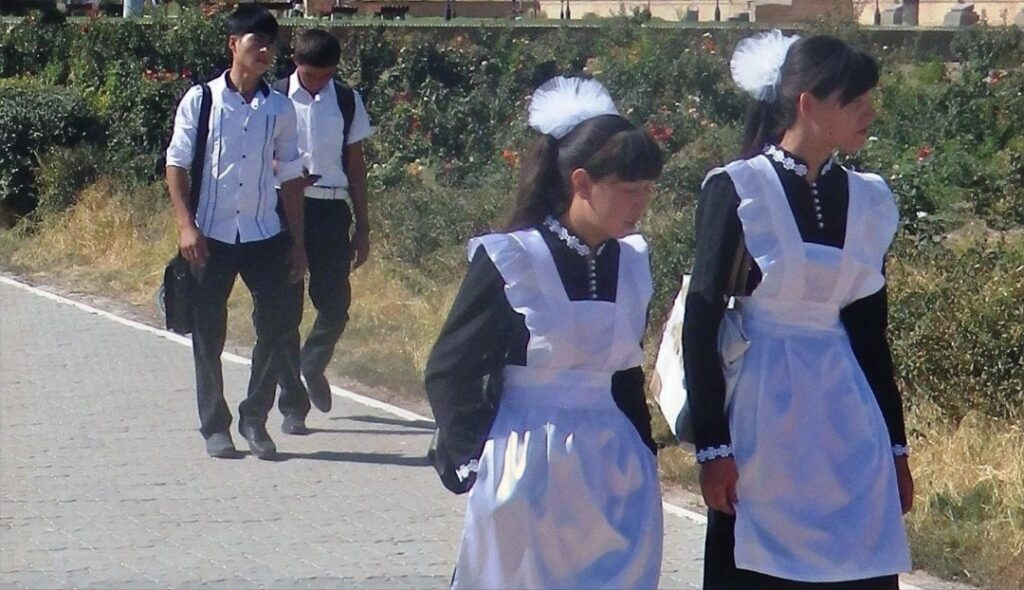
Uzbekistan is preparing to transition to a 12-year general education system, Deputy Minister of Preschool and School Education Sardor Radjabov announced in an interview with Uzbekistan-24. The change will incorporate preparatory classes into formal education, extending schooling from the current 11 years to 12. The revised structure will include three stages: One year of school preparation Four years of primary education (grades 1-4) Five years of general secondary education (grades 5-9) Two years of full secondary education (grades 10-11), which may be completed at general schools, academic lyceums, military schools, or technical colleges According to Radjabov, the reform aims to enhance educational quality and eliminate obstacles faced by Uzbek students applying to foreign universities. Currently, graduates are often required to complete a one-year foundation program abroad before qualifying for undergraduate studies. “This means our children lose a year,” he said. “If we implement the 12-year education system, students will no longer need to study foundation courses in several countries and will be able to enter undergraduate programs directly.” He added that aligning Uzbekistan’s education system with international standards would expand opportunities for graduates and narrow the gap between local and global academic systems. The reform builds on earlier changes to Uzbekistan’s school structure. In 2017, President Shavkat Mirziyoyev proposed the reinstatement of an 11-year general education framework, emphasizing its role in improving the connection between schools and colleges. Since then, most schools have operated under the 11-year model.

Kazakhstan’s Higher Education Transformation – Minister Sayasat Nurbek on Attracting Global Talent and Driving Innovation

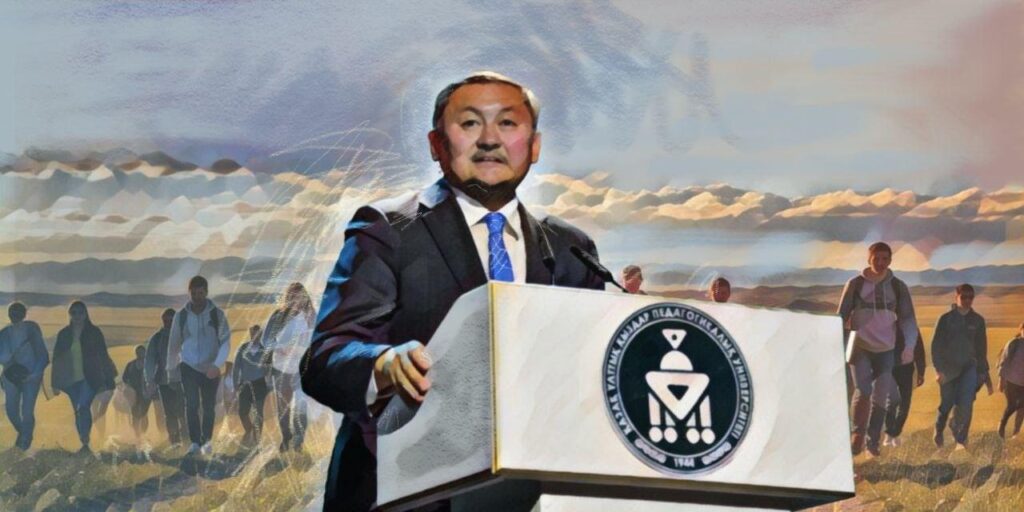
Kazakhstan is moving quickly to reposition its universities for a more competitive, tech-driven future and to become Central Asia’s study destination of choice. In an interview with The Times of Central Asia, Minister of Science and Higher Education of Kazakhstan, Sayasat Nurbek, explained that a flagship target captures this ambition: to attract 150,000 international students by 2029, nearly five times today’s level, while deepening partnerships with global universities, expanding research in critical minerals, and backing student entrepreneurship and AI talent pipelines. Kazakhstan as an Emerging Education Hub in Eurasia Government strategies and institutional partnerships frame Kazakhstan not only as Central Asia’s study destination of choice, but as a new nexus for education in Eurasia. The country’s location at the crossroads of Europe and Asia positions it to serve diverse regional markets, while rapidly multiplying branch campuses and partnerships with leading universities demonstrate how this ambition is taking shape. Inside the system, the reform agenda is anchored in greater university autonomy, modular and English-medium programs, stronger international accreditation, and a shift from rote learning to research-led, industry-connected education. As Sayasat Nurbek, Kazakhstan’s Minister of Science and Higher Education, told The Times of Central Asia: “Kazakhstan is not only Central Asia’s education leader - we are becoming a new Eurasian hub. Our partnerships with global universities and the growth of world-class campuses show that students no longer need to leave the region to access international-quality education.” Capturing Demographic Shifts and International Demand Demographics are one reason why this might work. Central Asia and the broader Eurasian neighborhood together have over a billion people under the age of 25 - a cohort that will strain capacity in nearby systems as the demand for higher education surges. Kazakhstan’s bet is to meet that need locally, in English, at global standards, and at a cost point that undercuts Western destinations. In this sense, the country is explicitly targeting an opportunity to capture demographic shifts and attract students from abroad, while positioning itself as a credible, accessible alternative to saturated or costly Western markets. Minister Nurbek emphasized this point: “With more than a billion young people across Central Asia and our neighboring regions, the demand for higher education is exploding. Kazakhstan is seizing this demographic opportunity by offering English-medium programs at global standards, and at a cost that is far more accessible than traditional destinations.” This change is visible on the ground through a rapid expansion of foreign branch campuses and deep partnerships. In September 2025, Cardiff University officially opened in Astana - the first Russell Group presence in the country. Branches of the British De Montfort and Coventry universities have already opened their doors in Almaty and Astana, whilst a campus of the South Korean university, Woosong, is set to launch in Turkestan this month. Ministerial briefings and project sheets describe a broader pipeline that includes operating collaborations as well as branches at varying stages - from Penn State and the University of Arizona to SeoulTech, TU Berlin, Queen’s University Belfast, New York Film Academy,...

Knowledge Day in Central Asia: What’s Changing in Schools This Academic Year?

Secondary schools across Central Asia are embracing modern teaching methods and aiming to elevate the status of teachers, as the new academic year begins with a wave of reforms. Kazakhstan: AI in Classrooms and Teacher Protections In Kazakhstan, the academic year begins on September 2, as Constitution Day on the 1st is a national holiday. Over 370,000 first-graders are expected to enter school this year. As previously reported by The Times of Central Asia, significant reforms are underway in the country’s education system. Amendments to the Law “On the Status of Teachers” will shield educators from non-teaching duties and protect them from undue legal responsibility. President Kassym-Jomart Tokayev has emphasized that educators should not be held accountable for incidents involving children that occur outside school or due to parental negligence. New “personal safety” lessons will also be introduced across all educational levels, from kindergartens to colleges. These age-appropriate classes will cover topics ranging from water safety and interaction with strangers to cyberbullying, financial literacy, and legal awareness. Schools and colleges are also rolling out DosbolLIKE, an anti-bullying initiative piloted in 50 schools last year, designed to curb bullying in student communities. Artificial intelligence will be introduced into the curriculum via “Digital Literacy” and “Computer Science” classes. AI-focused online courses called Day of AI are now available for grades 1-11, with training programs also developed for teachers. Despite the construction of 1,200 new schools accommodating over a million students in recent years, the high birth rate continues to strain infrastructure. In Almaty alone, the shortage exceeds 34,000 school places. Uzbekistan: Ivy League Aspirations and Civic Values In Uzbekistan, school also starts on September 2, a customary date. The first lesson will be conducted under the motto: “In the name of the Motherland, in the name of the nation, in the name of the people!” According to the Ministry of Preschool and School Education, 738,000 first-graders will receive gifts from President Shavkat Mirziyoyev. An international school is set to open this September, initially enrolling 60 top-performing graduates of the 8th grade. The curriculum will include leadership and social activism training, with a focus on preparing students for admission to Ivy League universities. A nationwide talent identification and development program is also in development. The weekly Kelazhak Soati (“Hour of the Future”) class will debut this year, aiming to strengthen students’ moral values and encourage reflection on their future roles in society. Kyrgyzstan: Transition to 12-Year Education This academic year marks Kyrgyzstan’s official transition to a 12-year education system. The reform affects lesson structures, curricula, and textbooks. The transition, to be completed by 2028, includes the redistribution of students across grade levels. For example, third graders born in 2015 will skip to fifth grade, and sixth graders born in 2012 will advance to eighth grade. Further shifts are scheduled for the next two academic years. While the extended education model is expected to allow deeper learning and skills development, the transition period may cause confusion among students, parents, and educators. Adapting to new...

Kazakhstan Aims to Redefine the Role and Status of Teachers

Kazakhstan is preparing sweeping changes to the role of teachers, aiming to significantly strengthen their legal protections and professional autonomy. The proposals, announced at an educators' conference in August, are being described by experts as revolutionary for the country’s education system. Protecting Teachers' Rights President Kassym-Jomart Tokayev participated in the conference and proposed amendments to the Law on the Status of Teachers to shield educators from non-core responsibilities. “The issue of protecting teachers' rights should always be a priority,” said Tokayev. “Teachers must be exempt from tasks unrelated to their primary duties. Unfortunately, local authorities often grossly violate the law in this regard. The Prosecutor’s Office must take strict action against such violations.” In many post-Soviet countries, it has been common for teachers to be assigned duties unrelated to education. In Kazakhstan, for instance, teachers are often tasked with running polling stations during elections or referendums, ensuring voter turnout, cleaning school premises, organizing community celebrations, and more. Tokayev also spoke out against holding teachers accountable for incidents outside school grounds. “It is inappropriate to immediately punish teachers for any accident involving children,” he stated. “If an incident occurs outside school or due to parental negligence, the teacher should not be held responsible.” He referred to a recent case in the Almaty region, where a graduate died in a fight at a private residence. The school’s principal and teachers were dismissed, but the Ministry of Education later intervened on their behalf. Responsibility Within the School While calling for greater protections, Tokayev also emphasized the critical role of teachers within school walls. He urged educators to take active roles in combating social issues such as drug and gambling addiction, domestic violence, bullying, vandalism, and dependency. Teaching has long been one of Kazakhstan’s least attractive professions due to high workloads and low pay. However, since 2019, the education budget has tripled, 1,200 new schools have opened, and teacher salaries have doubled. More than 500,000 teachers now receive performance-based bonuses. Fighting Dependency and Exploitation Kazakh political analyst Marat Shibutov emphasized the importance of ending the exploitation of teachers and addressing broader societal issues such as dependency. “At a meeting with teachers, the president spoke out against parasitism, which has become widespread, especially in rural areas, where social benefits discourage work and promote idleness,” Shibutov said. “Some families even avoid treating disabled children to retain their benefits.” He added that around 60 children had fallen from windows in Astana since the start of the year, yet the blame is often shifted to the state rather than to parents, who bear responsibility for safety at home. “Dependency is more than just a lifestyle, it’s an ideology of aggressive laziness eating away at youth,” he said. On the issue of non-core assignments, Shibutov remarked: “It’s time to get rid of Soviet relics, teachers are not free labor or child supervisors”. A Remedy in Mathematics Political analyst Gaziz Abishev called for deeper educational reforms to address the psychological and cognitive vulnerabilities of young people in the digital age....