• KZT/USD = 0.00223
  • TJS/USD = 0.10820
  • UZS/USD = 0.00009
  • TMT/USD = 0.29760
  • KZT/USD = 0.00223
  • TJS/USD = 0.10820
  • UZS/USD = 0.00009
  • TMT/USD = 0.29760
  • KZT/USD = 0.00223
  • TJS/USD = 0.10820
  • UZS/USD = 0.00009
  • TMT/USD = 0.29760
  • KZT/USD = 0.00223
  • TJS/USD = 0.10820
  • UZS/USD = 0.00009
  • TMT/USD = 0.29760
  • KZT/USD = 0.00223
  • TJS/USD = 0.10820
  • UZS/USD = 0.00009
  • TMT/USD = 0.29760
  • KZT/USD = 0.00223
  • TJS/USD = 0.10820
  • UZS/USD = 0.00009
  • TMT/USD = 0.29760
  • KZT/USD = 0.00223
  • TJS/USD = 0.10820
  • UZS/USD = 0.00009
  • TMT/USD = 0.29760
  • KZT/USD = 0.00223
  • TJS/USD = 0.10820
  • UZS/USD = 0.00009
  • TMT/USD = 0.29760
21 September 2026

Viewing results 1 - 6 of 8

Kazakhstan Education Reform Puts 12th Grade Under Review

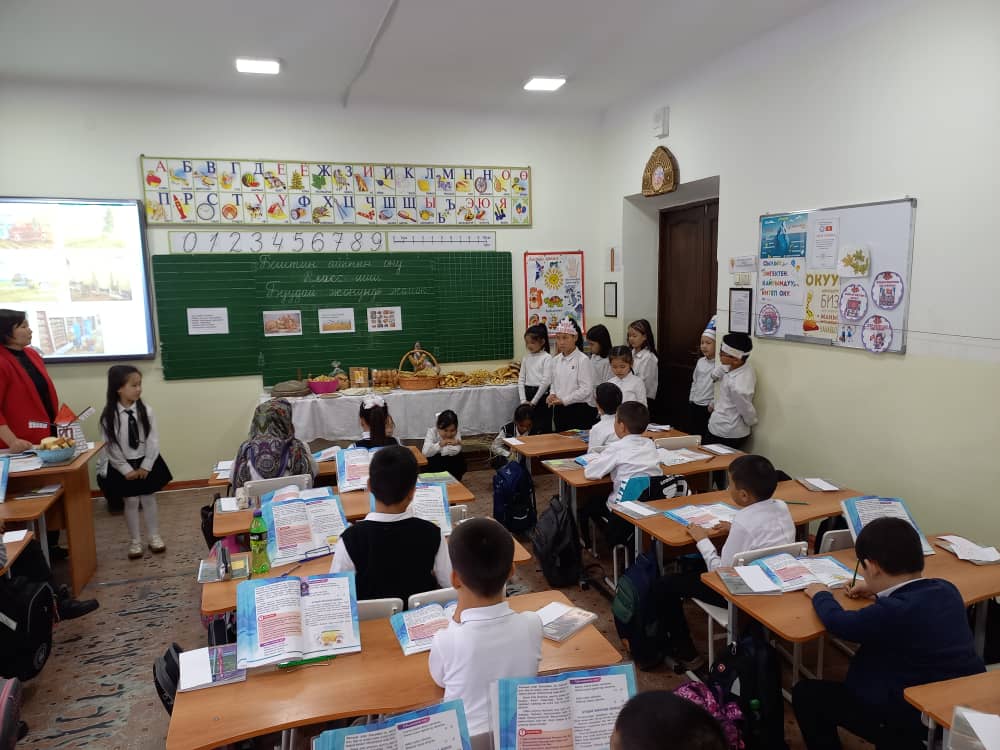
Kazakhstan is considering whether to eliminate the 12th grade at Nazarbayev Intellectual Schools (NIS), as some families transfer their children to regular schools after the 10th grade so they can graduate a year earlier. Established in 2008, NIS is a state-funded network of elite schools specializing in science, mathematics, and languages. It operates its own 12-year curriculum. Education Minister Zhuldyz Suleimenova said 88% of NIS graduates finish school at age 18, while about 300 received their diplomas at age 19 last year. A commission is examining whether the curriculum can be compressed into 11 grades, with conclusions expected by January 2027. The discussion began after remarks by President Kassym-Jomart Tokayev on August 26. At a national education conference, Tokayev questioned whether it made sense to keep 18-year-olds in school and instructed officials to review the 12-year programs at NIS and private schools. Possible changes would also affect international programs. Suleimenova referred to the uniform national standard for school education enshrined in Kazakhstan’s new Constitution, which took effect on July 1. No decision has yet been made to eliminate the 12th grade. The commission is comparing the curricula of NIS and regular schools and calculating the number of instructional hours. NIS has a longer school day, roughly from 8 a.m. to 5 p.m., plus eight hours of individual instruction a week. In regular schools, the main curriculum ends after the ninth grade; at NIS, it ends after the 10th. In the 11th grade, students at regular schools take state examinations while preparing for the Unified National Testing, Kazakhstan’s university entrance exam. NIS students have another year. There is a historical irony to the current debate. For more than two decades, Kazakhstan prepared to move in the opposite direction by making 12 years of schooling the national standard. The transition had been discussed since the early 2000s, and by 2012 the new model was being tested in more than 100 schools. The timetable was postponed several times, in part because of insufficient infrastructure. As recently as 2019, a full transition was planned for 2021. But the 12th grade ultimately took root mainly at NIS and some international schools. Today, the NIS network includes 22 Intellectual Schools and three international schools, with about 20,000 students and more than 2,600 teachers. Its schools use the NIS Programme and the International Baccalaureate. More than 4.1 million children are attending Kazakhstan’s schools in the 2026/27 academic year, including about 227,000 in the final 11th grade. The number of years spent in school, however, is only one part of the discussion. There is also an external measure of educational outcomes. On September 8, the same day Suleimenova spoke, the Organisation for Economic Co-operation and Development (OECD) released the results of the 2025 Programme for International Student Assessment (PISA). Students in Kazakhstan scored 420 points in science, 414 in mathematics, and 385 in reading. The respective OECD averages were 482, 463, and 461. More than 41% of participants from Kazakhstan failed to reach the baseline Level 2 in...

World Bank Approves $100 Million to Improve Primary Education in Uzbekistan

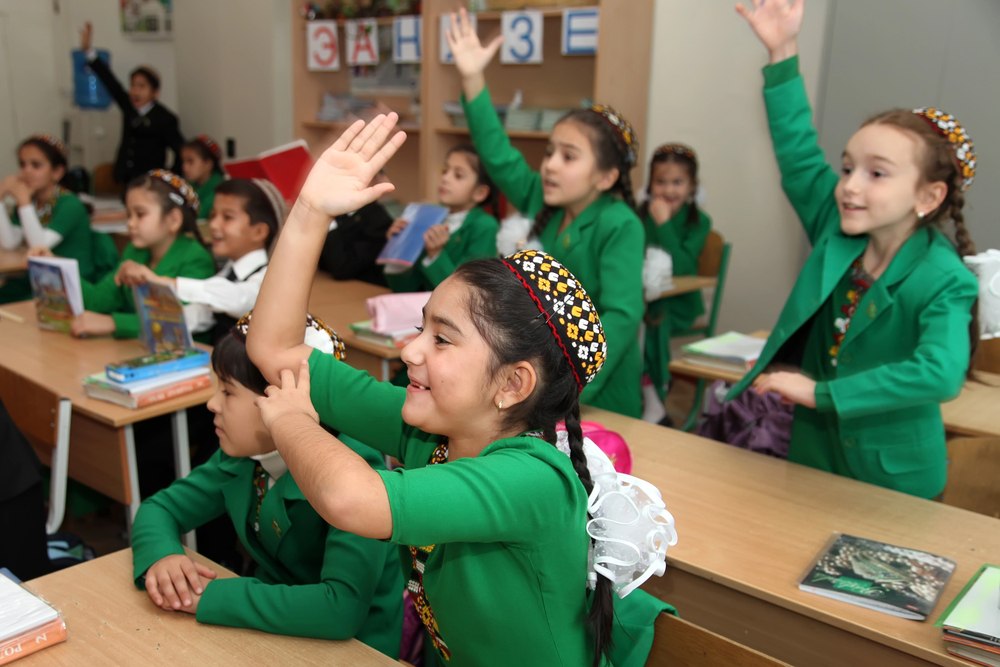
The World Bank has approved $100 million in concessional financing to help Uzbekistan improve the quality of primary education, strengthen foundational learning skills, and expand school capacity in some of the country’s most underserved regions, the bank announced. The funding, provided by the International Development Association, will support the Transforming Public Education for Economic Growth (BILIM) Program. The initiative will also receive a $5 million grant from the International Finance Facility for Education (IFFEd), marking the first partnership between IFFEd and the World Bank. Together with $273 million from Uzbekistan's government, the program has a total budget of $378 million. According to the World Bank, Uzbekistan’s public education system is under increasing pressure from rapid population growth and internal migration. School enrollment is expected to exceed 7.6 million students in 2026, requiring the construction of around 300 new schools every year to meet demand. Although more than 99% of primary school-age children are enrolled in school, learning outcomes in reading and mathematics remain below international standards. The bank also noted that teaching methods and teacher professional development require significant improvement. “Strengthening foundational skills in primary school, including reading, mathematics, and socio-emotional skills, is central to further building Uzbekistan’s human capital base and advancing its development,” said Najy Benhassine, the World Bank’s Division Director for Central Asia. “These skills will help children develop more advanced competencies and prepare them for the rapidly evolving jobs market. They are also critical to the country’s economic growth, which depends on a workforce capable of driving innovation.” The BILIM Program will be implemented by Uzbekistan’s Ministry of Preschool and School Education and the Ministry of Economy and Finance in Karakalpakstan and the Khorezm, Kashkadarya, Surkhandarya, Bukhara, and Navoiy regions. These areas account for about 45% of the country’s schools and face some of the greatest shortages of education infrastructure and learning resources. By 2030, the program aims to train 50,000 teachers, school leaders, and education administrators and create 27,000 student places through school construction and expansion. It will also improve education planning through better data collection and management. Around 2 million primary school students, half of them girls, are expected to benefit from the reforms. The financing adds to the World Bank’s existing education work in Uzbekistan. As previously reported by The Times of Central Asia, the bank approved a $250 million loan last December for the Edulmkon Program, a three-year initiative designed to expand access to higher and vocational education. Scheduled for implementation between 2026 and 2028, that program is expected to benefit around 600,000 young people. About 80% of the financing will go toward tuition loans for students from low-income families and women, who continue to face significant barriers to higher education.

Kazakhstan Reshapes Education System to Meet Industrial and Labor Market Needs

Kazakhstan has begun a large-scale restructuring of its education system in 2025-2026 as authorities attempt to address labor shortages, overloaded school infrastructure, and the growing mismatch between graduates’ qualifications and the needs of the economy. While previous reforms focused primarily on expanding access to education, the government is now shifting toward tighter administrative management of student enrollment, stronger support for technical and vocational training, and the integration of digital technologies into schools. As previously reported by The Times of Central Asia, the reforms are unfolding amid growing pressure on Kazakhstan’s labor market. One of the most pressing issues remains the condition of the country’s school infrastructure. Rapid urbanization and internal migration have created chronic shortages of school places in major cities and southern regions. To address the problem, authorities launched the “Comfortable School” national project, which envisioned the construction of 369 schools with capacity for 740,000 students during 2023-2024. However, implementation has faced delays caused by contractor failures and rising construction material costs. According to project operator Samruk-Kazyna Construction, by the end of 2025 authorities had commissioned 208 schools, creating more than 217,000 new student places. Most of the facilities were built in Astana, Almaty, and Turkistan Region. President Kassym-Jomart Tokayev previously warned that even accelerated school construction would only temporarily alleviate the problem, since at current population growth rates the shortage of school places could reach 400,000 in the medium term. Against this backdrop, authorities are increasingly turning to technological solutions. In May 2026, Tokayev signed a decree introducing artificial intelligence into the secondary education system. Under the initiative, AI technologies are expected to serve as auxiliary tools for personalized learning, identifying gaps in student knowledge, and reducing teachers’ workloads. By August 1, schools participating in the pilot program are expected to be equipped with high-speed internet access, while by September 1 authorities plan to approve national standards governing the use of AI in education. At the same time, Kazakhstan is strengthening support for technical and vocational education. For the 2025-2026 academic year, around 70% of state-funded grants in the technical and vocational education system were allocated to engineering and technical specialties, including metallurgy, mechanical engineering, energy, construction, and information technology. Authorities are also attempting to expand elements of dual education programs involving private businesses. According to official data, more than 4,000 enterprises have established partnerships with colleges. However, full-scale implementation remains largely confined to major industrial regions, while small and medium-sized businesses in other areas remain reluctant to participate in organizing practical training for students. Significant changes are also affecting higher education. Minister of Science and Higher Education Sayasat Nurbek announced a redistribution of state grants toward professions facing the most acute labor shortages, including thermal power engineering, industrial engineering, water management, and materials science. University financing will now depend directly on institutions’ positions in national rankings and on graduate employment rates. For weaker regional universities, this could effectively mean automatic reductions in state funding. Leading universities have also been granted the right to independently raise admission thresholds...

Kyrgyzstan Seeks Foreign Teachers to Ease Education Staff Shortage

A group of deputies in Kyrgyzstan’s Jogorku Kenesh, the national parliament, has drafted legislative amendments aimed at attracting foreign teachers and modernizing the country’s educational infrastructure through new legal and economic incentives. The proposed amendments were submitted for parliamentary consideration. Under the draft legislation, foreign teachers working in Kyrgyzstan would be exempt from income tax and mandatory social security payments. The bill would also grant foreign educators the right to obtain temporary residence permits. Additional measures include tax incentives for educational institutions and exemptions from value-added tax (VAT) on imported educational equipment. The authors of the amendments argue that modernizing Kyrgyzstan’s education system will require the introduction of international teaching standards, digital technologies, and updated educational programs. They say the process will also require the involvement of highly qualified specialists, including foreign teachers with international experience. According to the lawmakers, the proposed legislation is intended to help implement advanced teaching methods and global educational practices, improve student training, create a more competitive academic environment, and strengthen the intellectual potential of younger generations without requiring students to study abroad. The bill’s explanatory note states that a shortage of qualified teachers in schools and universities remains one of the key challenges facing Kyrgyzstan’s education system. The shortage comes as the country experiences a steady increase in student numbers and mounting pressure on educational infrastructure. According to official figures cited in the draft legislation, Kyrgyzstan had 2,175 public schools and 219 private schools in 2025, serving a total of 1,526,800 students with 108,006 teaching staff. The country also has 32 public universities and 41 private universities.

Opinion: Uzbekistan’s Growth Story Has a Skills Problem

Uzbekistan has become one of Central Asia's strongest growth stories. GDP expanded by 6.5% in 2024, and the Asian Development Bank projects growth of 6.7% in 2026 and 6.8% in 2027. Industry, services, and foreign investment are all expanding. The World Bank says real GDP growth averaged around 6% a year between 2017 and 2025. Beneath that momentum, however, a quieter problem is taking shape. Uzbekistan may not yet be training enough workers for the economy it is trying to build. The issue is not a shortage of capital; it is a shortage of market-ready skills. The country has moved from an isolated, heavily state-controlled economy toward a more open and reform-driven model in less than a decade. But if education, vocational training, and private-sector demand do not align faster, Uzbekistan risks turning one of the region's strongest demographic advantages into a labor-market strain. A Dividend That Could Become a Deficit Uzbekistan is a young country in every sense. About 700,000 young people enter the job market each year, while the working-age population is expected to keep expanding for decades. In development economics, this kind of demographic concentration is often described as a dividend: a period when a large share of the population is of working age, productive, and capable of driving growth. The risk is that the dividend does not materialize automatically. It depends on whether young people can move into productive, formal, and better-paid work. If the workforce entering the economy is not equipped with the skills employers need, the same demographic pressure can feed into informality, underemployment, migration, and social strain. The official unemployment rate fell to 4.9% in the third quarter of 2025. That is a meaningful improvement. But around 760,000 people remained registered as job seekers, and the International Labour Organization has estimated informal employment at about 40% of the workforce. Remittances also remain a structural pillar of household income: according to Central Bank data cited by local media, inflows reached $18.9 billion in 2025, up from $14.8 billion in 2024. This is not the picture of a country that has already solved its human-capital challenge. It is the picture of a country racing against time. The Mismatch at the Heart of the Problem The core challenge is not a shortage of graduates. Higher education has expanded dramatically. According to Uzbekistan's National Statistics Committee, coverage among 18- to 23-year-olds reached 47.7% at the start of the 2024/2025 academic year, up from 8.3% in 2017. The number of higher education institutions has also grown rapidly. By conventional access metrics, this is an extraordinary achievement. But enrollment alone is not the measure that matters. Employers need workers who can solve practical problems, operate modern equipment, manage digital systems, and adapt quickly to changing production and service needs. Too many students are still moving through programs shaped by an older economic model: credential-heavy, theoretically oriented, and weakly connected to the needs of a modern labor market in IT, manufacturing, logistics, energy, tourism, and services. The student-financing system has...

Opinion: Examination Reform – An Effective Assessment Tool in the Age of Artificial Intelligence

Kazakhstan’s decision to reform and expand assessment beyond the Unified National Testing (UNT) system marks a significant shift in how the country identifies talent and prepares young people for a rapidly changing world. Recently reported by Times Higher Education, the reform recognizes a growing reality: traditional, memory-based exams are no longer enough in an era shaped by artificial intelligence, automation and constant technological change. For more than two decades, the UNT has provided a standardized and transparent route into higher education. It brought clarity and fairness at scale, and for that, it deserves credit. Yet its core limitation has become increasingly clear. By focusing largely on the reproduction of subject knowledge, it leaves little room for students to demonstrate analytical thinking, problem-solving ability, or the capacity to work across disciplines. In practice, it rewards exam technique and memorization over deeper understanding. This matters because the skills now demanded of graduates are changing fast. Across the global labor market, employers are placing greater value on adaptability, technical literacy, and the ability to apply knowledge in real-world settings. International organizations have been clear on this point. The OECD’s Future of Education and Skills 2030 framework argues that education systems must develop cross-cutting competencies such as critical thinking, creativity, collaboration, and self-direction. The World Economic Forum has made a similar case, urging a move away from static, theoretical learning towards transferable, future-facing skills. As artificial intelligence becomes embedded across industries, assessment models need to keep pace. Evaluating what a student can recall under exam conditions is no longer a reliable proxy for how they will perform in complex, technology-rich environments. Research increasingly shows that standardized tests capture only part of an applicant’s potential, a point widely discussed in international higher education policy debates and assessments such as the OECD’s Programme for International Student Assessment. They can also reinforce socio-economic inequalities, as access to preparation resources often matters as much as ability. The result is a system that measures how well students survive exams, rather than how well they think. Kazakhstan’s new modular examination model is designed to respond directly to these challenges. Instead of testing knowledge in isolation, it aims to assess functional literacy, logic, analytical reasoning and critical thinking alongside mastery of the school curriculum. This more practice-oriented approach offers a fuller picture of a student’s readiness for higher education and, ultimately, for professional life. I see this shift every day in my work within Kazakhstan’s education ecosystem. The new test does not stand alone; it forms part of a wider effort to build coherence across schools, universities, policymakers and philanthropic organizations. Real, lasting change depends on alignment around shared goals, rather than on pilots or isolated initiatives. At the NNEF Public Foundation, established by the renowned educator Dinara Kulibayeva, this principle has guided our work for nearly three decades. Through a network of affiliated schools, universities and developmental programs - including Astana IT University, which I am proud to lead - we have helped young people across Kazakhstan learn, grow and realize their potential. Thousands...