• KGS/USD = 0.01144 0%
  • KZT/USD = 0.00205 0%
  • TJS/USD = 0.10771 0%
  • UZS/USD = 0.00009 0%
  • TMT/USD = 0.28571 0.28%
  • KGS/USD = 0.01144 0%
  • KZT/USD = 0.00205 0%
  • TJS/USD = 0.10771 0%
  • UZS/USD = 0.00009 0%
  • TMT/USD = 0.28571 0.28%
  • KGS/USD = 0.01144 0%
  • KZT/USD = 0.00205 0%
  • TJS/USD = 0.10771 0%
  • UZS/USD = 0.00009 0%
  • TMT/USD = 0.28571 0.28%
  • KGS/USD = 0.01144 0%
  • KZT/USD = 0.00205 0%
  • TJS/USD = 0.10771 0%
  • UZS/USD = 0.00009 0%
  • TMT/USD = 0.28571 0.28%
  • KGS/USD = 0.01144 0%
  • KZT/USD = 0.00205 0%
  • TJS/USD = 0.10771 0%
  • UZS/USD = 0.00009 0%
  • TMT/USD = 0.28571 0.28%
  • KGS/USD = 0.01144 0%
  • KZT/USD = 0.00205 0%
  • TJS/USD = 0.10771 0%
  • UZS/USD = 0.00009 0%
  • TMT/USD = 0.28571 0.28%
  • KGS/USD = 0.01144 0%
  • KZT/USD = 0.00205 0%
  • TJS/USD = 0.10771 0%
  • UZS/USD = 0.00009 0%
  • TMT/USD = 0.28571 0.28%
  • KGS/USD = 0.01144 0%
  • KZT/USD = 0.00205 0%
  • TJS/USD = 0.10771 0%
  • UZS/USD = 0.00009 0%
  • TMT/USD = 0.28571 0.28%

Viewing results 1 - 6 of 66

Kazakhstan Aims to Eliminate Energy Deficit and Begin Electricity Exports by 2027

Kazakhstan is on track to eliminate its domestic electricity deficit within the next year and transition from import reliance to surplus. According to projections by the Ministry of Energy, the country will fully meet internal demand by the end of the first quarter of 2027, and by 2029, it expects to maintain a stable surplus in both electricity and regulating capacity, laying the groundwork for future exports. Energy Minister Yerlan Akkenzhenov announced the plan during a meeting on the development of the electric power industry. At the close of 2025, Kazakhstan’s electricity generation totaled 123.1 billion kWh, while consumption reached 124.6 billion kWh, resulting in a deficit of over 1 billion kWh. However, this shortfall was less than half the 2 billion kWh gap recorded at the end of 2024, which was offset by imports from Russia, Uzbekistan, and Kyrgyzstan. Installed generation capacity increased over the year from 25.3 to 26.7 GW. While coal-fired power plants continue to dominate, accounting for 51.4% of output, the shares of gas (25.6%) and renewable energy (13.5%) are steadily growing. The Energy Ministry credits market liberalization for helping stabilize the power system. Over the past two years, nearly $1.8 billion in investment, mainly for capital repairs and modernization, has flowed into the sector. As a result, the number of technological violations has dropped by 27%, and nine combined heat and power (CHP) plants have exited the so-called “red zone.” Akkenzhenov noted that generating companies’ owners did not receive dividends, with all profits reinvested into asset renewal. This marks a strategic pivot from short-term profitability to long-term system reliability. Looking ahead to 2035, Kazakhstan plans to add over 26 GW in new generating capacity, including nuclear power. Simultaneously, the government is prioritizing upgrades to existing coal-fired plants using clean coal technologies. Key infrastructure projects include the 2,640 MW Ekibastuz GRES-3 station, a new 700 MW facility in Kurchatov, and CHP plants in Kokshetau, Semey, and Ust-Kamenogorsk. Contractors have been selected, and implementation is already underway. Despite this progress, systemic risks remain. Prime Minister Olzhas Bektenov has strongly criticized delays in the execution of energy projects. Nuclear power development has emerged as a distinct strategic priority. Kazakhstan plans to construct at least three nuclear power plants. Work on the first began last summer in partnership with Russia’s Rosatom, while two more are expected to be built with the involvement of the China National Nuclear Corporation (CNNC). President Kassym-Jomart Tokayev has described the development of nuclear energy as correcting a “historical absurdity.” Kazakhstan, one of the world’s leading uranium producers and exporters, has yet to use this resource to support its own energy needs.

Kyrgyzstan’s Power Consumption Rises Amid Declining Water Levels at Toktogul Reservoir

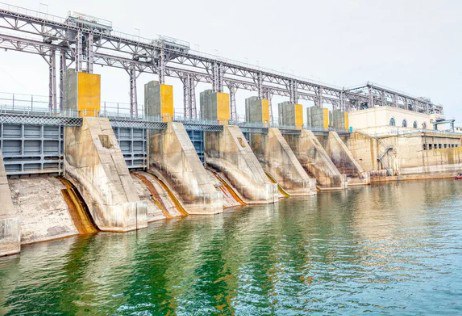
Electricity consumption in Kyrgyzstan continues to rise. In 2025, the country consumed 19.3 billion kWh, an increase of 900 million kWh compared to the previous year. Of this total, 15.4 billion kWh was generated domestically, while 3.9 billion kWh was imported from Turkmenistan, Uzbekistan, Kazakhstan, and Russia, officials reported at a government meeting on 14 January. Authorities also highlighted critically low water levels at the Toktogul Hydroelectric Power Plant, the country’s largest energy facility, which generates approximately 40% of its electricity. The Toktogul reservoir currently holds 9.102 billion cubic meters of water, a drop of 1.631 billion cubic meters compared to the same date in 2024. The reservoir is approaching the critical or “dead” level of 5.5 billion cubic meters, below which the plant would be unable to generate electricity. Officials at the meeting warned that continued low inflows could force a reduction in power generation and stressed the importance of adhering strictly to electricity consumption limits. Kyrgyzstan has long struggled with seasonal electricity shortages, particularly in winter, when many households rely on electric heating. Energy Minister Taalaibek Ibraev previously cautioned that the 2025–2026 winter season could be one of the most difficult in recent years due to the water shortfall at Toktogul. To address the electricity deficit, Kyrgyzstan is pressing ahead with both the construction of new hydropower projects and the modernization of existing facilities. In November 2025, the country completed a full modernization of Toktogul, located on the Naryn River. The upgrade increased the plant’s capacity from 1,200 MW to 1,440 MW. Kyrgyzstan is also moving forward with the construction of the Kambarata-1 hydropower plant, a strategic regional project being developed in partnership with Kazakhstan and Uzbekistan. Once completed, Kambarata-1 is expected to have a capacity of 1,860 MW and produce 5.6 billion kWh annually.

Water Shortages Cut Hydropower Output in Uzbekistan

Electricity generation at Uzbekistan’s hydropower plants has declined significantly due to water shortages, Energy Minister Jurabek Mirzamahmudov told lawmakers during a recent session of the Legislative Chamber of the country's parliament, the Oliy Majlis, according to reports in Uzbek media. Mirzamahmudov said water inflows to major hydropower facilities had fallen by 35%, directly impacting electricity production compared with last year. He was responding to a question from deputy Saydullo Azimov, who inquired about the ongoing decline in hydropower output. “The main reason for the drop in electricity generation at large hydropower plants compared to last year is the reduced water inflow,” Mirzamahmudov said. He added that while Uzbekistan has commissioned a number of small and micro hydropower stations, with capacities ranging from one to five megawatts, these facilities collectively produced only about 140 million kilowatt hours of electricity. This output, he noted, remains limited and cannot compensate for the shortfall at major plants. Mirzamahmudov reaffirmed the government's commitment to further developing the hydropower sector but acknowledged its heavy reliance on water availability. To reduce dependence on natural gas and enhance energy security, Uzbekistan is increasingly investing in alternative energy sources. “We are paying special attention to solar and wind power, as well as energy storage systems,” he said, noting that these options offer more consistent short-term performance. He also revealed plans to construct pumped-storage power plants, which store excess electricity for use during peak demand periods. However, he pointed out that building a large hydropower facility typically takes six to ten years, making green energy projects the most viable option for addressing immediate energy needs. In a related development, Uzbekistan and Tajikistan agreed in July to a new phase of electricity trade. Under the deal, power from Tajikistan’s Rogun Hydropower Plant will be exported to Uzbekistan at an initial rate of 3.4¢ per kilowatt hour. The agreement, which has a 20-year term with automatic extensions, builds on electricity exports that Tajikistan has supplied to Uzbekistan each summer since 2018.

Bishkek Officially Inaugurates Central Asia’s First Waste-to-Energy Plant

Bishkek marked a major environmental milestone on December 27 with the official inauguration of Central Asia’s first waste-to-energy plant. President Sadyr Japarov attended the ceremony, underscoring the project’s strategic and environmental importance. The facility received its first pilot batch of municipal solid waste on November 14 and has since become the region’s first operational plant generating electricity through waste incineration. Located at Bishkek’s primary landfill, the plant was constructed by China’s Hunan Junxin Environmental Protection Co. Ltd., which invested $95 million in the project. Initially, the facility will process 1,000 tons of waste per day, with future expansion plans to increase capacity to 3,000 tons. The plant is equipped with advanced technology and complies with international environmental standards. It also includes a processing line to convert slag and ash from incineration into construction materials. Speaking at the ceremony, Japarov said the plant would significantly improve the capital’s environmental conditions and contribute to electricity generation. He noted that the facility was built in just 1.5 years and operates under a 35-year concession agreement, after which it will be fully transferred to the state. Designed to process up to 365,000 tons of waste annually, the plant features a 30 MW turbo-generator power unit that will save approximately 80,000 tons of coal and reduce carbon dioxide emissions by about 100,000 tons per year. Japarov also met with residents living near the landfill. Many shared that they had long suffered from health issues due to constant smoke from burning garbage and waste blown by the wind. They expressed hope that the new plant would dramatically improve local living conditions. Opened in 1974, Bishkek’s municipal landfill has accumulated around 20 million tons of waste. In recent years, the city has struggled to manage growing volumes of solid waste, receiving up to 1,500 tons per day which has severely impacted the urban environment. The Bishkek plant is the first of three waste-to-energy projects by Hunan Junxin in Kyrgyzstan. In June 2025, the company began constructing a similar facility in Osh, the country’s second-largest city. On October 25, it launched another plant in Karakol, the administrative center of Issyk-Kul region. Hunan Junxin is also expanding regionally. In August, Kazakhstan’s Ministry of Ecology and Natural Resources announced that the company would build Kazakhstan’s first waste-to-energy plant in Almaty.

How Tajikistan Is Struggling to Keep the Lights On Amid Winter Power Shortages

As winter grips Tajikistan, severe electricity restrictions have become a daily reality. While officials claim that recent rainfall has helped partially stabilize the country’s largest hydroelectric power plant, residents across multiple regions report worsening shortages, with power barely available for a few hours each day. Government officials say that water inflow into the Nurek Reservoir has increased following recent rains. Kurbon Ahmadzoda, a representative of the state energy company Barki Tojik, reported an increase of 30-40 cubic meters per second, enabling authorities to supply electricity for four to five hours daily. Earlier, the government had attributed stricter electricity limits to a drop in water levels at the Nurek Hydroelectric Power Plant, which generates over half of Tajikistan’s electricity. A prolonged dry spell had reduced reservoir levels, triggering the latest round of supply cuts. “As of December 9, around seven meters of the reservoir’s total 53-meter reserve have already been used,” Ahmadzoda said, adding that recent rainfall had improved inflows into the Vakhsh River, which feeds the plant. Dustmurod Toirov, head of the Transmission Networks Control Center, confirmed a 15-20% increase in water inflow. As a result, daily depletion of the reservoir dropped from 23 centimeters to 17 centimeters. This, he said, allowed authorities to extend supply in some areas by an additional two to two-and-a-half hours. Toirov also claimed that residents in Khujand, Bokhtar, Kulob, and the Rudaki district were receiving consistent electricity, with high-rise buildings fully supplied. However, social media posts paint a different picture. Dozens of residents report receiving only one to three hours of electricity per day, describing increasing hardship as winter progresses. To address consumption, authorities have implemented strict rationing measures. Toirov said automated power cuts are triggered when household usage exceeds 4 kW, a move he claims has already led to more economical electricity use. In late November, the “Distribution Electric Networks” company sent mass SMS warnings to citizens: exceeding usage limits would result in 30-minute power cuts. Amid the broader energy crisis, the government has also introduced new penalties targeting illegal cryptocurrency mining, which officials say consumes large amounts of stolen electricity. Electricity rationing in Tajikistan typically begins in mid-autumn and continues through spring. However, in the past two years, restrictions have started earlier, as soon as September. The 2024-2025 winter has seen some of the harshest limits yet, with some regions receiving just two to four hours of electricity per day.

EBRD and EU Allocate €43 Million to Modernize Tajikistan’s Power Grid

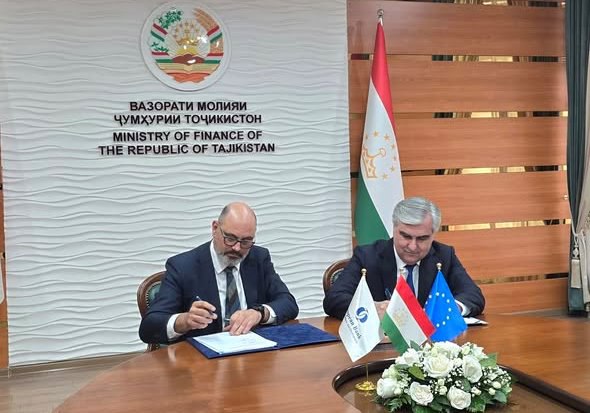
The European Bank for Reconstruction and Development (EBRD) and the European Union have announced a joint initiative to enhance the reliability and transparency of Tajikistan’s electricity distribution system. Under the agreement, a €43 million financing package will support the state-owned electricity distributor Shabakahoi Taqsimoti Barq (STB). The funding aims to reduce technical losses and improve efficiency by upgrading essential infrastructure. The “Energy Loss Reduction” project was officially signed on December 4 at Tajikistan’s Ministry of Finance. The agreement was endorsed by Minister of Finance Faiziddin Kahhorzoda and the EBRD’s permanent representative in Tajikistan, Holger Wiefel. The project is backed by €28 million in sovereign loans from the EBRD and €15 million in EU grants via the Asia-Pacific Investment Fund. Funds will be directed toward upgrading billing systems and installing new electricity metering equipment in nine cities across the Sughd and Khatlon regions. These areas are among the most affected by outdated infrastructure, which contributes to technical power losses, inaccurate metering, and the reduced financial viability of STB. The modernization program includes digitizing STB’s core operations and implementing cybersecurity measures to safeguard the national power grid. Technical assistance from both the EU and EBRD will support the rollout of these reforms. A key component of the initiative is human capital development. Specialized training programs on sustainable technologies and modern energy sector skills will be offered, with a focus on youth and women. This is intended to enhance the qualifications of local professionals and strengthen the regional labor market. The EBRD remains one of Tajikistan’s most significant international investors. To date, the bank has invested more than €1 billion across 188 projects in various sectors. The new energy initiative reflects the continued strategic role of international partners in supporting the modernization of Tajikistan’s critical infrastructure.