• KGS/USD = 0.01144 0%
  • KZT/USD = 0.00205 0%
  • TJS/USD = 0.10722 0%
  • UZS/USD = 0.00008 0%
  • TMT/USD = 0.28490 0%
  • KGS/USD = 0.01144 0%
  • KZT/USD = 0.00205 0%
  • TJS/USD = 0.10722 0%
  • UZS/USD = 0.00008 0%
  • TMT/USD = 0.28490 0%
  • KGS/USD = 0.01144 0%
  • KZT/USD = 0.00205 0%
  • TJS/USD = 0.10722 0%
  • UZS/USD = 0.00008 0%
  • TMT/USD = 0.28490 0%
  • KGS/USD = 0.01144 0%
  • KZT/USD = 0.00205 0%
  • TJS/USD = 0.10722 0%
  • UZS/USD = 0.00008 0%
  • TMT/USD = 0.28490 0%
  • KGS/USD = 0.01144 0%
  • KZT/USD = 0.00205 0%
  • TJS/USD = 0.10722 0%
  • UZS/USD = 0.00008 0%
  • TMT/USD = 0.28490 0%
  • KGS/USD = 0.01144 0%
  • KZT/USD = 0.00205 0%
  • TJS/USD = 0.10722 0%
  • UZS/USD = 0.00008 0%
  • TMT/USD = 0.28490 0%
  • KGS/USD = 0.01144 0%
  • KZT/USD = 0.00205 0%
  • TJS/USD = 0.10722 0%
  • UZS/USD = 0.00008 0%
  • TMT/USD = 0.28490 0%
  • KGS/USD = 0.01144 0%
  • KZT/USD = 0.00205 0%
  • TJS/USD = 0.10722 0%
  • UZS/USD = 0.00008 0%
  • TMT/USD = 0.28490 0%

Viewing results 1 - 6 of 254

Uzbekistan Signs $78 Million Deal with Saudi and French Firms to Manage Hazardous Waste

Uzbekistan has signed a landmark $78 million agreement with Saudi Arabia’s Vision International Investment Company (VIIC) and France’s Suez International to improve hazardous industrial waste management and bolster environmental protection. The Ministry of Ecology announced the signing earlier this month. The agreement was formalized by Deputy Minister of Ecology Jusipbek Kazbekov, VIIC Director of Development Kapil Lalwani, and Paul Bourdillon, Regional Director for Europe and Central Asia at Suez. The project will be implemented in three phases. A Three-Phase Strategy The first phase will involve the construction of new waste stabilization facilities, landfills, and transfer stations to safely store and process hazardous industrial waste. The second phase will focus on developing engineering designs and piloting technologies to produce Refuse-Derived Fuel (RDF), a method that converts waste into usable energy. This phase will also test incineration and thermal treatment systems. In the third and final phase, the project will establish a full-scale RDF and waste-to-energy facility. Suez International, with over 160 years of experience, is a global leader in water and waste management, offering innovative solutions across Europe, Asia, the Americas, Africa, and the Middle East. Saudi-based VIIC, founded in 2002, manages nearly $96 billion in assets and is active in energy, infrastructure, and public-private partnership projects. The Ministry of Ecology views the agreement as a significant advancement for Uzbekistan’s environmental policy, aiming to reduce industrial pollution and support sustainable development. Broader Environmental Initiatives Uzbekistan’s Ministry of Ecology is also collaborating with the Food and Agriculture Organization of the United Nations (FAO) and the European Union to manage hazardous agricultural chemicals. A joint project launched in Tashkent last year aims to reduce pesticide use and improve waste handling in agriculture. Minister of Ecology Aziz Abdukhakimov emphasized the importance of these initiatives for public health and environmental safety. He also highlighted the need to update the national registry of contaminated areas, particularly former agricultural airfields, many of which have not been surveyed since the 1990s.

South Korea to Support Electric Transport Infrastructure Development in Bishkek

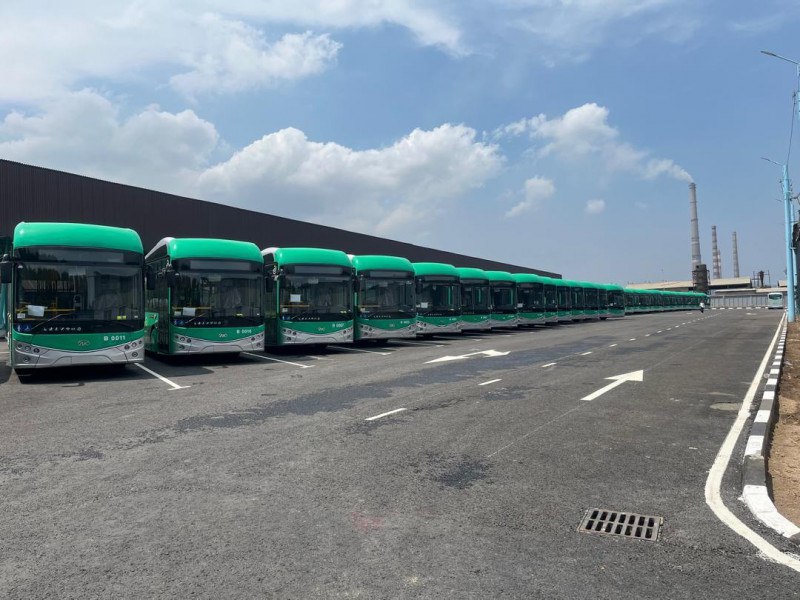
South Korean companies will assist Bishkek in building a modern charging infrastructure for electric public transport, following agreements reached between Kyrgyz Deputy Minister of Economy and Trade Sanzhar Bolotov and representatives of the Korea Environmental Transport Association, along with several private firms. The collaboration aims to jointly develop, implement, and operate a state-of-the-art network of charging stations for electric buses in the Kyrgyz capital. It also includes the introduction of improved environmental practices. “The South Korean side expressed its readiness not only to help with infrastructure, but also to transfer to Bishkek expert knowledge and technology in the field of eco-friendly transport, as well as to conduct extensive information campaigns to promote electric transport among the population,” the Kyrgyz Ministry of Economy and Trade stated. The agreement also encompasses a range of environmental initiatives. South Korean experts will assist Bishkek in improving air quality and reducing carbon emissions, critical objectives for a city frequently plagued by severe air pollution, particularly in the autumn and winter months. An important component of the agreement is the training of young specialists in South Korea. “Particular attention will be paid to the formation of a system of interaction between industry and the academic community, which will ensure the employment of trained specialists and the development of local expertise in the field of charging infrastructure operation,” the ministry added. Bishkek has pursued a consistent strategy of replacing traditional public transport with electric alternatives. Initially, the city phased out route taxis, replacing them with buses powered by gas and petrol. More recently, city authorities purchased 120 electric buses manufactured in China, with some units already delivered, through a project in collaboration with the Asian Development Bank. Concurrently, the city has begun phasing out its aging trolleybus fleet, a move that has sparked public debate. The infrastructure previously used for trolleybuses is being repurposed for the electric bus network. However, the process has faced delays, and several tenders for modifying the existing contact network have been cancelled. Starting in 2025, the popular Ala-Archa Nature Park will ban entry for vehicles with internal combustion engines. Tourists will be transported exclusively by municipal electric buses or allowed to use their own electric vehicles.

Biopesticide Trials in Kyrgyzstan Pave Way for Greener Locust Control

Between June 10 and 13, Kyrgyzstan conducted a national trial of biological pesticides in the northern Chuy region, marking a step forward in the country’s push toward environmentally responsible locust management. The trial was led by the Ministry of Water Resources, Agriculture and Processing Industry with support from the Food and Agriculture Organization of the United Nations (FAO), and funded by the Japan International Cooperation Agency (JICA) and FAO’s own resources. The initiative is part of the broader “Programme to Improve National and Regional Locust Management in the Caucasus and Central Asia (CCA),” which aims to shift countries away from reliance on chemical pesticides. According to the FAO, biopesticides, particularly those using the Metarhizium acridum fungus, are emerging as an effective, selective alternative to chemical treatments. These biological agents target locusts and grasshoppers without harming humans or non-target species such as pollinators, birds, and aquatic life. Kyrgyzstan regularly faces locust threats from two species: the Moroccan locust and the Italian locust. Both are capable of rapid reproduction and forming large swarms that can severely damage crops and pastures. “Biological pesticides offer a safer alternative for controlling locusts before they reach crisis levels,” said Oleg Guchgeldiyev, FAO Representative in Kyrgyzstan. “They are especially useful for fragile ecosystems. Continued testing will enhance scientific and technical capacity, paving the way for a more resilient agricultural sector.” Field trials are a critical step toward integrating biopesticides into national locust control strategies. The urgency of the initiative is underscored by recent government data. As previously reported by The Times of Central Asia, the Ministry of Agriculture surveyed 114,000 hectares earlier this month and found locusts present on nearly two-thirds of the land. More than 74,000 hectares have already been treated with pesticides. The infestation has been particularly severe in southern regions, where early harvest cycles and warm temperatures create ideal conditions for locust breeding. By embracing biopesticides, Kyrgyzstan hopes to reduce environmental risks while maintaining effective pest control, balancing agricultural productivity with ecological responsibility.

Tajikistan Pursues Cotton Reform with EU Backing

The European Union’s support for green transitions presents a real opportunity for Tajikistan to achieve sustainable agricultural development, particularly in the cotton industry, according to Mizrob Amirbekov, an agricultural development expert. Amirbekov highlighted this potential, underscoring the importance of international assistance in modernizing the sector, addressing environmental and social challenges, and establishing a fair and transparent production system. Rising Demand, Persistent Problems As global demand for environmentally friendly textiles grows, Tajikistan has a unique chance to establish a sustainable model for cotton production, Amirbekov explained. Increased interest in natural fabrics, driven by both demographic growth and technological advancements, is pushing the industry toward transformation. However, this economic potential is clouded by persistent challenges, including environmental stress, social risks such as forced labor, and a lack of transparency across the supply chain. The global cotton sector has long faced scrutiny over high water consumption, widespread pesticide use, and unethical labor practices. In response, consumers and international regulators are increasingly pressing for a shift to more sustainable production methods. EU Investment and National Reform Tajikistan has begun responding to these challenges. In 2024, it approved the National Strategy for the Development of the Cotton and Textile Industry through 2040, prioritizing modernization, cost reduction, and the expansion of high-value-added production chains. The European Union is playing a central role in this transformation, having allocated a €19.88 million grant to support the sector’s green transition. The funds aim to advance digital technologies, assist small and medium-sized enterprises, and help the industry adapt to climate change impacts, from droughts to rising temperatures. “This is not merely financial aid, it’s an opportunity to build a truly sustainable cotton production system,” said Amirbekov. “Farmers and buyers need to understand the principles of sustainability and how agriculture can become a driver of the green economy.” Ongoing Social and Environmental Challenges Despite signs of progress, Amirbekov noted that significant problems persist. Farmers report that forced labor continues in some areas, with schoolchildren and unrelated government employees involved in cotton harvesting, practices that violate Tajikistan’s international commitments and damage the credibility of its organic cotton sector. Environmental impacts are equally severe. Producing a single T-shirt can consume up to 2,700 liters of water, and nearly a kilogram of pesticides may be used per hectare. Amirbekov stressed the need to adopt certified standards such as the Global Organic Textile Standard (GOTS), to promote sustainable cotton varieties, and to implement precision farming. “Climate change is already reducing yields, droughts, floods, and temperature fluctuations are becoming more common,” he warned. To address this, he advocates for sustainable seed varieties, efficient irrigation, and participation in carbon reduction programs. Amirbekov also criticized the cotton supply chain as fragmented and poorly regulated, undermining trust from international buyers and complicating the enforcement of sustainability standards. He called for the introduction of digital platforms to track supply chains in real time. Social inequality is another concern: women and small-scale farmers often face limited access to markets and lack property rights. Incorporating fair trade practices, supporting cooperatives, and enforcing...

Kazakhstan Under Pressure to Address Environmental Crisis

The United Nations Green Climate Fund (GCF) has pledged $280 million to Kazakhstan for environmental projects, underscoring the country's increasingly urgent ecological challenges. Experts warn that Kazakhstan faces a widening crisis as environmental degradation accelerates. Toward a “Green” Transition Minister of Ecology and Natural Resources Yerlan Nyssanbayev announced that the GCF will allocate substantial funding to Kazakhstan to support initiatives in renewable energy, electric transport development, and the adoption of low-carbon industrial technologies. “These investments will accelerate the country's transition to a sustainable, environmentally friendly economy,” Nyssanbayev stated. The minister said that Kazakhstan prepared a national program for GCF funding in 2024, comprising seven major initiatives. These included reducing greenhouse gas emissions in the energy sector, strengthening rural water supply systems, modernizing livestock farms, and promoting private-sector green financing. The program's total budget exceeds $1 billion, with $630 million potentially financed by the GCF. Additionally, the European Bank for Reconstruction and Development (EBRD) continues to back renewable energy projects in Kazakhstan. Eleven projects with a combined capacity of 330 MW are planned by 2027; nine have already secured financing. A Mounting Environmental Toll Kazakhstan continues to struggle with serious environmental challenges, many rooted in the Soviet-era legacy, and others emerging from modern development pressures. The country faces desertification, flooding, frequent wildfires, and escalating urban air pollution, particularly in cities like Almaty, Pavlodar, and Karaganda. On June 5, the government announced the formation of a Biodiversity Protection Fund at a forum in Astana. Akylbek Kurishbayev, President of the National Academy of Sciences, emphasized the urgency of regional collaboration in biodiversity conservation amid intensifying climate and anthropogenic pressures. Deputy Minister Nurlan Kurmalayev highlighted biodiversity preservation as a key component of environmental security and sustainable land use, calling for cross-border cooperation. In parallel, the national initiative “Green Kazakhstan” is advancing afforestation efforts across urban and rural areas, alongside waste management programs, ecosystem restoration, energy efficiency campaigns, and public education on environmental stewardship. Environmental Disaster Zones: The Caspian and Aral Seas Two of Kazakhstan's most pressing ecological crises involve the shrinking Caspian and Aral Seas. The Caspian Sea's water levels are falling dramatically. According to the Ministry of Ecology and Natural Resources, levels in 2024 are expected to drop by 22 cm in the northeast and 29 cm in the eastern Kazakh sector compared to 2023. Scientists warn of continued decline due to reduced inflows from the Volga and Ural rivers and rising global temperatures. TCA has previously reported about mass die-outs of Caspian seals in recent years. Vadim Ni, founder of the Save the Caspian Sea movement, described the crisis as triple-faceted, climate, ecological, and economic. “Its level is falling at an unprecedented rate, 2 meters over the past 20 years. By century’s end, up to one-third of its surface could be lost,” he said, warning that the shallow northern shelf, vital to the ecosystem, is especially at risk. Pollution, overfishing, and unchecked oil extraction are cited as critical threats. In April 2025, Mazhilis Deputy Sergei Ponomarev addressed a parliamentary inquiry to Prime...

Kazakhstan to Slash Extraction Tax for Processing Man-Made Mineral Waste

Kazakhstan's new draft Tax Code proposes a tenfold reduction in the mineral extraction tax (MET) for companies processing man-made mineral formations (MMF), a move expected to boost investment in mining waste reclamation and reduce environmental burdens. Currently, Kazakhstan taxes the processing of MMF, mineral residues left in waste dumps after the primary extraction of solid minerals, at standard MET rates. These rates range from 21.06% for chromite ore to 2% for mineral raw materials containing technical stones. The application of these standard rates to waste materials has discouraged subsoil users from reprocessing them. As a result, an estimated 55 to 60 billion tons of MMF have accumulated in dumps, tailing ponds, and storage facilities across the country’s mining enterprises, according to Gulnara Bizhanova of the Atameken Chamber of Entrepreneurs. She presented this data at the AMM-2025 Mining and Metallurgical Forum. In Kazakhstan, only 11% of MMF is currently being processed, compared to 70-80% in many developed countries, where such waste is either exempt from MET or subject to significantly reduced rates. “The draft Tax Code introduces a reduction coefficient of 0.1 for MET on the processing of MMF. The bill is still under consideration in the Senate,” Bizhanova stated. Bizhanova noted that this change would benefit both the government and the private sector. For instance, Qarmet, a leading Kazakh steel and mining firm, plans to launch 10 projects worth $137 million if the tax reduction is approved. “There are many investors interested in this area of MMF processing. It is also important to highlight that increasing waste processing will reduce the operational burden on active mines,” she added. Previously, The Times of Central Asia reported that Aibar Dautov, head of the Kazakhstan Mining Industry Association, urged reforms to the MET framework to enhance state revenue from both oil and solid mineral extraction.