• KGS/USD = 0.01144 0%
  • KZT/USD = 0.00205 0%
  • TJS/USD = 0.10722 0%
  • UZS/USD = 0.00008 0%
  • TMT/USD = 0.28490 0%
  • KGS/USD = 0.01144 0%
  • KZT/USD = 0.00205 0%
  • TJS/USD = 0.10722 0%
  • UZS/USD = 0.00008 0%
  • TMT/USD = 0.28490 0%
  • KGS/USD = 0.01144 0%
  • KZT/USD = 0.00205 0%
  • TJS/USD = 0.10722 0%
  • UZS/USD = 0.00008 0%
  • TMT/USD = 0.28490 0%
  • KGS/USD = 0.01144 0%
  • KZT/USD = 0.00205 0%
  • TJS/USD = 0.10722 0%
  • UZS/USD = 0.00008 0%
  • TMT/USD = 0.28490 0%
  • KGS/USD = 0.01144 0%
  • KZT/USD = 0.00205 0%
  • TJS/USD = 0.10722 0%
  • UZS/USD = 0.00008 0%
  • TMT/USD = 0.28490 0%
  • KGS/USD = 0.01144 0%
  • KZT/USD = 0.00205 0%
  • TJS/USD = 0.10722 0%
  • UZS/USD = 0.00008 0%
  • TMT/USD = 0.28490 0%
  • KGS/USD = 0.01144 0%
  • KZT/USD = 0.00205 0%
  • TJS/USD = 0.10722 0%
  • UZS/USD = 0.00008 0%
  • TMT/USD = 0.28490 0%
  • KGS/USD = 0.01144 0%
  • KZT/USD = 0.00205 0%
  • TJS/USD = 0.10722 0%
  • UZS/USD = 0.00008 0%
  • TMT/USD = 0.28490 0%

Viewing results 1 - 6 of 254

Global Declaration on Saving Disappearing Glaciers Signed in Dushanbe

The first high-level international conference focused on the global crisis of glacier melt concluded this week in Dushanbe, marking a major milestone in global environmental cooperation. The event brought together over 2,500 participants from 80 countries, including scientists, NGO representatives, heads of delegations, and international donors. The Dushanbe Declaration A key outcome of the conference was the adoption of the Dushanbe Declaration, a collective commitment to coordinated international action to safeguard glaciers. The document outlines urgent concerns: glaciers are retreating at an alarming rate, threatening the freshwater supply of millions who rely on mountain rivers. “Every piece of glacier lost is a step toward greater threats to the future of humanity,” said Tajikistan's President Emomali Rahmon. The declaration calls for immediate measures including reductions in greenhouse gas emissions, shifts to environmentally sustainable production, and the implementation of advanced monitoring systems. An international coalition was also announced, comprising states, scientific institutions, civil society organizations, and environmental movements. This coalition will oversee the declaration's implementation, facilitate knowledge exchange, attract investment, and foster climate technology innovation. Glacier Protection and Knowledge Access Fund To support practical initiatives, participants agreed to establish an international Glacier Protection and Knowledge Access Fund. The fund will finance scientific expeditions, the installation of glacier monitoring systems, freshwater source restoration projects, and the dissemination of eco-friendly technologies. Countries with limited resources will be prioritized. Education emerged as another central theme. The conference advocated for integrating glacier studies into school and university curricula, and for community-based environmental literacy programs, particularly for youth. Greater public awareness, participants emphasized, is essential for fostering long-term climate resilience. Andrea Celeste Saulo, Secretary-General of the World Meteorological Organization, highlighted the chronic underfunding of climate science. “Funding for science remains extremely limited, even though it is science that enables us to predict risks and develop response measures,” she said, urging both governments and businesses to invest in sustainable monitoring systems. Tajikistan Joins IUCN A significant development during the conference was Tajikistan’s accession to the International Union for Conservation of Nature (IUCN), joining over 1,400 global members. This move grants Tajikistan access to a broad network of expertise, funding opportunities, and international partnerships, thereby enhancing its role in global environmental policy. In his speech, Rahmon shared sobering statistics: in 2023 alone, glaciers lost an estimated 600 gigatons of fresh water, contributing to rising sea levels and ecosystem instability. Since 2000, the world has lost nearly one-third of its mountain glaciers, and a projected two-degree rise in temperature could eliminate another third. He proposed a seven-point plan, including strengthening international cooperation, early warning systems, and resource mobilization. Central Asia Under Threat The urgency is particularly acute for Central Asia. Over the last 50-60 years, Tajikistan has lost up to 30% of its glacier area and about 20% of its volume. More than 1,000 glaciers have vanished in the past 23 years. According to the UN Environment Programme, over 50% of Central Asia’s glaciers could disappear by 2050, endangering water access for over 64 million people, especially in rural and...

EDB Evaluates Environmental Projects to Combat Air Pollution in Bishkek

The Bishkek municipality and the Eurasian Development Bank’s (EDB) Fund for Digital Initiatives are considering two major environmental projects to tackle air pollution and enhance the quality of life in Kyrgyzstan’s capital. The proposals were reviewed during a meeting on May 21 between Bishkek Mayor Aibek Junushaliyev and Tigran Sargsyan, Deputy Chairman of the EDB Management Board and head of the EDB's Fund for Digital Initiatives. According to the municipal government, the first project involves establishing a comprehensive air quality monitoring system based on a digital platform. The system is designed to address the city’s chronic air pollution by providing government bodies with real-time data on key emission sources. It would also enable assessments of contributions from industrial activities and natural background pollutants. The second project envisions an intelligent transport monitoring system aimed at improving traffic flow modeling and management. The goal is to optimize the city’s public transport network, reduce congestion, and enhance urban mobility, all while improving environmental conditions. Transport and Air Quality: Pressing Challenges for Bishkek Traffic congestion and outdated public transport are among the most pressing issues in Bishkek, a city undergoing rapid population growth. According to the Ministry of Natural Resources, Ecology, and Technical Supervision, motor vehicles are responsible for 27% of the city’s air pollution. With over 600,000 registered vehicles, nearly double the city’s road infrastructure capacity of 350,000, Bishkek’s air quality continues to decline. More than 333,000 of these vehicles are over 15 years old, contributing significantly to emissions. Nonetheless, the city has taken steps to modernize its public transport fleet, including replacing aging diesel-powered buses with larger, eco-friendlier models powered by liquefied petroleum gas (LPG). Air pollution is especially severe during the winter months when coal burning for household heating, accounting for 40% of the city’s emissions, surges. As a result, Bishkek frequently ranks among the world’s top 10 most polluted cities on IQAir’s global air quality index. The proposed EDB-backed projects represent a potential turning point for Bishkek’s environmental management strategy, offering digital tools and policy solutions to address longstanding public health and urban planning challenges.

Two Key Environmental Initiatives Completed in Turkmenistan

Turkmenistan has marked the successful completion of two major agro-environmental initiatives aimed at enhancing natural resource management and climate change adaptation. These efforts represent significant progress in addressing environmental challenges both nationally and across the broader Central Asian region. Regional Project on Natural Resource Management The first project concluded was the second phase of the regional program titled “Integrated Natural Resource Management in Drought-Prone and Salinized Agricultural Production Landscapes of Central Asia and Turkey,” which commenced in 2018. This initiative focused on pilot sites in the Karakum Desert, the mountain village of Nokhur, and the Turkmen sector of the Aral Sea region. Key achievements include the establishment of mini GIS laboratories at the Scientific and Information Center under the Interstate Commission on Sustainable Development, the National Institute of Deserts, Flora and Fauna, and within the environmental control departments of the Ministry of Agriculture. These facilities are now equipped with modern tools to support research and monitoring efforts. The project also delivered resource-efficient agricultural equipment, drought-resistant seeds and seedlings, water pumps for various intakes, and rapid soil analysis equipment to agricultural universities. Twenty wells and sardobs (traditional water reservoirs) were constructed for livestock centers and nurseries utilizing drip irrigation systems. Additionally, the project cleaned parts of the collector drainage system and developed reclamation plans to rehabilitate degraded land. Another notable contribution was the continued publication of the international scientific journal “Problems of Desert Development,” which has been issued in Ashgabat since 1967. National Climate Change Adaptation Plan The second completed initiative, “Development of the National Adaptation Planning Process in Turkmenistan”, was carried out by the Ministry of Environmental Protection in partnership with the United Nations Development Programme (UNDP) and the Green Climate Fund. Launched in 2021, the project sought to implement the National Climate Change Strategy by defining specific adaptation measures and implementation mechanisms. The initiative resulted in the development of a comprehensive Roadmap for implementing the National Adaptation Plan, the creation of a national climate finance concept, and new guidelines for integrating climate adaptation into water resource management. These tools aim to bolster Turkmenistan’s resilience to the adverse effects of climate change. Central Asian Climate Conference in Ashgabat From May 13 to 15, Ashgabat will host the Seventh Central Asian Conference on Climate Change (CACCC-2025), organized by the Regional Environmental Centre for Central Asia (CAREC) with support from the World Bank, CAWEP, RESILAND Tajikistan, and GIZ. CACCC-2025 will serve as a key regional platform to transform climate ambitions into actionable strategies. The agenda includes mobilizing financial resources for adaptation and mitigation, enhancing regional cooperation, and sharing best practices. Participants will engage in plenary sessions, thematic panels, and field visits to sites that exemplify successful adaptation measures. One of the conference’s strategic goals is to develop a plan for increasing regional climate finance by 25% over the next five years. Delegates are also expected to present updated national contributions (NDCs 3.0) under the Paris Agreement and promote cross-border cooperation for sustainable development. With the region facing accelerating climate threats, such as...

UN Adopts Uzbekistan’s Initiative on Global Forest Restoration

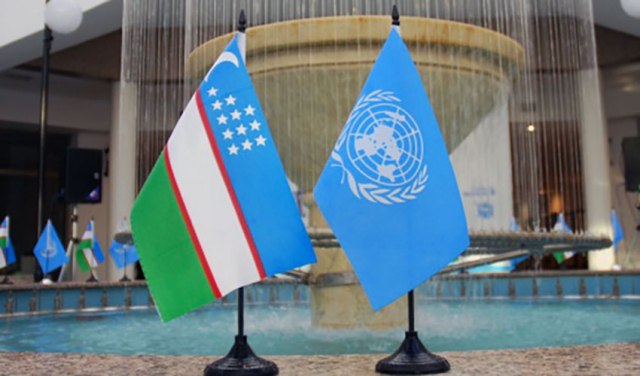
The United Nations General Assembly has adopted a resolution put forward by Uzbekistan to declare 2027-2036 as the Decade for Afforestation and Reforestation. The announcement was made in a statement by Uzbekistan’s Ministry of Foreign Affairs. Titled “The Decade of Action for Sustainable Forest Management, Afforestation, and Reforestation”, the resolution was passed during a session in New York and garnered the support of over 80 co-sponsoring nations. Among them were all Central Asian countries, as well as Azerbaijan, Russia, Brazil, Austria, Germany, Finland, Portugal, India, Iran, Pakistan, the United Arab Emirates, Qatar, and Bahrain. According to the Foreign Ministry, the resolution is grounded in several environmental initiatives championed by President Shavkat Mirziyoyev, including the national “Green Space” project, the “Year of Environmental Protection and Green Economy” program, and the “Central Asian Green Belt” tree-planting campaign. The document urges nations and international organizations to intensify their efforts and pool resources to safeguard forests and rehabilitate degraded ecosystems, particularly in arid and semi-arid regions. This marks the second recent environmental resolution initiated by Uzbekistan and adopted by the UN. In 2024, the General Assembly supported a separate proposal focused on sustainable forest management and the restoration of degraded lands, including drylands, as part of broader efforts to combat ecological degradation. Uzbekistan’s flagship environmental initiative, Yashil Makon (Green Space), was launched in 2021 and aims to plant one billion trees and shrubs nationwide within five years.

Kazakhstan and France Join Forces to Save Lake Balkhash

Work has begun in Almaty on the development of a master plan to preserve Lake Balkhash, one of Central Asia’s largest bodies of water. Experts from Kazakhstan and France will collaborate on the project, according to the Ministry of Water Resources and Irrigation of the Republic of Kazakhstan.  Master Plan for the Balkhash Ecosystem A two-day seminar has been launched in Almaty, during which a roadmap for the action plan was presented. The document includes an analysis of the water resources in the Ile-Balkhash basin, a study of groundwater reserves, the creation of a digital platform to monitor water levels, and the automation of hydraulic engineering facilities. Additional measures aim to ensure the more efficient use of the basin’s water resources and involve joint projects with China to protect the Ili River. The French Development Agency (AFD) and the French Geological and Mining Research Bureau (BRGM) are key partners in the project. French experts are currently collecting the necessary data and planning site visits to inspect wells, hydrological stations, and irrigated lands. The project is overseen by the Ministry of Water Resources and Irrigation of Kazakhstan, with support from Kazakhmys Corporation LLP. The seminar is attended by representatives from Kazakhstani ministries, international organizations, academia, and the Consulate General of France in Almaty. “For a long time, issues related to Lake Balkhash were addressed on a case-by-case basis, without a unified strategy. To move towards a systematic approach, we are starting to develop a master plan,” said Bolat Bekniyaz, First Deputy Minister of Water Resources and Irrigation. He emphasized that the plan would consider all aspects of the basin’s sustainability, from ecology and water management to energy, agriculture, and socio-economic development. Kazakhstan-France Cooperation The Balkhash preservation initiative builds on earlier agreements between Kazakhstan and France. Last October, it was announced that a memorandum of cooperation and a trilateral agreement, covering groundwater exploration in the Ili-Balkhash basin, were in preparation.  The French Development Agency (AFD), the French Geological and Mining Research Bureau (BRGM), and the International Water Agency (OiEau) are leading partners in this endeavor. During a meeting with Kazakhstan’s Minister of Water Resources, Nurzhan Nurzhigitov, French Ambassador Sylvain Guillemot highlighted the growing interest of French companies in constructing and modernizing water facilities, as well as in projects related to leak detection and resource management optimization. Water Resource Challenges in Balkhash Separately, on the shores of Lake Balkhash, in the village of Ulken, Kazakhstan plans to build its first nuclear power plant.  According to unofficial data, since early 2025, approximately 3.8 billion cubic meters of water have been diverted from the Kapshagay Reservoir to Lake Balkhash, a move that has positively impacted the region’s ecological conditions and the Ili River delta.  Experts have long warned that without a coordinated approach to water resource management, Lake Balkhash risks following the catastrophic path of the Aral Sea. Declining water levels are already impacting biodiversity, climate conditions, and the socio-economic well-being of local communities. The development of a master plan is viewed as a crucial...

Ecologists Warn Central Asian Dams May Threaten UNESCO Heritage Site

A coalition of international environmentalists is sounding the alarm over the impact of large-scale dam construction in Central Asia, warning that it could cause irreversible harm to the Western Tien Shan, a UNESCO World Heritage Site jointly shared by Kazakhstan, Kyrgyzstan, and Uzbekistan. Dam Projects Multiply Across Region According to a recent report by the coalition Rivers Without Boundaries, dozens of new hydropower projects are either in development or under construction across the region. The group says this wave of dam-building poses a significant threat to the unique ecosystems and biodiversity of the Western Tien Shan, which was inscribed on the UNESCO World Heritage List in 2016 due to its exceptional natural value. The report identifies more than five dams already constructed in recent years, with an additional 15 to 40 projects currently in the pipeline. These developments are affecting key river systems, including the Chatkal, Ugam, Pskem, and Aksu, which play a vital role in sustaining the region’s delicate ecological balance. Protected Areas Under Pressure Some of the most contentious projects are unfolding inside or near designated conservation zones. In Kyrgyzstan, a dam is planned within the Besh-Aral Nature Reserve, while gold mining activities have already degraded parts of the Chatkal River valley. In Kazakhstan, officials are considering a series of dams in Sayram-Ugam National Park. Uzbekistan is also pressing ahead with new hydropower schemes, including one on the Pskem River, drawing criticism from environmental advocates. “Short-term economic goals are being prioritized over the long-term need to protect this globally important natural area,” said Eugene Simonov, international coordinator of Rivers Without Boundaries. He urged UNESCO and the broader international community to intervene before further damage is done. Threats to Rare Species and Ecosystems Environmentalists argue that dam construction is fragmenting river systems and isolating animal habitats, particularly those of rare and endemic species. The snow leopard and several native fish species are among the wildlife at risk. Floodplain forests and wild fruit tree habitats, critical components of the area’s biodiversity, are also under threat. Alexander Kolotov, regional director of Rivers Without Boundaries, highlighted the dangers of building dams within protected national parks. “We are not properly measuring the impact on fish and river ecosystems,” he said. “If this continues, we could lose many species forever.” Legal and Diplomatic Concerns The group further contends that several dam projects may be violating international agreements, including the World Heritage Convention and the Espoo and Aarhus Conventions. These treaties require environmental impact assessments, public consultation, and cross-border cooperation, all of which may be lacking or inadequately implemented. Rivers Without Boundaries has formally petitioned UNESCO to add the Western Tien Shan to its List of World Heritage in Danger. The proposal is expected to be reviewed at the UNESCO World Heritage Committee session scheduled for July 2025. Previously, Evgeny Vinokurov, Vice-Chairman and Chief Economist of the Eurasian Development Bank, issued a stark warning about Central Asia’s looming water and energy crisis, noting that regional development must be carefully balanced with environmental protection.