• KGS/USD = 0.01144 0%
  • KZT/USD = 0.00201 0%
  • TJS/USD = 0.10578 0%
  • UZS/USD = 0.00008 0%
  • TMT/USD = 0.28571 0%
  • KGS/USD = 0.01144 0%
  • KZT/USD = 0.00201 0%
  • TJS/USD = 0.10578 0%
  • UZS/USD = 0.00008 0%
  • TMT/USD = 0.28571 0%
  • KGS/USD = 0.01144 0%
  • KZT/USD = 0.00201 0%
  • TJS/USD = 0.10578 0%
  • UZS/USD = 0.00008 0%
  • TMT/USD = 0.28571 0%
  • KGS/USD = 0.01144 0%
  • KZT/USD = 0.00201 0%
  • TJS/USD = 0.10578 0%
  • UZS/USD = 0.00008 0%
  • TMT/USD = 0.28571 0%
  • KGS/USD = 0.01144 0%
  • KZT/USD = 0.00201 0%
  • TJS/USD = 0.10578 0%
  • UZS/USD = 0.00008 0%
  • TMT/USD = 0.28571 0%
  • KGS/USD = 0.01144 0%
  • KZT/USD = 0.00201 0%
  • TJS/USD = 0.10578 0%
  • UZS/USD = 0.00008 0%
  • TMT/USD = 0.28571 0%
  • KGS/USD = 0.01144 0%
  • KZT/USD = 0.00201 0%
  • TJS/USD = 0.10578 0%
  • UZS/USD = 0.00008 0%
  • TMT/USD = 0.28571 0%
  • KGS/USD = 0.01144 0%
  • KZT/USD = 0.00201 0%
  • TJS/USD = 0.10578 0%
  • UZS/USD = 0.00008 0%
  • TMT/USD = 0.28571 0%
23 February 2026

Viewing results 1 - 6 of 19

Kyrgyzstan Draws International Attention to Climate Risks for Lake Issyk-Kul

Speaking at the World Governments Summit in Dubai on February 4, Bakyt Torobaev, Kyrgyzstan’s Deputy Chairman of the Cabinet of Ministers and Minister of Water Resources, Agriculture, and Processing Industry, highlighted the growing threat climate change poses to Lake Issyk-Kul, the country’s largest lake, a unique ecological reserve, and one of Central Asia’s leading tourist destinations. Torobaev described Issyk-Kul as a unique ecosystem of regional significance and a vital socioeconomic and environmental resource for Kyrgyzstan. However, in recent decades, the lake has experienced serious climate-related pressures, according to the Ministry of Water Resources. Since the mid-19th century, the lake’s water level has dropped by nearly 14 meters, while its total volume has decreased by approximately 85 billion cubic meters. The number of rivers flowing into the lake has also significantly declined, largely due to melting glaciers and increased agricultural water use. Torobaev warned that further declines in Issyk-Kul’s water level could lead to severe environmental and socioeconomic consequences, including threats to biodiversity, the lake’s tourism potential, and the well-being of the local population. Kyrgyzstan, he said, sees the preservation of Issyk-Kul as part of the broader global climate and water agenda, calling for a shift from short-term measures to long-term, science-based, and investment-driven solutions. He urged the international community to strengthen partnerships in sustainable water resource management, integrate climate, water, and ecosystem approaches, and support joint initiatives aimed at preserving ecologically significant natural sites. In December 2025, Kyrgyzstan’s Cabinet of Ministers approved the Concept for the Sustainable Development of the Ecological and Economic System of Lake Issyk-Kul until 2030, along with a corresponding Action Plan. The initiative aims to safeguard the lake and its surrounding biosphere from mounting environmental and human pressures while enhancing long-term economic resilience in the region. Torobaev also addressed the broader issue of water scarcity, which is becoming an increasingly critical factor for regional stability, food security, and sustainable development in the context of climate change. As a mountainous country that serves as a key source of Central Asia’s rivers, Kyrgyzstan bears particular responsibility for the sustainability of the region’s water ecosystems, he said, and consistently advances the water agenda at international forums. Also on February 4, Torobaev participated in a Global Councils on SDGs meeting at the summit, where he proposed greater global attention to the challenges facing mountain regions. He said that mountain ecosystems are among the most vulnerable to climate change. Melting glaciers, shifting precipitation patterns, and more frequent extreme weather events pose long-term risks to water resources, agriculture, and energy security in Central Asia and beyond. Kyrgyzstan, he said, advocates for recognizing mountain regions as special zones for sustainable development and ensuring their prioritized access to climate finance, adaptation technologies, and environmental monitoring systems. According to Torobaev, the sustainability of mountain regions is directly linked to the water and food security of millions of people, underscoring the need for systemic and coordinated international responses.
Approximately 200 Million Tons of Radioactive Waste Accumulated in Kazakhstan

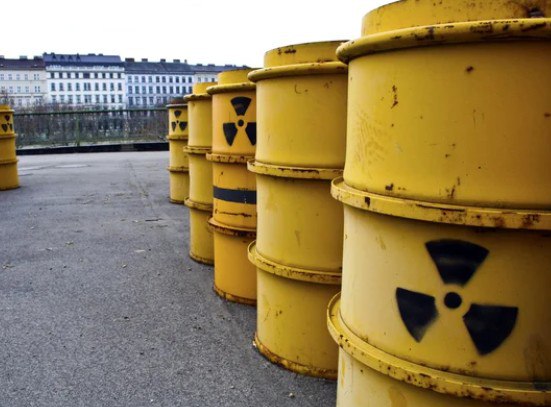
Kazakhstan’s soil is contaminated with radioactive waste, heavy metals, oil, and petroleum products, according to the Central Asia Climate Change and Green Energy Project Office (CACF). The total volume of radioactive materials is estimated at approximately 200 million tons. These findings are based on the 2024 National Report on the State of the Environment and Natural Resource Use. The document identifies widespread zones of excessive contamination with radionuclides, toxic substances, and heavy metals across the country. A Radioactive Legacy Radiation exposure to soil is considered the most hazardous form of contamination. Kazakhstan is home to six major uranium provinces, along with dozens of smaller deposits and ore occurrences, contributing to naturally elevated levels of radioactivity. Over the full operational period of the country’s uranium mining industry, an estimated 200 million tons of radioactive waste have been generated. Military infrastructure further compounds the environmental burden. Kazakhstan has four military test sites and the Baikonur rocket and space complex. The zones where rocket booster stages fall span vast areas of Karaganda, Ulytau, Akmola, Pavlodar, and East Kazakhstan regions. According to scientific data, approximately 9.5 million hectares of land are contaminated with the byproducts of rocket fuel combustion and debris. Elevated levels of radionuclides, heavy metals, and toxic compounds have been recorded in areas surrounding these facilities. Heavy Metals Intensify the Pressure Soil contamination is also acute near major cities and industrial centers, exacerbated by the growing number of motor vehicles. Additional pollution originates from metallurgical and mining operations. In areas around the towns of Ust-Kamenogorsk, Ridder, Zhezkazgan, Shymkent, and Karaganda, the concentrations of lead, copper, zinc, and cadmium significantly exceed permissible limits. In the Syr Darya River plains of the Kyzylorda region, lead concentrations are double the legal threshold, while nickel levels exceed standards by roughly 1.5 times. Soil degradation is further aggravated by salinization caused by the discharge of highly mineralized drainage water. Billions of Tons of Industrial Waste All of Kazakhstan’s industrial regions now contain ecologically hazardous zones, including slag heaps, tailings ponds, mining dumps, and quarries. These collectively cover more than 60,000 hectares. Enterprises in the non-ferrous metallurgy sector alone have generated over 22 billion tons of industrial waste, including around 4 billion tons of mining byproducts. Of this, more than 1 billion tons consist of toxic enrichment waste, and over 100 million tons are metallurgical waste. According to the Ministry of Ecology and Natural Resources, Kazakhstan's total industrial waste volume has reached 31.5 billion tons. More than 1 billion tons of new waste are produced each year, with roughly 70% consisting of man-made mineral formations such as overburden and ash. Oil Pollution: A Persistent Challenge Oil contamination is another major environmental threat. In western Kazakhstan, nearly 200,000 hectares of land are affected by oil and petroleum products. The total volume of oil spills exceeds 5 million tons. The highest levels of pollution have been recorded in the Atyrau region near the Makat field, where petroleum concentrations in soil surpass regulatory limits by more than 1,000 times. Severe pollution...

Environmental Groups Criticize World Bank’s Decision on Rogun Dam Complaint

Environmental advocates have sharply criticized the World Bank’s decision to reject a request for a full investigation into Tajikistan’s Rogun Hydropower Plant, citing concerns over potentially severe environmental and social consequences for communities downstream along the Amu Darya river in Uzbekistan and Turkmenistan. According to the international coalition Rivers without Boundaries, the World Bank’s Board of Executive Directors dismissed the complaint despite mounting evidence that the project could exacerbate water scarcity, degrade water quality, damage vulnerable ecosystems, and displace rural populations dependent on agriculture and access to clean water. The complaint, filed earlier this year on behalf of affected communities, argued that the project’s environmental impact assessments were based on outdated data and non-binding verbal assurances from Tajikistan that the reservoir would not be operated at full capacity. The World Bank’s Inspection Panel registered the complaint in April 2025 and, after conducting an initial review, including a fact-finding visit to Tajikistan in June, recommended a comprehensive investigation, citing a strong likelihood of harm. However, the Bank’s Board rejected that recommendation, asserting that only citizens of the country receiving Bank financing are eligible to request an investigation. This decision surprised observers, particularly given that the Bank had previously accepted similar complaints from Uzbekistan over the same project in 2010. Environmental groups argue that the Board’s procedural reasoning allows it to ignore the project's far-reaching transboundary impacts. Evgeny Simonov, a lead expert at Rivers without Boundaries, stated that the Inspection Panel’s own findings validated the downstream communities’ concerns. He accused the Bank of avoiding accountability by hiding behind technicalities. Alexander Kolotov, director of the same coalition, said the ruling reveals a contradiction between the Bank’s public commitments to inclusive development and its actual response to cross-border grievances. He warned that dismissing downstream voices undermines the principles of equitable and participatory water governance. Environmental experts also caution that the refusal to launch an investigation leaves no recourse for affected communities should their fears materialize. Potential long-term impacts include increased soil salinity, reduced agricultural productivity, and the erosion of traditional rural livelihoods. The Rogun Alert coalition, an alliance of international environmental organizations, announced plans to continue monitoring the situation and to explore alternative mechanisms to protect the environmental rights of the region’s residents. Previous assessments had warned that filling the Rogun reservoir could reduce water flows to the Amu Darya delta by 25% or more, with potentially devastating effects on ecosystems and the wellbeing of up to 10 million people in Uzbekistan and Turkmenistan.

Environmental Review of Sea Breeze Uzbekistan Resort at Charvak Still in Progress

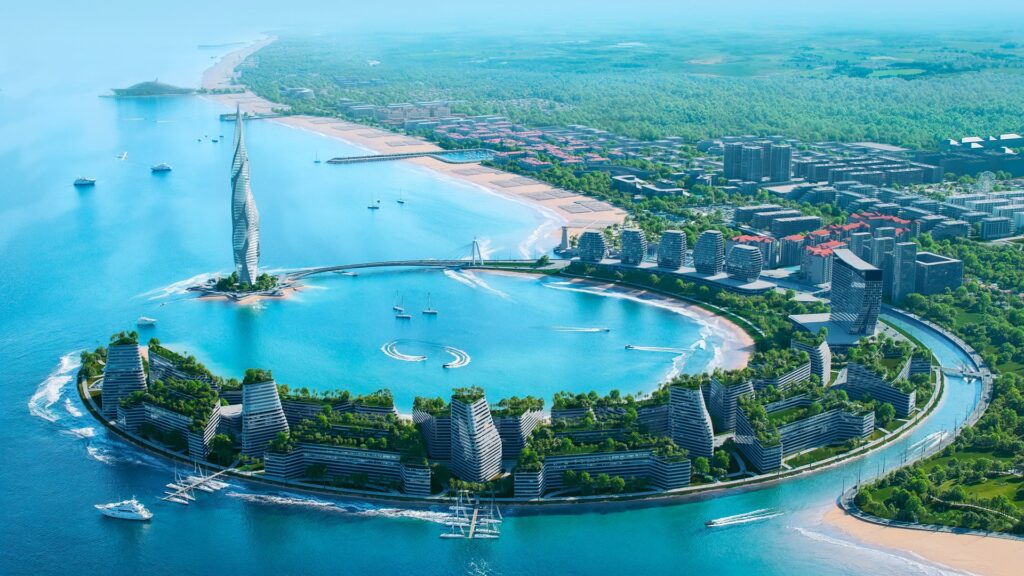
The environmental review for the multi-billion-dollar Sea Breeze Uzbekistan resort on the shores of the Charvak Reservoir is still in progress, Spot.uz reported, citing the press service of Sea Breeze Uzbekistan. According to the company, initial site preparations, including land clearing and waste removal, are underway. “As for the environmental assessment, this process is not yet complete. We are awaiting the results and remain open to any inquiries from the Ministry of Ecology, Environmental Protection, and Climate Change of Uzbekistan,” the company said in a statement. Emin Agalarov, president of Azerbaijan’s Agalarov Development and the main investor behind the project, addressed the status of construction in a recent interview. He noted that the primary challenges involve infrastructure, specifically access to water, gas, and electricity. “We have gone a long way to secure our project and make sure that nothing will be discharged into the environment. Wastewater will be collected in special facilities. Ecology is a fundamentally important issue. We are now going through all the required procedures in Uzbekistan, at Charvak,” Agalarov said. As previously reported by The Times of Central Asia, Agalarov plans to develop Sea Breeze Uzbekistan as a $5 billion all-season tourist complex spanning 500-700 hectares along Charvak Lake in the Tashkent region. The project is set to include hotels, villas, swimming pools, sports and leisure zones, retail spaces, restaurants, and a bridge linking both sides of the reservoir. The resort is also expected to host cultural events, festivals, and concerts year-round. Despite mounting public scrutiny and criticism from environmental activists, the Uzbek government has approved the project. In August, Prime Minister Abdulla Aripov signed Cabinet Resolution No. 490, granting Sea Breeze Uzbekistan LLC a 25-year direct lease on 577 hectares of land for development. Environmental experts note that the results of the ecological review will be pivotal in determining the project's future, as Charvak remains one of Uzbekistan’s most vital freshwater and recreational assets.  

Tajikistan’s Rogun Dam to Triple Forests Under No Net Loss Plan

The construction of Tajikistan’s massive Rogun Hydropower Plant (HPP) will proceed under strict environmental conditions, guided by what experts describe as a "No Net Loss" (NNL) approach to nature. According to Asia-Plus, the updated Environmental and Social Impact Assessment (ESIA) for the project outlines a series of measures to offset ecological damage, including large-scale forest restoration. The report states that 262 hectares of land, including 185 hectares of juniper forest and 77 hectares of floodplain, will be lost due to construction. To compensate, authorities plan to restore 786 hectares of new forest, tripling the area impacted. The reforestation effort will prioritize juniper, riverside, and fruit and nut forests, while also establishing new protected areas to reinforce local ecosystems. Tajikistan’s Forestry Agency has already allocated nearly 7,600 hectares of land for these efforts. Reforestation is expected to cost over $7.5 million, with annual maintenance costs projected at approximately $10,500. The ESIA outlines a phased strategy. From 2025 to 2030, specific restoration sites will be identified. Practical implementation, including planting and ecosystem protection, is scheduled to begin in 2031. The NNL principle aims to ensure that long-term ecological gains outweigh short-term environmental disruptions. Once completed, the Rogun HPP will have an installed capacity of 3,780 megawatts, making it the largest hydropower facility in Central Asia. Its six turbines, each with a capacity of 630 MW, are expected to generate over 14.5 billion kilowatt-hours of electricity annually once the plant becomes fully operational in 2029. Two units, launched in 2018 and 2019, are already producing power at reduced capacity. In 2024, the plant generated 1.22 billion kWh, accounting for 5.5 percent of Tajikistan’s total electricity output. However, the project has not escaped controversy. The World Bank’s Inspection Panel recently agreed to review a formal complaint filed by residents of Uzbekistan and Turkmenistan, supported by the regional coalition Rivers Without Boundaries. The complaint questions the adequacy of the project's environmental assessments, which critics argue fail to fully account for downstream impacts on communities and ecosystems along the Amu Darya basin. Despite these concerns, Tajik officials maintain that Rogun will enhance national energy independence while also helping position Central Asia as a hub for renewable energy.

Economist Raises Concerns Over $5 Billion Sea Breeze Resort Project at Charvak

The Uzbek government has approved the construction of the Sea Breeze Uzbekistan resort complex along the Charvak Reservoir, granting the investor 577 hectares of land on a 25-year lease at a sharply reduced rate. According to a Cabinet resolution, construction may begin even before the completion of project documentation. Tree relocation is expected as part of the development process. The project, led by Russian-Azerbaijani developer Emin Agalarov, envisions a new lakeside tourist destination complete with hotels, villas, swimming pools, sports facilities, restaurants, shops, and a bridge linking both sides of the reservoir. Financial Concerns Raised by Local Economist Uzbek economist and blogger Otabek Bakirov has voiced strong concerns over the project, arguing that while public debate has focused on environmental issues, the financial aspects have not been adequately examined. After reviewing the Cabinet resolution, he raised several questions about investor selection, project financing, lease terms, and the shifting of infrastructure costs onto the state. Questions About Investor Selection The government resolution names Sea Breeze Uzbekistan, a joint venture involving Agalarov’s development firm, as the winner of the site through what it describes as the “best proposal.” Bakirov questioned whether other bids were solicited or evaluated and whether any Uzbek partners hold ownership in the project. He noted that the resolution lacks information about the local share. Skepticism Over Project Financing Bakirov expressed doubt about the reported $5 billion investment figure, suggesting the Agalarov family likely lacks the capital to fund the project independently. “The Agalarovs don’t have their own $5 billion, which means the money will be borrowed,” he wrote. He questioned the source of financing, the terms of any loans, and what guarantees would be provided. He also pointed to a provision allowing the land to be subdivided and released without restrictions, warning that this could lead to speculation rather than real development. Concerns About Lease Pricing The land was leased for 17 billion soms (approximately $1.4 million), to be paid in installments over five years. This price reflects a 0.01 coefficient discount granted as an incentive. Bakirov argued that such a deeply discounted lease is inappropriate for a large-scale commercial venture. “Why has such a drastically reduced price been set for a commercial project, when this is a major business venture and not a social initiative?” he asked. He called for comparisons with other tourism projects to determine whether similar incentives were offered. “Mr. Agalarov is not building a hospital; he is building a commercial enterprise,” he added. Public Funding for Private Infrastructure According to Bakirov, the resolution assigns responsibility for essential infrastructure—such as access roads, utilities, and the reservoir bridge—to the Uzbek government. He argued that these should be covered by the investor. “Weren’t sewage treatment and bridge construction supposed to be the investor’s responsibility? Or were the public presentations misleading?” he asked. He emphasized the contradiction between promoting Sea Breeze as a $5 billion private investment and then shifting core expenses to the public sector. Fast-Tracked Construction Raises Red Flags Bakirov also criticized the decision to...