• KGS/USD = 0.01144 0%
  • KZT/USD = 0.00213 0%
  • TJS/USD = 0.10894 0%
  • UZS/USD = 0.00008 0%
  • TMT/USD = 0.28490 0%
  • KGS/USD = 0.01144 0%
  • KZT/USD = 0.00213 0%
  • TJS/USD = 0.10894 0%
  • UZS/USD = 0.00008 0%
  • TMT/USD = 0.28490 0%
  • KGS/USD = 0.01144 0%
  • KZT/USD = 0.00213 0%
  • TJS/USD = 0.10894 0%
  • UZS/USD = 0.00008 0%
  • TMT/USD = 0.28490 0%
  • KGS/USD = 0.01144 0%
  • KZT/USD = 0.00213 0%
  • TJS/USD = 0.10894 0%
  • UZS/USD = 0.00008 0%
  • TMT/USD = 0.28490 0%
  • KGS/USD = 0.01144 0%
  • KZT/USD = 0.00213 0%
  • TJS/USD = 0.10894 0%
  • UZS/USD = 0.00008 0%
  • TMT/USD = 0.28490 0%
  • KGS/USD = 0.01144 0%
  • KZT/USD = 0.00213 0%
  • TJS/USD = 0.10894 0%
  • UZS/USD = 0.00008 0%
  • TMT/USD = 0.28490 0%
  • KGS/USD = 0.01144 0%
  • KZT/USD = 0.00213 0%
  • TJS/USD = 0.10894 0%
  • UZS/USD = 0.00008 0%
  • TMT/USD = 0.28490 0%
  • KGS/USD = 0.01144 0%
  • KZT/USD = 0.00213 0%
  • TJS/USD = 0.10894 0%
  • UZS/USD = 0.00008 0%
  • TMT/USD = 0.28490 0%

Viewing results 1 - 6 of 18

Direct Flights Between Almaty and Lake Issyk-Kul Resume

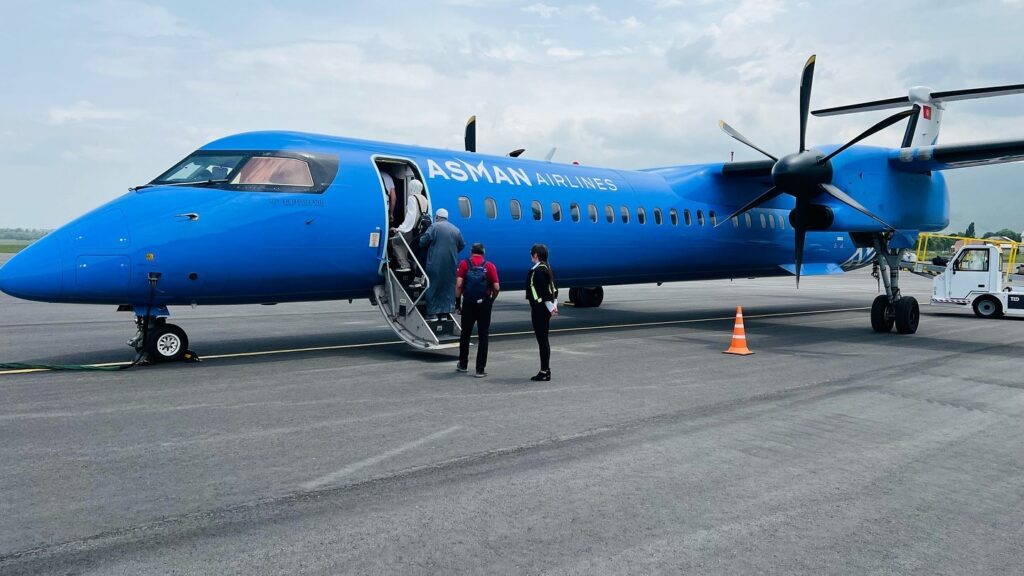
Kyrgyzstan’s state-owned Asman Airlines will resume seasonal direct flights between Almaty, Kazakhstan’s largest city, and Lake Issyk-Kul, Kyrgyzstan’s leading summer tourist destination. One-hour flights will begin on July 10 and arrive at Issyk-Kul International Airport in the village of Tamchy on the lake’s northern shore. The service will operate twice a week, on Mondays and Fridays, in partnership with tour operator Kompas, Asman Airlines’ official partner in Kazakhstan. Round-trip fares start at $120. Asman Airlines currently operates three Dash 8 Q400 aircraft, Canadian-made short-haul turboprop planes capable of carrying up to 80 passengers over distances of up to 2,000 kilometers. The aircraft are used on domestic routes across Kyrgyzstan after the airline recently restored air links between Bishkek and several remote regional centers. Lake Issyk-Kul remains one of the most popular summer destinations for tourists from across Central Asia, particularly residents of Almaty looking for short weekend trips. The Almaty-Tamchy route is expected to make travel easier for visitors from southern Kazakhstan by significantly reducing travel time during the peak holiday season. By road, the journey from Almaty to Issyk-Kul currently covers more than 460 kilometers via Bishkek and usually takes around eight hours. Efforts to shorten the overland route are continuing. As previously reported by The Times of Central Asia, Kazakhstan and Kyrgyzstan have been advancing a long-discussed highway project intended to directly connect Almaty with Issyk-Kul. Although the two locations are only about 80 kilometers apart in a straight line, mountain ranges force travelers to make a long detour through the Kyrgyz capital. Issyk-Kul has also become more accessible to travelers from Kazakhstan’s capital. According to Kazakhstan’s Ministry of Transport, FlyArystan began regular flights between Astana and Issyk-Kul on July 3. The flights operate twice a week, on Mondays and Fridays, using an Airbus A320. On July 8, Asman Airlines also launched a seasonal direct service between Tashkent, Uzbekistan’s capital, and Lake Issyk-Kul.

Direct Flights Between Tashkent and Lake Issyk-Kul Launched

Kyrgyzstan’s state-owned Asman Airlines will launch a seasonal direct service between Tashkent and Lake Issyk-Kul on July 8, expanding transport links between Kyrgyzstan and Uzbekistan during the peak summer tourism season. The route is being introduced in partnership with Uzbek tour operator Malva Tour and is intended to make travel to Kyrgyzstan’s largest resort area more convenient for visitors from Uzbekistan. Flights will operate once a week, every Wednesday, arriving at Issyk-Kul International Airport in the village of Tamchy on the lake’s northern shore. The journey will take approximately one hour and 20 minutes. Round-trip fares start at $160, according to Asman Airlines. Lake Issyk-Kul, one of Central Asia’s most popular summer destinations, attracts visitors from across the region with its mountain scenery, beaches, and resort infrastructure. The new route is expected to strengthen tourism ties between the neighboring countries by reducing travel time and improving direct access to the lake. Uzbekistan remains Kyrgyzstan’s largest source of international visitors, accounting for more than 40% of all inbound foreign tourists each year. Visa-free travel, close geographic proximity, and relatively affordable holiday costs have made Kyrgyzstan a popular destination for Uzbek travelers. The launch of the new route reflects broader efforts by Central Asian countries to improve regional connectivity and capitalize on growing cross-border tourism as travel demand continues to recover.

Kyrgyzstan Launches Tamchy Financial Zone to Attract Foreign Capital

Kyrgyzstan officially inaugurated the Tamchy Special Financial Investment Territory (SFIT) on July 3 on the northern shore of Lake Issyk-Kul, marking the launch of a new investment zone designed to attract foreign capital and position the country as a regional financial and business hub. Located near the village of Tamchy and close to Issyk-Kul International Airport, the SFIT operates under a separate legal framework aimed at attracting domestic and international investment, improving Kyrgyzstan's investment climate, and supporting growth in manufacturing, tourism, wellness services, and transport infrastructure. The zone also features an independent international dispute resolution center operating under English common law. The Tamchy SFIT covers approximately 6,000 hectares. Companies registered within the zone will operate under English common law, benefit from a zero-tax regime for 49 years, and be allowed to repatriate 100% of their profits. Speaking at the opening ceremony, President Sadyr Japarov expressed confidence that the Tamchy SFIT would become a regional and global investment platform. "According to forecasts, the project will gradually gain momentum, and by 2035, more than 3,900 resident companies are expected to operate in this investment territory, creating over 10,000 new jobs," the president said. Japarov also pointed to the project’s economic impact. "When companies enter the financial investment territory, they bring new orders for builders, suppliers, transport companies, hotels, restaurants, service organizations, farmers, and entrepreneurs. Thus, this project provides jobs for our people, new opportunities for businesses, and new sources of economic growth for the state," he said. The president said the zone’s legal and regulatory framework draws on the experience of several leading international financial centers. He named Dubai and Singapore, and also cited Luxembourg. "We've adopted proven models from these countries' experience and sought to combine them with the national advantages of the Kyrgyz Republic, the unique location of Lake Issyk-Kul, and our human potential," Japarov said. A central feature of the new investment zone is its independent International Center for Dispute Resolution operating under English law. "This important step will significantly enhance trust in the project and make the SFIT's legal framework one of its key competitive advantages," the president said. Japarov also stressed that economic development in the zone would not come at the expense of the environment. "The development of the Tamchy special territory will be carried out with full consideration of the lake's conservation requirements and its unique natural environment. Issyk-Kul is a natural gem, our national treasure, and a symbol of the country. Whatever projects are implemented in the Tamchy special territory, they will be carried out only in compliance with environmental requirements and under strict oversight," he said. During the ceremony, the president presented certificates to the first five resident companies representing the UAE, Hong Kong, Switzerland, Kazakhstan, and South Korea. The organizers also announced registration fees and licensing costs for companies operating in the zone. Company registration within SFIT will cost a minimum of $525, while registration of investment funds starts at $975. According to the organizers, businesses operating within SFIT will be able to...

Kyrgyzstan-Germany Project Studies Lake Issyk-Kul Ecosystem

A comprehensive scientific study of Lake Issyk-Kul began on June 11 as part of an international project involving Razzakov Kyrgyz State Technical University (KSTU), the International Medical University, and Germany’s Leibniz Institute of Freshwater Ecology and Inland Fisheries. Lake Issyk-Kul is Kyrgyzstan’s largest lake and its leading tourist destination. It also forms part of a protected ecological area. In recent decades, the lake has faced growing climate-related pressures. According to KSTU, cooperation between the scientific institutions began in 2024 with the establishment of the Issyk-Kul Ecological Laboratory in Cholpon-Ata. The laboratory has since become a platform for joint research into the lake’s ecological condition. In 2025, the partners secured a grant from the German Research Foundation to conduct a comprehensive study of the Issyk-Kul ecosystem. German scientists have arrived in Kyrgyzstan to take part in the research. The project focuses on the hydrophysical, hydrochemical, hydrobiological, and hydro-optical properties of Issyk-Kul’s water using advanced scientific methods and technologies. Researchers are also studying biological processes within the aquatic ecosystem, including DNA and RNA analysis of biomaterials. The research is expected to help assess ongoing ecological processes, identify long-term trends, and establish a scientific basis for measures to preserve the lake’s ecosystem. According to KSTU Professor Salmor Alymkulov, the project is important for expanding international scientific cooperation, training young researchers, and developing recommendations to protect Kyrgyzstan’s natural heritage. Kyrgyzstan views the preservation of Issyk-Kul as part of the global climate and water agenda. In December 2025, the Cabinet of Ministers approved the Concept for the Sustainable Development of the Ecological and Economic System of Lake Issyk-Kul through 2030, along with an accompanying action plan. The initiative is aimed at protecting the lake and its surrounding biosphere from growing environmental and human pressures while supporting the region’s long-term economic resilience. Speaking at the World Governments Summit in Dubai in February 2026, Kyrgyzstan’s then Deputy Chairman of the Cabinet of Ministers and Minister of Water Resources, Agriculture, and Processing Industry, Bakyt Torobaev, warned of the growing climate risks facing Issyk-Kul. According to Torobaev, the lake’s water level has fallen by nearly 14 meters since the mid-19th century, while its total volume has decreased by approximately 85 billion cubic meters. The number of rivers flowing into the lake has also declined significantly, largely due to glacier melt and increased agricultural water use. He warned that further declines in Issyk-Kul’s water level could have serious environmental and socioeconomic consequences, including threats to biodiversity, the lake’s tourism potential, and the well-being of local communities.

Passenger Bus Service Connects Tashkent and Lake Issyk-Kul

A seasonal passenger bus service connecting Uzbekistan’s capital, Tashkent, with Cholpon-Ata, the main resort city on the northern shore of Lake Issyk-Kul in Kyrgyzstan, has been launched, Uzbekistan’s Ministry of Transport has announced. The route, operated by Uzautotrans Service using Yutong buses, opened on June 8. The service will depart from Tashkent’s main bus station on even-numbered days in June. Return trips from Issyk-Kul to Tashkent will run on odd-numbered days. Tickets cost 365,000 Uzbekistani sum, or about $30. Lake Issyk-Kul is Kyrgyzstan’s premier tourism hub and is especially popular with visitors from Kazakhstan, Uzbekistan, and Russia. According to data from Kyrgyzstan’s Ministry of Economy and Commerce and the 2GIS mapping service, tourism activity in the Issyk-Kul region has tripled over the past six years. By the end of August 2025, which marked the close of the summer resort season, the volume of tourist services along the lake’s shores had tripled compared with 2019.

Kyrgyzstan’s New Investment Zone at Issyk-Kul Opens First Business Center

The Tamchy Special Financial Investment Territory (Tamchy SFIT), a newly established investment zone operating under its own legal framework, is opening its first business center on the shores of Lake Issyk-Kul. The zone also includes an independent international dispute-resolution center based on English common law. According to Kyrgyzstan’s Ministry of Economy and Commerce, the new facility will house the offices of the Tamchy zone’s management company, which is preparing to begin the territory’s operations. The company will be responsible for registering resident businesses and overseeing licensing, as well as managing infrastructure development within the zone. The 3,850-square-meter business center includes office and co-working spaces, multifunctional conference halls, and meeting rooms. A restaurant and café are also expected to open in the near future. Tamchy SFIT covers approximately 6,000 hectares along the northern shore of Lake Issyk-Kul. Companies registered in the zone will be able to operate under English common law, benefit from a zero-tax regime for 49 years, and freely repatriate 100% of their profits. By 2035, the authorities expect the investment territory to host more than 3,900 companies and create more than 10,000 jobs. The zone is intended to attract both domestic and foreign investment, improve Kyrgyzstan’s investment climate, and stimulate growth in key sectors, including manufacturing, tourism, wellness services, and transport infrastructure. “The Tamchy Special Financial Investment Territory has emerged at a time when international businesses are actively seeking new points of trust,” said Kyrgyz Justice Minister Ayaz Baetov, who chairs the territory’s Management Council. “The opening of this first business center marks the beginning of the territory’s operational life. We are building financial and logistical bridges between the markets of the CIS, Asia, the Middle East, Europe, and Africa, and today this bridge has its first address, where active preparations are already underway to welcome the first residents.” Ahead of the opening, the Management Council established the zone’s management company, approved its development strategy, and adopted the first package of regulatory documents governing operations within the territory. At the same time, the selection process is underway for the chairman and judges of the International Center for Dispute Resolution. The center will adjudicate investment-related disputes within the Tamchy zone under English common law, a legal system based on judicial precedent that is widely used in major global financial hubs such as London, Dubai, and Singapore. The dispute-resolution center is being established by Kyrgyzstan’s Ministry of Justice with support from the British Embassy in Bishkek. As previously reported by The Times of Central Asia, the initiative is part of Kyrgyzstan’s effort to create an English law-based legal framework designed to enhance investor confidence and align the country’s investment environment with international standards.