• KGS/USD = 0.01143 0%
  • KZT/USD = 0.00205 0%
  • TJS/USD = 0.10724 0.09%
  • UZS/USD = 0.00008 0%
  • TMT/USD = 0.28571 0%
  • KGS/USD = 0.01143 0%
  • KZT/USD = 0.00205 0%
  • TJS/USD = 0.10724 0.09%
  • UZS/USD = 0.00008 0%
  • TMT/USD = 0.28571 0%
  • KGS/USD = 0.01143 0%
  • KZT/USD = 0.00205 0%
  • TJS/USD = 0.10724 0.09%
  • UZS/USD = 0.00008 0%
  • TMT/USD = 0.28571 0%
  • KGS/USD = 0.01143 0%
  • KZT/USD = 0.00205 0%
  • TJS/USD = 0.10724 0.09%
  • UZS/USD = 0.00008 0%
  • TMT/USD = 0.28571 0%
  • KGS/USD = 0.01143 0%
  • KZT/USD = 0.00205 0%
  • TJS/USD = 0.10724 0.09%
  • UZS/USD = 0.00008 0%
  • TMT/USD = 0.28571 0%
  • KGS/USD = 0.01143 0%
  • KZT/USD = 0.00205 0%
  • TJS/USD = 0.10724 0.09%
  • UZS/USD = 0.00008 0%
  • TMT/USD = 0.28571 0%
  • KGS/USD = 0.01143 0%
  • KZT/USD = 0.00205 0%
  • TJS/USD = 0.10724 0.09%
  • UZS/USD = 0.00008 0%
  • TMT/USD = 0.28571 0%
  • KGS/USD = 0.01143 0%
  • KZT/USD = 0.00205 0%
  • TJS/USD = 0.10724 0.09%
  • UZS/USD = 0.00008 0%
  • TMT/USD = 0.28571 0%

Viewing results 1 - 6 of 6

Global Tech Weekend Brings International Investors and Startups to Uzbekistan

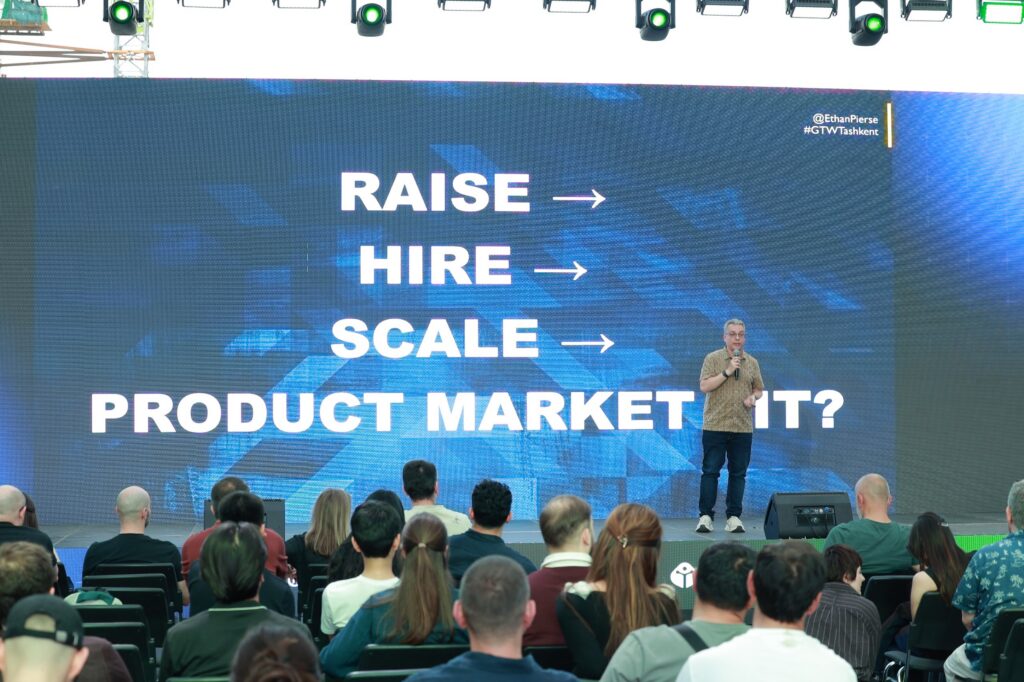
More than 2,500 startup founders, investors, developers, venture capital representatives, and technology experts gathered in Uzbekistan’s capital from May 15-17 for the inaugural Global Tech Weekend × TECH FEST, an event organizers say reflects the region’s growing role in the international innovation economy. Held in partnership with IT Park Uzbekistan, the three-day festival featured more than 40 events and over 120 speakers from Central Asia, Europe, the Middle East, and the United States. Discussions covered artificial intelligence, venture capital, gaming, digital transformation, startup scaling, and cross-border investment. The event marks Global Tech Weekend’s first edition in Uzbekistan. Founded in Los Angeles in 2024, the event debuted in Tbilisi in 2025 before expanding in 2026 to Tashkent, Tbilisi, and Baku as flagship host cities. “You have everything you need to achieve your goals. IT Park and the government provide strong support. I wish every country had this level of support,” said Jaba Kikvidze, co-founder of Global Tech Weekend, during the festival. “My advice to founders in Uzbekistan is to work hard, look beyond the local market, explore new opportunities, and make use of the ecosystem being built around you,” he added. [caption id="attachment_49077" align="aligncenter" width="300"] @IT Park Uzbekistan[/caption] One of the recurring themes of the event was how Central Asian startups can move beyond domestic markets and attract international investment. During a panel titled “Roots: Local Playbooks on Investing and Building within Central Asia,” regional investors discussed how funding strategies and startup expectations are evolving across emerging economies. Representatives from global accelerators and investment networks also highlighted growing international interest in founders from less traditional technology hubs. Speaking to The Times of Central Asia, Farrukh Erkinov, head of the Startup Ecosystem Development Department at IT Park Uzbekistan, said one of the festival’s main objectives was to create direct links between local entrepreneurs and global investors. “One of the most important factors in today’s startup ecosystem is connection to the global community,” Erkinov said. “Through Global Tech Weekend, we aimed to create a direct platform for startups in Uzbekistan to interact with international investors, accelerators, and technology partners.” [caption id="attachment_49078" align="aligncenter" width="300"] @IT Park Uzbekistan[/caption] Artificial intelligence was another major focus of the festival. Speakers including Ethan Pierse, a partner at Borderless Ventures whose work focuses on the AI economy, argued that traditional investment models are becoming less effective as AI reshapes industries and shortens startup development cycles. The event also included startup pitch competitions featuring projects from Uzbekistan and neighboring countries, mentorship sessions with international experts, and esports tournaments centered on PUBG MOBILE and Mobile Legends. Organizers said the festival is intended to connect Central Asia more closely with the Caucasus and other neighboring regions. “We believe we can unite Central Asia and the Caucasus,” Global Tech Weekend co-founder Guri Koiava told The Times of Central Asia. “This means friendship, bridges between countries, joint investments, and new business opportunities. Here I see a strong drive from young people. They believe in what they are building."

Games, Ambitions, and a New Industry: How Esports are Developing in Kazakhstan

Just ten years ago, esports in Kazakhstan were widely seen as little more than a hobby for teenagers and university students. Today, the situation has changed dramatically. The industry is expanding, international tournaments are being hosted in the country, and Kazakhstani players are competing on the global stage. The development of infrastructure, growing government support, and the success of individual esports athletes are gradually making Kazakhstan a visible player on the global esports map. From Computer Clubs to International Arenas The first esports competitions in Kazakhstan were held in small computer clubs, which became centres for the formation of local gaming communities. Over time, the standard of tournaments rose, and audiences grew. Today, Kazakhstan hosts major international competitions. One such event was the PGL Astana 2025 Counter-Strike 2 tournament, held in the capital. Featuring some of the world’s strongest teams, the event had a prize pool of $1,250,000. Team Spirit defeated Astralis in the final. The tournament attracted thousands of spectators to the arena and a large online audience worldwide. Mobile esports are developing in parallel. In spring 2025, Almaty hosted the PUBG Mobile Super League Central & South Asia Spring 2025. Teams from across the region took part, competing for a total prize pool of $200,000. Alpha Gaming won the tournament after demonstrating consistent performance throughout the championship. Hosting events at this scale highlights Kazakhstan’s growing attractiveness as a venue for international esports tournaments. Government Support and Future Plans The rising popularity of esports has prompted the government to view the sector as a promising area for development. In 2025, the Concept for the Development of Esports in Kazakhstan for 2025-2029 was approved. The document outlines plans to create a comprehensive system for player development. These include expanding school and university leagues, organising regional tournaments, and developing infrastructure for training professional teams. According to projections, the country’s esports audience could reach around 5 million people by 2026. Kazakhstan is also preparing to host the international “Games of the Future” in 2026, a large-scale “phygital” event combining traditional sports and esports. Organisers have indicated a multi-million dollar prize fund, with figures varying depending on the competition structure. Hosting such a tournament could become one of the biggest esports milestones in the region’s history. A New Generation of Stars Kazakhstan’s esports scene has long been regarded as one of the strongest in the CIS region, particularly in Counter-Strike 2 and Counter-Strike: Global Offensive. In recent years, several players from the country have gained international recognition. Among them is Abay “HObbit” Khasenov, champion of one of the biggest CS:GO tournaments, PGL Major Kraków 2017. Also well-known are Alexey “Qikert” Golubev, who played for Virtus.pro, and Dauren “AdreN” Kystaubayev, one of the most experienced players on the Kazakhstani scene and a winner of major international championships. Their achievements have helped shape Kazakhstan’s reputation as a country with a strong Counter-Strike tradition. A new generation is continuing this legacy. One of its most notable representatives is Counter-Strike 2 player Danil “molodoy” Golubenko, who is...