• KGS/USD = 0.01144 0%
  • KZT/USD = 0.00198 -0%
  • TJS/USD = 0.10901 0%
  • UZS/USD = 0.00008 0%
  • TMT/USD = 0.28490 0%
  • KGS/USD = 0.01144 0%
  • KZT/USD = 0.00198 -0%
  • TJS/USD = 0.10901 0%
  • UZS/USD = 0.00008 0%
  • TMT/USD = 0.28490 0%
  • KGS/USD = 0.01144 0%
  • KZT/USD = 0.00198 -0%
  • TJS/USD = 0.10901 0%
  • UZS/USD = 0.00008 0%
  • TMT/USD = 0.28490 0%
  • KGS/USD = 0.01144 0%
  • KZT/USD = 0.00198 -0%
  • TJS/USD = 0.10901 0%
  • UZS/USD = 0.00008 0%
  • TMT/USD = 0.28490 0%
  • KGS/USD = 0.01144 0%
  • KZT/USD = 0.00198 -0%
  • TJS/USD = 0.10901 0%
  • UZS/USD = 0.00008 0%
  • TMT/USD = 0.28490 0%
  • KGS/USD = 0.01144 0%
  • KZT/USD = 0.00198 -0%
  • TJS/USD = 0.10901 0%
  • UZS/USD = 0.00008 0%
  • TMT/USD = 0.28490 0%
  • KGS/USD = 0.01144 0%
  • KZT/USD = 0.00198 -0%
  • TJS/USD = 0.10901 0%
  • UZS/USD = 0.00008 0%
  • TMT/USD = 0.28490 0%
  • KGS/USD = 0.01144 0%
  • KZT/USD = 0.00198 -0%
  • TJS/USD = 0.10901 0%
  • UZS/USD = 0.00008 0%
  • TMT/USD = 0.28490 0%
08 December 2025

Viewing results 1 - 6 of 15

EBRD and EU Allocate €43 Million to Modernize Tajikistan’s Power Grid

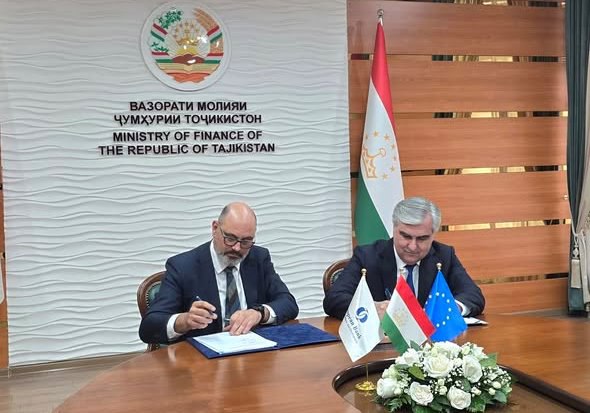
The European Bank for Reconstruction and Development (EBRD) and the European Union have announced a joint initiative to enhance the reliability and transparency of Tajikistan’s electricity distribution system. Under the agreement, a €43 million financing package will support the state-owned electricity distributor Shabakahoi Taqsimoti Barq (STB). The funding aims to reduce technical losses and improve efficiency by upgrading essential infrastructure. The “Energy Loss Reduction” project was officially signed on December 4 at Tajikistan’s Ministry of Finance. The agreement was endorsed by Minister of Finance Faiziddin Kahhorzoda and the EBRD’s permanent representative in Tajikistan, Holger Wiefel. The project is backed by €28 million in sovereign loans from the EBRD and €15 million in EU grants via the Asia-Pacific Investment Fund. Funds will be directed toward upgrading billing systems and installing new electricity metering equipment in nine cities across the Sughd and Khatlon regions. These areas are among the most affected by outdated infrastructure, which contributes to technical power losses, inaccurate metering, and the reduced financial viability of STB. The modernization program includes digitizing STB’s core operations and implementing cybersecurity measures to safeguard the national power grid. Technical assistance from both the EU and EBRD will support the rollout of these reforms. A key component of the initiative is human capital development. Specialized training programs on sustainable technologies and modern energy sector skills will be offered, with a focus on youth and women. This is intended to enhance the qualifications of local professionals and strengthen the regional labor market. The EBRD remains one of Tajikistan’s most significant international investors. To date, the bank has invested more than €1 billion across 188 projects in various sectors. The new energy initiative reflects the continued strategic role of international partners in supporting the modernization of Tajikistan’s critical infrastructure.

Kazakhstan Aims to Double Output of Existing Medium-Sized Enterprises

Kazakhstan’s Ministry of National Economy, in partnership with the European Bank for Reconstruction and Development (EBRD), is developing a strategy to help existing medium-sized enterprises increase their production capacity two to threefold. The initiative is part of the “Improving the Investment Attractiveness of Medium-Sized Businesses” program. Deputy Minister of National Economy Yerlan Sagnaev announced the initiative at a press conference hosted by the Central Communications Service. According to Sagnaev, companies will receive state-backed support in the form of diagnostic assessments and customized development plans. “Today, medium-sized businesses are primarily concentrated in the manufacturing sector, which currently accounts for about 12% of total SME output. Yet there remains significant untapped potential for growth, as much as two to three times the current level,” he said. Sagnaev noted that the most active sectors include metallurgy, light industry, construction materials, mechanical engineering, and chemicals. The state plans to prioritize these industries, including through joint programs with the EBRD. According to ministry data, small and medium-sized enterprises (SMEs) now contribute 39.8% to Kazakhstan’s GDP. In the first half of 2025, the sector’s total output reached $82.6 billion, representing a 25% increase. Employment in the SME segment rose by 3.9% to 4.4 million people, with trade, industry, construction, transport, and agriculture driving the highest growth. However, challenges persist. A recent Business Climate rating by the “Atameken” National Chamber of Entrepreneurs  shows that while 35.4% of small businesses plan to expand, only 10.1% are interested in launching new projects. Requests for government support remain modest at 18.8%, and 6.2% of respondents are considering staff cuts or closures. Timur Zharkenov, Deputy Chairman of the Atameken Board, highlighted the most pressing concerns for medium-sized businesses: a high tax burden (28.1%), labor shortages (16.2%), and inconsistent support from local authorities for investment initiatives. In autumn 2025, domestic manufacturers reported a decline in orders and a rise in production costs, reinforcing the urgency of state support and the need to improve operational efficiency.

Tajikistan Completes Modernization of Kairakkum Hydropower Plant

On November 20, Tajik President Emomali Rahmon officially inaugurated three newly modernized hydroelectric units at the Kairakkum Hydropower Plant (HPP) in Guliston, located in the northern Sughd region. Situated on the Syr Darya River, the Kairakkum HPP comprises six hydroelectric units, the last of which was commissioned in 1957. Over nearly seven decades of operation, the plant’s equipment had become outdated, leading to a decline in generation capacity. The facility currently provides electricity to approximately 500,000 residents in Sughd province. A modernization project for the aging plant began in August 2019. The first three upgraded units were brought online in September 2024. With the completion of the remaining three units, all six have now been fully renovated. [caption id="attachment_39735" align="aligncenter" width="1024"] Image: president.tj[/caption] Each upgraded unit now has a capacity of 29 MW, bringing the plant’s total capacity from 126 MW to 174 MW, an increase of 60 MW. As a result, annual electricity generation has risen from 650 million kWh to 900 million kWh. The modernization was backed by a $196 million financing package led by the European Bank for Reconstruction and Development (EBRD), which included: An $88 million EBRD loan A $37 million loan from the European Investment Bank A $50 million loan and grant from the Green Climate Fund A $21 million loan and grant from the Climate Investment Funds (CIF), directed to state-owned utility Barki Tojik. Tajikistan, which possesses vast hydropower potential but suffers from chronic energy shortages, has prioritized hydropower projects in recent years. Chief among them is the ongoing construction of the massive Rogun Dam and hydropower plant. These initiatives aim not only to address domestic supply issues but also to establish Tajikistan as a regional electricity exporter.

EBRD Launches Online Mentoring Platform for Entrepreneurs in Tajikistan

Small and medium-sized enterprises (SMEs) in Tajikistan have a new avenue of support: the European Bank for Reconstruction and Development (EBRD) has launched an online platform offering mentoring and professional consultations. The initiative is funded by the Government of Switzerland. A Global Community for Tajik Entrepreneurs The new platform, MicroMentor.tj, connects Tajik business owners with a global network of more than 420,000 entrepreneurs and 120,000 mentors across 180 countries. Available in six languages, including Russian, the service is free and accessible to entrepreneurs even in remote regions of Tajikistan. The platform aims to expand opportunities for SMEs, foster innovation, support business development, and generate employment. Promotion of the platform within the country is supported by local partner Shedevr, headed by Muboriz Subkhonov. Mentoring as a Growth Tool The EBRD has long supported SMEs not only through financial instruments but also via non-financial services such as mentoring, sector-specific consultations, training, and educational events. According to the bank, 77% of entrepreneurs who engaged actively with mentors reported increased revenues. The new platform builds on the Mentoring for Women Entrepreneurs program, which supported more than 100 participants from Dushanbe, Khatlon, Sughd, and Gorno-Badakhshan Autonomous Oblast (GBAO), with guidance from 50 mentors from Kazakhstan, Kyrgyzstan, and Armenia. Over a nine-month period, 108 mentor-mentee pairs were formed. Nearly all participants reported tangible outcomes: 95% improved their business skills 93% expanded their businesses 90% created new jobs EBRD Updates Strategy for Tajikistan Coinciding with the platform’s launch, the EBRD approved a new country strategy for Tajikistan through 2030, prioritizing structural reforms, private sector development, and sustainable growth in energy, transport, and urban infrastructure. “The new strategy reflects our commitment to supporting Tajikistan’s economic development through a comprehensive approach combining financial resources, policy dialogue, and technical assistance,” the EBRD press service stated. The bank plans to support projects that enhance competitiveness and foster technological independence. To date, the EBRD has invested more than €1 billion in Tajikistan’s economy across 185 projects. According to the latest Regional Economic Prospects report, the EBRD forecasts Tajikistan’s GDP growth at 7% in 2025 and 5.7% in 2026. Key drivers include infrastructure investments, private sector expansion, and advancements in digital technologies and energy. The new strategy integrates investment, advisory support, and regulatory reform to create a more favorable business environment for Tajikistan’s growing economy.

EBRD Projects Central Asia Economies 2025 Growth at 6.1%

The European Bank for Reconstruction and Development (EBRD) projects that the economies of Kazakhstan, the Kyrgyz Republic, Mongolia, Tajikistan, Turkmenistan, and Uzbekistan will grow by an average of 6.1% in 2025. According to the EBRD, the region’s momentum is being driven by strong industrial output, robust domestic demand, higher investment, rising wages, and continued remittance inflows. In 2026, growth is expected to remain positive but moderate to 5.2%. The report warns, however, that volatility in commodity prices, reliance on remittances, and dependence on Russian and Chinese markets pose ongoing risks to stability. Kazakhstan, Central Asia’s largest economy, is forecast to expand by 5.7% in 2025. Growth has been fueled by increased oil production at the Tengiz field, which boosted industrial activity and wholesale trade. The construction sector grew by 18.4% in the first half of the year, reflecting large infrastructure projects and residential development. Even so, the EBRD cautions that over-reliance on Russian transit routes and global commodity fluctuations could slow growth to 4.5% in 2026. The Kyrgyz Republic is projected to remain one of the region’s fastest-growing economies, with GDP expected to rise by 9.0% in 2025. The economy expanded by 11.4% in the first half of the year, supported by strong public investment, remittance inflows, and rising wages. Manufacturing, trade, and construction are key drivers, while tourism is growing through new investments. Growth is forecast to ease to 6.0% in 2026 but is expected to remain resilient unless remittance flows decline. Mongolia’s economy is expected to grow by 5.8% in 2025. A 35.6% rebound in agriculture after two difficult years helped offset slower mining activity and weaker coal prices, while copper production increased. Tajikistan’s economy grew by 8.1% in the first half of 2025, driven by trade, agriculture, transport, and a doubling of mining output. Remittances rose by 64%, and sharp wage growth boosted household consumption. The EBRD forecasts GDP growth of 7.5% in 2025, moderating to 5.7% in 2026. Continued support from international institutions such as the World Bank and IMF is expected to sustain growth, although reliance on remittances remains a structural vulnerability. Turkmenistan is projected to grow by 6.3% in both 2025 and 2026, supported by trade, transport, services, and construction. Official data show capital investment up 15.6% year on year. Uzbekistan’s economy is expected to expand by 6.7% in 2025, backed by strong domestic demand, rising wages, and a 28.7% increase in remittances. Services grew by more than 8%, while industrial output was buoyed by high gold prices and stronger manufacturing in food and metals. Growth is projected to ease slightly to 6.0% in 2026 but will remain supported by diversified manufacturing and stable foreign investment.

EBRD Provides $250 Million Loan to Upgrade Uzbekistan’s Irrigation Pumps

The European Bank for Reconstruction and Development (EBRD) has approved a sovereign loan of up to $250 million (€240 million) to support the modernization of 110 irrigation pumping stations across Uzbekistan. The funding, allocated to the Ministry of Water Resources, will enable the installation of modern, energy-efficient pumps in 10 regions. According to the EBRD, the project is expected to reduce electricity consumption by approximately 251,000 megawatt-hours (MWh) annually and cut CO₂-equivalent emissions by more than 117,000 tons per year. The financing will also cover refurbishment of related infrastructure and the installation of rooftop solar panels at select stations. This initiative is a core part of Uzbekistan’s national irrigation modernization program, which aims to reduce electricity consumption across the irrigation system by 25%. The program also includes the deployment of water-saving technologies that will reach nearly half of the country’s irrigated farmland. Currently, Uzbekistan operates over 1,600 irrigation pumping stations, an energy-intensive network crucial for the country’s agricultural sector. Recognizing the need for improved efficiency, the water management sector has declared 2025 the "Year of Enhancing Pumping Station Efficiency." In recent years, the country has invested $1 billion in upgrading major stations such as Karshi, Amu-Bukhara, and Amu-Zang. However, the degradation of smaller and mid-sized stations has continued to drive up irrigation water costs. Efforts to conserve water are also underway. By concreting 550 kilometers of canals and ditches, water supply to 200,000 hectares of farmland has been stabilized, saving an estimated 450 million cubic meters of water annually. In 2025, Uzbekistan plans to concrete an additional 18,000 kilometers of main canals nationwide.