• KGS/USD = 0.01144 0%
  • KZT/USD = 0.00205 0%
  • TJS/USD = 0.10771 0%
  • UZS/USD = 0.00009 0%
  • TMT/USD = 0.28571 0.28%
  • KGS/USD = 0.01144 0%
  • KZT/USD = 0.00205 0%
  • TJS/USD = 0.10771 0%
  • UZS/USD = 0.00009 0%
  • TMT/USD = 0.28571 0.28%
  • KGS/USD = 0.01144 0%
  • KZT/USD = 0.00205 0%
  • TJS/USD = 0.10771 0%
  • UZS/USD = 0.00009 0%
  • TMT/USD = 0.28571 0.28%
  • KGS/USD = 0.01144 0%
  • KZT/USD = 0.00205 0%
  • TJS/USD = 0.10771 0%
  • UZS/USD = 0.00009 0%
  • TMT/USD = 0.28571 0.28%
  • KGS/USD = 0.01144 0%
  • KZT/USD = 0.00205 0%
  • TJS/USD = 0.10771 0%
  • UZS/USD = 0.00009 0%
  • TMT/USD = 0.28571 0.28%
  • KGS/USD = 0.01144 0%
  • KZT/USD = 0.00205 0%
  • TJS/USD = 0.10771 0%
  • UZS/USD = 0.00009 0%
  • TMT/USD = 0.28571 0.28%
  • KGS/USD = 0.01144 0%
  • KZT/USD = 0.00205 0%
  • TJS/USD = 0.10771 0%
  • UZS/USD = 0.00009 0%
  • TMT/USD = 0.28571 0.28%
  • KGS/USD = 0.01144 0%
  • KZT/USD = 0.00205 0%
  • TJS/USD = 0.10771 0%
  • UZS/USD = 0.00009 0%
  • TMT/USD = 0.28571 0.28%

Viewing results 1 - 6 of 307

EU Criticizes Tajikistan for Failing to Arrest Putin on ICC Warrant

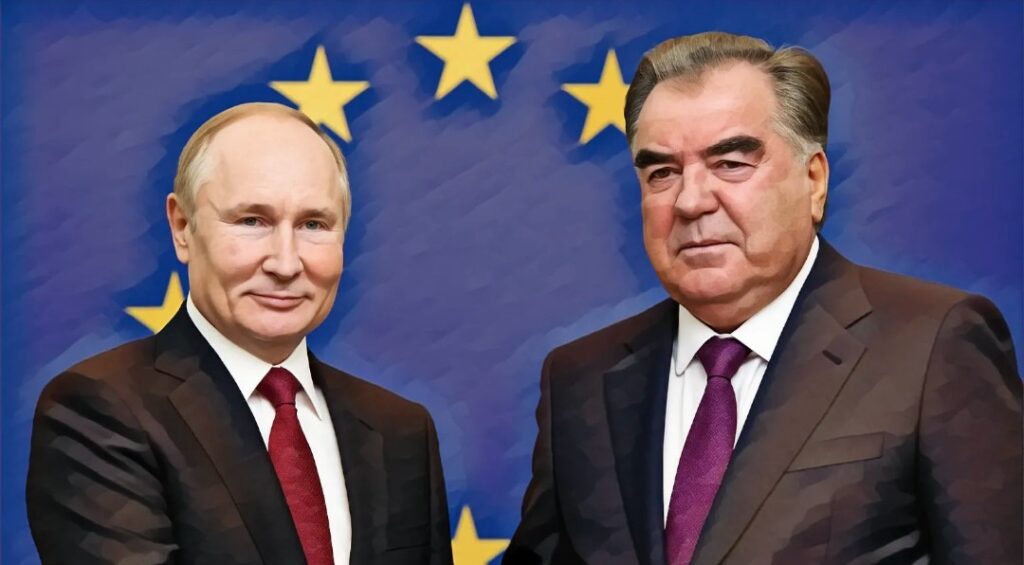
The European Union says Tajikistan was obligated under international law to arrest Russian President Vladimir Putin during his visit to the Central Asian country for a regional summit this week. “Tajikistan is a State Party to the Rome Statute of the ICC (International Criminal Court) and failed to comply with its obligations under the Statute to execute the arrest warrant,” the EU’s diplomatic service said in a statement on Thursday. “Vladimir Putin is under an arrest warrant by the ICC for international crimes, specifically alleged crimes of unlawful deportation and unlawful transfer of children from temporarily occupied Ukrainian territories in the context of his illegal war of aggression against Ukraine,” the service said. Russia rejects the authority of the court, which issued the warrant for Putin’s arrest in March 2023. Tajikistan signed the Rome Statute, which established the International Criminal Court, in 1998. But it maintains close political, economic, and security ties with Russia. At a joint appearance with Putin in Dushanbe on Thursday, Tajik President Emomali Rahmon noted the “high level of relations between Tajikistan and Russia." Putin also met the leaders of Kazakhstan, Kyrgyzstan, Turkmenistan, and Uzbekistan at the Russia-Central Asia summit.

EU Opens First Migrant Resource Center in Uzbekistan as Russia Moves to Tighten Control

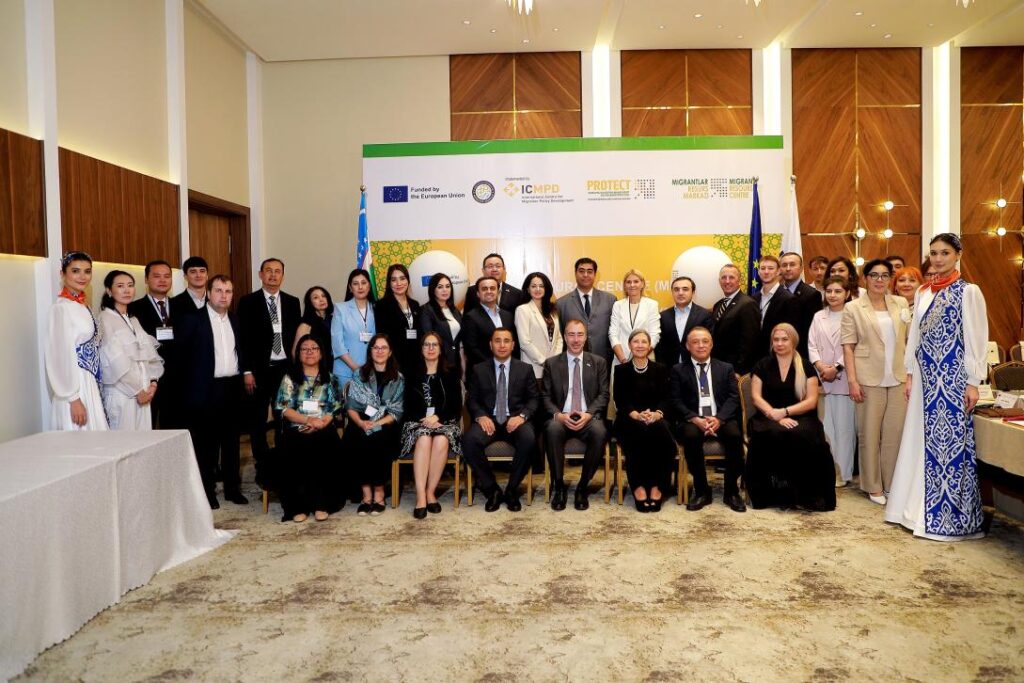
The European Union has launched Uzbekistan’s first Migrant Resource Center in Tashkent, while Russia is preparing to roll out a mobile application to monitor foreign workers starting September 1. Migrant Resource Center in Tashkent The EU Delegation in Uzbekistan announced that the centre opened on August 26 as part of the EU-funded PROTECT program: Improving Migration Management and Migrant Protection in Selected Silk Routes and Central Asian Countries. The initiative is implemented by the International Centre for Migration Policy Development (ICMPD) in partnership with Uzbekistan’s Migration Agency. The Center will provide information on legal employment opportunities abroad, raise awareness about the risks of irregular migration, and support the reintegration of returning migrants. Similar centers already operate in Tajikistan and Kyrgyzstan. At the opening ceremony, EU Ambassador Toivo Klaar said the centers “play a crucial role in providing people with the information they need to make informed decisions about migration.” ICMPD Deputy Director General Sedef Dearing added that the new facility will be “practical and timely for those considering migrating and returning.” Russia’s Mobile Application for Migrants Meanwhile, Russia will begin testing a new digital monitoring system in Moscow and the Moscow region on September 1, according to the Multifunctional Migration Centre in the Russian town of Sakharovo. Citizens from Uzbekistan, Tajikistan, Kyrgyzstan, Armenia, Kazakhstan, Georgia, Azerbaijan, Moldova, and Ukraine will be required to install a mobile application called Amina. The app will handle residence registration, address updates, work permit payments, and appointment scheduling. The Ministry of Internal Affairs will also have access to users’ geolocation data. Migrants who fail to confirm their location within three working days risk being removed from the registration system and placed on a monitoring list. Migration Management in Focus The launch of the EU-backed center in Tashkent reflects Europe’s emphasis on support services and informed choice for migrants, while Russia’s mobile app signals a shift toward stricter surveillance and control. Together, these measures highlight the growing importance of migration management across Central Asia and Eurasia.

Hungarian Firm to Build Honey Processing Plant in Kazakhstan

Hungarian company Aranynektár Kft plans to invest in the construction of a honey production and processing plant in Kazakhstan, with a focus on environmentally friendly exports to the European Union. The project was discussed during a meeting in Astana between Kazakhstan’s Deputy Minister of Agriculture, Yermek Kenzhehanuly, and Aranynektár Kft CEO Ferenc Fulmer. According to the ministry, the facility will feature modern equipment and aim to meet stringent EU standards. “Kazakhstan has all the necessary conditions for the sustainable development of beekeeping, from a favorable climate and clean environment to a strong scientific base and government support,” Kenzhehanuly said. Fulmer expressed readiness for long-term cooperation. His company is Hungary’s largest honey producer and exporter, with an annual capacity of up to 4,000 tons, 80% of which is exported to EU countries, the Middle East, and Asia. In 2024, Kazakhstan produced 5,000 tons of honey, with over 58% of output coming from East Kazakhstan, Pavlodar, Almaty, Turkestan, Abai, and Zhetysu regions. To support the sector, the government will introduce a subsidy of $0.37 per kilogram of honey sold starting in 2025. Under the 2024-2026 state development program, Kazakhstan is also funding projects aimed at the rational use of bee genetic resources and the adoption of environmentally sustainable production methods. These initiatives are expected to enhance product quality and align with EU export standards. Previously, The Times of Central Asia reported that Kazakhstan is seeking to expand agricultural exports to Europe and Russia, while China has emerged as the largest importer of honey from Kyrgyzstan.

Trump’s 100% Tariffs May Target Kazakhstan and Kyrgyzstan

U.S. President Donald Trump has signaled a new wave of sanctions against Russia, including the potential imposition of 100% tariffs on its trading partners, which could affect Kazakhstan, Kyrgyzstan, and other former Soviet states. Who Could Be Affected? On July 15, President Trump announced an escalation in U.S. arms deliveries to Ukraine and warned of intensified sanctions against Russia. If no progress is made in resolving the conflict within 50 days, the U.S. will implement additional measures, including secondary tariffs of up to 100% on countries trading with Russia. Experts warn that Kazakhstan, Kyrgyzstan, and Azerbaijan may be particularly vulnerable. Although not among Russia’s largest trading partners, these countries maintain extensive commercial ties with Moscow. According to the Centre for Research on Energy and Clean Air (CREA), China, India, and Turkey accounted for 74 percent of Russia's fossil fuel revenue in 2024. Oil exports totaled €104 billion, petroleum products €75 billion, gas €40 billion, and coal €23 billion. Despite multiple sanctions packages, the European Union continues to import Russian energy. In 2024, the EU spent €21.9 billion on Russian oil and gas, just 1% less than in 2023. Over the same period, EU financial assistance to Ukraine amounted to €18.7 billion, according to the Kiel Institute for the World Economy. Yet Trump may spare Russia’s largest trading partners. In recent months, he has taken steps to impose severe tariffs on the European Union and China, only to reverse course under pressure from business groups and concerns about global trade disruptions. Nevertheless, Kazakhstan received formal notification from the U.S. on July 7 that a 25% tariff on its goods will take effect from August 1, 2025. This raises the possibility that smaller economies in Russia’s orbit may become targets of U.S. economic retaliation. Already in the Crosshairs Kazakh analyst Olzhas Baidildinov noted that trade between Kazakhstan and Russia totaled $27.8 billion in 2024, with $18.2 billion in exports from Russia and $9.5 billion from Kazakhstan. "Such figures certainly cannot escape the attention of OFAC,” Baidildinov wrote, referring to the U.S. Treasury’s Office of Foreign Assets Control. “European sanctions apply only within Europe. However, Kazakhstan continues to import Russian oil, gas, and petroleum products. Secondary sanctions, as I’ve previously warned, are merely a matter of minor adjustments to existing measures,” he added. Trump’s administration may also be overlooking Kazakhstan’s unique geographic and economic ties to Russia. The two countries share the world’s longest continuous land border, over 7,500 kilometers, and are closely connected through pipelines, energy infrastructure, and raw materials trade. Azerbaijan and Kyrgyzstan Also Vulnerable Azerbaijan’s trade with Russia reached approximately $4.8 billion in 2024, an increase of 10.1 percent. Russia ranks as Azerbaijan’s third-largest trading partner, after Italy and Turkey. Exports to Russia totaled $1.178 billion, accounting for 4.4 percent of Azerbaijan’s total exports. Notably, Russia is the largest buyer of Azerbaijan’s non-oil products, with a 34.6 percent share. Imports from Russia include foodstuffs, machinery, and metals, while Azerbaijan supplies gas, textiles, and agricultural goods. Kyrgyzstan is also at risk....

Tajikistan Pursues Cotton Reform with EU Backing

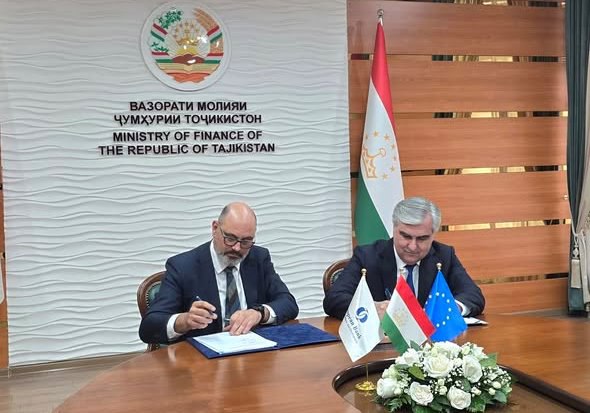
The European Union’s support for green transitions presents a real opportunity for Tajikistan to achieve sustainable agricultural development, particularly in the cotton industry, according to Mizrob Amirbekov, an agricultural development expert. Amirbekov highlighted this potential, underscoring the importance of international assistance in modernizing the sector, addressing environmental and social challenges, and establishing a fair and transparent production system. Rising Demand, Persistent Problems As global demand for environmentally friendly textiles grows, Tajikistan has a unique chance to establish a sustainable model for cotton production, Amirbekov explained. Increased interest in natural fabrics, driven by both demographic growth and technological advancements, is pushing the industry toward transformation. However, this economic potential is clouded by persistent challenges, including environmental stress, social risks such as forced labor, and a lack of transparency across the supply chain. The global cotton sector has long faced scrutiny over high water consumption, widespread pesticide use, and unethical labor practices. In response, consumers and international regulators are increasingly pressing for a shift to more sustainable production methods. EU Investment and National Reform Tajikistan has begun responding to these challenges. In 2024, it approved the National Strategy for the Development of the Cotton and Textile Industry through 2040, prioritizing modernization, cost reduction, and the expansion of high-value-added production chains. The European Union is playing a central role in this transformation, having allocated a €19.88 million grant to support the sector’s green transition. The funds aim to advance digital technologies, assist small and medium-sized enterprises, and help the industry adapt to climate change impacts, from droughts to rising temperatures. “This is not merely financial aid, it’s an opportunity to build a truly sustainable cotton production system,” said Amirbekov. “Farmers and buyers need to understand the principles of sustainability and how agriculture can become a driver of the green economy.” Ongoing Social and Environmental Challenges Despite signs of progress, Amirbekov noted that significant problems persist. Farmers report that forced labor continues in some areas, with schoolchildren and unrelated government employees involved in cotton harvesting, practices that violate Tajikistan’s international commitments and damage the credibility of its organic cotton sector. Environmental impacts are equally severe. Producing a single T-shirt can consume up to 2,700 liters of water, and nearly a kilogram of pesticides may be used per hectare. Amirbekov stressed the need to adopt certified standards such as the Global Organic Textile Standard (GOTS), to promote sustainable cotton varieties, and to implement precision farming. “Climate change is already reducing yields, droughts, floods, and temperature fluctuations are becoming more common,” he warned. To address this, he advocates for sustainable seed varieties, efficient irrigation, and participation in carbon reduction programs. Amirbekov also criticized the cotton supply chain as fragmented and poorly regulated, undermining trust from international buyers and complicating the enforcement of sustainability standards. He called for the introduction of digital platforms to track supply chains in real time. Social inequality is another concern: women and small-scale farmers often face limited access to markets and lack property rights. Incorporating fair trade practices, supporting cooperatives, and enforcing...

TRNC President Urges Central Asia to Tread Carefully on Cyprus in EU Deals

Ersin Tatar, President of the Turkish Republic of Northern Cyprus (TRNC), has urged Central Asian nations to exercise caution in their dealings with the European Union, particularly regarding the Cyprus issue. His remarks were reported by Anadolu Agency during a recent meeting with representatives of the Association of Turkish Travel Agencies (TÜRSAB). Tatar acknowledged that it is “understandable” for Central Asian countries to cooperate with the EU in pursuit of their national interests. “These countries have various projects and partnerships with the EU, especially in trade and development. That’s normal,” he said. “But I believe the Turkish states should be more careful in their relations with the Greek Cypriot side.” Turkic Solidarity and the Role of TRNC Highlighting the cultural and linguistic connections among Turkic nations, Tatar highlighted the importance of maintaining solidarity within the Organization of Turkic States (OTS), where the TRNC has held observer status since 2022. “The TRNC values its growing relationship with member states such as Kazakhstan, Uzbekistan, Kyrgyzstan, and Turkmenistan,” he said. Tatar expressed concern that recent EU overtures toward Central Asia could be aimed at limiting the TRNC’s engagement in the Turkic bloc. “The EU, which showed little interest in the region before, is now making deals. This raises questions,” he noted. Cyprus Issue and EU Documents Reaffirming the Turkish Cypriot stance on the Cyprus issue, Tatar reiterated support for a two-state solution and called on Turkic nations to extend the same diplomatic openness to Northern Cyprus as they do to the internationally recognized Greek Cypriot administration. “Our expectation is that they treat us with the same openness they show to the Greek Cypriots,” he said, warning that EU documents may contain references to UN resolutions on Cyprus that could be misinterpreted. “Do they really know what those articles mean and what consequences they might have?” he asked. Central Asia-EU Relations on the Rise Tatar’s comments follow the recent EU-Central Asia Summit in Samarkand, held on April 3-4, which marked a new chapter in regional cooperation. The summit culminated in the signing of the Samarkand Declaration, underscoring the intent to build a strategic partnership between the two regions. “Over the past seven years, the trade turnover between Central Asian countries and the EU has quadrupled, amounting to 54 billion euros,” said Uzbek President Shavkat Mirziyoyev in remarks to Euronews. European Commission President Ursula von der Leyen also welcomed the shift, stating, “The EU and Central Asia are becoming closer partners, and this summit marks the beginning of a new phase in our cooperation.”