• KGS/USD = 0.01144 0%
  • KZT/USD = 0.00206 0%
  • TJS/USD = 0.10760 -0.46%
  • UZS/USD = 0.00008 0%
  • TMT/USD = 0.28571 0%
  • KGS/USD = 0.01144 0%
  • KZT/USD = 0.00206 0%
  • TJS/USD = 0.10760 -0.46%
  • UZS/USD = 0.00008 0%
  • TMT/USD = 0.28571 0%
  • KGS/USD = 0.01144 0%
  • KZT/USD = 0.00206 0%
  • TJS/USD = 0.10760 -0.46%
  • UZS/USD = 0.00008 0%
  • TMT/USD = 0.28571 0%
  • KGS/USD = 0.01144 0%
  • KZT/USD = 0.00206 0%
  • TJS/USD = 0.10760 -0.46%
  • UZS/USD = 0.00008 0%
  • TMT/USD = 0.28571 0%
  • KGS/USD = 0.01144 0%
  • KZT/USD = 0.00206 0%
  • TJS/USD = 0.10760 -0.46%
  • UZS/USD = 0.00008 0%
  • TMT/USD = 0.28571 0%
  • KGS/USD = 0.01144 0%
  • KZT/USD = 0.00206 0%
  • TJS/USD = 0.10760 -0.46%
  • UZS/USD = 0.00008 0%
  • TMT/USD = 0.28571 0%
  • KGS/USD = 0.01144 0%
  • KZT/USD = 0.00206 0%
  • TJS/USD = 0.10760 -0.46%
  • UZS/USD = 0.00008 0%
  • TMT/USD = 0.28571 0%
  • KGS/USD = 0.01144 0%
  • KZT/USD = 0.00206 0%
  • TJS/USD = 0.10760 -0.46%
  • UZS/USD = 0.00008 0%
  • TMT/USD = 0.28571 0%

Viewing results 1 - 6 of 4

Kazakhstan Says Violation of Production Procedures Preliminary Cause of Deadly Kazzinc Blast

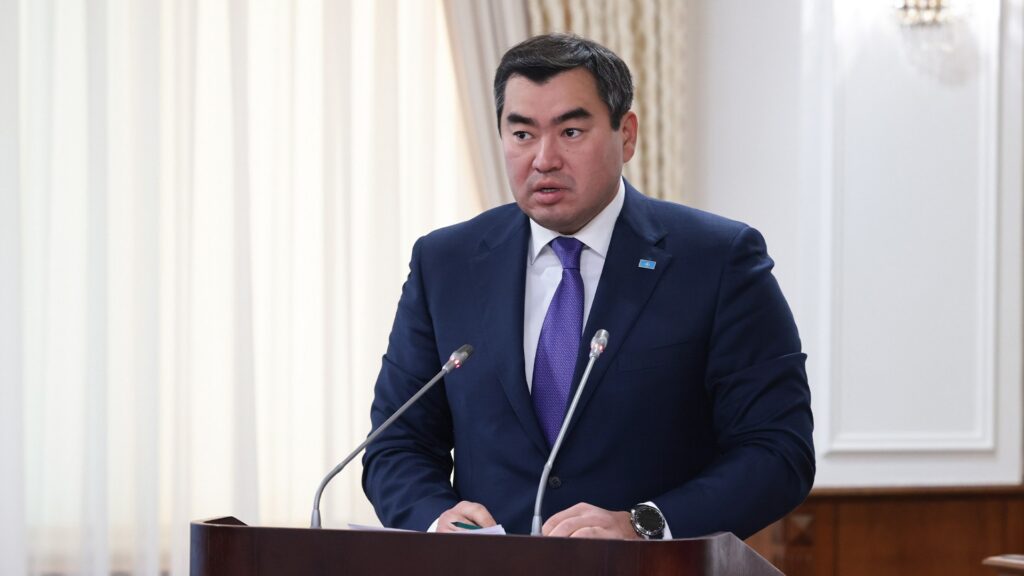
A fatal explosion at a Kazzinc plant in eastern Kazakhstan was preliminarily caused by a violation of technological procedures, Emergency Situations Minister Chingis Arinov said on Monday, as authorities continue to investigate the incident that killed three workers. The blast occurred on May 5 at a processing workshop in Ust-Kamenogorsk, where a dust-collection unit exploded, triggering a fire and the partial collapse of the facility. Two employees were killed at the scene, while a third later died in hospital from injuries sustained in the accident. Prime Minister Olzhas Bektenov placed the investigation under his personal supervision following the incident. “The preliminary cause of the explosion at the Kazzinc plant was a violation of the technological process,” Arinov told a government meeting. He said previous inspections had identified multiple industrial safety violations at the facility, including discrepancies in technical documentation, missing assessments required to extend the service life of equipment, deviations from approved engineering designs, weak production controls, and delays in replacing worn-out machinery. Arinov said the investigation remains ongoing and that several expert examinations have been commissioned. A decision on any company liability will be made once the review is completed. The minister also outlined preliminary findings from a separate fatal accident at the Artemyevskaya mine, operated by Vostoktsvetmet, a subsidiary of KAZ Minerals. A rockfall at the mine on May 30 killed one worker. According to Arinov, investigators believe the accident was linked to mining operations conducted in violation of project documentation and inadequate worksite management. Speaking at the same meeting, Labor and Social Protection Minister Askarbek Yertayev said the authorities had recorded 39 cases this year in which employers allegedly concealed workplace injuries. The highest number of cases was reported in the services sector, with 18 incidents, followed by manufacturing and construction, with five cases each. Regionally, the largest numbers were recorded in Atyrau Region, Astana, and Akmola Region, he said. Yertayev said the practice allows employers to avoid liability while depriving injured workers of compensation and social benefits. According to government data, about 479,000 people in Kazakhstan currently work in hazardous or harmful conditions. The industrial sector accounts for 295,000 of those workers, including 173,000 in mining and 122,000 in manufacturing. The largest concentrations of workers employed in hazardous conditions are in Karaganda Region, followed by Pavlodar, Mangystau, and East Kazakhstan regions. The figures add to wider concerns over enforcement in Kazakhstan’s heavy industries, where aging equipment, subcontracting chains, and pressure to maintain production can make safety oversight difficult. Kazakhstan has faced increased scrutiny over industrial safety standards following a series of deadly accidents in the mining and metals sectors. Last year, President Kassym-Jomart Tokayev ordered a nationwide review of industrial facilities to assess compliance with safety regulations.
Kazakhstan Labor Minister Briefs on Kazzinc Explosion and Effects of AI

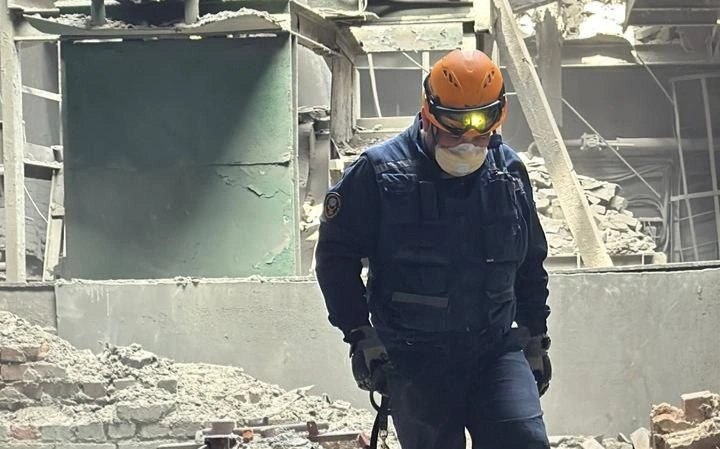
Kazakhstan’s Ministry of Labor and Social Protection is considering several possible causes behind the explosion at a Kazzinc plant in Ust-Kamenogorsk that killed three people. The incident occurred on the morning of May 5, when a dust collection unit exploded inside one of the plant’s workshops, triggering a fire and the partial collapse of structures. Two employees died at the scene, while another later died in hospital from his injuries. Five more were injured. “We are now determining the exact cause and who is responsible: whether it was non-compliance with safety regulations, failure to properly instruct workers on safety procedures, a technological malfunction at the enterprise, or a failure to replace outdated equipment,” First Vice Minister of Labor Yerbol Tuyaqbayev said during a briefing in the Senate. “We will determine the cause, and believe me, responsibility will follow,” he added. The Kazzinc plant, 70 per cent owned by Anglo-Swiss Commodity giant Glencore, has been operating at reduced capacity since the incident. Last year, Kazzinc produced over 200,000 tonnes of zinc, and more than 500,000 troy ounces of gold. According to the vice minister, large industrial enterprises employing between 5,000 and 10,000 workers in Kazakhstan are classified as high-risk facilities and undergo annual preventive inspections. Tuyaqbayev noted that Kazzinc has previously undergone annual inspections and "the company complied with all orders on time. No fines were imposed.” During the same briefing, the official also commented on the impact of artificial intelligence on Kazakhstan’s labor market. According to estimates by Kazakhstan’s Center for Labor Resources Development, the introduction of AI technologies could eliminate between 300,000 and 400,000 jobs over the next decade. “This primarily concerns secondary support personnel, such as accountants and lawyers, areas where direct human involvement is not always required,” he said. Tuyaqbayev added that the Labor Ministry is already implementing professional retraining programs. Since the beginning of the year, approximately 186,000 people have completed retraining courses. Around 112,000 vacancies are currently registered on Kazakhstan’s Enbek electronic employment platform. The Times of Central Asia previously reported that, according to the Center for Labor Resources Development, artificial intelligence could directly or indirectly affect around 4 million jobs in Kazakhstan over the next decade.

Two Killed in Explosion at Industrial Plant in Eastern Kazakhstan

Two people were killed and nine injured in an explosion at a facility operated by Kazzinc in Ust-Kamenogorsk, local authorities and emergency services said. The incident occurred at around 8 a.m. on May 5. According to preliminary information, a dust-collection unit malfunctioned in one of the workshops, followed by a fire and the partial collapse of building structures. Emergency crews from the Ministry of Emergency Situations of Kazakhstan were quickly dispatched to the scene, deploying 10 fire units. “Rescuers are clearing debris and extinguishing remaining fire sources until the situation is fully contained. Search operations for victims are ongoing. According to preliminary information, four people are being transported to medical facilities,” the ministry said. Local health authorities later reported that the number of injured had risen to nine. Three remain in serious condition: two have been hospitalized, while one received resuscitation at the scene. “One of the injured was transported to a medical facility by employees of the enterprise,” the Ust-Kamenogorsk health department said. Following the explosion, thick smoke rose above the plant, prompting specialists from the East Kazakhstan regional Department of Ecology to carry out air quality monitoring at the boundary of the sanitary protection zone. “We deployed a mobile laboratory to the sanitary protection zone first. Measurements have already been taken at two points, and we are now moving to a third point in the northwestern direction from the plant, following the wind,” said department head Aset Suleimenov. He added that four to five locations would be tested, primarily along the direction of the smoke plume. Results will be released later. Authorities subsequently confirmed that two people had died in the incident. Prime Minister Olzhas Bektenov said he had taken the situation under personal control. “This morning I issued the necessary instructions regarding the explosion in Ust-Kamenogorsk. The Ministry of Emergency Situations, environmental authorities, and regional administrations must take all necessary measures and report back to me. This issue will remain under my personal control,” he said at a government meeting. The Kazzinc site in Ust-Kamenogorsk is a major metallurgical complex that includes zinc, lead, and copper production, as well as precious metals refining and sulfuric acid production. Ust-Kamenogorsk is considered one of Kazakhstan’s most environmentally affected cities, where the concentration of metallurgical enterprises frequently leads to air pollution levels exceeding permissible limits. Glencore, a multinational commodity trading and mining company, is a major shareholder in Kazzinc, which was established in 1997. The company is a major producer of zinc, as well as lead, copper, and precious metals.

Explosion Near Kyrgyz-Tajik Border Leaves Two Injured

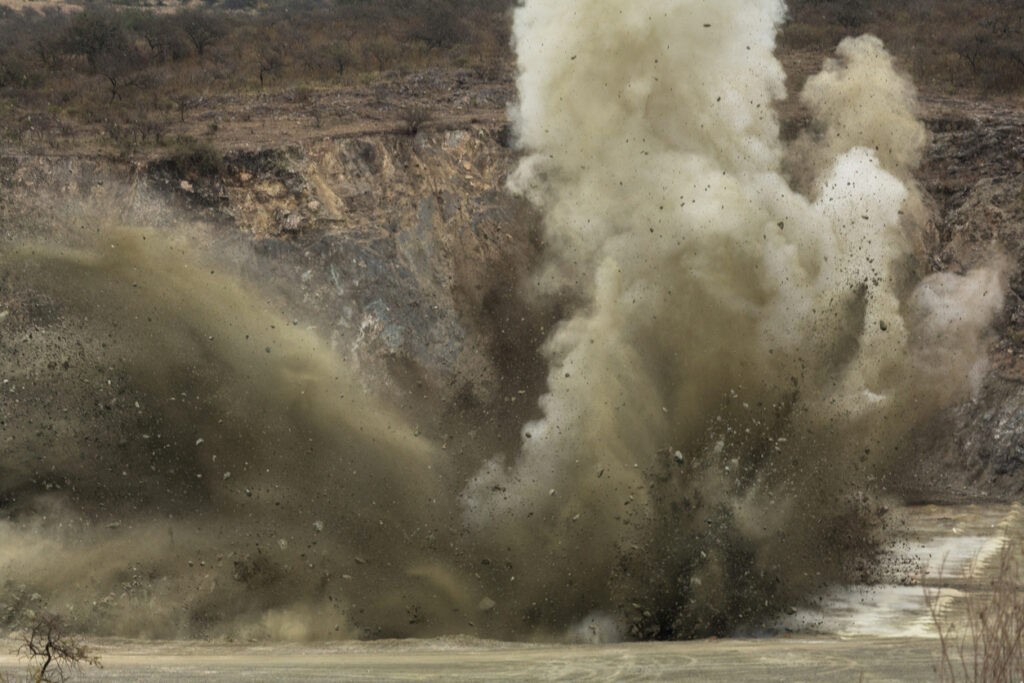
On January 5, an explosion occurred in the Kyrgyz village of Arka-2, near Kyrgyzstan's border with Tajikistan. The incident was reported by the Information and Communications Department of the Border Service under the State Committee for National Security (SCNS). According to preliminary investigations, the explosion happened while the homeowner, identified as N.A., was cleaning under his porch, where old construction materials and metal objects had been stored. During the cleaning, N.A. discovered an unknown explosive device, believed to be a shell, which then detonated. The Border Guard Service noted that N.A.'s house had previously been damaged in 2022 as a result of shelling during cross-border clashes. The explosion left N.A. and his 12-year-old daughter, who was with him at the time, with shrapnel injuries. Both victims were taken to the hospital, where they received medical treatment and are now reported to be in stable condition. Following the explosion, Border Patrol engineers quickly secured the area. Law enforcement officials have launched an extensive investigation to determine the origin and circumstances surrounding the device. On the same day, a meeting was held between representatives of the law enforcement agencies of Kyrgyzstan and Tajikistan. The Tajik side was informed about the incident, and the border service issued a call for heightened vigilance among residents of border areas. Citizens were urged not to handle or investigate suspicious objects but to immediately report them to border units or law enforcement agencies. The explosion highlights lingering risks in border regions between Kyrgyzstan and Tajikistan, which have been prone to tensions and periodic violence in recent years. Efforts to strengthen security and cooperation between the two countries remain critical in preventing further incidents and ensuring the safety of border communities.