• KGS/USD = 0.01143 0%
  • KZT/USD = 0.00208 0%
  • TJS/USD = 0.10438 -0.1%
  • UZS/USD = 0.00008 0%
  • TMT/USD = 0.28579 0%
  • KGS/USD = 0.01143 0%
  • KZT/USD = 0.00208 0%
  • TJS/USD = 0.10438 -0.1%
  • UZS/USD = 0.00008 0%
  • TMT/USD = 0.28579 0%
  • KGS/USD = 0.01143 0%
  • KZT/USD = 0.00208 0%
  • TJS/USD = 0.10438 -0.1%
  • UZS/USD = 0.00008 0%
  • TMT/USD = 0.28579 0%
  • KGS/USD = 0.01143 0%
  • KZT/USD = 0.00208 0%
  • TJS/USD = 0.10438 -0.1%
  • UZS/USD = 0.00008 0%
  • TMT/USD = 0.28579 0%
  • KGS/USD = 0.01143 0%
  • KZT/USD = 0.00208 0%
  • TJS/USD = 0.10438 -0.1%
  • UZS/USD = 0.00008 0%
  • TMT/USD = 0.28579 0%
  • KGS/USD = 0.01143 0%
  • KZT/USD = 0.00208 0%
  • TJS/USD = 0.10438 -0.1%
  • UZS/USD = 0.00008 0%
  • TMT/USD = 0.28579 0%
  • KGS/USD = 0.01143 0%
  • KZT/USD = 0.00208 0%
  • TJS/USD = 0.10438 -0.1%
  • UZS/USD = 0.00008 0%
  • TMT/USD = 0.28579 0%
  • KGS/USD = 0.01143 0%
  • KZT/USD = 0.00208 0%
  • TJS/USD = 0.10438 -0.1%
  • UZS/USD = 0.00008 0%
  • TMT/USD = 0.28579 0%

Viewing results 1 - 6 of 575

Tajikistan-Kyrgyzstan Trade Soars More Than 15-Fold in 2025

Trade between Tajikistan and Kyrgyzstan has surged dramatically in 2025, increasing more than fifteenfold compared to the same period last year, according to the Customs Service of Tajikistan, as reported by Asia-Plus. From January to May, total bilateral trade reached $6.35 million, up from just $405,100 during the same period in 2024. Tajik exports to Kyrgyzstan amounted to $1.59 million, while imports from Kyrgyzstan totaled $4.76 million. Analysts attribute the sharp rise to improving political relations and the state visit of Kyrgyz President Sadyr Japarov to Dushanbe on July 8-9, at the invitation of Tajik President Emomali Rahmon. Bilateral trade has experienced fluctuations over the past decade. Peak volumes were recorded in 2018-2019, when annual trade neared $60 million, with more than $48 million in Kyrgyz exports to Tajikistan and over $14 million in Tajik exports. Since 2020, however, trade had been in decline, dropping to $26.2 million in 2021, $15 million in 2022, and just $11.4 million in 2023. Figures for 2024 remained low at approximately $11.6 million. The strong recovery in 2025 is largely credited to progress on border delimitation, the opening of two new border checkpoints, and renewed political dialogue. Experts also cite a series of new intergovernmental agreements as contributing factors. On June 30, during the visit of Tajikistan’s Foreign Minister Sirojiddin Muhriddin to Cholpon-Ata, both sides reaffirmed their commitment to expand trade and economic cooperation. A new target has been set: increasing annual trade to $500 million. Since the beginning of the year, the two countries have signed 15 agreements, including border-related protocols and measures to strengthen both political and humanitarian ties.

Kyrgyzstan’s Jewelry Industry Emerges from the Shadows

The jewelry industry in Kyrgyzstan is experiencing rapid growth, marked by a surge in exports, an expanded geographic reach, and a significant rise in foreign trade operations, according to official statistics. According to the National Statistical Committee, Kyrgyz jewelers quadrupled the volume of foreign trade in jewelry made from precious metals during the first four months of 2025. This figure encompasses both exports and imports. Approximately 100 kilograms of jewelry, valued at around $600,000, were exported. Export revenues increased fourfold compared to the same period in 2024. Meanwhile, imports reached 15.6 tons, worth $5.8 million, more than double the previous year’s figures. Russia and Italy were the primary destinations for Kyrgyz jewelry exports. Business Legalization and Tax Incentives Stalbek Akmatov, president of the Kyrgyz Jewelers' Union, told The Times of Central Asia that this growth was driven by the industry’s formalization, which allowed jewelers to operate legally, pay taxes, and submit accurate reports. "First of all, I would like to thank our authorities, the Jogorku Kenesh and the Cabinet of Ministers," Akmatov said. "Recently, significant changes were introduced to the Tax Code and legislation concerning precious metals. Instead of three separate taxes, VAT, sales tax, and income tax, a single tax of 0.25% has now been implemented." Akmatov noted that the new tax policy has provided a substantial boost to production and exports, while significantly reducing the size of the shadow economy, which previously accounted for over 90% of the sector. Experts estimate that less than half the industry now remains informal. Entry into the Kazakh Market Kyrgyz jewelers are also exploring new markets. Akmatov highlighted that one company has already exhibited twice at a jewelry fair in Almaty and has begun selling products featuring national designs. "The current volume of exports to Kazakhstan is small, just a few kilograms, but it's only the beginning. The potential in this direction is enormous," he told TCA. Persistent Challenges: Scrap Gold and Regulation Despite these advancements, challenges remain. One major issue is the high cost of scrap gold for local producers. As was the case five years ago, scrap gold is sold with a 5% markup over the London gold price, even though Kyrgyzstan annually produces several dozen tons of gold and even more silver. Akmatov also pointed to restrictive regulations on the circulation of precious metals. "If gold could be traded freely like a currency, our sales would increase significantly," he stated. The Jewellers' Union is currently in talks with the Ministry of Economy and Commerce on liberalizing precious metals circulation within the country.

Kazakhstan Imposes Temporary Ban on Chicken Egg Imports

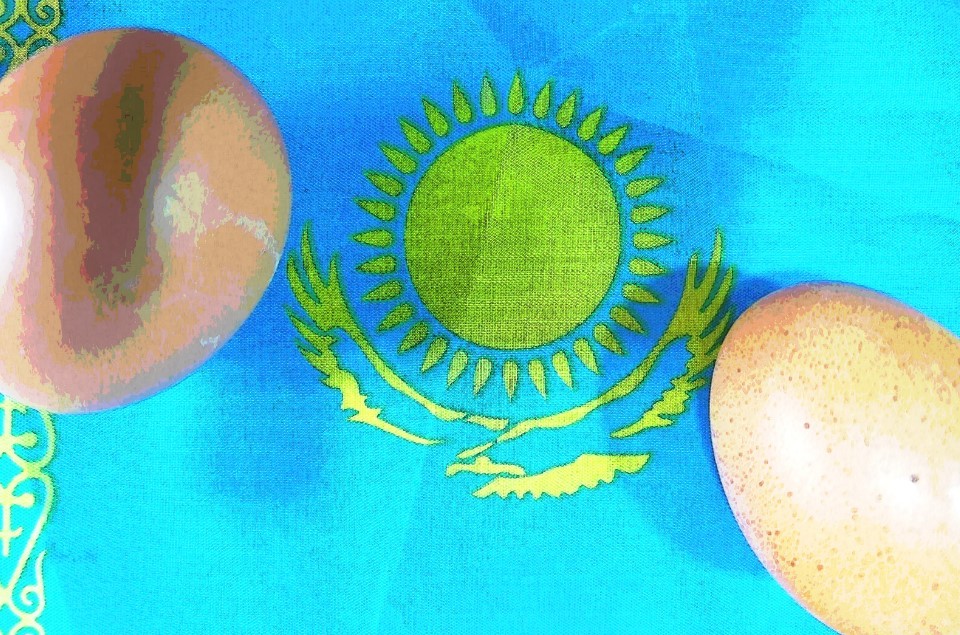
Starting April 9, Kazakhstan will impose a six-month ban on the import of fresh chicken eggs, aimed at supporting local poultry farms during a seasonally weak demand period. The measure, signed into effect by Minister of Agriculture Aidarbek Saparov, is outlined in Order No. 101 and targets eggs classified under code TN VED 040721. The ban applies to imports from both non-EAEU countries and fellow Eurasian Economic Union member states and covers all transportation modes. However, transit shipments through Kazakhstan and the movement of eggs between EAEU countries via Kazakh territory are exempt. Why the Ban Was Imposed The Ministry of Agriculture said the decision is intended to support local producers during spring and summer, when demand for eggs traditionally falls. With a seasonal influx of fresh produce and a larger share of household-produced goods on the market, egg prices often dip below cost, putting poultry farms under financial strain. Additionally, warmer temperatures shorten product shelf life and make it technologically difficult for producers to scale down operations. This often leads to warehouse overstocking. To counter these issues, the Interdepartmental Commission on Foreign Trade Policy approved the temporary import restrictions. “In order to protect the domestic market and the sustainability of enterprises, the Interdepartmental Commission on Foreign Trade Policy approved the establishment of temporary restrictive measures,” the ministry said. Advance Planning and Strategic Goals Discussions around restricting egg imports began in February 2025 as part of a broader government initiative to support domestic producers and combat gray imports. Officials expect the ban to help stabilize domestic prices, which surged nearly 12% year-on-year as of October 2024 due to seasonal fluctuations. Prices typically fall in summer but rise again in autumn to offset earlier losses. In a bid to strengthen long-term food security, construction of a new egg and mixed fodder production plant will begin in Turkestan region in 2024. Once operational, the facility is expected to produce around 200 million eggs annually. Authorities Confident in Domestic Supply Despite the potential for price hikes, Minister of Trade and Integration Arman Shakkaliev assured the public there will be no shortage of eggs or poultry products. According to the ministry, domestic producers are capable of fully meeting the country’s summer demand. The government sees the temporary import ban as a strategic tool to stabilize the agro-industrial sector, shield local producers from unfair competition, and promote self-sufficiency in food production.

Trump Tariffs: A Barrier for Kyrgyzstan, or an Opportunity?

Akylbek Japarov, former head of Kyrgyzstan’s Cabinet of Ministers, has described the United States’ newly imposed trade duties as an "economic earthquake" already reshaping global markets. However, he sees an opportunity for Kyrgyzstan, which faces a comparatively low U.S. tariff rate of just 10%. A Regional Advantage Japarov argues that China has been hit hardest by the new U.S. tariffs. “Following the introduction of duties, Chinese goods are 20-35 percent less competitive, not due to the nominal tariff alone, but because of higher overall costs, disrupted logistics, contract renegotiations, and increased risk premiums,” he explained in a Facebook post. “Part of that market is being freed up, for someone else.” Kyrgyzstan, along with Uzbekistan and Tajikistan, faces a 10% U.S. tariff rate. In contrast, Kazakhstan’s goods are subject to 27% duties. Japarov sees this as a competitive edge that Kyrgyzstan could leverage to integrate into new supply chains, especially while global players are adjusting to the new trade landscape. The former prime minister believes the country is well-positioned geographically, situated between China, the Eurasian Economic Union (EAEU), and South Asia, with low production costs and access to regional markets. While Kyrgyzstan’s total trade turnover stands at around $16 billion, the U.S. accounts for only 4% of that figure. Key exports to the U.S. include shoes, tobacco products, animal-derived goods, and pharmaceuticals. Japarov suggests Kyrgyz businesses focus on re-exports, product localization, and packaging. He calls for investments in logistics and customs certification, and for the government to craft a new export strategy. “While some see a threat, others are building export channels. While some are calculating losses, others are increasing production,” he said. An Opening for Business, Not Policy In an interview with The Times of Central Asia, Sergei Ponomarev, president of the Kyrgyz Association of Markets, Trade and Services, said the new tariffs should be viewed as part of a larger negotiation process. “The trade war has begun. China, the European Union, and other countries are already responding. But the duties have also triggered a wave of global inflation. These are high risks but also great opportunities,” he said. Ponomarev noted that Kyrgyzstan’s limited integration with the global economy means it will likely experience only indirect effects. Still, he pointed to past examples of adaptive trade strategies. Before joining the EAEU, Kyrgyz entrepreneurs often re-labeled Chinese products as “Made in Kyrgyzstan” for resale in Russia. In some cases, Chinese producers even falsely labeled their goods as Kyrgyz to benefit from preferential access to the Russian market. He suggested similar tactics could re-emerge under the current trade environment. “Some businesses may exploit the 10% duty. Chinese goods could be repackaged in Kyrgyzstan or processed through joint ventures,” Ponomarev said. “For example, a sweater could arrive from China, sleeves sewn on in Kyrgyzstan, and the product re-exported as local.” Such methods, he noted, may be feasible in low-tech sectors like apparel, but Kyrgyzstan lacks the skilled labor force needed to replicate this in high-tech manufacturing. Ponomarev concluded that while Japarov’s ideas are...

Gas Crunch in Uzbekistan: Industry Falters as Demand Surges

In the first two months of 2025, Uzbekistan's natural gas production declined by 4.2% compared to the same period in 2024, continuing a troubling trend that has seen output fall from 61.59 billion cubic meters in 2018 to 44.59 billion cubic meters in 2024. This persistent decrease raises concerns about the nation’s energy security and economic stability. Once among Central Asia’s energy success stories, Uzbekistan became a net importer of natural gas in 2023, a symbolic turning point for a country whose identity was long intertwined with hydrocarbon abundance. The extent of the strain was demonstrated in December 2024, when gas stations around the country were forced to close during a cold snap as heating systems across the country kicked into action. This led drivers of methane-powered cars, which are common in the country given that it costs about $15 to fill the tank as opposed to $40-50 in a gasoline-powered vehicle, into a desperate hunt for places to fill up. Kilometer-long queues formed, and drivers ferociously competed to be first to the pump. Such scenes have become a familiar sight in the Uzbek winter as gas production has fallen. “Uzbekistan’s gas production is already quite mature,” Anne-Sophie Corbeau of Columbia University’s Center on Global Energy Policy told The Times of Central Asia. “The existing fields are entering a phase of decline. The reserve-to-production ratio was around 18 years based on 2020 data, and the situation is unlikely to be much better now.” Put simply, the country is running out of easy gas. Despite repeated efforts to locate new reserves, particularly in the under-explored Ustyurt region, exploration has so far failed to yield significant breakthroughs. Even if discoveries are made, the timeline to bring new fields online would mean little impact before 2030, at best. In parallel, demand for gas has remained stubbornly high. Corbeau noted that “the country’s energy mix and electricity generation are very dependent on natural gas. And Uzbekistan is one of the countries with the lowest wholesale gas prices in the world.” Those prices have long distorted both domestic consumption and investor interest, keeping demand high while choking off potential upstream capital. [caption id="attachment_30630" align="aligncenter" width="1209"] Image: Wholesale Gas Price Survey 2024 Edition. International Gas Union. https://www.datocms-assets.com/[/caption] This sentiment is echoed by Irina Mironova, Senior Energy Analyst at the New Energy Advancement Hub. “Domestic production is declining faster than consumption,” she said, “and domestic gas pricing is not market-based. It remains below the price of imported gas, which undermines the investment appeal of upstream projects for foreign investors.” The government has undertaken some measures to control demand over the past year, raising the tariffs for electricity and gas by 52.5% and 71% respectively, hitting consumers in the pocket in an attempt to alter the wasteful use of scant resources. On the supply side, the government has declared a bold ambition to raise production to 62 billion cubic meters annually under its Uzbekistan–2030 development strategy, but observers remain skeptical. “They’ve tried to facilitate exploration, especially in the...

Chevrolet vs China: The Battle for the Future of Uzbekistan’s Auto Industry

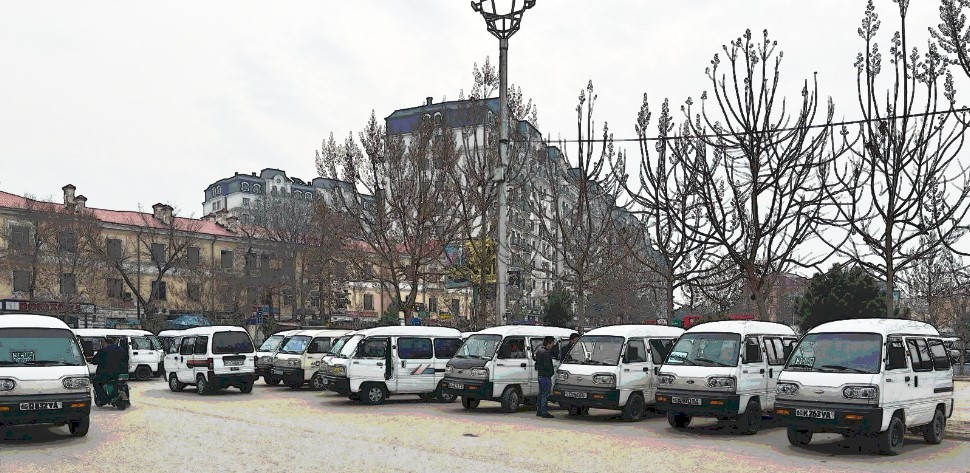
ANDIJAN -- Spend long enough in Uzbekistan and you become adept at reading numberplates. While in Paris or Los Angeles, you will generally identify your taxi by its color and its manufacturer; try doing that in Uzbekistan, and you run into a problem: for the past two decades or so, the color and manufacturer have invariably been White and Chevrolet. “Yep, it’s true,” laughed Alisher, as I remarked on this when he collected me from Andijan train station. “90% of the cars are Chevrolets, and 80% of them are white.” But this era of monochrome monopoly may be coming to an end. With the electric vehicle (EV) revolution sweeping the world, Chinese companies have Chevrolet’s kingdom in their sights. A Levy for the Chevy Islam Karimov, Uzbekistan’s first president, was alone among the leaders of former Soviet republics in being a trained economist. Schooled in the planned economy, his powerful state acquired control over key industries and sought to make Uzbekistan self-reliant. It did a deal with South Korean conglomerate Daewoo to open its first factory in Uzbekistan in 1996, while slapping huge tariffs on all cars coming into the country from abroad. Daewoo, caught up in the Asian Financial Crisis in 1998, sold its auto arm to General Motors in 2002. The Detroit giant saw little wrong with the deal they had inherited in Uzbekistan, and so continued to produce Daewoo cars but now under their Chevrolet branding. The partnership transformed streets all across the country, with practically the only other cars to be seen on the roads being old Ladas from the Soviet period. [caption id="attachment_29761" align="aligncenter" width="1600"] A Kia hoarding above, naught but Chevrolet's below; image: Joe Luc Barnes[/caption] This lack of choice nevertheless provided jobs and an industrial base for the country’s auto industry. “I am very proud that Uzbekistan has built such an industry,” said Aziz Shukurov, CEO of A Group, a chain of car dealerships and owner of the nation’s largest network of service stations. “Today, more than one hundred companies operate in the local automotive industry producing parts for the vehicles; a lot of technology has been transferred over the years with tens of thousands of people employed. To my mind, a strong local automotive industry is a substantial asset for any country.” Meeting Mr. Market After Karimov died in 2016, his successor, Shavkat Mirziyoyev, began to embrace the free market. Close to a decade later, Tashkent throughfares are home to ever more foreign brands. Most prominent are South Korea’s Kia and Hyundai and China’s BYD and Changan. “The new president started opening up the country from 2017, giving access to foreign institutions and companies to the Uzbekistan market,” said Farkhodjon Israilov, an expert who specializes in attracting foreign investment into the country. In 2019, the government removed import duties and excise taxes on EVs. Given the growing popularity of EVs since then, the state-owned UzAuto Motors partnered with BYD to open one of only two operational production facilities outside China – the...