• KGS/USD = 0.01144 0%
  • KZT/USD = 0.00205 0%
  • TJS/USD = 0.10778 0%
  • UZS/USD = 0.00008 0%
  • TMT/USD = 0.28571 0%
  • KGS/USD = 0.01144 0%
  • KZT/USD = 0.00205 0%
  • TJS/USD = 0.10778 0%
  • UZS/USD = 0.00008 0%
  • TMT/USD = 0.28571 0%
  • KGS/USD = 0.01144 0%
  • KZT/USD = 0.00205 0%
  • TJS/USD = 0.10778 0%
  • UZS/USD = 0.00008 0%
  • TMT/USD = 0.28571 0%
  • KGS/USD = 0.01144 0%
  • KZT/USD = 0.00205 0%
  • TJS/USD = 0.10778 0%
  • UZS/USD = 0.00008 0%
  • TMT/USD = 0.28571 0%
  • KGS/USD = 0.01144 0%
  • KZT/USD = 0.00205 0%
  • TJS/USD = 0.10778 0%
  • UZS/USD = 0.00008 0%
  • TMT/USD = 0.28571 0%
  • KGS/USD = 0.01144 0%
  • KZT/USD = 0.00205 0%
  • TJS/USD = 0.10778 0%
  • UZS/USD = 0.00008 0%
  • TMT/USD = 0.28571 0%
  • KGS/USD = 0.01144 0%
  • KZT/USD = 0.00205 0%
  • TJS/USD = 0.10778 0%
  • UZS/USD = 0.00008 0%
  • TMT/USD = 0.28571 0%
  • KGS/USD = 0.01144 0%
  • KZT/USD = 0.00205 0%
  • TJS/USD = 0.10778 0%
  • UZS/USD = 0.00008 0%
  • TMT/USD = 0.28571 0%

Viewing results 1 - 6 of 3

Extradited Turkmen Activist Sentenced to Five Years in Prison

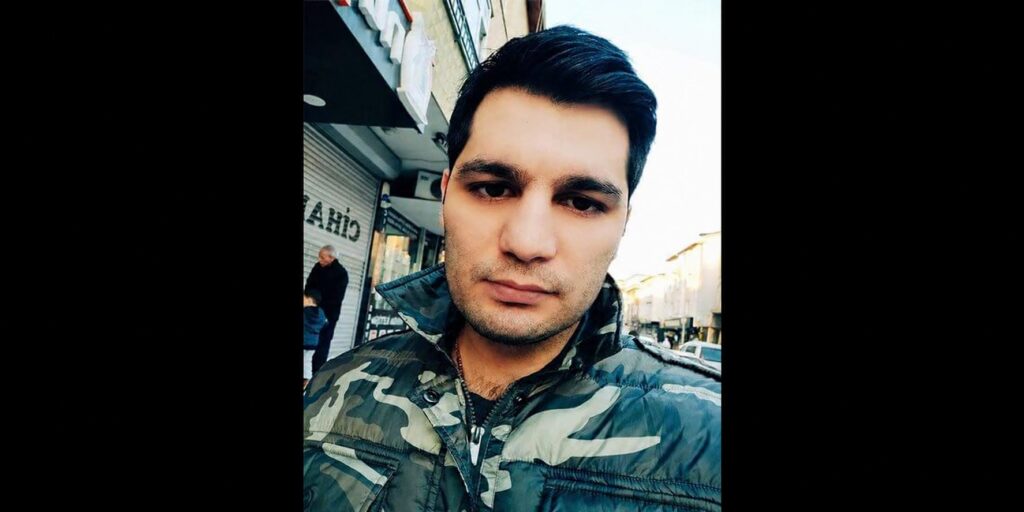
Turkmen activist Saddam Gulamov, who was extradited from Russia to Turkmenistan last year, has been sentenced to five years in prison, according to Turkmen.news, citing documents it said were obtained from Russia’s Prosecutor General’s Office. The new information appears to revise earlier reports that Gulamov had received an eight-year sentence. Those accounts were based on sources in Turkmenistan’s law enforcement system and on information from inmates at the LB-E/12, also known as the Seydi Prison Labor Camp, where Gulamov is reportedly serving his sentence. According to Turkmen.news, Turkmenistan’s Prosecutor General’s Office requested Gulamov’s extradition. Russian authorities approved the request on December 20, 2023, and transferred him to Turkmen law enforcement agencies on March 1, 2024, after the decision entered into force. The documents cited by the outlet say the Judicial Panel of the Ashgabat City Court sentenced Gulamov on May 13, 2024, to five years in prison. They do not specify the charges or the legal provisions under which he was convicted. Turkmen.news also reported that Russian Embassy employees in Turkmenistan had visited Gulamov in prison and asked about his conditions of detention. No details about the outcome of those visits have been made public. The outlet said records from Turkmenistan’s wanted persons database showed that, as of 2021, Gulamov was being sought under Article 175, Part 2, of the country’s Criminal Code, which concerns public calls to violently change the constitutional order through mass media, and under Article 175-2, Part 2, which concerns public calls to extremist activity through media channels. Both offenses carried maximum prison terms of five years. As previously reported by The Times of Central Asia, Gulamov publicly criticized Turkmen authorities and former president Gurbanguly Berdimuhamedov on social media in 2020 and 2021. His posts focused on food shortages, economic difficulties, the government’s handling of the COVID-19 pandemic, and the official response to a destructive hurricane. In several posts, Gulamov called on citizens not to be afraid of what he described as authoritarian rule. Human rights organizations have repeatedly expressed concern about the treatment of political activists and government critics in Turkmenistan, one of the world’s most closed countries, where independent political activity and public dissent remain tightly restricted.

Kazakhstan Suspends Extradition of Navalny Associate as Courts Weigh Asylum Claim

Kazakhstan has suspended the extradition of Yulia Yemelyanova, a former staff member of Alexei Navalny’s St. Petersburg office, to Russia. Yemelyanova was detained in Almaty in August 2025 after the Russian authorities requested her transfer. The Prosecutor General’s Office halted the extradition after her lawyers filed appeals linked to her asylum claim. Earlier this month, authorities approved Russia’s request despite her pending asylum application. Her lawyer subsequently stated that he would challenge that approval before the Supreme Court. Russian investigators have accused Yemelyanova of theft linked to a 2021 case. Her defense rejects the charge and argues that the prosecution is politically motivated. Yemelyanova’s case fits into a broader pattern of extradition proceedings involving Russian nationals who relocated to Kazakhstan after Russia launched its full-scale invasion of Ukraine in February 2022. In late September 2022, Kazakhstan’s Interior Ministry stated that nearly 100,000 Russians had entered the country following Moscow’s announcement of partial mobilization on September 21. “Most of them have to leave because of the hopeless situation. We have to take care of them and secure their safety,” Kazakh President Kassym-Jomart Tokayev said at the time. Many have remained. Kazakhstan’s Interior Ministry reported that more than 80,000 Russian citizens received work-related residence permits between January 2023 and September 2024. Opinion in Kazakhstan on Navalny spans a wide and often divergent spectrum. When news of his death in a Russian penal colony broke in February 2024, responses across Central Asia ranged from sympathy to indifference. In Kazakhstan, some civic activists expressed concern over political repression in Russia, while others recalled Navalny’s past nationalist rhetoric and critical comments about migration from Central Asia. Those divergent views form the domestic context for cases involving former members of Navalny’s political network. Extradition proceedings unfold within a society that interprets Russian opposition politics through its own historical experience and social priorities. The relocation wave reshaped rental markets in Almaty and Astana in late 2022, as IT firms, logistics companies, and service businesses absorbed skilled migrants. At the same time, authorities tightened migration rules and reduced the duration of visa-free stays, signaling that temporary entry did not guarantee long-term residence. In 2024 and 2025, Russian extradition requests began to draw greater public attention, with several defendants seeking asylum while contesting their transfer. One prominent case involved Mansur Movlayev, a Chechen activist critical of Ramzan Kadyrov. In January 2026, Kazakhstan approved Russia’s extradition request after denying him refugee status. The UN Human Rights Committee registered a complaint in Movlayev’s case and requested that Kazakhstan refrain from extraditing him while the review proceeded. Kazakhstan’s Supreme Court subsequently suspended the extradition decision pending review connected to his asylum appeal. Kazakhstan’s Criminal Procedure Code governs extradition decisions and provides appeal mechanisms, with the Law on Refugees establishing procedures for reviewing asylum claims and defining protections from removal. International law reinforces these safeguards; the principle of non-refoulement prohibits returning a person to a country where they face serious threats to their life or freedom. Kazakhstan’s extradition decisions are unfolding within a...

Kazakhstan to Seek Extradition of Boxer Dmitry Bivol’s Ex-Wife

Kazakhstan’s Ministry of Internal Affairs plans to pursue the extradition of Ekaterina Bivol, the ex-wife of world boxing champion Dmitry Bivol, according to Deputy Minister of Internal Affairs Sanzhar Adilov. Dmitry Bivol, who was born in Kyrgyzstan and moved to Russia at age 11, married Ekaterina Burdinskaya before rising to prominence in professional boxing. The couple divorced while Bivol held the WBA light heavyweight world title. Following the split, Ekaterina repeatedly posted derogatory comments about Bivol and his relatives on social media. Despite the controversies, Bivol became the undisputed world champion in his weight class in February 2025. In the fall of 2025, a video circulated on social media in which Ekaterina Bivol made offensive remarks about Kyrgyz and Kazakh people. In response, Kyrgyzstan’s Ministry of Internal Affairs launched a preliminary investigation into the distribution of the video material. On October 25, the Pervomaisky District Court in Bishkek issued a preventive detention order and an arrest warrant for Ekaterina Bivol under Article 330 of Kyrgyzstan’s Criminal Code: “Inciting racial, ethnic, national, or interregional discord.” Soon after, Kazakhstan’s Ministry of Internal Affairs opened a similar criminal case. The matter is complicated by the fact that Ekaterina Bivol is a citizen of the Russian Federation. However, Adilov stated that Kazakhstan intends to seek her extradition if she is located within Russian territory. “A criminal case has been opened against her, and she has been placed on an international wanted list. The investigation is ongoing. We are in contact with the Russian police through special channels. If she is detained, we will raise the issue of extradition through the Prosecutor General’s Office,” Adilov said in response to journalists’ questions. Earlier this year, The Times of Central Asia reported that in May, Kazakhstan secured the deportation of Talgat Ardan, the former head of the Astana Light Rail Transit (LRT) project, who was wanted internationally for large-scale embezzlement. He was extradited from Turkey, a process made easier by the fact that he held Kazakh citizenship.