Kazakhstan has suspended the extradition of Yulia Yemelyanova, a former staff member of Alexei Navalny’s St. Petersburg office, to Russia. Yemelyanova was detained in Almaty in August 2025 after the Russian authorities requested her transfer. The Prosecutor General’s Office halted the extradition after her lawyers filed appeals linked to her asylum claim.
Earlier this month, authorities approved Russia’s request despite her pending asylum application. Her lawyer subsequently stated that he would challenge that approval before the Supreme Court.
Russian investigators have accused Yemelyanova of theft linked to a 2021 case. Her defense rejects the charge and argues that the prosecution is politically motivated.
Yemelyanova’s case fits into a broader pattern of extradition proceedings involving Russian nationals who relocated to Kazakhstan after Russia launched its full-scale invasion of Ukraine in February 2022. In late September 2022, Kazakhstan’s Interior Ministry stated that nearly 100,000 Russians had entered the country following Moscow’s announcement of partial mobilization on September 21.
“Most of them have to leave because of the hopeless situation. We have to take care of them and secure their safety,” Kazakh President Kassym-Jomart Tokayev said at the time.
Many have remained. Kazakhstan’s Interior Ministry reported that more than 80,000 Russian citizens received work-related residence permits between January 2023 and September 2024.
Opinion in Kazakhstan on Navalny spans a wide and often divergent spectrum. When news of his death in a Russian penal colony broke in February 2024, responses across Central Asia ranged from sympathy to indifference. In Kazakhstan, some civic activists expressed concern over political repression in Russia, while others recalled Navalny’s past nationalist rhetoric and critical comments about migration from Central Asia.
Those divergent views form the domestic context for cases involving former members of Navalny’s political network. Extradition proceedings unfold within a society that interprets Russian opposition politics through its own historical experience and social priorities.
The relocation wave reshaped rental markets in Almaty and Astana in late 2022, as IT firms, logistics companies, and service businesses absorbed skilled migrants. At the same time, authorities tightened migration rules and reduced the duration of visa-free stays, signaling that temporary entry did not guarantee long-term residence.
In 2024 and 2025, Russian extradition requests began to draw greater public attention, with several defendants seeking asylum while contesting their transfer.
One prominent case involved Mansur Movlayev, a Chechen activist critical of Ramzan Kadyrov. In January 2026, Kazakhstan approved Russia’s extradition request after denying him refugee status. The UN Human Rights Committee registered a complaint in Movlayev’s case and requested that Kazakhstan refrain from extraditing him while the review proceeded. Kazakhstan’s Supreme Court subsequently suspended the extradition decision pending review connected to his asylum appeal.
Kazakhstan’s Criminal Procedure Code governs extradition decisions and provides appeal mechanisms, with the Law on Refugees establishing procedures for reviewing asylum claims and defining protections from removal. International law reinforces these safeguards; the principle of non-refoulement prohibits returning a person to a country where they face serious threats to their life or freedom.
Kazakhstan’s extradition decisions are unfolding within a shifting geopolitical and economic landscape, as Russia’s war in Ukraine has accelerated diversification of the country’s strategic partnerships. Sitting beside Vladimir Putin at the St. Petersburg International Economic Forum in June 2022, President Kassym-Jomart Tokayev refused to recognize what he called the “quasi-state territories” of Donetsk and Luhansk, a remark that drew sharp criticism from Russian commentators and officials.
In 2023, China overtook Russia as Kazakhstan’s largest trading partner and maintained that lead through 2024 and 2025. Bilateral trade with China reached approximately $43.8 billion in 2024, accounting for approximately 30% of total trade turnover. Russia ranked second, with a turnover of roughly $27 billion, representing about 19% of total trade. The shift reflects the expansion of energy and mineral exports to Asian markets and the rapid diversification of transport routes.
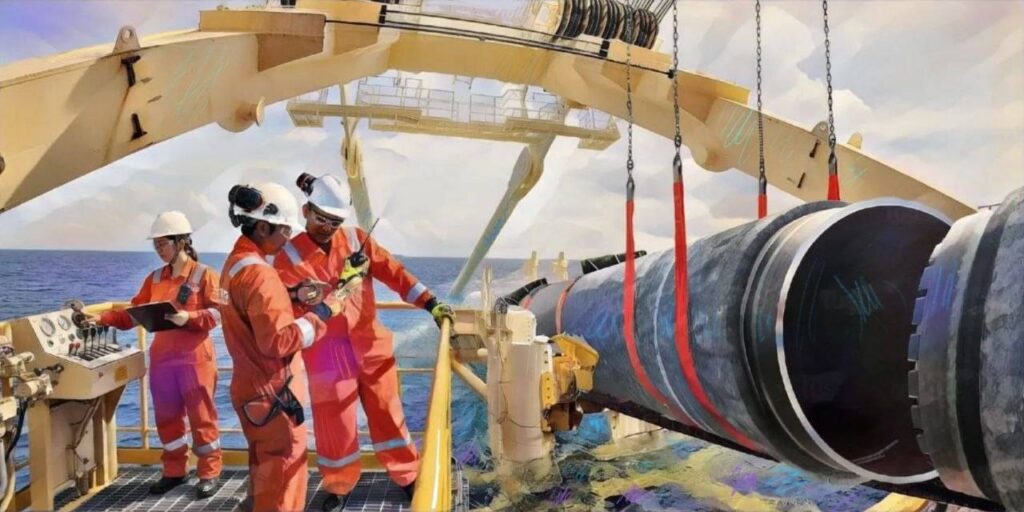
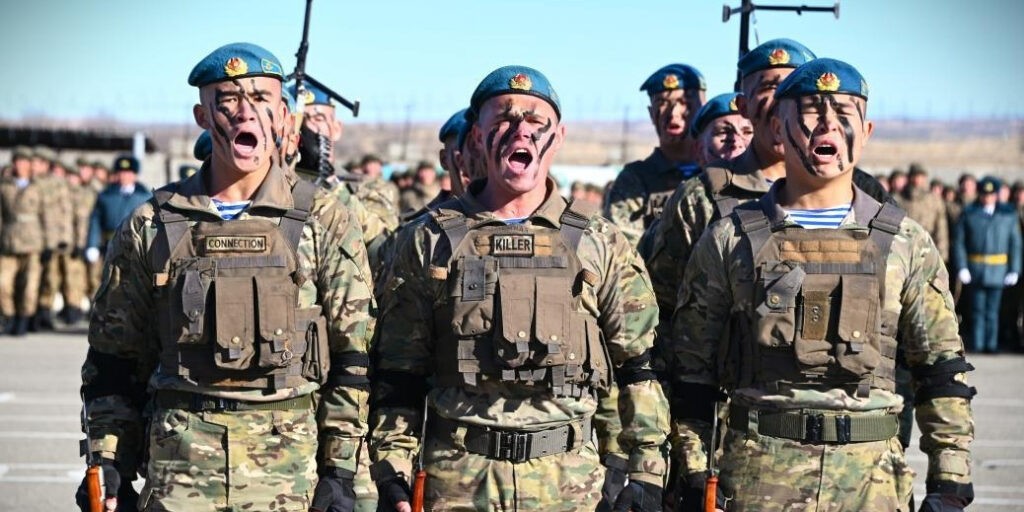
Despite China’s rise as Kazakhstan’s largest trading partner, Russia remains structurally embedded in the country’s economy and security system. The Caspian Pipeline Consortium continues to carry the majority of Kazakhstan’s crude exports to global markets via Russia’s Black Sea port of Novorossiysk, making the route central to state revenue and export stability. Kazakhstan’s membership in the Eurasian Economic Union and the Collective Security Treaty Organization also anchors customs alignment and defense cooperation. Cross-border trade, transport infrastructure, and labor mobility along the long Kazakh-Russian border sustain that structural connection.
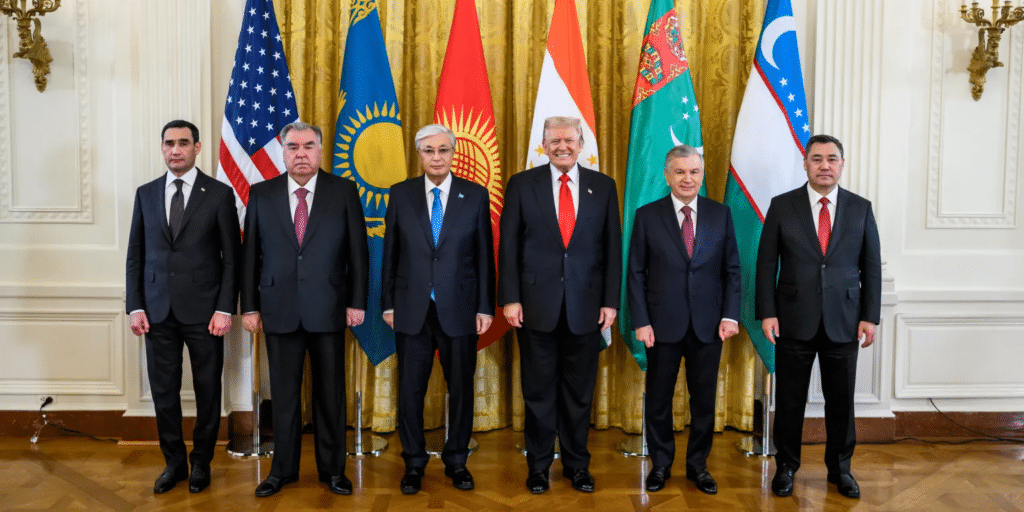
At the same time, Astana has widened its strategic options. In addition to China, engagement with the European Union has expanded in infrastructure and energy cooperation, while Turkey has strengthened economic and transport ties with Kazakhstan as part of a broader Eurasian partnership. Cooperation with the United States has also deepened through the C5+1 platform, with a growing focus on critical minerals, energy security, and regional connectivity.
The government is actively promoting the Trans-Caspian International Transport Route, or Middle Corridor, as an alternative east-west trade route that links China to Europe via the Caspian Sea and the South Caucasus, reducing reliance on Russian transit.
Extradition cases involving Russian political activists now sit within that broader diplomatic and economic balance. Approving a transfer request affirms treaty-based cooperation with Russia; suspending extradition during appellate review reflects the operation of domestic courts and asylum safeguards.
Before 2022, extradition cooperation between Kazakhstan and Russia rarely attracted sustained public attention. The relocation of tens of thousands of Russian citizens altered that environment — courts now grapple with cases that combine criminal allegations, asylum claims, and geopolitical sensitivities.
Recent proceedings reveal a recurring sequence: prosecutors approve Russian requests under existing legal frameworks; defense teams appeal and invoke refugee protections; higher courts review the case. Extradition may be paused during that process.
Yemelyanova’s case now follows that path. The suspension keeps her in Kazakhstan while courts assess the legality of extradition alongside her asylum claim. The final ruling will determine whether judicial safeguards prevent the transfer or whether extradition proceeds once appeals are concluded.
Kazakhstan continues to process extradition requests under established legal frameworks, but those frameworks now operate under the weight of geopolitical consequences. Cooperation with Russia remains intact, yet judicial review and refugee protections are shaping how far that cooperation extends. As regional alignments evolve, politically sensitive extraditions are no longer technical matters — they are signals of how Kazakhstan balances treaty obligations, domestic law, and strategic autonomy.