• KGS/USD = 0.01143 0%
  • KZT/USD = 0.00202 0%
  • TJS/USD = 0.10661 -0.19%
  • UZS/USD = 0.00008 0%
  • TMT/USD = 0.28575 0%
  • KGS/USD = 0.01143 0%
  • KZT/USD = 0.00202 0%
  • TJS/USD = 0.10661 -0.19%
  • UZS/USD = 0.00008 0%
  • TMT/USD = 0.28575 0%
  • KGS/USD = 0.01143 0%
  • KZT/USD = 0.00202 0%
  • TJS/USD = 0.10661 -0.19%
  • UZS/USD = 0.00008 0%
  • TMT/USD = 0.28575 0%
  • KGS/USD = 0.01143 0%
  • KZT/USD = 0.00202 0%
  • TJS/USD = 0.10661 -0.19%
  • UZS/USD = 0.00008 0%
  • TMT/USD = 0.28575 0%
  • KGS/USD = 0.01143 0%
  • KZT/USD = 0.00202 0%
  • TJS/USD = 0.10661 -0.19%
  • UZS/USD = 0.00008 0%
  • TMT/USD = 0.28575 0%
  • KGS/USD = 0.01143 0%
  • KZT/USD = 0.00202 0%
  • TJS/USD = 0.10661 -0.19%
  • UZS/USD = 0.00008 0%
  • TMT/USD = 0.28575 0%
  • KGS/USD = 0.01143 0%
  • KZT/USD = 0.00202 0%
  • TJS/USD = 0.10661 -0.19%
  • UZS/USD = 0.00008 0%
  • TMT/USD = 0.28575 0%
  • KGS/USD = 0.01143 0%
  • KZT/USD = 0.00202 0%
  • TJS/USD = 0.10661 -0.19%
  • UZS/USD = 0.00008 0%
  • TMT/USD = 0.28575 0%
08 February 2026

Viewing results 1 - 6 of 11

New FAO Report Ranks Tajikistan Among World’s Most At-Risk Countries for Land Degradation

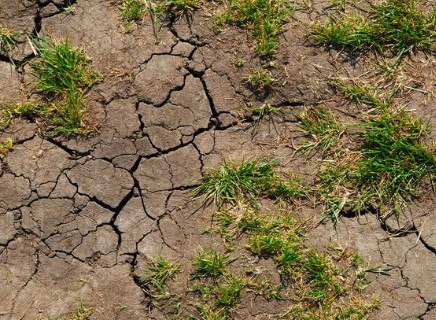
Tajikistan is among the countries most vulnerable to land degradation, according to a new report from the Food and Agriculture Organization of the United Nations (FAO). The findings point to alarming environmental and socio-economic risks for a country where agriculture remains the primary source of employment. The FAO attributes Tajikistan's vulnerability to a combination of small landholdings and intense pressure on soil resources. The country has more than 1 million rural households, including approximately 181,000 dekhkan farms. The average landholding is just 0.2 hectares, with a median size of 0.1 hectares, meaning half of all farmers operate on micro-plots. Challenges to Sustainable Agricultural Growth Under these conditions, expanding agricultural production is not feasible through increased acreage. Instead, growth depends on improving soil quality, upgrading irrigation systems, ensuring stable water access, and adopting modern technologies. These factors now define the boundaries of Tajikistan's agricultural development. According to the FAO, land degradation has affected 3.2 billion people globally, nearly 40% of the world's population. In some regions, agricultural yields have already declined by at least 10%. In Tajikistan, the stakes are especially high. The country has limited arable land, and its farming sector relies heavily on glacial meltwater and consistent irrigation. Climate risks are intensifying faster here than in many neighboring states. Extent and Impact of Land Degradation International experts estimate that nearly 70% of Tajikistan’s arable land is already degraded, with 10% of the population living in affected areas. The main drivers are erosion, salinization, and nutrient depletion, which collectively undermine soil productivity. These environmental pressures reduce rural incomes, increase reliance on external resources such as fertilizers, and contribute to forced migration, exacerbating social and economic vulnerabilities across the country.

Central Asia Cuts Hunger Fivefold in Two Decades, FAO Reports

The number of people facing hunger in Central Asia has fallen sharply over the past two decades, according to a new report from the UN Food and Agriculture Organization (FAO). The share of the population suffering from undernourishment dropped from 13.1% in 2005 to just 2.8% in 2024, equivalent to a decline from 7.8 million people to 2.3 million. Much of this progress was achieved before 2019. The COVID-19 pandemic temporarily disrupted that trend: between 2020 and 2021, undernourishment rose to 2.5 million. However, with the introduction of stronger food security policies and an economic rebound, the region has since regained positive momentum. The FAO report notes that a healthy diet in Central Asia now costs an average of $3.78 per person per day. While this is below the global average of $4.46, it remains unaffordable for many low-income households, particularly in rural Tajikistan. In 2024, FAO estimates that approximately 14% of the region’s population, roughly 11.5 million people, still could not afford a balanced diet. Child health indicators have also improved. The prevalence of stunting among children under five has halved since 2012, falling from 14.8% to 7.4%. Rates of acute malnutrition have also declined, and childhood obesity rates have decreased slightly. Nonetheless, persistent challenges remain: anemia affects about one-third of women of reproductive age, and adult obesity is on the rise, increasing from 18.8% to 25.1% over the past decade. In 2024, Tajikistan remained the most food-insecure country in the former Soviet Union. According to the Global Hunger Index published by the International Food Policy Research Institute, 8.7% of its population faces food shortages, placing the country 65th out of 127 worldwide. In a sign of regional engagement, Uzbekistan officially joined the Global Alliance to Combat Hunger and Poverty in December 2024, reinforcing its commitment to the Sustainable Development Goals and to global cooperation on food security.

Almosi Valley in Tajikistan Recognized as Global Agricultural Heritage Site

The Almosi mountain valley in Tajikistan’s Gissar district has been designated as a Globally Important Agricultural Heritage System (GIAHS) by the Food and Agriculture Organization (FAO) of the United Nations. The decision was announced on July 8 during a meeting of the FAO’s Scientific Advisory Group. A Milestone for Central Asia Tajikistan is now the first country in the post-Soviet space to have one of its agricultural landscapes recognized by the GIAHS program. Until now, only 12 agroecosystems across five European nations, Austria, Spain, Italy, Portugal, and Andorra, had received such recognition. Tajikistan’s inclusion marks a significant acknowledgment of Central Asia’s rich agricultural legacy and its global relevance. GIAHS sites are selected not only for their scenic beauty but also for their enduring agricultural practices and deep-rooted human-nature interaction. According to FAO materials, these systems demonstrate high levels of agrobiodiversity, sustainable production, centuries-old agricultural knowledge, and strong community ties to the environment. Almosi exemplifies these values. In its mountainous terrain, farmers engage in transhumant sheep herding and the cultivation of crops such as wheat, barley, vegetables, and the prized pink Taifi grape, used for raisins, syrups, juice, and wine. The valley is also home to the Gissar sheep breed, developed for resilience in high-altitude conditions. Preserving Tradition and Biodiversity Agriculture in Almosi relies on traditional techniques, including contour planting, organic fertilization, and irrigation through ancient canal systems. Farmers monitor natural indicators to optimize water use and adapt to climatic shifts, ensuring both productivity and environmental preservation. Community organization is another hallmark of the Almosi model. Farming is managed through mahalla committees, cooperatives, family farms, and even remnants of collective farming structures. This supports intergenerational knowledge transfer, shared resource management, and social cohesion. GIAHS designation not only affirms Almosi’s global agricultural significance but also opens avenues for sustainable development. Opportunities include eco-tourism, enhanced agricultural investment, and broader recognition of Tajikistan’s rural heritage. With new entries from Tajikistan, South Korea, and Portugal, the GIAHS network now includes 99 recognized systems in 29 countries. Almosi stands as the first in the Commonwealth of Independent States (CIS), a testament to the region’s enduring agricultural traditions and its capacity for innovation grounded in history.

Uzbekistan Elected to the UN FAO Council for the First Time

Uzbekistan has been unanimously elected to the Council of the Food and Agriculture Organization of the United Nations (FAO) for the 2028-2029 term, the country’s Ministry of Foreign Affairs has announced. This marks the first time Uzbekistan has secured a seat on the Council, which plays a pivotal role in shaping global agricultural and food policy. The FAO Council consists of 49 member states, selected to ensure equitable geographic representation. It is tasked with reviewing the FAO’s budget and programs and making strategic recommendations to the FAO Conference. Uzbekistan’s election is widely viewed as international recognition of the country's recent reforms in agriculture and food security. Under the leadership of President Shavkat Mirziyoyev, the government has prioritized sustainability, food safety, and environmental protection. Council membership will provide Uzbekistan with a stronger voice in international agricultural discussions. It will enable the country to participate in the development of global standards, support national and regional initiatives, and attract international funding to advance key development goals. In recent years, Uzbekistan has collaborated closely with the FAO on several high-profile projects. In May 2024, the FAO and the Ministry of Ecology organized a workshop in Tashkent to launch a joint initiative on hazardous chemical management. Supported by the European Union, the project aims to reduce reliance on harmful pesticides by promoting safer alternatives to local farmers. Earlier, in March 2024, the FAO and Uzbekistan’s Ministry of Agriculture hosted a seminar on the “Recarbonization of Agricultural Soils” (RECSOIL), culminating in an approved national action plan. The RECSOIL initiative complements two ongoing FAO projects focused on sustainable land management in drought-prone and dryland areas. These efforts are already benefiting Uzbek farmers through the adoption of modern, resource-efficient practices that improve productivity while preserving the environment.

Kyrgyzstan to Improve Farmland Monitoring with EBRD and FAO Support

The European Bank for Reconstruction and Development (EBRD) and the Food and Agriculture Organization of the United Nations (FAO) have launched a joint initiative titled Greening Kyrgyzstan’s Economy: Know More, Act Better, Enhance Results. The project aims to foster climate-smart agriculture through the use of geographic information system (GIS) technology, improving farmland management and bolstering food security in Kyrgyzstan. According to the EBRD, the initiative is supported by its Food and Agribusiness team and involves close cooperation with three key local aggregators: Kaindy-Kant (sugar beet processing), Kirbi (potato processing), and Dan Agro (pulses and legume processing). Together, these partners will help extend the project’s reach to more than 5,000 farmers. Harnessing GIS Technology The GIS platform will be managed by Kyrgyzstan’s State Agency for Land Resources, Cadastre, Geodesy and Cartography. It will be accessible to stakeholders across the agricultural sector, including the Ministry of Water Resources, Agriculture and Processing Industry, as well as farmers and aggregators. The system will enable users to identify sown crops, assess land-use efficiency, estimate productivity, and monitor crop rotation and sustainable water use. With additional funding from the Ministry of Digital Development, the State Agency will also develop a mobile application to improve access and facilitate the adoption of GIS tools at the grassroots level. Meanwhile, the EBRD and FAO will roll out a free e-extension application to provide advisory services to farmers. This collaboration promises substantial benefits for Kyrgyzstan, where agriculture employs nearly half the workforce and contributes approximately 12% of the national GDP. Broader Impact and Expectations The initiative is also expected to deliver environmental gains by enhancing efficiency in a sector responsible for roughly 37% of Kyrgyzstan’s greenhouse gas emissions. These efforts align with the country’s Paris Agreement target of cutting emissions by 16% by 2030. In addition to supporting environmental goals, the project is set to improve food security for Kyrgyzstan’s growing population, projected to reach 9.6 million by 2050. The data-driven approach to land management is designed to help rural communities adapt to climate change, strengthen agribusiness supply chains, and contribute to sustainable economic development. Participating aggregators stand to benefit from access to more accurate planting data, which will improve harvest forecasting and help optimize financing strategies.

Artificial Glaciers Created in Kyrgyzstan for Sustainable Agriculture and Climate Change Adaptation

As the international community observed the first-ever World Day for Glaciers on March 21, a project led by the Food and Agriculture Organization of the United Nations (FAO) has demonstrated how artificial glaciers can help rural communities in Kyrgyzstan adapt to the effects of climate change. As part of the FAO initiative, seven artificial glaciers were constructed in villages across the Batken region of southern Kyrgyzstan in late autumn 2024​. Over the winter, these glaciers accumulated more than 1.5 million cubic meters of ice. As spring temperatures rise, the ice begins to melt, providing essential irrigation water for downstream agricultural lands. According to FAO experts, more than 1,750 hectares of land, equivalent to 2,451 football fields, can be irrigated using furrow irrigation. If modern systems are introduced, this could expand to as much as 15,000 hectares. These artificial glaciers are relatively simple structures designed to collect and freeze water in winter for agricultural use in summer, including for irrigation and livestock. On average, one glacier can support irrigation on 300 to 500 hectares. “The key is to choose the right location,” said Matraim Jusupov, FAO expert on water-saving technologies. “We channel water from a mountain spring through a pipeline ending in a vertical pipe 10-15 meters high. The elevation difference generates pressure, which allows us to spray water into the air. At sub-zero temperatures, it freezes and gradually forms an ice cone.” To build the glaciers, 6,956 meters of pipeline were laid. FAO supplied construction materials and technical guidance, while the work was carried out by local residents. The FAO office in Kyrgyzstan has since developed universal guidelines for building artificial glaciers and distributed them across the country. Based on this experience, new glacier construction is already underway in other regions. Global Glacier Melt According to the World Meteorological Organization (WMO) and the World Glacier Monitoring Service (WGMS), five of the past six years have seen the fastest glacier retreat ever recorded. The years 2022–2024 marked the largest three-year loss of glacier mass in history​. Once regarded as “eternal ice,” many glaciers are now unlikely to survive the 21st century. There are more than 275,000 glaciers worldwide, covering approximately 700,000 square kilometers. Along with ice sheets, glaciers store about 70% of the planet’s freshwater. Their depletion threatens water supplies for hundreds of millions of people. In response to this growing crisis, the UN General Assembly declared 2025 the International Year of Glaciers’ Preservation and designated March 21 as the annual World Day for Glaciers. The initiative aims to raise awareness of the critical role glaciers play in the global climate and hydrological systems, and their significance to economic and ecological stability. UNESCO and WMO are leading the global coordination effort, supported by over 200 organizations and 35 countries. Kyrgyzstan’s Initiatives A Kyrgyz delegation led by Dinara Kemelova, the President’s Special Representative for the Five Years of Action for Mountain Regions Development, participated in World Day for Glaciers events at UNESCO headquarters in Paris on March 20-21​. The meetings focused on...