• KGS/USD = 0.01144 0%
  • KZT/USD = 0.00206 0%
  • TJS/USD = 0.10736 -0.19%
  • UZS/USD = 0.00008 0%
  • TMT/USD = 0.28490 -0.28%
  • KGS/USD = 0.01144 0%
  • KZT/USD = 0.00206 0%
  • TJS/USD = 0.10736 -0.19%
  • UZS/USD = 0.00008 0%
  • TMT/USD = 0.28490 -0.28%
  • KGS/USD = 0.01144 0%
  • KZT/USD = 0.00206 0%
  • TJS/USD = 0.10736 -0.19%
  • UZS/USD = 0.00008 0%
  • TMT/USD = 0.28490 -0.28%
  • KGS/USD = 0.01144 0%
  • KZT/USD = 0.00206 0%
  • TJS/USD = 0.10736 -0.19%
  • UZS/USD = 0.00008 0%
  • TMT/USD = 0.28490 -0.28%
  • KGS/USD = 0.01144 0%
  • KZT/USD = 0.00206 0%
  • TJS/USD = 0.10736 -0.19%
  • UZS/USD = 0.00008 0%
  • TMT/USD = 0.28490 -0.28%
  • KGS/USD = 0.01144 0%
  • KZT/USD = 0.00206 0%
  • TJS/USD = 0.10736 -0.19%
  • UZS/USD = 0.00008 0%
  • TMT/USD = 0.28490 -0.28%
  • KGS/USD = 0.01144 0%
  • KZT/USD = 0.00206 0%
  • TJS/USD = 0.10736 -0.19%
  • UZS/USD = 0.00008 0%
  • TMT/USD = 0.28490 -0.28%
  • KGS/USD = 0.01144 0%
  • KZT/USD = 0.00206 0%
  • TJS/USD = 0.10736 -0.19%
  • UZS/USD = 0.00008 0%
  • TMT/USD = 0.28490 -0.28%

Viewing results 1 - 6 of 42

“Between Worlds”: Filmmaker Zhannat Alshanova on Migration and Identity

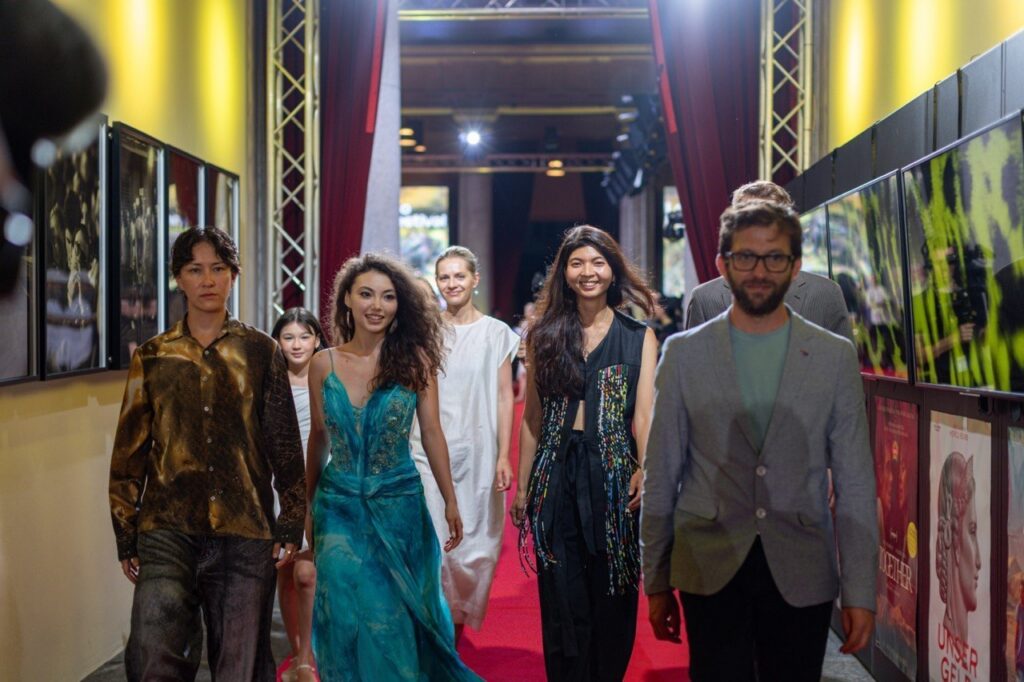
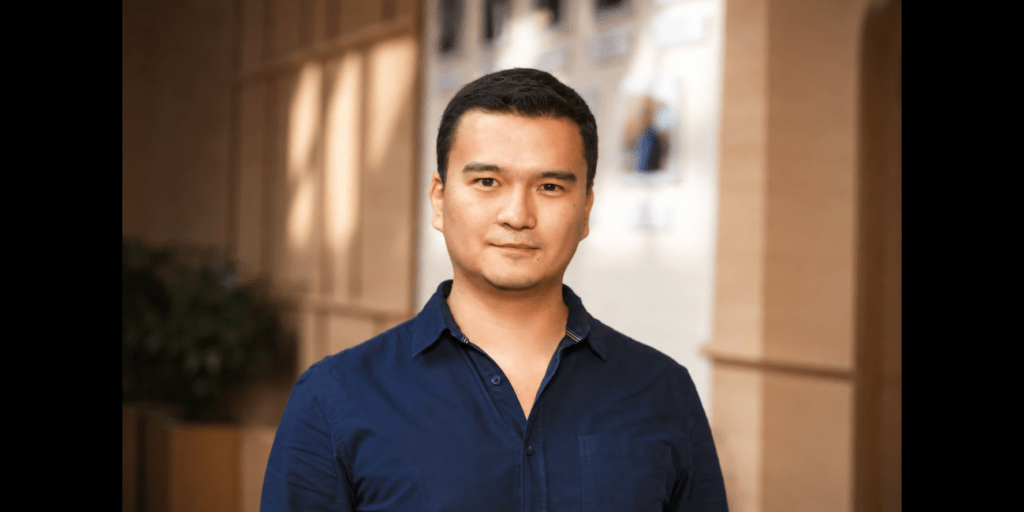
Kazakhstani filmmaker Zhannat Alshanova belongs to a new generation of directors whose careers have unfolded across countries and cultures. Before establishing herself as an auteur filmmaker, the London Film School graduate worked on international productions filmed in Kazakhstan, South Africa, Guatemala, Malaysia, and the United States. Her short film History of Civilization won the Silver Leopard at the Locarno Film Festival; several years later, her debut feature Becoming also premiered there. In an interview with The Times of Central Asia, Alshanova discusses migration, identity, the Western film industry, the creative vulnerability of young directors, and what it means to make cinema “between worlds.” TCA: Zhannat, would it be fair to call you a “Locarno star”? Your debut feature Becoming premiered there; before that, you won the Silver Leopard for your short A History of Civilization, and you also took part in the festival’s directing academy. Zhannat: We really have had a long relationship. Even before screening my own films there, I attended the festival as a co-producer of a South African film selected for competition. That was a year before my own participation. TCA: How did you end up working on a South African project, and what was the film about? Zhannat: It was made by people from my film school. We all studied together at London Film School, although they were a year ahead of me. It was a genuinely creative environment where everyone supported one another and worked on each other’s graduation films. Usually, productions took place in the filmmaker’s home country, so I ended up helping produce projects not only in South Africa, but also in Turkey and the United States. In Guatemala, I worked as a second assistant director. The South African project was a hybrid film, part fiction, part documentary, a road movie about a young man traveling to an audition. The entire story unfolds through that journey. It turned out to be a very beautiful film. [caption id="attachment_49166" align="aligncenter" width="1280"] From a personal photo archive[/caption] TCA: You all came to London Film School from completely different parts of the world. Were your themes similar or very different? Zhannat: Some were similar, others completely different. So many factors shape a filmmaker, the country you grew up in, your personal background, your experience of migration or travel. Some people had lived in one country their entire lives before leaving; others had moved between countries since childhood, while some had lived abroad and then returned home. Everyone carried different experiences. Some directors were interested in stories about children, others focused on people their own age, while some tried to imagine the future. The ideas were extremely varied, but all of them were vivid and personal. For me, the greatest asset of film school was access to different cultures and perspectives. Everyone brought their own cinematic baggage, films, directors and artistic traditions you might never otherwise encounter. It became a fascinating mix of global culture. TCA: What kind of film were you working on in Guatemala? Zhannat: It...
Screenwriter Yefrat Sharipov on AI and the Future of Kazakhstani Cinema

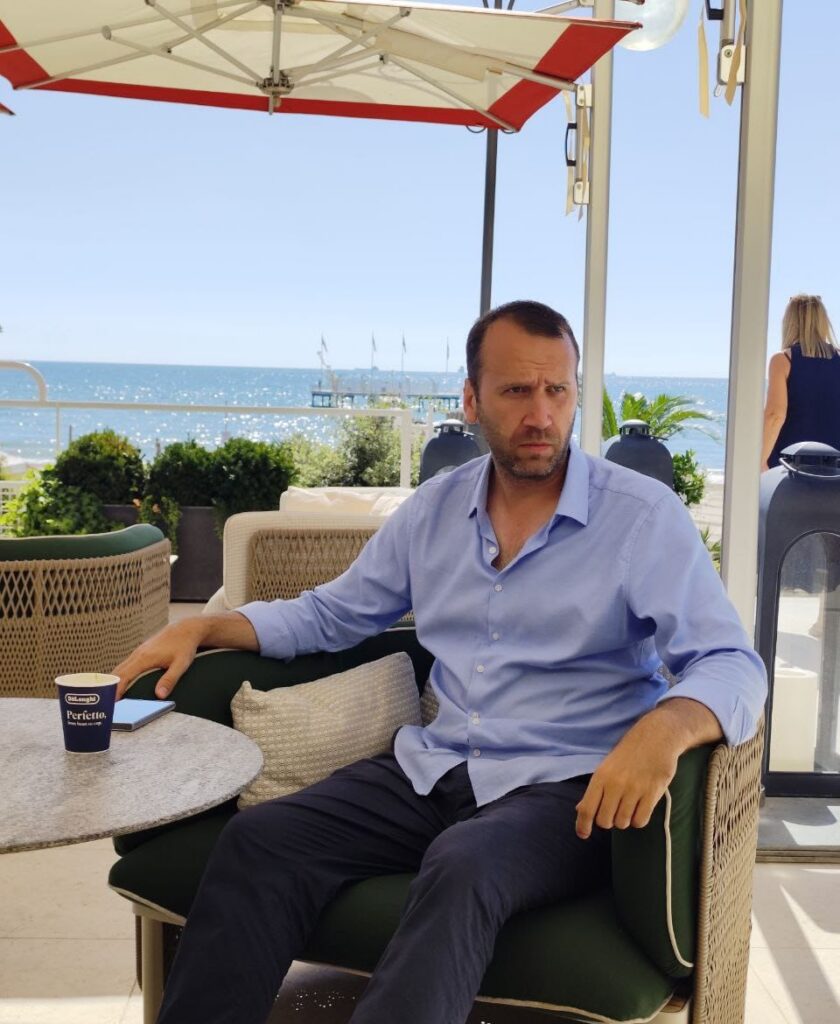
Screenwriter Yefrat Sharipov is a graduate of Kazakhstan’s Academy of Civil Aviation and the New York Film Academy (NYFA), and one of the country’s most sought-after screenwriters in recent years. He worked on the box office hit Dos-Mukasan, a film about the legendary Kazakhstani musical group often described as the local equivalent of The Beatles. He now reflects on the future of global cinema, the role of artificial intelligence, and why Kazakhstani stories can resonate far beyond the country’s borders. In an interview with The Times of Central Asia, Sharipov discusses how engineering thinking shapes his approach to storytelling, why screenwriters must understand the inner workings of the film industry, and how technology may soon erase language barriers. TCA: You’re a screenwriter with an engineering background who graduated from the Academy of Civil Aviation. How did that happen? Sharipov: Honestly, it’s difficult for me to explain myself. The desire to write stories has been with me since childhood; I always knew I would never stop doing it. The need to express myself through writing appeared very early. Back in school, I was already trying to write short stories, novellas, poetry, even songs. But when it came time to choose a profession, I decided to pursue a technical field, although I never stopped writing “for the drawer.” Later, when I entered the film industry and worked on projects in other roles, I remembered this passion and realized there was a way to apply it professionally. There was a huge demand for screenwriters. At first, it was mostly curiosity, I wanted to see whether anyone besides me would actually find my stories interesting. Gradually, things started to work out, and here I am. TCA: What did you write about as a child? Sharipov: About whatever fascinated me at the time. At one point, I became obsessed with Tolkien and started inventing fantasy stories with imaginary creatures. I mostly wrote for myself, though sometimes I let friends, parents, and relatives read my work. I remember my mother always praising me, and I usually got good grades for essays at school. My friends and I even kept what we called “school chronicles,” where we humorously wrote about everything happening around us. Honestly, if I were a better speaker, maybe I would have become a stand-up comedian. TCA: Does your technical education help you in your current work? Sharipov: It does. Technical disciplines probably influenced the way I approach storytelling. I look at stories almost like an engineer, everything has to be structured and logical. Before starting a film, I research the subject deeply. I don’t just read materials casually. I use an approach similar to scientific research. I gather facts, critically analyze the material, and repeatedly verify information. TCA: So, every film becomes almost like a dissertation. But cinema is always about people. Can human beings really be approached scientifically? Sharipov: When I worked on the Dos-Mukasan biopic, I didn’t just rely on archival material, I tried to meet personally with everyone who had...

Astana to Host International AI Film Festival

Astana will host the Astana AI Film Festival (AAIFF 2026) this autumn an international event dedicated to films created using artificial intelligence. The festival will focus on the growing influence of AI on the creative industries. Its central feature will be an international competition of short films produced using AI technologies, according to the Creative Industries Alliance of Kazakhstan. Speaking at an awards ceremony for the Alem.ai Battle and AI Governance Cup competitions, President Kassym-Jomart Tokayev said the festival reflects a “fundamental shift” in the development of the creative sector. According to him, AI is transforming the nature of creativity, opening new forms of expression and lowering barriers for creators. At the same time, Tokayev acknowledged more cautious views suggesting that AI could reshape, or even displace, traditional segments of the creative industries. In this context, he stressed the importance of adapting in a timely manner to emerging technological trends. The festival is expected to serve as a platform for showcasing innovative approaches to filmmaking and promoting Kazakh creative projects internationally. Applications for participation are set to open in May. The announcement comes amid broader efforts by Kazakhstan to develop AI. The Times of Central Asia previously reported plans to establish an AI fund backed by the National Bank, aimed at financing key digital projects and educational programs.

Construction Begins in Kazakhstan on a World-Class Film Studio for a Movie Starring Jackie Chan

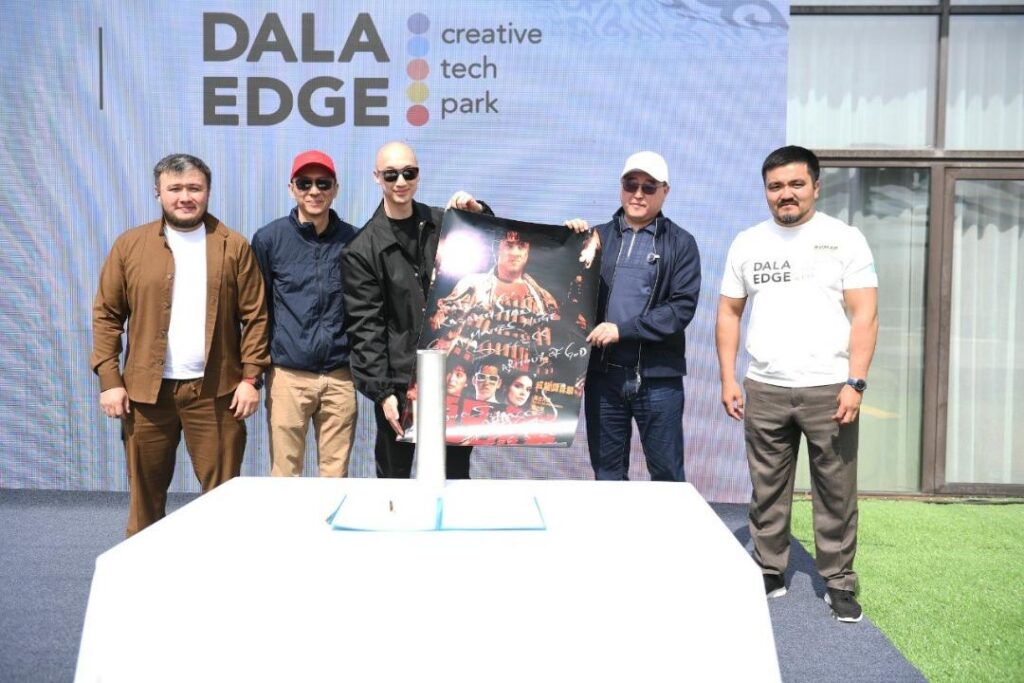
A project has been launched in Kazakhstan’s Almaty region that could significantly transform the local film industry. Construction has begun in the city of Kaskelen on the “Dala Stage” film studio project, which is positioned as a world-class facility and is being developed with the participation of international partners. According to local authorities, one of the most notable moments at the project’s groundbreaking ceremony was the delivery of a time capsule from Jackie Chan, which was transported by helicopter. The capsule was received by director Robert Koon, who is set to work on the first production at the new site, Armor of God 4: Ultimatum. “The film industry is developing rapidly, requiring increasingly large-scale solutions and advanced technologies. This new project will allow local professionals to compete at a global level,” said Almaty Region Akim Marat Sultangaziev. Producer Li Chiu Wa conveyed greetings from Jackie Chan and said the project is progressing quickly. He said that just six months ago it was still at the discussion stage, but construction has already begun. The key parameters of the future facility have already been outlined. The total site will cover 15 hectares, with built-up space of 3,000 square meters. The project extends beyond the construction of a film studio and is intended to support the development of the national film industry, including training specialists and attracting investment.

Actor Rauan Akhmedov on Cinema in Kazakhstan and Why He Has No Interest in Hollywood

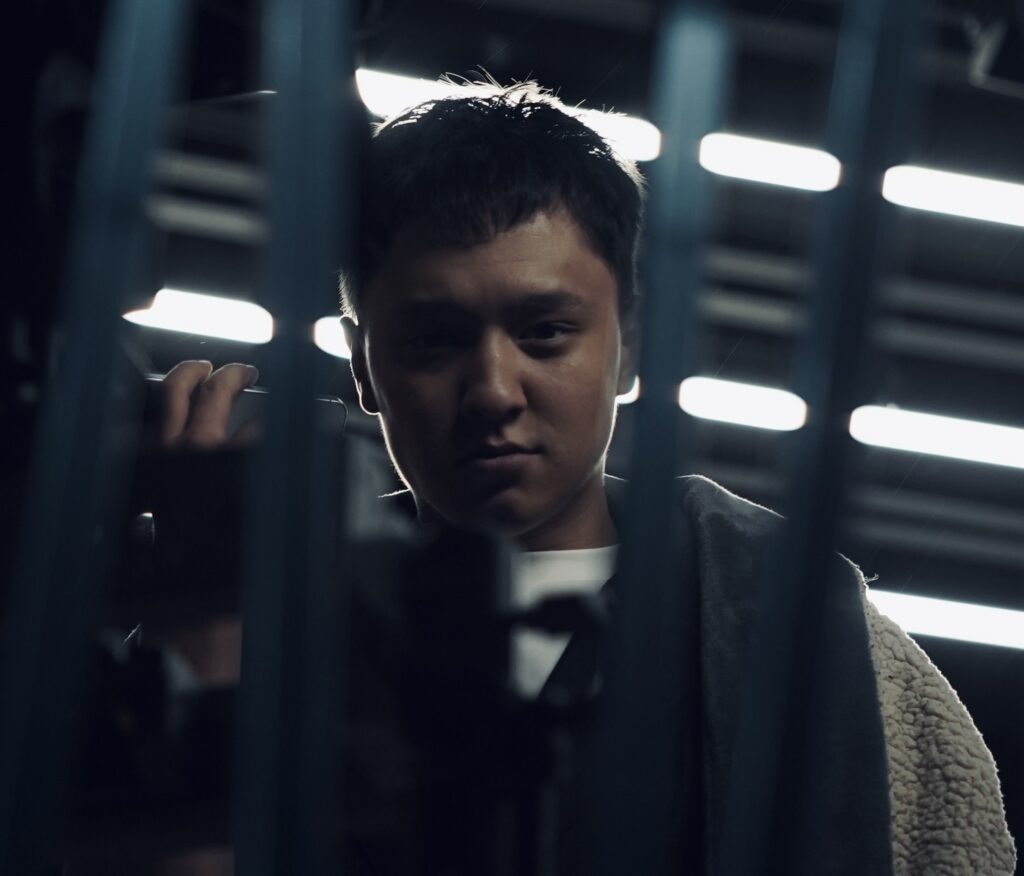
Rauan Akhmedov is one of Kazakhstan’s most sought-after young actors. Despite his rapidly rising career and growing international interest in Kazakh cinema, the 22-year-old says his priority is to continue developing within the domestic industry. In an interview with The Times of Central Asia, he discusses the state of cinema in Kazakhstan, the role of personal experience in his acting, and why tradition and modernity are not mutually exclusive. TCA: Your breakthrough came with Black Yard, directed by Dias Bertis. Is it true he noticed you while you were filming a small cameo in the series The Player? Rauan: Yes. I came to the audition, and we were rehearsing a scene with another candidate, I think he was reading for a doctor. We weren’t getting it right, so at some point the director stepped away. I then suggested to my scene partner that we try a different approach. Dias overheard us, came over, and said, “Switch roles.” We did, and he decided I should take the part. Apparently, he liked my performance, and later he invited me to Black Yard. TCA: You have three films coming out this spring. Is the Kazakhstani film industry becoming overcrowded? Do you feel the urge to work abroad? Rauan: Not yet. I want to follow my own path and realize my potential here. I believe Kazakhstani cinema can reach a very high level. I don’t dream about Hollywood. If I ever end up there, I want it to be through a Kazakhstani project. It’s important for me to stay at home, the language, the culture, the people. I want to grow here and contribute to the development of cinema in my country. Especially as audiences abroad are beginning to take an interest in our films. We haven’t conquered the world yet, but we’re improving all the time. Kazakhstan has strong potential. TCA: Would you describe yourself as a patriot? Rauan: Yes. I respect our filmmakers. When someone succeeds, when a film performs well at the box office, I’m genuinely pleased, even if it’s not my project. I think that once we overcome internal divisions and start supporting one another, we can achieve a great deal. TCA: Many films are now being shot in the Kazakh language. Does that give Kazakh-speaking actors a competitive advantage? Rauan: Probably. But in my view, that’s natural. Every country produces films in its own language. We are Kazakhs, who else will make films in Kazakh? At the same time, I respect all languages, Russian, English, Chinese. The more languages you know, the broader your perspective. TCA: You often portray characters from the 1990s, even though you were born in the 2000s. How do you research that period? Rauan: Partly through my parents. But it’s not that long ago, you can find a lot online, and I experienced some of it myself. For example, we had a rotary phone at home. We often used a VCR to watch home videos, family celebrations, my parents’ wedding. I saw how young they...

Kazakhstani Cinema at a Turning Point: Screenwriter Sergey Litovchenko Discusses the Industry

Kazakhstani cinema may be entering a “golden age.” Kazakh films are increasingly appearing at international festivals, while television series are reaching major global streaming platforms and attracting millions of viewers. Yet the country has not broken through at the Oscars, and the reasons go beyond funding. Screenwriter and creative producer Sergey Litovchenko discusses the changes and challenges shaping the industry, why the pandemic unexpectedly benefited Kazakhstani cinema, and which projects he considers the most significant milestones to date. TCA: Sergey, the Oscars have just taken place. Will Kazakhstan ever win an Oscar? And when might that happen? Sergey: Our industry is developing rapidly, with the pace increasing every year. I believe we are close to that moment. However, it will probably come sooner in the short-film category. Although it may seem like an unattainable goal, that is not the case. Look at Brazil, for example, which has been prominent in the Oscar race for the second year in a row. Last year, the film I’m Still Here received three nominations and won an Oscar for Best International Feature Film. This year, Brazilian entries have already secured four nominations, including Best Picture. So anything is possible. At present, the main factor holding us back is technical capacity. TCA: The relatively low-budget film Sentimental Value won Best International Feature Film this year. Is technical prowess really the most important factor? Sergey: It is technically very well made. We should also remember that it participated in a major festival and featured Hollywood star Elle Fanning. The reason I mentioned the Brazilian example is that Brazilian cinema is not widely known to mass audiences, yet the technical quality and acting impressed me. It is clear they have the time and resources to prepare thoroughly for filming. For Kazakhstan, the situation is more complex. We often operate in a “we should have filmed this yesterday” mode. The only film to reach not just the shortlist but the nominations was Sergei Bodrov’s Mongol. It is a masterpiece of technical craftsmanship. Its $17 million budget is evident on screen. It is not only technically accomplished, but also a strong film artistically. There have been other worthy candidates: Sergei Dvortsevoy’s Aika and Tulpan, Yermek Tursunov’s Kelin, and Askhat Kuchinchirekov’s Bauryna Salu. All are high-level works. But for a major breakthrough, we need stronger production capacity. TCA: Is this primarily a question of money? Sergey: Not always. I often hear filmmakers say, “Give us a budget and we will make it happen.” I ask them how much they need, a billion? Two? Asghar Farhadi shot A Separation for $400,000. Andrey Zvyagintsev filmed The Return for about $300,000. So it is not only about money. Nor is it about casting, we have many talented people. To create a breakthrough film, you need not only a profound story but also extensive preparation and a certain uncompromising attitude, in a positive sense. In Kazakhstan, however, we often adapt films to circumstances. If the weather is unsuitable, we proceed anyway. If the actor...