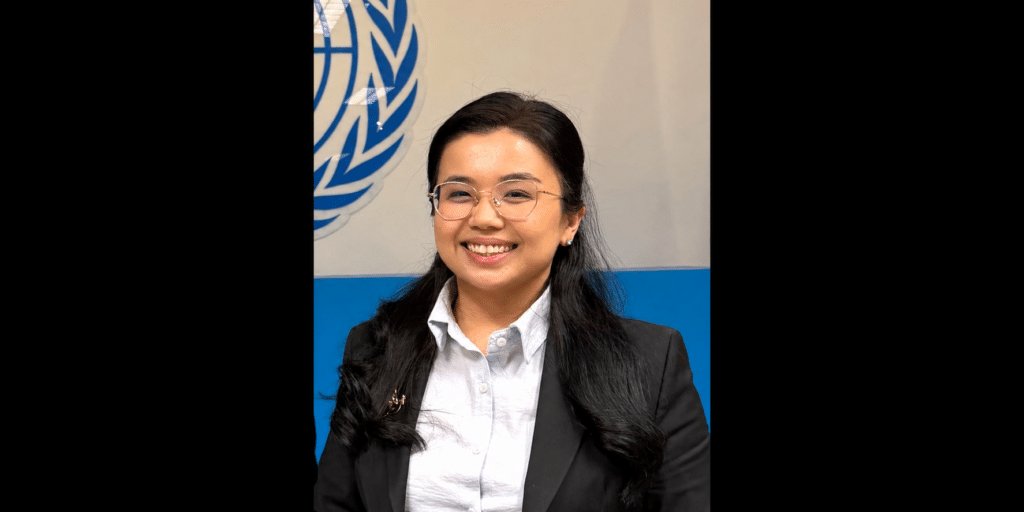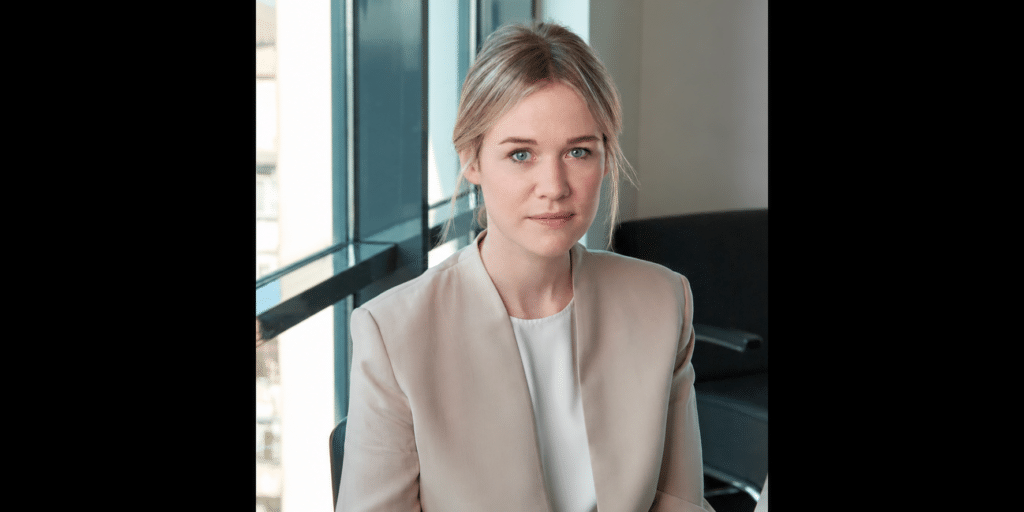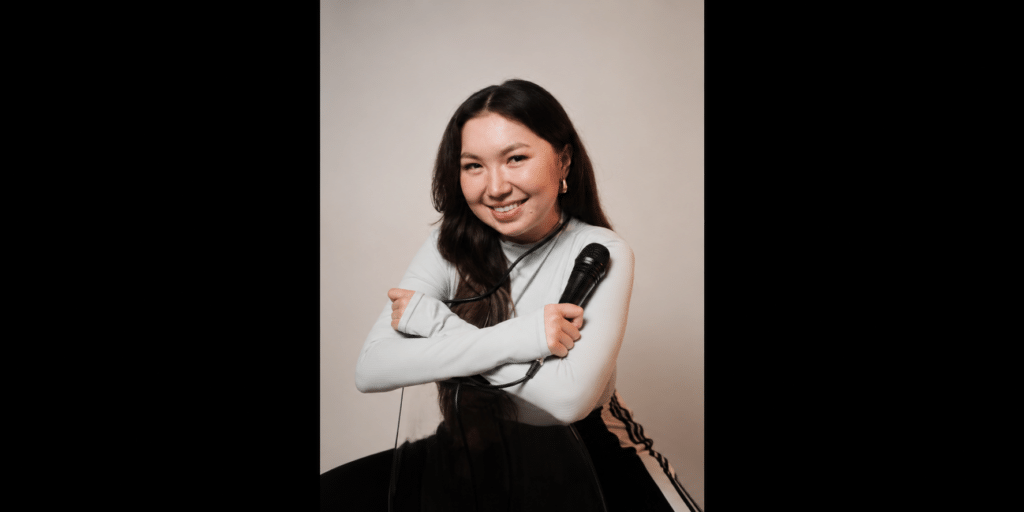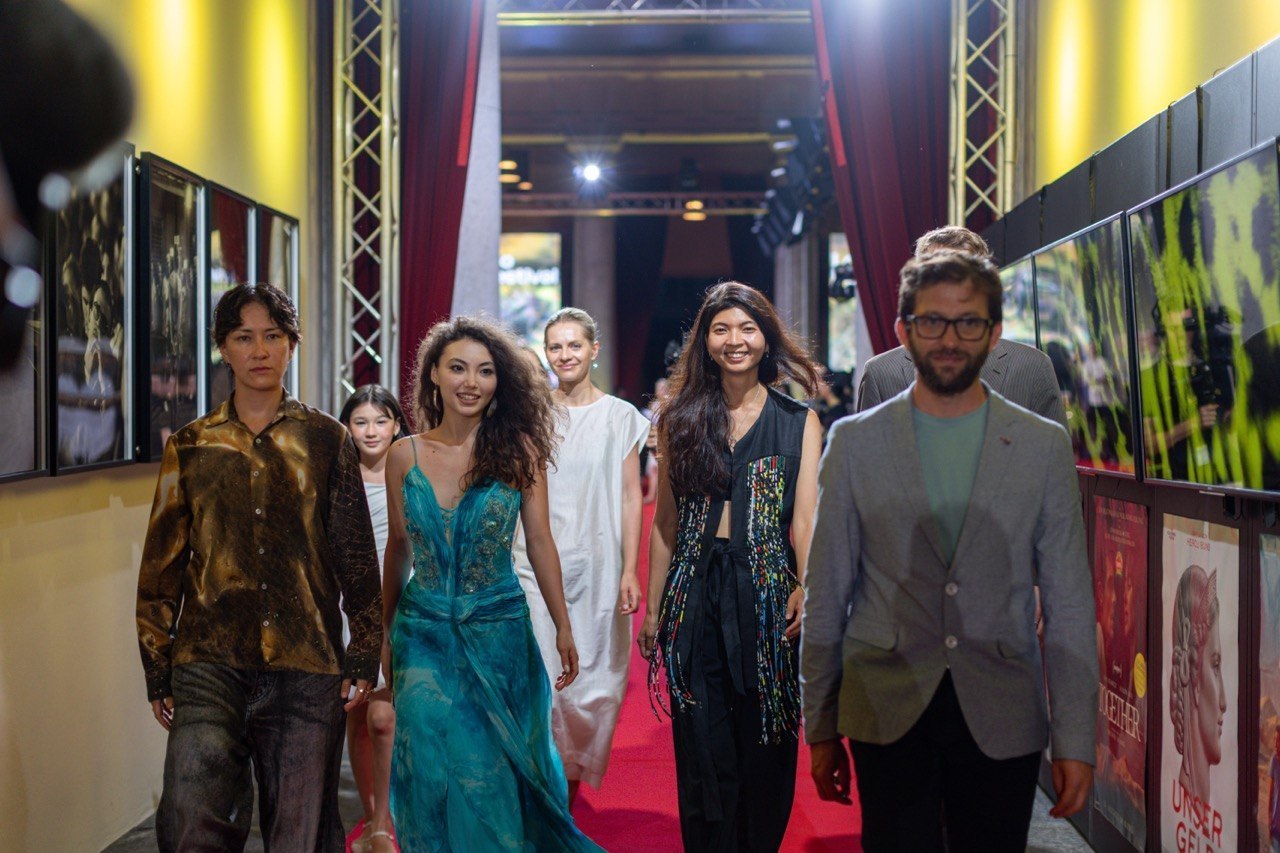
Kazakhstani filmmaker Zhannat Alshanova belongs to a new generation of directors whose careers have unfolded across countries and cultures. Before establishing herself as an auteur filmmaker, the London Film School graduate worked on international productions filmed in Kazakhstan, South Africa, Guatemala, Malaysia, and the United States. Her short film History of Civilization won the Silver Leopard at the Locarno Film Festival; several years later, her debut feature Becoming also premiered there.
In an interview with The Times of Central Asia, Alshanova discusses migration, identity, the Western film industry, the creative vulnerability of young directors, and what it means to make cinema “between worlds.”
TCA: Zhannat, would it be fair to call you a “Locarno star”? Your debut feature Becoming premiered there; before that, you won the Silver Leopard for your short A History of Civilization, and you also took part in the festival’s directing academy.
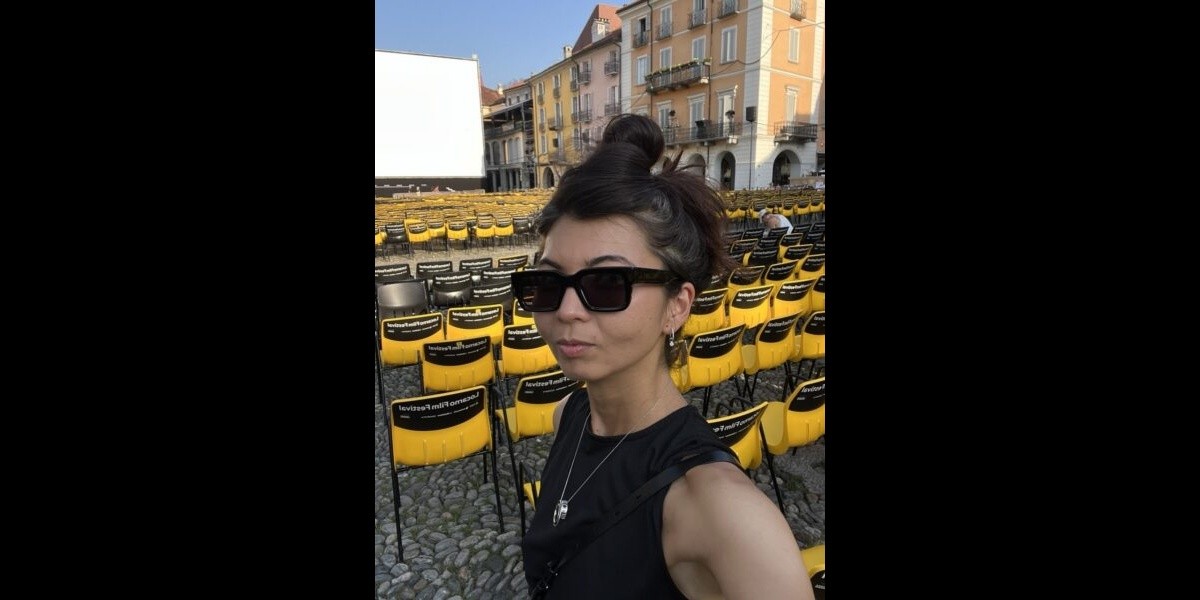
Zhannat: We really have had a long relationship. Even before screening my own films there, I attended the festival as a co-producer of a South African film selected for competition. That was a year before my own participation.
TCA: How did you end up working on a South African project, and what was the film about?
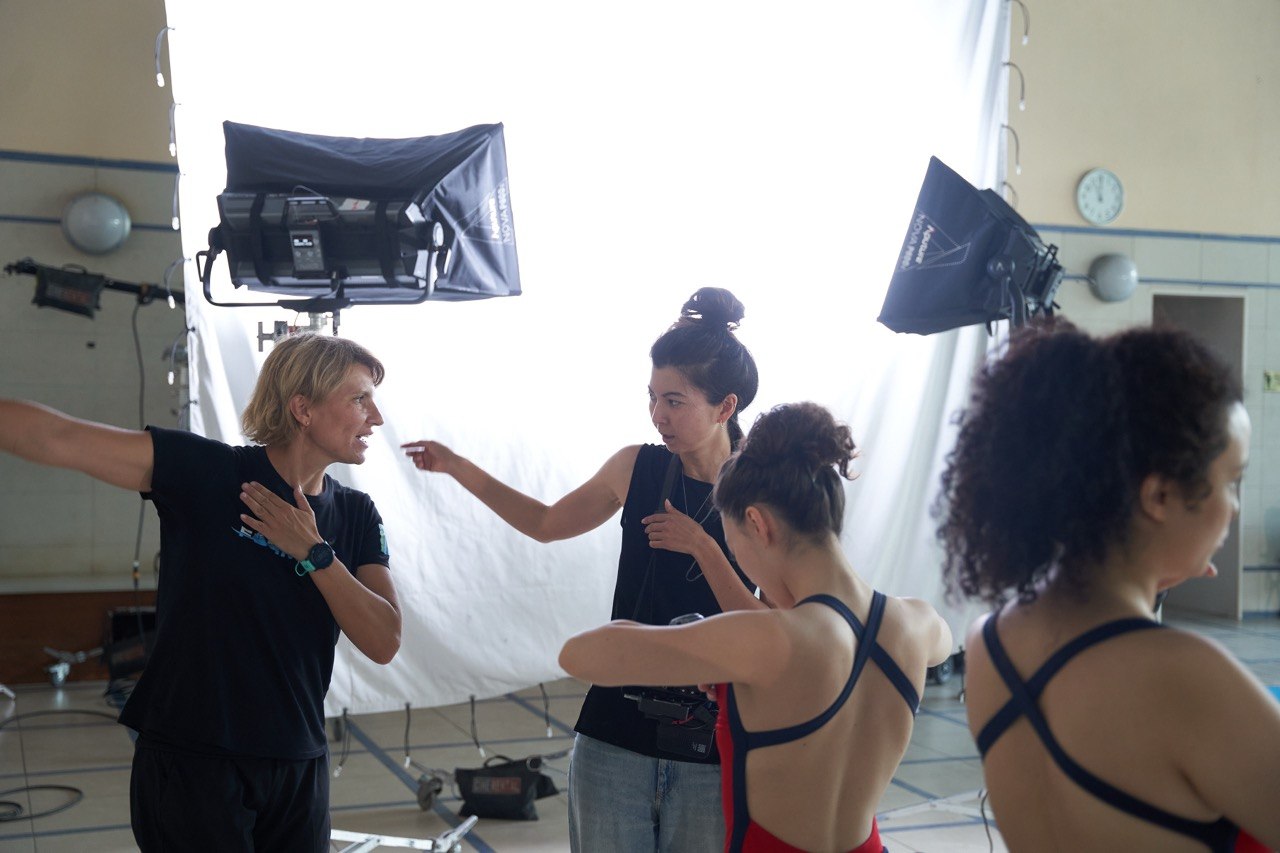
Zhannat: It was made by people from my film school. We all studied together at London Film School, although they were a year ahead of me. It was a genuinely creative environment where everyone supported one another and worked on each other’s graduation films.
Usually, productions took place in the filmmaker’s home country, so I ended up helping produce projects not only in South Africa, but also in Turkey and the United States. In Guatemala, I worked as a second assistant director.
The South African project was a hybrid film, part fiction, part documentary, a road movie about a young man traveling to an audition. The entire story unfolds through that journey. It turned out to be a very beautiful film.
From a personal photo archive
TCA: You all came to London Film School from completely different parts of the world. Were your themes similar or very different?
Zhannat: Some were similar, others completely different. So many factors shape a filmmaker, the country you grew up in, your personal background, your experience of migration or travel.
Some people had lived in one country their entire lives before leaving; others had moved between countries since childhood, while some had lived abroad and then returned home. Everyone carried different experiences.
Some directors were interested in stories about children, others focused on people their own age, while some tried to imagine the future. The ideas were extremely varied, but all of them were vivid and personal.
For me, the greatest asset of film school was access to different cultures and perspectives. Everyone brought their own cinematic baggage, films, directors and artistic traditions you might never otherwise encounter. It became a fascinating mix of global culture.
TCA: What kind of film were you working on in Guatemala?
Zhannat: It was a feature film about a young man who works as a tour guide during the day and seduces men at night in order to rob them. The film premiered at Rotterdam in 2020.
Interestingly, after that the director returned to short films, and this year his film Madrugada was selected for Directors’ Fortnight at Cannes.
TCA: Where do you live and work now?
Zhannat: Between Almaty and London.
TCA: Isn’t it easier for artists to create at home where their cultural roots and “nutritional environment” are?
Zhannat: That’s a difficult question for me. When I was studying in London, I thought I would stay there and make films in England. But toward the end of film school, I realized I didn’t understand British culture deeply enough to know what stories I should tell there.
Most of my classmates went home to make films, and I did too.
But when I returned to Kazakhstan, I realized I had been away for several years and no longer fully understood what was happening at home either. You end up existing somewhere in between; different both from the people who left and from those who stayed. You no longer fully belong to either world.
At some point, though, I realized that this “in-between” state was itself interesting. So many people today live in constant movement, relocation and transition, and that experience itself becomes a source of stories.

From a personal photo archive
TCA: So, you identify strongly with themes of migration? Your short A History of Civilization was about a young teacher preparing to leave Kazakhstan.
Zhannat: Yes. We live in a world where migration has become global, and many people experience it in one form or another.
On one hand, it creates distance from the place where you were born and raised. On the other hand, even while living far away, you continue searching for things that resonate deeply with you.
Right now, I’m trying to find myself precisely within this condition of existing “between worlds.” I currently have three projects in development: one in Kazakhstan and two in England. But they still intersect through their characters and narrative themes. I’m still observing how all of that will eventually coexist.
TCA: How realistic is it to integrate into the British film industry and become part of it?
Zhannat: I think the opportunities exist; it’s mostly a matter of time and persistence. If you consciously pursue that goal, it’s possible, because the industry is huge and there are many points of entry, including television and episodic directing.
At the same time, British cinema is not limited to traditional British stories with strictly local themes. There are many filmmaking communities connected to countries that were historically part of the British Empire. As a result, many British projects are actually shot outside the UK.
For example, last year there was My Father’s Shadow, a British production filmed in Nigeria that performed very well on the festival circuit and received theatrical distribution. This year, Sundance premiered two British productions filmed abroad, Filipiñana, which was shot in the Philippines, and Lady, which was filmed in Nigeria.
I still don’t feel fully “inside” the industry myself, and maybe I’ll only be able to speak about that once I complete my own British project.
TCA: You’re currently developing an English-language project supported by Chanel. What is the story about, and why did you decide to make it in English?
Zhannat: The project actually began years ago, around the time I moved to England. We signed a development agreement with Film4, which is one of the most significant production companies in the British industry, with an extraordinary filmography and strong support for directors.
We signed the agreement based on the initial concept, and I thought I would be able to develop this project alongside my debut feature. But in reality, Becoming consumed everything, all my time, attention, energy and resources. I became completely immersed in production.
Only after finishing Becoming was I finally able to return to this new story with fresh energy and much more experience.
a personal photo archive
TCA: So, you essentially came back to it from the beginning?
Zhannat: Yes, although first I needed time to adjust to a new process, a new team and a different working method. I had to reflect on my experience with the first film, to understand what I wanted to preserve and what needed to change.
It was almost like conducting an internal postmortem analysis. I think the next film will benefit from that.
TCA: How do British filmmakers approach story development? Is the process different from elsewhere?
Zhannat: Development is always an extremely important, sensitive and sometimes vulnerable stage. At that point, you are still trying to discover the emotional core of the story while simultaneously opening up that process to producers.
You have to learn to distinguish between comments that genuinely move the story forward and those that do not resonate with you.
I’m still at the beginning of this process myself, so it’s difficult for me to fully compare the British system with European filmmaking more broadly. Perhaps I’ll be able to discuss it in more detail once the film is completed.
TCA: Young filmmakers often rewrite scripts endlessly. Doesn’t that destroy creative energy?
Zhannat: It’s definitely difficult, especially for newcomers. But I think this is also how young directors learn to respect their own opinions.
When you’re making your first film, you assume everyone around you knows better because they have more experience. You’re ready to compromise in advance because you don’t fully trust yourself yet.
But eventually you realize that defending what matters to you is also your responsibility. Otherwise, it becomes very easy to lose your voice.
It’s a process of learning to listen while refusing to dissolve entirely into other people’s opinions.