• KGS/USD = 0.01144 0%
  • KZT/USD = 0.00204 0%
  • TJS/USD = 0.10394 -0.38%
  • UZS/USD = 0.00008 0%
  • TMT/USD = 0.28571 0%
  • KGS/USD = 0.01144 0%
  • KZT/USD = 0.00204 0%
  • TJS/USD = 0.10394 -0.38%
  • UZS/USD = 0.00008 0%
  • TMT/USD = 0.28571 0%
  • KGS/USD = 0.01144 0%
  • KZT/USD = 0.00204 0%
  • TJS/USD = 0.10394 -0.38%
  • UZS/USD = 0.00008 0%
  • TMT/USD = 0.28571 0%
  • KGS/USD = 0.01144 0%
  • KZT/USD = 0.00204 0%
  • TJS/USD = 0.10394 -0.38%
  • UZS/USD = 0.00008 0%
  • TMT/USD = 0.28571 0%
  • KGS/USD = 0.01144 0%
  • KZT/USD = 0.00204 0%
  • TJS/USD = 0.10394 -0.38%
  • UZS/USD = 0.00008 0%
  • TMT/USD = 0.28571 0%
  • KGS/USD = 0.01144 0%
  • KZT/USD = 0.00204 0%
  • TJS/USD = 0.10394 -0.38%
  • UZS/USD = 0.00008 0%
  • TMT/USD = 0.28571 0%
  • KGS/USD = 0.01144 0%
  • KZT/USD = 0.00204 0%
  • TJS/USD = 0.10394 -0.38%
  • UZS/USD = 0.00008 0%
  • TMT/USD = 0.28571 0%
  • KGS/USD = 0.01144 0%
  • KZT/USD = 0.00204 0%
  • TJS/USD = 0.10394 -0.38%
  • UZS/USD = 0.00008 0%
  • TMT/USD = 0.28571 0%

Viewing results 1 - 6 of 886

Kyrgyzstan Introduces Voluntary Loan Ban to Curb Financial Fraud

Starting November 1, Kyrgyzstan will implement a self-restriction mechanism allowing citizens to voluntarily block the issuance of loans and credits in their name, a measure aimed at protecting individuals from financial fraud involving unauthorized loans. Announcing the initiative at a press conference on October 30, Bektur Aliyev, Deputy Chairman of the National Bank of Kyrgyzstan, said the new regulation comes in response to a rise in cases where fraudsters used fake or stolen passports to secure loans online. The self-restriction can be activated or revoked remotely at any time via the State Portal of Electronic Services or the Tunduk mobile app. Once submitted, the restriction takes effect immediately, while cancellations require a 12-hour waiting period. Financial institutions, including banks and microfinance organizations, are legally required to check for any active self-restriction before issuing a loan. If such a restriction is in place, the loan cannot be granted. Should a loan be issued during the restricted period, the contract is deemed legally invalid and the lender has no legal grounds to demand repayment. According to the National Statistics Committee, microcredit organizations issued over 40 billion soms in loans to more than 567,000 recipients in the first half of 2025. More than 60% of those loans were for consumer purposes, and the volume of microloans increased by 34% compared to the same period last year. A similar voluntary loan restriction system has been in place in Kazakhstan since 2023.

Billion-Dollar Agreements and a Boeing Deal: Inside Mirziyoyev’s Visit to New York

On September 20, President of Uzbekistan Shavkat Mirziyoyev arrived in New York to participate in events marking the 80th session of the UN General Assembly. At John F. Kennedy Airport, he was welcomed by Paolo Zampolli, Special Envoy of the U.S. President for Global Partnerships, Carolyn Lamm, Chair of the American-Uzbekistan Chamber of Commerce, and other officials. Finance and Critical Minerals Cooperation On September 22, Mirziyoyev held a series of high-level meetings with executives from leading corporations and international institutions. Uzbekistan is seeking to position itself as a reliable supplier in the global critical minerals chain. With reserves of copper, gold, uranium, and rare earths, officials have prioritized foreign partnerships to accelerate exploration and processing capacity, while also ensuring environmental and governance standards are met. In talks with IMF Managing Director Kristalina Georgieva, the two sides discussed expanding cooperation on monetary policy, statistical reform, and educational programs. Georgieva commended Uzbekistan’s economic reforms and reaffirmed the Fund’s support. A $1 billion package of initiatives was finalized with Traxys, the Colorado School of Mines, FLSmidth, McKinsey, and Go Green Partners. These projects focus on critical minerals mining and processing, alongside the creation of a Competence Center in Uzbekistan. Discussions with BlackRock board member Adebayo Ogunlesi centered on establishing a joint infrastructure fund. With Citigroup Chairman John Dugan, the president addressed IPOs of state-owned enterprises, Eurobond issuance, and trade finance mechanisms. Franklin Templeton CEO Jenny Johnson confirmed agreements related to the transformation of state-owned companies and the development of the Tashkent Stock Exchange. President Brian Friedman of the New York-based global investment banking and capital markets firm, Jefferies, meanwhile, expressed interest in helping attract strategic investors to Uzbekistan’s National Investment Fund. Franklin Templeton’s management of Uzbekistan’s $1.7 billion National Investment Fund signals growing trust in U.S. asset managers. Meanwhile, Jefferies’ potential involvement in attracting strategic investors highlights the rising role of global capital markets in Uzbekistan’s privatization and modernization agenda. NASDAQ CEO Adena Friedman discussed the modernization of the Tashkent Stock Exchange and the introduction of a government bond trading platform. Oppenheimer Holdings CEO Robert Lowenthal pledged support for Uzbekistan’s private sector and participation in Eurobond issuance. [caption id="attachment_36462" align="aligncenter" width="1280"] Image: president.uz[/caption] Strategic Agreements Signed A signing ceremony was held in the presence of President Mirziyoyev and U.S. Presidential Special Envoy Sergio Gor. Agreements were exchanged with Boeing, FLSmidth, Cleveland Clinic, Citigroup, Cargill, Pangea Filtration Technology, SLB, Biologic International, and others. During a meeting with WTO Director-General Ngozi Okonjo-Iweala, Mirziyoyev reaffirmed Uzbekistan’s commitment to aligning its legislation with international standards, with the goal of completing WTO accession by 2026. Uzbekistan’s WTO accession is being closely watched in Central Asia, as its success could set a precedent for other countries still outside the organization. For investors, WTO membership would mean greater legal predictability and integration into global trade frameworks. The president also met with Air Products CEO Eduardo Menezes. The company has already invested over $1 billion in Uzbekistan, with projects at the GTL plant, Ferghana Refinery, and “Navoiazot.” Both parties agreed to...

Dollarization in Kyrgyzstan Declines as Banks Report Lower Profits

The National Bank of the Kyrgyz Republic (NBKR) has reported a continued decline in dollarization within the country’s banking sector, reflecting growing public confidence in the national currency. As of early September, the share of foreign currency loans in the banking sector dropped to 18%, down from over 20% at the start of the year. The decrease is even more pronounced in the deposit base: the share of foreign currency deposits fell from 43% to 38% during the first eight months of 2025. NBKR officials say households are increasingly moving away from the U.S. dollar and other foreign currencies as trust in the national currency, the som, strengthens. Despite the reduction in foreign currency lending and deposits, the sector overall continues to grow. Since the beginning of the year, deposits in Kyrgyz soms have increased by 21%, reaching 717.6 billion KGS ($8.2 billion). The total loan portfolio rose by 26% to 430 billion KGS ($4.9 billion). However, commercial banks are reporting weaker profitability. Financial statements for January to August 2025 indicate a steep drop in earnings from foreign exchange operations. During this period, turnover in foreign currencies fell by more than 2 billion KGS ($23 million), totaling 18 billion KGS ($206.5 million). Analysts note that the current environment contrasts sharply with conditions just a few years ago. After the onset of Russia's war in Ukraine in 2022 and the introduction of Western sanctions, Kyrgyzstan’s currency market experienced significant volatility. Banks then benefited from heightened demand for exchange operations. But with today’s more stable ruble and reduced fluctuations, those profits have diminished. Just five years ago, the National Bank was actively urging citizens to use the som more broadly. At the time, dollar-denominated loans were more expensive, yet remained popular among Kyrgyz borrowers. Now, the trend has reversed, with households increasingly choosing the national currency over foreign alternatives.

Kazakhstan Trade Deficit with China Quadruples in 2025

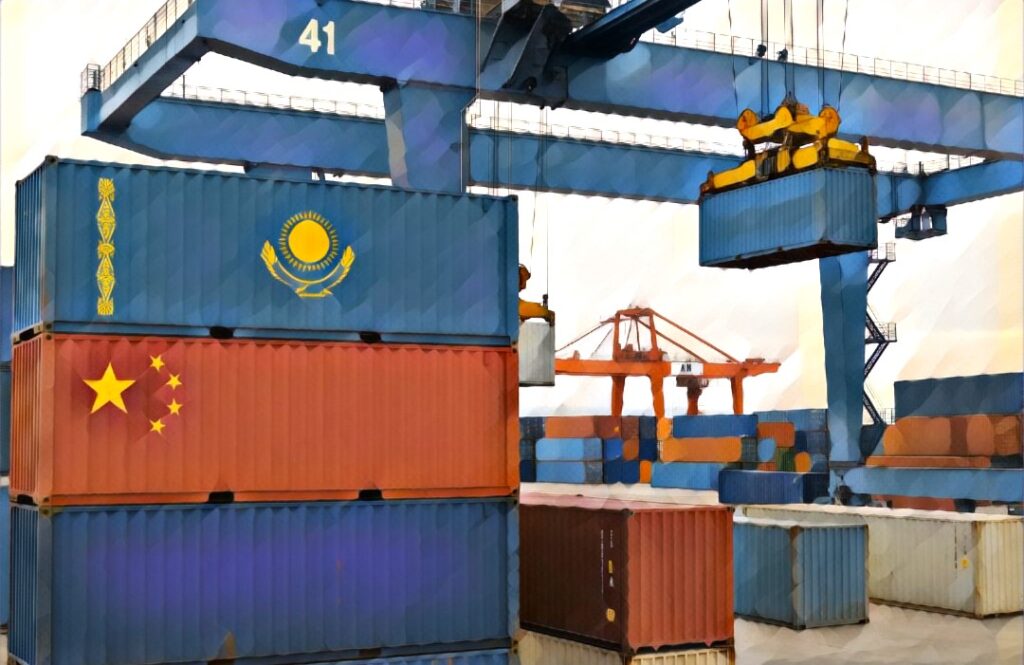
Kazakhstan’s trade deficit with China reached $1.8 billion in the first half of 2025, a sharp increase compared to $400 million for the whole of 2024. According to the Association of Financiers of Kazakhstan (AFK), the growth in trade turnover was driven almost entirely by rising imports of Chinese goods. A review published by AFK noted that Kazakhstan’s trade balance with China has remained in deficit since 2023, with the gap continuing to widen. Despite this, China remains Kazakhstan’s largest trading partner, accounting for more than 20% of the country’s total foreign trade. From January to June 2025, mutual trade between the two countries increased by 5.9% to $14.9 billion. However, Kazakhstan’s exports fell nearly 10%, while imports surged by 22.8%. “The decline in export revenues is mainly due to falling oil and metal prices and weaker demand from China, which increases the vulnerability of Kazakhstan’s export-oriented raw materials model,” AFK experts stated. Imports are expanding in line with rising domestic consumption and the rollout of large-scale infrastructure projects. China’s share of Kazakhstan’s trade turnover rose to 22.6% in the first half of 2025, up from 20.7% a year earlier. The growth was fueled by imports, which increased their share to 28.6% from 23.9%, while exports fell to 17.8% from 18.4%. Kazakhstan did record modest export gains in certain categories, including animal and plant products (+$164 million) and vehicles (+$160 million). These, however, were outweighed by sharp declines in mineral product exports (-$599 million) and metals (-$408 million). Imports from China grew most significantly in vehicles (+$1.2 billion), metals (+$279 million), and chemical products (+$231 million). The increase in vehicle imports was aided by a 14% drop in average car prices from China. Imports of food, furniture, construction materials, and consumer goods also rose. Trade settlements are also shifting. While the dollar remains the dominant contract currency, the yuan is gaining ground in import transactions, with the euro ranking third due to Kazakhstan’s ongoing trade ties with Europe. As a result, Kazakhstan’s trade deficit with China widened to $1.8 billion in January-June 2025, compared to $0.4 billion in the whole of 2024. “Imports are likely to continue to grow amid high consumer and investment demand, while exports will remain dependent on commodity prices and industrial dynamics in China. China is becoming an increasingly pronounced ‘economic magnet’ for Kazakhstan,” the AFK report concluded. As The Times of Central Asia previously reported, Kazakhstan is experiencing a slowdown in manufacturing activity in 2025 following record growth at the end of last year.

UNDP and Eldik Bank Partner to Advance Green Finance in Kyrgyzstan

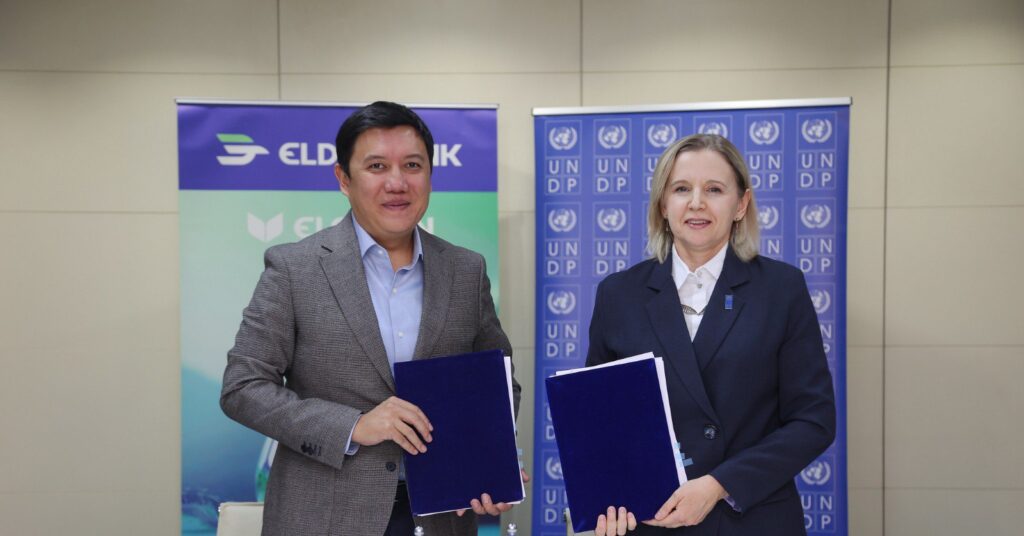
Kyrgyzstan is taking a significant step toward building a greener and more resilient economy. On September 9, state-owned Eldik Bank and the United Nations Development Programme (UNDP) signed a memorandum of understanding to deepen cooperation in sustainable finance. The agreement aims to mobilize climate-related investments, develop sustainable financial products, and integrate Environmental, Social, and Governance (ESG) principles into Kyrgyzstan’s banking sector. It also outlines plans for joint research and knowledge exchange in climate finance, including the creation of tools to assess climate risks in lending operations. This initiative supports Kyrgyzstan’s updated Nationally Determined Contributions (NDC 3.0) under the Paris Agreement, which commit the country to reducing greenhouse gas emissions, expanding renewable energy, and enhancing climate resilience. It also aligns with the National Development Program through 2030, which prioritizes expanding the regulatory framework for green finance. “UNDP supports the development of sustainable finance solutions that reduce the carbon footprint of the economy, enable the green transformation of businesses, and create new opportunities for investment,” said Alexandra Solovieva, UNDP Resident Representative in Kyrgyzstan. For Eldik Bank, the partnership represents more than a financial commitment; it is a strategic step toward becoming a catalyst for climate-conscious economic development. “Together with UNDP, we aim to introduce products that promote green growth and sustainable business development for our clients,” said Ulanbek Nogaev, Chair of the bank’s Management Board. Green finance is gaining traction across Central Asia, a region still heavily reliant on extractive industries but increasingly vulnerable to climate risks such as water scarcity, extreme weather, and glacial melt. Kyrgyzstan’s efforts to empower domestic financial institutions signal that achieving climate goals will require more than policy declarations; it will demand concrete investments and innovation. The Eldik Bank-UNDP partnership also underscores the importance of regional cooperation. Similar initiatives are under discussion in neighboring countries, as Central Asia seeks to attract international capital for renewable energy, sustainable agriculture, and green infrastructure projects. If effectively implemented, Kyrgyzstan’s model could serve as a regional benchmark, demonstrating how national banks can help transform global climate commitments into tangible, growth-oriented outcomes.

Uzbekistan and United States Leaders Discuss Expanding Strategic Partnership

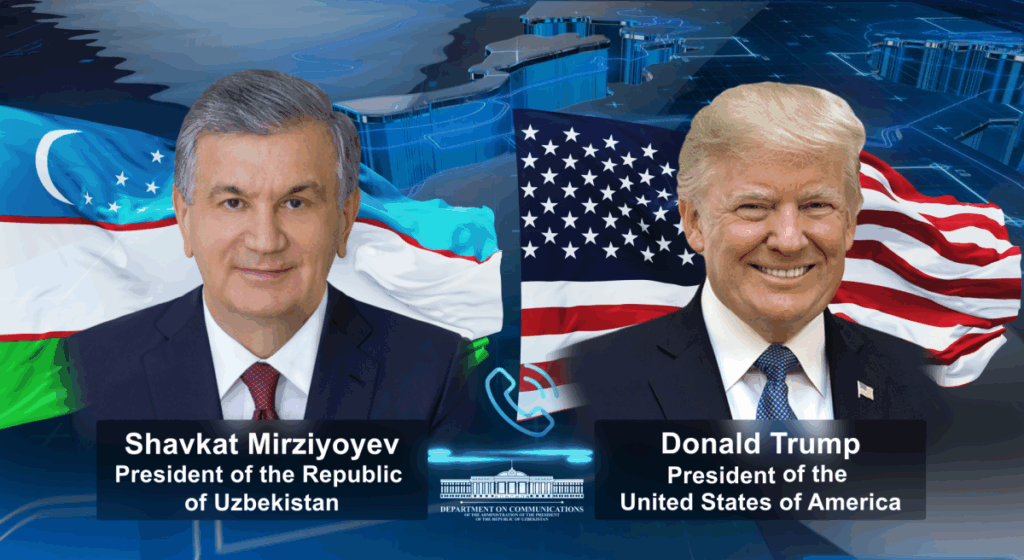
According to the office of President Shavkat Mirziyoyev, the Uzbek and U.S. presidents held a telephone conversation on Friday, focusing on ways to deepen their countries’ strategic partnership across economic, security, and cultural fields. The details of the call were provided by the Uzbek president’s office. Strengthening Economic Ties The presidential office reported that both leaders emphasized opportunities to expand trade and investment. Bilateral trade grew by 15% in 2024, and the two sides signaled interest in building on that momentum. Prospective projects span civil aviation, mineral resources, energy, agriculture, digital technologies, finance, and education. Later this month, meetings are expected between Uzbek representatives and leading U.S. companies to explore long-term cooperation. Security and Regional Cooperation According to the statement, security issues also featured prominently in the conversation. The two presidents noted ongoing joint work against terrorism, extremism, and illegal migration. They also exchanged views on regional cooperation in Central Asia, highlighting the role of the “C5+1” dialogue format that brings together the United States and five Central Asian countries. Cultural and Humanitarian Exchanges The Uzbek president’s office noted that the discussion touched on expanding cultural and educational links. Branches of U.S. universities are operating in Tashkent, providing new opportunities for academic exchange. Looking ahead, the leaders noted with satisfaction that Uzbekistan’s national football team will participate for the first time in the 2026 World Cup, which the United States will be the main host of. A Growing Partnership Since Mirziyoyev assumed the presidency in 2016, Uzbekistan has pursued a more open foreign policy and a program of internal reforms aimed at modernizing the economy and improving governance. These changes have created new opportunities for cooperation with Washington. The United States, for its part, has supported regional initiatives through the C5+1 framework, while also seeking closer ties with Tashkent in areas such as counterterrorism, economic development, and education. American universities and companies have increased their presence in Uzbekistan, and cultural exchanges have expanded steadily in recent years. Next Steps The president’s office stated that President Mirziyoyev invited President Trump to pay an official visit to Uzbekistan. Both leaders agreed to maintain high-level contacts and continue advancing joint projects and programs. According to the Uzbek president’s office, the conversation was held in a constructive and friendly atmosphere, underscoring a shared interest in further strengthening Uzbek-American relations.