• KGS/USD = 0.01144 0%
  • KZT/USD = 0.00204 0%
  • TJS/USD = 0.10394 -0.38%
  • UZS/USD = 0.00008 0%
  • TMT/USD = 0.28571 0%
  • KGS/USD = 0.01144 0%
  • KZT/USD = 0.00204 0%
  • TJS/USD = 0.10394 -0.38%
  • UZS/USD = 0.00008 0%
  • TMT/USD = 0.28571 0%
  • KGS/USD = 0.01144 0%
  • KZT/USD = 0.00204 0%
  • TJS/USD = 0.10394 -0.38%
  • UZS/USD = 0.00008 0%
  • TMT/USD = 0.28571 0%
  • KGS/USD = 0.01144 0%
  • KZT/USD = 0.00204 0%
  • TJS/USD = 0.10394 -0.38%
  • UZS/USD = 0.00008 0%
  • TMT/USD = 0.28571 0%
  • KGS/USD = 0.01144 0%
  • KZT/USD = 0.00204 0%
  • TJS/USD = 0.10394 -0.38%
  • UZS/USD = 0.00008 0%
  • TMT/USD = 0.28571 0%
  • KGS/USD = 0.01144 0%
  • KZT/USD = 0.00204 0%
  • TJS/USD = 0.10394 -0.38%
  • UZS/USD = 0.00008 0%
  • TMT/USD = 0.28571 0%
  • KGS/USD = 0.01144 0%
  • KZT/USD = 0.00204 0%
  • TJS/USD = 0.10394 -0.38%
  • UZS/USD = 0.00008 0%
  • TMT/USD = 0.28571 0%
  • KGS/USD = 0.01144 0%
  • KZT/USD = 0.00204 0%
  • TJS/USD = 0.10394 -0.38%
  • UZS/USD = 0.00008 0%
  • TMT/USD = 0.28571 0%

Viewing results 1 - 6 of 97

Von der Leyen Affirms EU’s Commitment to Uzbekistan

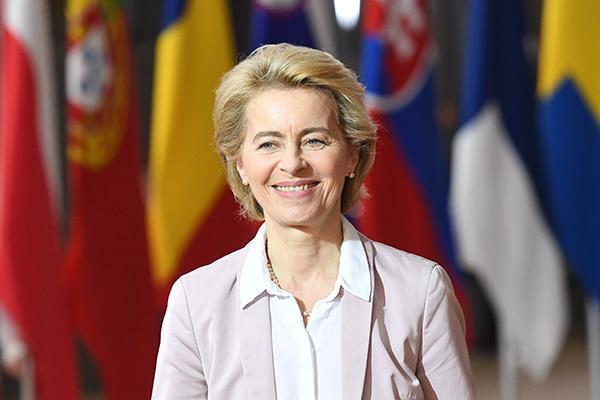
On November 6, the European-Uzbekistan Economic Cooperation Association opened the European Economic Days 2024 in Tashkent. At the ceremony, the President of the European Commission, Ursula von der Leyen, sent a video message to the event participants expressing her support for Uzbekistan’s efforts to restore its central position on Asian and world trade routes. More than 300 representatives from Uzbek and European governments and business sectors participated. Von der Leyen highlighted three main areas of cooperation between the European Union and Uzbekistan, which have grown significantly in recent years. She began by emphasizing Uzbekistan’s historical role as a “beating heart” of global trade. “For centuries, European merchants traveled to Samarkand, Bukhara, and Khiva for clothing and ceramics,” she said, recalling the stories these merchants would bring back of Uzbekistan’s palaces, landscapes, and vibrant culture. She noted that Uzbekistan seeks to open to the world once again. Her first example of collaboration focused on trade: “Since 2021, we opened the European market to Uzbek goods, and exports, especially in textiles and metallurgy, have rapidly increased,” she said, adding that there is still vast growth potential. Von der Leyen then turned to investment, mentioning the EU’s Global Gateway program, which supports Uzbekistan’s goal of global connectivity. She highlighted the EU’s investment of up to 10 billion euros, alongside international partners, in the Trans-Caspian Corridor—the shortest, safest route from Europe to East Asia, connecting Central Asia and Europe in less than 15 days. Additionally, she noted efforts to connect Uzbekistan to the EU satellite network to bring advanced digital communications to even the country’s most remote areas. Her final example centered on expanding EU cooperation in Uzbekistan’s strategic sectors. She referenced an agreement signed in April 2024 to bolster supply chains for critical minerals, a project that aims to create jobs and add value locally. “While some global investors focus solely on raw material extraction, that’s not us,” she emphasized, reaffirming Europe’s commitment to supporting domestic industry, job creation, and value-added production in line with high standards. Concluding her speech, Von der Leyen expressed hope that the forum would establish effective cooperation, new business opportunities, and strong relations between Europe and Uzbekistan. She also announced plans for the first-ever “Central Asia—EU” summit in Samarkand next year, marking another step in the region’s evolving relationship with the EU.
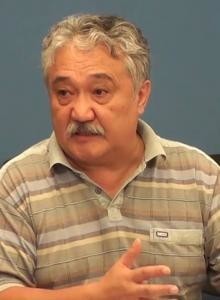
Bakyt Baketayev: Organization of Turkic States Is About Investment, Not Politics

The 11th summit of the Organization of Turkic States (OTS), which includes Kyrgyzstan, Kazakhstan, Uzbekistan, Turkmenistan, Azerbaijan, Turkey, and Hungary (as an observer), was held in Bishkek, Kyrgyzstan's capital. Speaking with The Times of Central Asia, Kyrgyz political analyst Bakyt Baketayev noted that the OTS was initially created on a cultural and linguistic basis. However, the turbulent geopolitical situation in the world gave the organization impetus for its current development. “The catalyst for the development of the OTS was the geopolitical situation and military-political events in the world. At the beginning of the organization's work - in 2009 - the countries worked on cultural programs and common spiritual issues uniting Turkic peoples. Today, the members of the OTS already cooperate at the level of governments, ministries, and agencies and discuss economic issues,” Baketayev said. Baketayev drew attention to the composition of the Organization of Turkic States. It includes countries representing different economic and political associations: NATO (Turkey), the European Union (Hungary), and the EAEU (Kyrgyzstan and Kazakhstan). “We should not expect any big results from the OTS summit. There will be no common political statements - the countries are scattered geographically and have different interests. But from the economic point of view of trade development and investment development, concrete steps are quite possible,” Baketayev said. The analyst is confident that the Organisation of Turkic States will help overcome problems related to hydropower and the lack of water resources in Central Asia. If the heads of state have common economic interests, they will be more likely to reach an agreement.

Kazakhstan and France – Key Take-Aways From Tokayev’s Trip to Paris

As The Times of Central Asia has reported, President Kassym-Jomart Tokayev paid a state visit to Paris, during which he met with his French counterpart and held fruitful talks with representatives of major European companies. After the bilateral talks, Tokayev and French President Emmanuel Macron issued a joint statement. “This visit is significant for us. France is a close and reliable partner of Kazakhstan in the European Union. For 34 years, our relations have acquired a strategic character. Astana and Paris have established a political dialog based on mutual understanding at all levels. Ties in trade and economic, investment, cultural, and humanitarian spheres have been strengthened; a clear legal framework has been formed. Interaction within the framework of international organizations has expanded. I am confident that our partnership, based on unshakable friendship and mutual support, will be successful in the future,” Tokayev said. Both parties stated that they consider it necessary to develop trade and economic cooperation. “Last year, the two countries' trade turnover amounted to $4.2 billion. And this year, we reached this figure in 9 months. France ranks sixth in terms of investment in our country. French companies, including Alstom, Total Energies, Air Liquide, Orano, Vicat, Danone, and Lactalis, have invested heavily in Kazakhstan, reaching about $19.5 billion. Cooperation in the oil and gas, mining, industrial, construction, aviation, engineering, and health care sectors is being strengthened,” the Kazakh president said. In addition, Tokayev met in Paris with a potential supplier of nuclear technology for the construction of nuclear power plants, the CEO of Électricité de France (EDF), Luc Remona. According to the official website of the President of Kazakhstan, Akorda, “The French company is on the short list of potential suppliers of nuclear technology for constructing nuclear power plants. The country is considering the establishment of an international consortium as one of the potential models for the realization of this crucial project.” President Tokayev also participated in an investment roundtable attended by the heads of France's largest companies. “We are pleased to be one of France's main trade, economic, and investment partners in Central Asia. Kazakhstan now accounts for more than 80% of France's trade with the region. This year, bilateral trade volume has increased by 45%,” Tokayev said. The President also outlined promising areas of economic ties for the two countries. “Energy has always been a key sector of our cooperation. Astana is a major supplier of oil and uranium to the European Union and is ready to support France's energy sovereignty further. We expect an intensified presence of French industry in Kazakhstan, with which we associate the introduction of advanced technologies in our production sphere. Given that our country is the largest uranium producer in the world, and France has extensive experience in the nuclear industry, we could cooperate in civilian nuclear energy,” Tokayev stated. Tokayev emphasized that massive international companies are interested in implementing large-scale wind, solar, and hydropower projects in Kazakhstan. For example, Total Energies plans to invest $1.1 billion in a one-gigawatt wind...

Turkey Writes Off All Foreign Debt to Kyrgyzstan

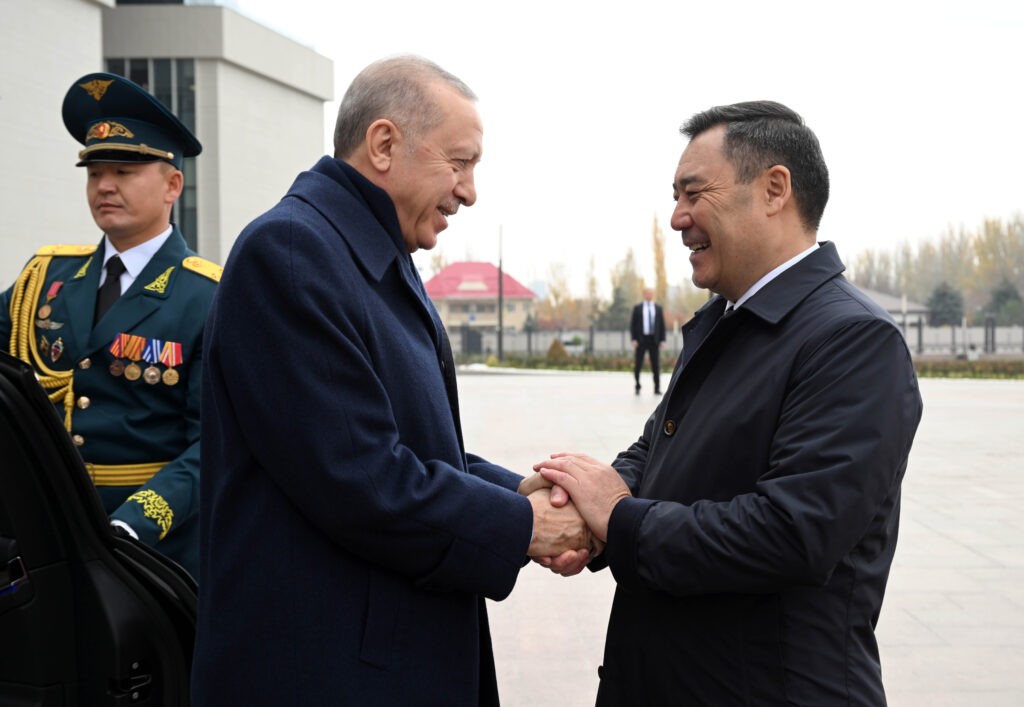
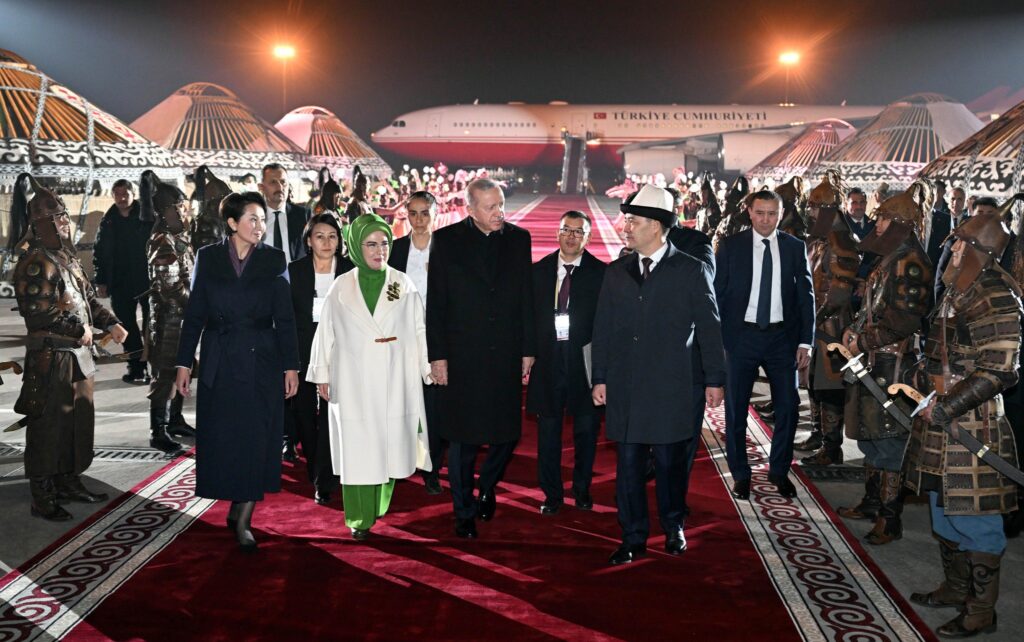
Turkish President Recep Tayyip Erdogan has held talks with Kyrgyz President Sadyr Japarov during his state visit to Bishkek. It has became known that Turkey has decided to write off Kyrgyzstan's remaining debt, which amounted to $58.9 million. “I express my sincere gratitude to President Erdogan for the decision to write off the debt,” Japarov said at a joint press conference. He also asked the Turkish side to consider customs privileges for Kyrgyz suppliers and to involve Turkish companies in constructing small—and medium-sized hydroelectric power plants in Kyrgyzstan. Erdogan said the talks resulted in the signing of 19 documents on cooperation, including in trade. “We discussed steps to increase trade turnover between our countries from $2 billion to $5 billion. Turkish construction companies have implemented more than 90 projects here with a total value of about $1 billion,” he said. This is not the first time Turkey has forgiven Kyrgyzstan's debt. In 2011 Ankara wrote off $51m of the country's foreign debt, accrued over the previous 15 years. According to the Kyrgyz Finance Ministry, by August 2024, the country's total foreign debt amounted to $4.6 billion. Erdogan is on a state visit to Kyrgyzstan from November 4-6.

Kyrgyzstan Backs Turkish Arms Embargo Against Israel

The Turkish authorities have sent a letter to the UN on behalf of 52 countries calling for an arms embargo against Israel in response to the ongoing war in Gaza and Lebanon, Turkish media has reported. In the letter, the Turkish authorities call the "staggering" civilian death toll "unconscionable and intolerable." In response to the letter, Turkish Ambassador to the UN, Danny Danon stated in uncompromising terms, "What else can be expected from a country whose actions are driven by malice in an attempt to create conflicts with the support of the 'Axis of Evil' countries?" Turkish President Recep Tayyip Erdogan arrived in Bishkek on November 4. During the visit, the Turkish leader will hold talks with the president of Kyrgyzstan and participate in the 11th Summit of the Council of Heads of State of the Organization of Turkic States. Following the summit, several bilateral documents will be signed to expand strategic cooperation between the countries. On the eve of Erdogan's visit, Kyrgyzstan backed the Turkish resolution in the UN. The authorities in Turkey have stated that with its military actions against Palestine and Lebanon, Israel has brought the entire region to the brink of a full-scale war. “This is necessary to end Israel's illegal occupation, to prevent further violations against civilians in the Gaza Strip and the rest of the occupied Palestinian territory, as well as in Lebanon, and to prevent further regional escalation,” Turkey's permanent representative to the UN, Ahmet Yildiz stated. The Turkish letter was signed by 52 states, including Russia, Kazakhstan, and China, whilst the Arab League, and the Organization of Islamic Cooperation are also signatories. Kyrgyzstan, along with other Central Asian states, usually adheres to strict diplomatic neutrality regarding the Middle East conflict.

Authorities Rail Against Use of Kazakhstan in Circumventing International Sanctions Against Russia

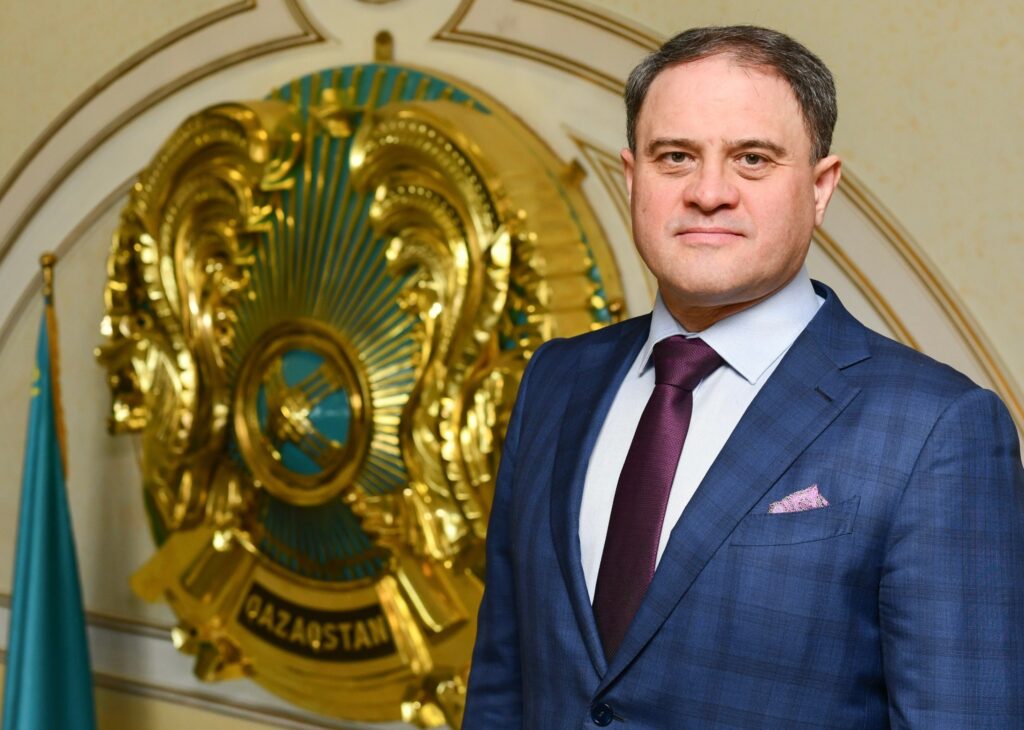
Kazakhstan's Deputy Foreign Minister Roman Vassilenko emphasized in an interview with the Polish publication PAP that the country seeks to prevent its territory from being used to circumvent international sanctions imposed against Russia. According to Vassilenko, although Kazakhstan has not officially imposed sanctions nor joined the anti-Russian measures, the republic's authorities consider it essential to prevent risks associated with possible secondary sanctions against its companies. This is especially important in regard to its close economic ties with Western countries. At the same time and in acknowledgement of its position concerning both its Western partners and Russia, Kazakhstan has emphasized the need for  balance and an avoidance of circumvention of restrictive measures. Vassilenko also noted that Kazakhstan is actively cooperating with the European Union on the sanctions regime, and as part of  these consultations, reported that he had been in dialog with David O'Sullivan, the EU special envoy for sanctions. Vassilenko denied speculation about growing tensions between Kazakhstan and Russia, and pointing out that the countries maintain close ties, explained: “There are different issues because we are neighbors and have diverse relations. We are working with Russia to solve these issues before they become problems. This is our approach not only to the Russian Federation but to any other country." After the start of the Russian military operation in Ukraine, Kazakhstan took a neutral stance and did not support Western sanctions against Moscow. Nevertheless, the Kazakh authorities have repeatedly stated that they will not allow the country's territory to be used to circumvent these restrictions. President Kasym-Jomart Tokayev, in his speeches, adheres to the principle of compliance with the international sanctions regime and aims to conduct a constructive dialog with the EU and the U.S. to  avoid possible secondary sanctions that could affect Kazakh companies.