• KZT/USD = 0.00220
  • TJS/USD = 0.10800
  • UZS/USD = 0.00009
  • TMT/USD = 0.29850
  • KZT/USD = 0.00220
  • TJS/USD = 0.10800
  • UZS/USD = 0.00009
  • TMT/USD = 0.29850
  • KZT/USD = 0.00220
  • TJS/USD = 0.10800
  • UZS/USD = 0.00009
  • TMT/USD = 0.29850
  • KZT/USD = 0.00220
  • TJS/USD = 0.10800
  • UZS/USD = 0.00009
  • TMT/USD = 0.29850
  • KZT/USD = 0.00220
  • TJS/USD = 0.10800
  • UZS/USD = 0.00009
  • TMT/USD = 0.29850
  • KZT/USD = 0.00220
  • TJS/USD = 0.10800
  • UZS/USD = 0.00009
  • TMT/USD = 0.29850
  • KZT/USD = 0.00220
  • TJS/USD = 0.10800
  • UZS/USD = 0.00009
  • TMT/USD = 0.29850
  • KZT/USD = 0.00220
  • TJS/USD = 0.10800
  • UZS/USD = 0.00009
  • TMT/USD = 0.29850
08 September 2026

Viewing results 1 - 6 of 118

Uzbekistan Raises Concerns Over Mistreatment of Citizens During Russian Raids

Uzbekistan has expressed serious concern over the reported mistreatment of its citizens during recent police raids in Russia. On June 10, Uzbekistan’s Ministry of Foreign Affairs held a scheduled meeting with Russian officials to discuss migration issues. A ministry spokesperson stated that the Uzbek side raised alarm over reports of disrespectful and aggressive behavior toward its nationals during identity checks. “In several instances, our citizens have faced unauthorized inspections and mistreatment,” the ministry said. “Such actions do not correspond to the friendly relations between our countries. We believe that concrete measures must be taken to prevent such incidents.” The ministry emphasized that safeguarding the rights and interests of Uzbek citizens abroad remains a priority. It urged Russian authorities to treat migrants with dignity and adhere to international human rights standards. The concerns follow a large-scale raid on June 8 in Moscow’s Strogino district, where Russian law enforcement reportedly targeted a dormitory housing migrants from other Eurasian countries. The building is located near a facility belonging to the Russian Defense Ministry, according to the Russian Telegram channel Baza. During the operation, members of OMON, Russia’s special police forces under the National Guard, were seen using excessive force. Videos, some filmed by the officers themselves, show migrants being forcibly removed from their rooms, insulted, beaten, and in some instances, shocked with electric devices. The nationalities of those affected have not been confirmed. In a separate incident in St. Petersburg, approximately 200 individuals were reportedly left to sleep outdoors overnight following a similar raid. In response to these events, the Uzbek embassy in Moscow submitted an official note to the Russian Ministry of Foreign Affairs, requesting an explanation and a legal assessment of the law enforcement actions. The embassy described the incidents as unacceptable and called on Russian authorities to uphold the dignity of Uzbek nationals. Uzbekistan’s Migration Agency also issued a statement affirming it was closely monitoring the situation. It confirmed that five or six individuals with documentation issues had been detained for further investigation. The Foreign Ministry said it would continue to track developments and take further action if necessary. Uzbek authorities have encouraged citizens affected by these events to contact their nearest consulate or the Migration Agency's office in Russia.

Russian-Kyrgyz Development Fund Approves New Projects for 2025

The Russian-Kyrgyz Development Fund (RKDF) has approved a $150 million budget to support Kyrgyzstan’s economy in 2025, with six new projects already greenlit for more than $95 million in financing. According to Artem Novikov, Chairman of the RKDF Board, the newly approved initiatives include industrial cooperation with the national railway company, Kyrgyz Temir Jolu, support for the domestic sugar industry, and the implementation of new trade financing mechanisms to enhance trade turnover between Kyrgyzstan and Russia. Kyrgyzstan’s Minister of Economy and Commerce, Bakyt Sydykov, underscored the strategic role of the RKDF, calling it a key tool in the country’s economic development. “The RKDF remains Kyrgyzstan’s key partner in financing strategically important projects,” he said. Sydykov also highlighted Kyrgyzstan’s recent industrial growth. In 2024, the country opened 102 new industrial enterprises, with plans to launch an additional 128 facilities this year. The RKDF was established in 2014 by the governments of Kyrgyzstan and Russia to promote bilateral economic cooperation, modernize Kyrgyzstan’s economy, and capitalize on opportunities offered by regional integration within the Eurasian Economic Union (EAEU), which includes Armenia, Belarus, Kazakhstan, Kyrgyzstan, and Russia. In a related development, the Azerbaijan-Kyrgyz Development Fund (AKDF) recently approved financing for two projects in Kyrgyzstan: the construction of a 9 MW small hydroelectric power plant and a modern sewing factory expected to create 300 jobs.

Ukraine Appoints New Ambassador to Türkiye, Born in Uzbekistan

Ukrainian President Volodymyr Zelensky has appointed Nariman Dzhelal as Ukraine’s new ambassador to Türkiye, according to RBC-Ukraine. The appointment was formalized in a presidential decree signed earlier this month, the president’s press service reported. Dzhelal, a Crimean Tatar politician, journalist, and human rights advocate was born on April 27, 1980, in Navoi, Uzbekistan. His family returned to Crimea in 1989. According to Ukrainian media, Dzhelal graduated from the Political Science Department at Odesa National University. He began his career as a journalist at Avdet, a Crimean Tatar newspaper, and later worked for the ATR television channel. He also taught history and law at an international school in Simferopol. Dzhelal entered politics in 2013 when he was elected first deputy chairman of the Mejlis, the representative body of the Crimean Tatar people. Following Russia’s annexation of Crimea in 2014, Dzhelal remained in the region, where he continued to advocate for the rights of Crimean Tatars and Ukrainians. He monitored human rights abuses and participated in trials widely regarded as politically motivated. In 2021, after attending the inaugural Crimea Platform summit, Dzhelal was detained by the Russian security services and accused of sabotage. In 2022, he was sentenced to 17 years in prison. Ukrainian authorities confirmed that he was released in a prisoner exchange in June 2024 and returned to Ukraine. Dzhelal’s appointment to the post in Ankara underscores Türkiye’s pivotal role in Ukraine’s diplomatic strategy.

Uzbekistan and Russia Hold First Meeting on Labor Migration and Migrant Rights

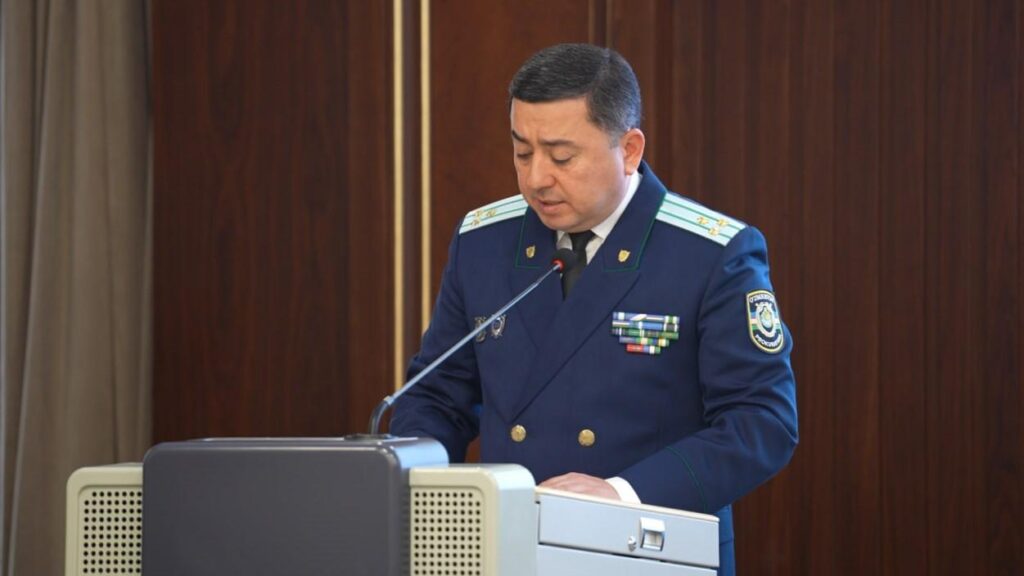
On April 29, an interagency delegation from Uzbekistan visited Moscow for the inaugural session of the Uzbekistan–Russia working group on labor migration and migrant rights. The Prosecutor General’s Office of Uzbekistan reported that the delegation was led by Uzbekistan’s Deputy Prosecutor General Shohrukh Aminov. The Russian delegation was headed by Deputy Prosecutor General Pyotr Gorodov and included representatives from the Prosecutor General’s Office, the Federal Security Service, and the Ministries of Foreign Affairs and Internal Affairs. Uzbekistan’s delegation comprised officials from the Prosecutor General’s Office, the State Security Service, the Migration Agency, and the Ministries of Foreign Affairs, Internal Affairs, and Health. During the meeting, the two sides discussed the current state of labor migration, identified ongoing challenges, and explored potential solutions. They agreed to develop joint measures to regulate legal migration while balancing the interests of both countries. The delegations also agreed to strengthen oversight of the rights of Uzbek citizens working in Russia and Russian citizens visiting Uzbekistan. Both countries’ Prosecutor General’s Offices pledged to closely monitor the protection of migrant rights. At the conclusion of the meeting, a protocol was signed outlining the decisions made. The implementation of these agreements will be jointly monitored by both Prosecutor General’s Offices. The session followed Russian Foreign Minister Sergey Lavrov’s recent visit to Uzbekistan, during which he stressed the importance of migrants understanding Russian laws and language. While warning of an increase in migrant-related crime, he also acknowledged Russia’s ongoing need for foreign labor.

China and Central Asia Deepen Ties at Almaty Foreign Ministers’ Meeting

The sixth meeting of foreign ministers in the “Central Asia-China” format was held in Almaty, attended by the foreign ministers of Kazakhstan (Murat Nurtleu), China (Wang Yi), Kyrgyzstan (Jeenbek Kulubaev), Tajikistan (Sirojiddin Muhriddin), Uzbekistan (Bakhtiyor Saidov), and a representative of Turkmenistan.  The main topics of discussion included strengthening political dialogue, expanding trade and economic ties, enhancing transport interconnectivity, and jointly countering global challenges. The ministers also addressed sustainable development and environmental security, outlining steps to improve the architecture of multilateral cooperation based on the principles of equality and mutual respect. A key item on the agenda was preparation for the second China-Central Asia Summit scheduled for this year. The foreign ministers engaged in in-depth political coordination and exchanged views on expanding cooperation across various fields. Challenges of Globalization and China's Position Chinese Foreign Minister Wang Yi expressed concern over growing trends of anti-globalization and protectionism. He criticized the United States for launching a “tariff war” against more than 180 countries, stating that it had undermined international trade rules and the stability of the world economy.  "China will consistently promote a high degree of openness, share opportunities with the world, and take responsibility for upholding international norms," Wang Yi emphasized. China proposed five areas for deepening cooperation with Central Asia: building political trust, promoting trade and investment, improving cooperation mechanisms, jointly celebrating historical anniversaries, and developing humanitarian ties. Positions of the Central Asian Countries The Central Asian foreign ministers highly supported China's proposal to build a "community of common destiny" and expressed intentions to intensify joint efforts under the Belt and Road Initiative. Particular attention was paid to facilitating trade, enhancing transportation connectivity, boosting industrial investment, and promoting agricultural development. The ministers reaffirmed their commitment to combating the "three forces of evil", terrorism, extremism, and separatism and to strengthening cooperation within the United Nations framework. A joint communiqué was adopted following the meeting, reaffirming the parties' commitment to good-neighborliness, sustainable development, and deepening partnership.  Kazakhstan at the Center of Integration Processes Kazakhstan’s Foreign Minister Murat Nurtleu highlighted that the leaders of Central Asian countries had set clear guidelines for cooperation in trade, energy, transport logistics, education, and science.  "In 2024, trade turnover between Central Asia and China reached a record $95 billion, with Kazakhstan accounting for 46% of that total," Nurtleu said. He noted that combining the region’s potential with China’s economic opportunities paves the way for a new architecture of strategic partnership. Plans to launch tourist railway routes between China and Central Asian countries were also discussed, and 2025 was declared the Year of Tourism of Uzbekistan in China. Bilateral Meetings on the Margins of the Event On the sidelines of the forum, Wang Yi held separate meetings with his counterparts from Kyrgyzstan, Tajikistan, and Uzbekistan.  With Kyrgyz Foreign Minister Jeenbek Kulubaev, Wang discussed expanding practical cooperation and accelerating the China-Kyrgyzstan-Uzbekistan railway project. Talks with Tajik Foreign Minister Sirojiddin Muhriddin focused on strengthening strategic partnership and promoting initiatives within the Belt and Road framework. With Uzbek Foreign Minister Bakhtiyor Saidov,...

Lavrov in Uzbekistan: Criticism, Controversy, and Clashing Narratives

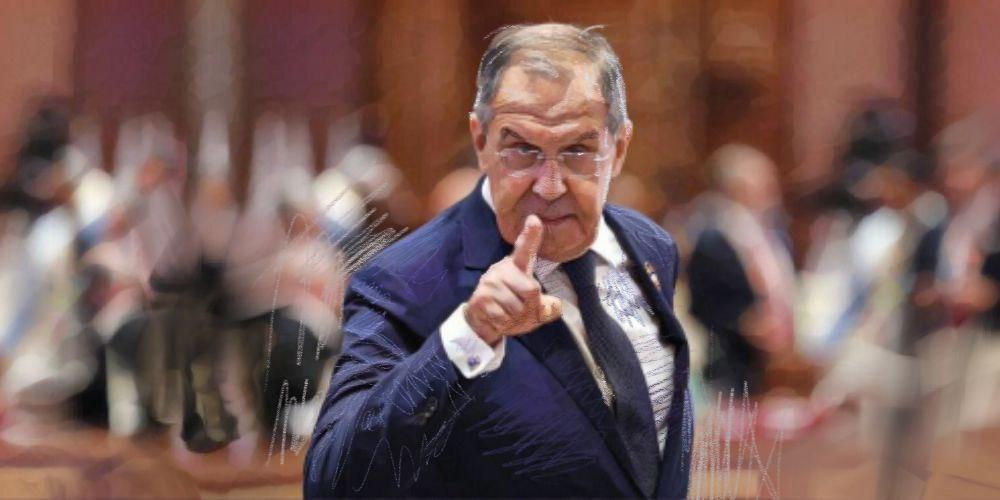
Russian Foreign Minister Sergey Lavrov’s official visit to Uzbekistan this week has triggered significant public and political responses, particularly after remarks he made during a visit to the Motamsaro Ona (Grieving Mother) memorial in Samarkand. While at the memorial, which honors Uzbek soldiers who died during World War II and features inscriptions in Uzbek and English, Lavrov pointed out the absence of a Russian-language text. “There is an inscription in English, but I didn’t see one in Russian. A mother is the most sacred figure,” Lavrov reportedly told his tour guide, according to TASS. Uzbekistan’s Foreign Minister Bakhtiyor Saidov was present during the exchange. Photographs released by the Russian Foreign Ministry show Lavrov laying flowers at the site, accompanied by an honor guard. Lavrov was in Uzbekistan for a two-day official visit. On April 23, he met with President Shavkat Mirziyoyev to discuss bilateral ties and regional cooperation, including trade, energy, and security issues. [caption id="attachment_31165" align="aligncenter" width="1280"] Sergey Lavrov lays flowers at the Grieving Mother memorial in Samarkand; image: MFA Russia[/caption] Domestic Responses to Lavrov’s Remarks Lavrov’s observation about the memorial sparked criticism from several Uzbek public figures. Alisher Qodirov, a member of parliament and leader of the Milliy Tiklanish (National Revival) party, stated that “Russian politicians seem to be trying every possible way to portray Uzbekistan as disrespectful to Russian language and culture... Lavrov surely understands that forced respect and invented needs only create the opposite effect.” Sherzodkhon Qudratkhodja, rector of the University of Journalism and Mass Communications of Uzbekistan, was similarly outspoken. “It is inappropriate for a Foreign Minister from another country to come here and criticize us,” he said. “After all, we are not their colony.” Qudratkhodja further criticized Russia’s treatment of Uzbek labor migrants. “Why are our migrants in Russia discriminated against? Why do Russian officials remain silent when local authorities, migration services, or police violate their basic human rights?” he asked. “If Mr. Lavrov wants to speak about sacred symbols like mothers, Uzbekistan can remind him that human rights are sacred, too.” Mutual Recriminations and Educational Policy Lavrov also addressed Uzbekistan’s engagement with the EU, prompting a further response from Qudratkhodja. “No one has the right to interfere in Uzbekistan’s internal affairs,” he said. “This includes independently determining our level of relations with the European Union. It demonstrates our state’s multi-vector foreign policy.” Coinciding with Lavrov’s visit, Uzbekistan’s Ministry of Preschool and School Education introduced a new requirement: all graduating students, including those from non-Uzbek-language schools, must now pass an exam in the Uzbek state language, a move widely viewed as part of broader efforts to reinforce national identity. At a joint press conference, Lavrov emphasized the closeness of Uzbekistan-Russia relations. “You feel this closeness when you are here, not only at the official level but also at the human level,” he said. Foreign Minister, Saidov responded by underscoring Uzbekistan’s balanced diplomacy: “Our country does not compare friends. We are close to all our strategic partners and friendly countries.” Labor Migration and Energy Cooperation...