• KZT/USD = 0.00220
  • TJS/USD = 0.10800
  • UZS/USD = 0.00009
  • TMT/USD = 0.29850
  • KZT/USD = 0.00220
  • TJS/USD = 0.10800
  • UZS/USD = 0.00009
  • TMT/USD = 0.29850
  • KZT/USD = 0.00220
  • TJS/USD = 0.10800
  • UZS/USD = 0.00009
  • TMT/USD = 0.29850
  • KZT/USD = 0.00220
  • TJS/USD = 0.10800
  • UZS/USD = 0.00009
  • TMT/USD = 0.29850
  • KZT/USD = 0.00220
  • TJS/USD = 0.10800
  • UZS/USD = 0.00009
  • TMT/USD = 0.29850
  • KZT/USD = 0.00220
  • TJS/USD = 0.10800
  • UZS/USD = 0.00009
  • TMT/USD = 0.29850
  • KZT/USD = 0.00220
  • TJS/USD = 0.10800
  • UZS/USD = 0.00009
  • TMT/USD = 0.29850
  • KZT/USD = 0.00220
  • TJS/USD = 0.10800
  • UZS/USD = 0.00009
  • TMT/USD = 0.29850
08 September 2026

Viewing results 1 - 6 of 118

Turkmenistan Steps into the Spotlight with Regional Diplomacy and Economic Reforms

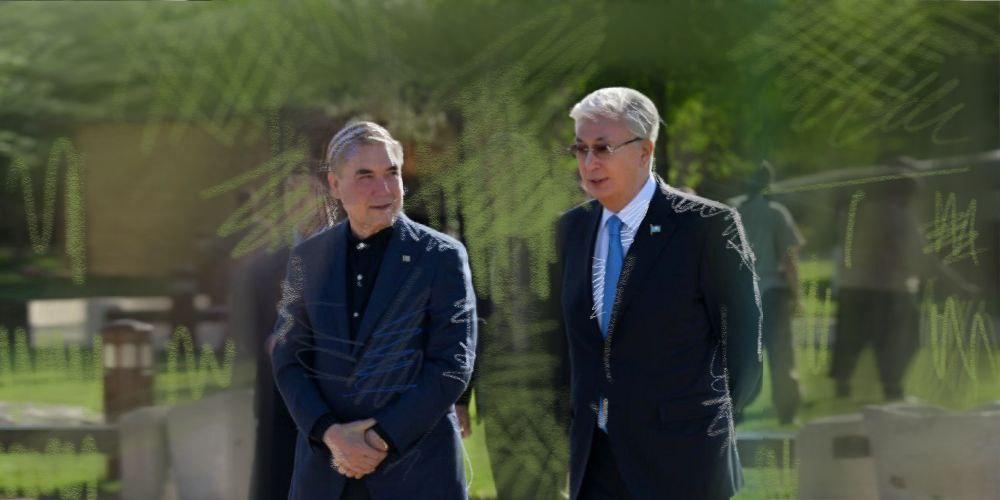
Long known for its isolationist policies, Turkmenistan is gradually opening up to the international community through significant economic and diplomatic initiatives. Recent efforts include diversifying its natural gas exports, engaging in regional infrastructure projects such as the TAPI gas pipeline, and expanding trade partnerships. Additionally, the government has taken steps toward modernization and economic reforms to attract foreign investment, signaling a shift towards enhanced regional cooperation and global integration. This week, these initiatives gathered pace, as Chairman of the Halk Maslahaty of Turkmenistan, Gurbanguly Berdimuhamedov, continued his diplomatic tour of Central Asia with official visits to Kazakhstan and Kyrgyzstan. Berdimuhamedov's meetings focused on strengthening strategic partnerships, expanding trade and economic cooperation, and deepening cultural dialogue. Visit to Kazakhstan: Cultural Diplomacy and Strategic Cooperation On April 21, Berdimuhamedov arrived in the city of Turkestan, where he was welcomed by Kazakh President Kassym-Jomart Tokayev. The leaders held an informal meeting and visited key cultural and infrastructure sites, including the mausoleum of Khoja Ahmed Yassawi, a UNESCO World Heritage Site considered a spiritual center of the Turkic world. The tour also included the “Ethnoaul” ethnographic complex, the Turkistan Visit Centre, and an inspection of ongoing archaeological and restoration work at the ancient settlement of Kultobe. At the SPK Turkistan industrial park, they reviewed six investment projects worth a total of 36.5 billion tenge, encompassing production from tractors to medical equipment, with future expansion plans involving 112 facilities​. During the meeting, Tokayev highlighted growing bilateral ties and discussed joint initiatives in energy, transport, and digitalization. Tokayev reaffirmed Kazakhstan’s interest in participating in the development of Turkmenistan’s Galkynysh gas field and regional infrastructure projects, including the Turgundi-Herat-Kandahar-Spin Buldak railway and various transit highways connecting the two nations. Tokayev also offered support in digital governance and IT training, aligning with broader goals of regional modernization. Speaking to Toppress.kz, political analyst Tair Nigmanov interpreted Berdimuhamedov’s regional tour as a sign of Turkmenistan’s gradual emergence from diplomatic isolation. Nigmanov emphasized the symbolic significance of Turkestan, which Kazakhstan is positioning as a regional diplomatic hub for the Turkic world. Visit to Kyrgyzstan: Tradition and Informal Diplomacy On April 22, Berdimuhamedov arrived in Kyrgyzstan, where he was met at Issyk-Kul Airport by President Sadyr Japarov, who personally drove his guest along the visit route, a gesture that drew public attention. The leaders toured the Rukh-Ordo cultural center in Cholpon-Ata, and held informal discussions. During the visit, Japarov gifted a komuz, a traditional Kyrgyz string instrument, and invited Berdimuhamedov to sample the national kuurma tea. Talks on April 23 focused on enhancing bilateral relations. President Japarov praised the “centuries-old friendship” between the two nations and proposed establishing a Kyrgyz-Turkmen Development Fund, modeled on similar funds with Russia, Hungary, and Uzbekistan. Berdimuhamedov responded positively, expressing a desire to expand cooperation in trade, energy, education, and cultural exchange. Next Stop: Uzbekistan Berdimuhamedov is scheduled to visit Uzbekistan on April 23-24 at the invitation of President Shavkat Mirziyoyev. The agenda includes political, economic, and transportation cooperation, continuing the regional outreach and reinforcing Turkmenistan’s strategic...
Kyrgyz Prime Minister Kasymaliev in Washington for IMF, World Bank Meetings

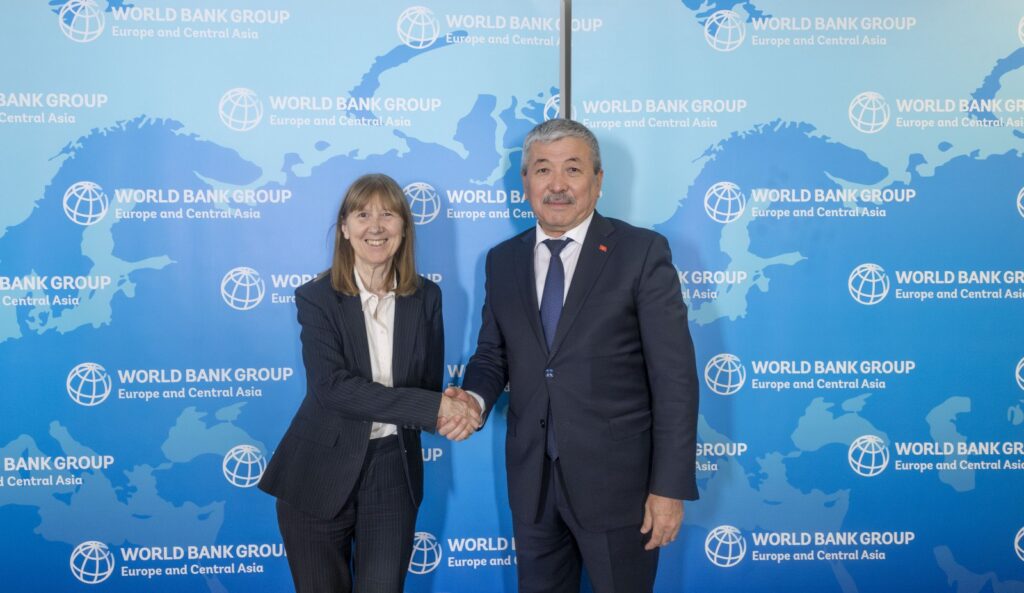
Kyrgyz Prime Minister Adylbek Kasymaliev has arrived in Washington, D.C. to participate in the Spring Meetings of the International Monetary Fund (IMF) and World Bank Group. During his visit, Kasymaliev is expected to meet with senior World Bank officials to discuss ongoing and future investment projects in Kyrgyzstan. Following the IMF and World Bank sessions, Kasymaliev is scheduled to hold high-level talks with Anna Bjerde, the World Bank’s Managing Director for Operations, and Antonella Bassani, Vice President for Europe and Central Asia. A key item on the agenda will be the planned construction of the Kambarata-1 Hydropower Plant (HPP) on the Naryn River. The Kyrgyz government hopes to secure an interest-free loan of $500 million from the World Bank to support the project, which is estimated to cost $3.6 billion in total. Kambarata-1 is seen as a strategic initiative that could make Kyrgyzstan fully self-sufficient in electricity generation. To date, approximately 4 billion Kyrgyz soms (about $46 million) have been allocated from the state budget for preliminary construction works. These funds are being used to build vital infrastructure including roads, a transportation tunnel, a bridge over the Naryn River, power lines, and temporary housing for workers. In addition to his meetings with international financial institutions, Kasymaliev will also engage with executives from leading U.S. corporations. These discussions will not only cover the hydropower sector but will also highlight other government-led investment opportunities in Kyrgyzstan across various industries. The Kyrgyz leadership has intensified efforts to attract foreign partners for its infrastructure and energy projects, as part of a broader strategy to enhance economic independence and modernize the national energy grid.

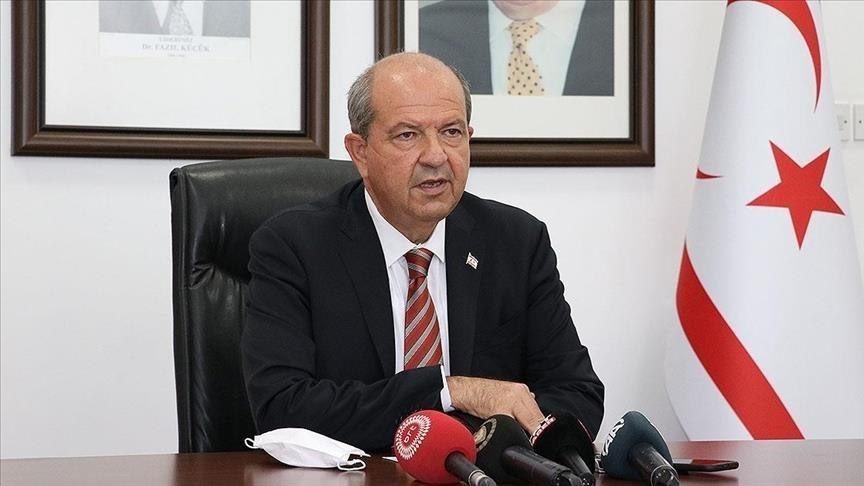
TRNC President Urges Central Asia to Tread Carefully on Cyprus in EU Deals

Ersin Tatar, President of the Turkish Republic of Northern Cyprus (TRNC), has urged Central Asian nations to exercise caution in their dealings with the European Union, particularly regarding the Cyprus issue. His remarks were reported by Anadolu Agency during a recent meeting with representatives of the Association of Turkish Travel Agencies (TÜRSAB). Tatar acknowledged that it is “understandable” for Central Asian countries to cooperate with the EU in pursuit of their national interests. “These countries have various projects and partnerships with the EU, especially in trade and development. That’s normal,” he said. “But I believe the Turkish states should be more careful in their relations with the Greek Cypriot side.” Turkic Solidarity and the Role of TRNC Highlighting the cultural and linguistic connections among Turkic nations, Tatar highlighted the importance of maintaining solidarity within the Organization of Turkic States (OTS), where the TRNC has held observer status since 2022. “The TRNC values its growing relationship with member states such as Kazakhstan, Uzbekistan, Kyrgyzstan, and Turkmenistan,” he said. Tatar expressed concern that recent EU overtures toward Central Asia could be aimed at limiting the TRNC’s engagement in the Turkic bloc. “The EU, which showed little interest in the region before, is now making deals. This raises questions,” he noted. Cyprus Issue and EU Documents Reaffirming the Turkish Cypriot stance on the Cyprus issue, Tatar reiterated support for a two-state solution and called on Turkic nations to extend the same diplomatic openness to Northern Cyprus as they do to the internationally recognized Greek Cypriot administration. “Our expectation is that they treat us with the same openness they show to the Greek Cypriots,” he said, warning that EU documents may contain references to UN resolutions on Cyprus that could be misinterpreted. “Do they really know what those articles mean and what consequences they might have?” he asked. Central Asia-EU Relations on the Rise Tatar’s comments follow the recent EU-Central Asia Summit in Samarkand, held on April 3-4, which marked a new chapter in regional cooperation. The summit culminated in the signing of the Samarkand Declaration, underscoring the intent to build a strategic partnership between the two regions. “Over the past seven years, the trade turnover between Central Asian countries and the EU has quadrupled, amounting to 54 billion euros,” said Uzbek President Shavkat Mirziyoyev in remarks to Euronews. European Commission President Ursula von der Leyen also welcomed the shift, stating, “The EU and Central Asia are becoming closer partners, and this summit marks the beginning of a new phase in our cooperation.”

Russian Foreign Minister Sergey Lavrov: Kazakhstan Is Our Ally and Partner

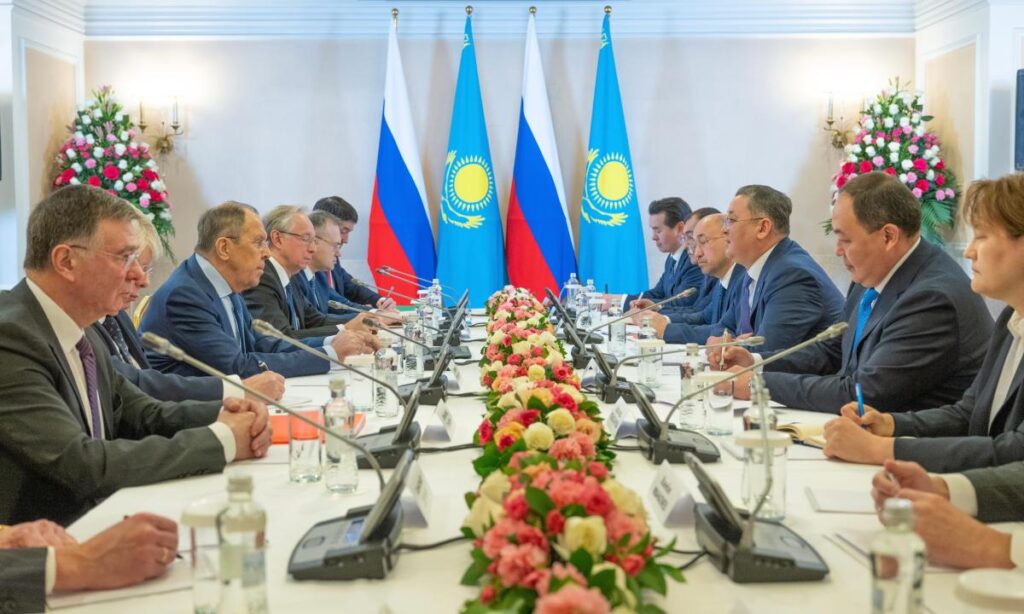
Russian Foreign Minister Sergey Lavrov arrived in Almaty this week to participate in two significant diplomatic events: a meeting of the CIS Council of Foreign Ministers and the eighth gathering of foreign ministers from Russia and Central Asia. On April 10, Lavrov held a bilateral meeting with Kazakh Foreign Minister Murat Nurtleu, during which both sides reviewed the implementation of earlier high-level agreements and discussed expanding cooperation in political, economic, and humanitarian spheres. “Maintaining the high dynamics of political dialogue and the consistent implementation of the agreements reached remain priorities in our bilateral cooperation. This is the direction set by our presidents,” Nurtleu stated. Lavrov, for his part, emphasized the depth of the strategic partnership between the two countries: “Kazakhstan is our reliable ally and neighbor. We traditionally support each other both at the bilateral level and on the international stage.” The foreign ministers also gave particular attention to strengthening trade and economic ties. On April 11, Lavrov will participate in a CIS Council of Foreign Ministers meeting. According to Russian Foreign Ministry Spokeswoman Maria Zakharova, the ministers will discuss major international and regional issues, including preparations for the 80th anniversary of Victory in the Great Patriotic War, and matters related to cultural and humanitarian cooperation, as well as border security. Later that day, Lavrov is expected to take part in the eighth meeting of foreign ministers of Russia and Central Asian states, Kazakhstan, Kyrgyzstan, Tajikistan, Turkmenistan, and Uzbekistan. The agenda includes political and economic priorities, joint humanitarian initiatives, and measures aimed at enhancing regional stability. Discussions will also focus on global challenges, particularly the coordination of security efforts in Central Asia. Lavrov's last visit to Kazakhstan was in November 2024, as part of preparations for President Vladimir Putin’s official visit to the country. Earlier, in 2023, Foreign Minister Nurtleu had met Lavrov in Moscow, highlighting the ongoing diplomatic engagement between the two nations.

Tajikistan to Modernize Energy, Cotton, and Education Sectors with EU Grants

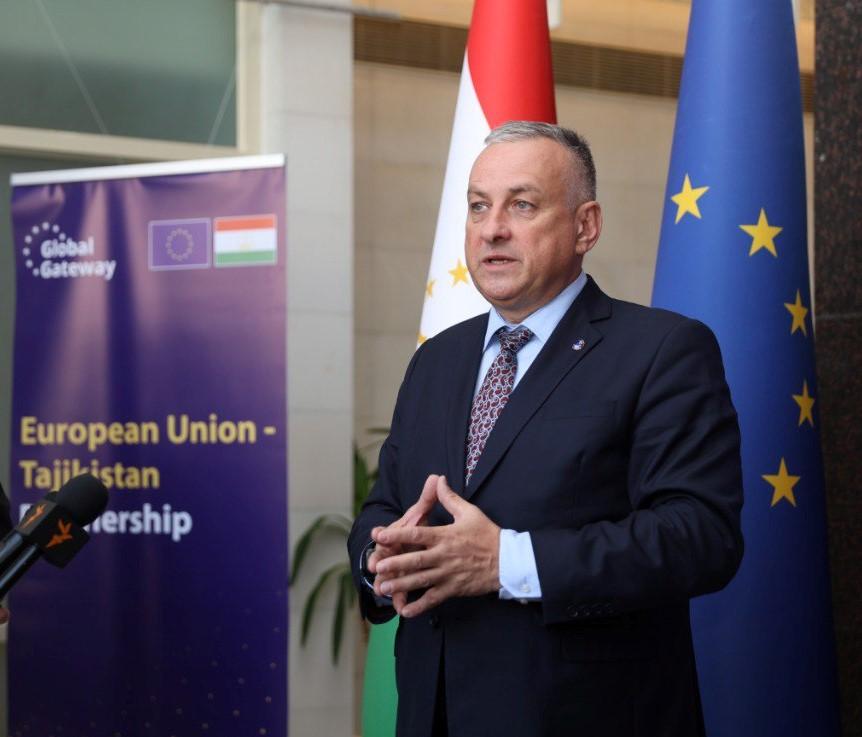
On March 14, European Commissioner for International Partnerships Jozef Síkela arrived in Tajikistan. He met with President Emomali Rahmon to reaffirm the European Union’s commitment to the country through the EU’s Global Gateway initiative​. During their meeting, Síkela and Rahmon discussed the state and future of EU-Tajikistan relations, as well as pressing regional issues. Their talks focused on expanding economic and trade ties, attracting investments in industry and agriculture, and securing funding for hydropower projects. Rahmon emphasized Tajikistan’s commitment to green technologies and its goal of generating 100% of its electricity from renewable sources under the Strategy for the Development of the Green Economy until 2037​. EU’s New Funding for Tajikistan During his visit, Síkela announced several new EU funding initiatives aimed at strengthening Tajikistan’s sustainable development. According to the EU Delegation to Tajikistan, two key agreements were signed with Team Europe partners to drive sustainability efforts in the country: A €20 million investment grant with the European Bank for Reconstruction and Development (EBRD) to modernize Tajikistan’s electricity grid, reduce energy losses, and prepare for future renewable energy investments. This aligns with the EU’s broader goal of enhancing energy security and supporting the green transition in Central Asia. A €20 million grant with Deutsche Gesellschaft für Internationale Zusammenarbeit (GIZ), the German Agency for International Cooperation, to promote sustainability in Tajikistan’s cotton sector. The initiative will support certified sustainable cotton production, improve processing for high-quality exports, and create new opportunities for the domestic private sector. Additionally, the EU announced a €10 million disbursement as part of a larger €30 million budget support program. This funding will help implement the National Strategy for Education Development 2030 and the Programme for Professional Training of Citizens 2021-2025, improving the quality and relevance of both general secondary education and vocational training​. As part of his visit, Síkela toured the Rogun Hydropower Plant, a crucial project for Tajikistan’s energy infrastructure. “With its Global Gateway strategy, the EU is investing in Tajikistan’s future by supporting critical infrastructure upgrades, expanding renewable energy capacity, and modernizing key industries such as cotton production,” Síkela stated. “These investments will reduce energy losses, create jobs, and open new export markets”​.

Uzbekistan and France Sign €6.5 Billion Partnership Agreements

Uzbekistan’s President Shavkat Mirziyoyev arrived in Paris on March 12 for a state visit at the invitation of French President Emmanuel Macron. The visit focused on strengthening political, economic, and cultural ties between the two countries. Expanding Cooperation with UNESCO As part of his visit, President Mirziyoyev met with Audrey Azoulay, Director-General of UNESCO, to discuss Uzbekistan’s growing collaboration with the organization. The talks also covered preparations for the 43rd UNESCO General Conference, set to take place in Samarkand this autumn, the first time the event will be held outside UNESCO’s Paris headquarters in 40 years. Uzbekistan has been actively engaged with UNESCO on various cultural and educational projects. The country has joined the International Center for the Preservation and Restoration of Cultural Heritage, and Bukhara has been added to the Network of Creative Cities. Several Uzbek traditions and artifacts, such as sericulture, pottery, and the archives of the Emir of Bukhara, have also been recognized by UNESCO. Bilateral Talks and Strengthened Economic Ties During his meeting with President Macron at the Élysée Palace, Mirziyoyev discussed ways to enhance Uzbek-French relations. Both leaders noted that agreements made during their 2023 meeting in Samarkand were already being implemented. Trade between the two nations has grown significantly, surpassing €1 billion last year. The number of joint ventures has quadrupled, with French businesses increasing their presence in Uzbekistan. A series of business forums and cultural events were held in Paris, Toulouse, Lyon, and Nice, covering key areas such as medicine, science, and education. Notably, a bust of Abu Rayhan Beruni, the renowned Uzbek scholar, was unveiled in the French town of Grez-Armainville. €6.5 Billion Innovation and Industrial Partnership One of the most significant outcomes of the visit was the launch of a new Innovation and Industrial Partnership Program, which includes €6.5 billion worth of joint projects in energy, infrastructure, mining, and transport. With this, the total value of Uzbek-French projects now exceeds €12 billion. In education, an agreement was signed to establish the Uzbek-French University in Tashkent, with experienced French specialists expected to teach there. Additionally, cooperation will continue in training French language teachers in Uzbekistan. To further boost business, tourism, and cultural exchanges, both sides discussed increasing the number of direct flights between Uzbekistan and France. Signed Agreements and Strategic Partnership Following the talks, Mirziyoyev and Macron adopted a joint declaration on the establishment of a strategic partnership. Key agreements signed include: An intergovernmental agreement on the establishment of the Uzbek-French University A mutual visa exemption for diplomatic passport holders A cooperation program for investment and innovation covering €6.5 billion in projects Agreements on healthcare, music, cinema, and theater collaboration A protocol to strengthen French language education A partnership agreement between the cities of Tashkent and Paris