• KGS/USD = 0.01144 0%
  • KZT/USD = 0.00207 0%
  • TJS/USD = 0.10463 0%
  • UZS/USD = 0.00008 0%
  • TMT/USD = 0.28490 0%
  • KGS/USD = 0.01144 0%
  • KZT/USD = 0.00207 0%
  • TJS/USD = 0.10463 0%
  • UZS/USD = 0.00008 0%
  • TMT/USD = 0.28490 0%
  • KGS/USD = 0.01144 0%
  • KZT/USD = 0.00207 0%
  • TJS/USD = 0.10463 0%
  • UZS/USD = 0.00008 0%
  • TMT/USD = 0.28490 0%
  • KGS/USD = 0.01144 0%
  • KZT/USD = 0.00207 0%
  • TJS/USD = 0.10463 0%
  • UZS/USD = 0.00008 0%
  • TMT/USD = 0.28490 0%
  • KGS/USD = 0.01144 0%
  • KZT/USD = 0.00207 0%
  • TJS/USD = 0.10463 0%
  • UZS/USD = 0.00008 0%
  • TMT/USD = 0.28490 0%
  • KGS/USD = 0.01144 0%
  • KZT/USD = 0.00207 0%
  • TJS/USD = 0.10463 0%
  • UZS/USD = 0.00008 0%
  • TMT/USD = 0.28490 0%
  • KGS/USD = 0.01144 0%
  • KZT/USD = 0.00207 0%
  • TJS/USD = 0.10463 0%
  • UZS/USD = 0.00008 0%
  • TMT/USD = 0.28490 0%
  • KGS/USD = 0.01144 0%
  • KZT/USD = 0.00207 0%
  • TJS/USD = 0.10463 0%
  • UZS/USD = 0.00008 0%
  • TMT/USD = 0.28490 0%

Viewing results 1 - 6 of 122

Climbing the Value Chain: Uzbekistan’s Textile Transformation Through Chinese Investment

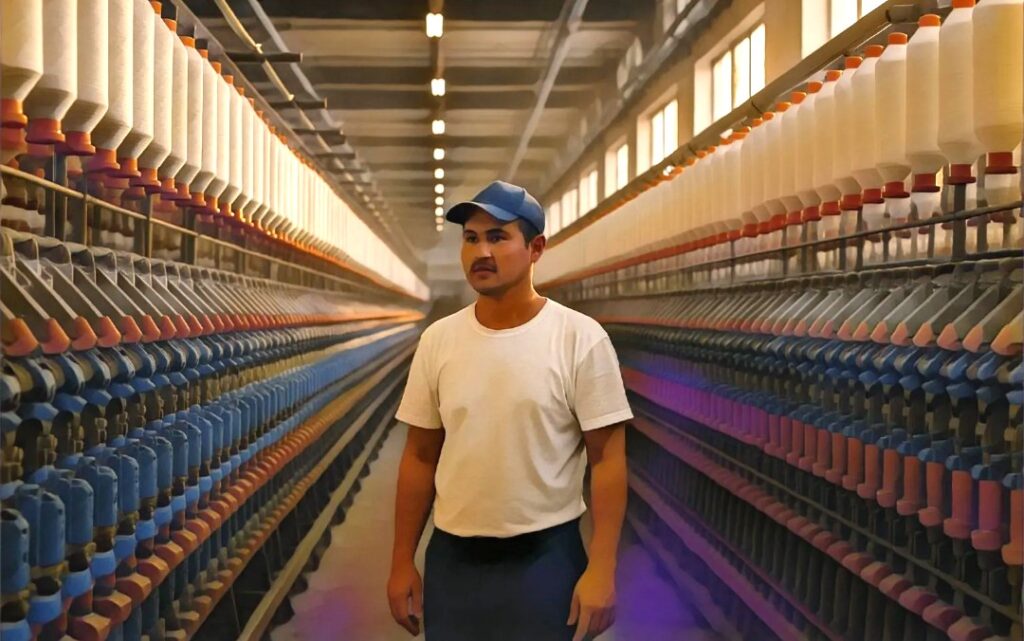
As relations between China and Uzbekistan deepen, cooperation is no longer confined to the traditional pillars of energy and infrastructure. The partnership has begun to branch into new and diverse areas, adding layers of complexity and opportunity to their bilateral ties. Emerging sectors such as pharmaceuticals and waste-to-energy are gaining traction, signaling a shift toward a more multidimensional relationship. At the same time, the textile industry has become an increasingly important bridge between the two countries, offering fresh avenues for collaboration. Recent agreements highlight this momentum. In the upstream segment of Uzbekistan’s textile sector, China Hi-Tech Holding has committed to a major investment in synthetic fiber and viscose yarn production. This move is particularly significant for Uzbekistan, as it reduces reliance on cotton and secures inputs essential for modern mixed-fabric production. Midstream, cooperation is expanding as well. An agreement between Uzbekistan and China’s Fong Group to develop dyeing and finishing facilities for mixed fabrics underscores the practical steps being taken to create a more integrated textile supply chain. These developments also reflect a broader trend of growing Chinese interest in Uzbekistan’s domestic market and its strategic location at the crossroads of the Middle East and Europe. With its young population and export potential, Uzbekistan is increasingly attractive to Chinese textile companies. The Red Dragonfly Group’s plan to establish a manufacturing base in Uzbekistan by 2026 is a clear example of how Chinese firms see the country not only as a production hub but as a gateway to wider regional markets. One of the main reasons Uzbekistan is emerging as a crucial destination for Chinese companies is the shifting incentive structure that encourages the relocation of manufacturing capacity abroad. Rising labor costs in China, particularly in the labor-intensive textile sector, are placing companies under pressure amid fierce domestic competition. In contrast, Uzbekistan offers an appealing alternative where the average monthly wage for a skilled worker is around 200-400 dollars, and energy costs are just 0.04 dollars per kilowatt-hour. Together, these factors significantly lower production costs and make the country highly attractive for firms seeking to maintain competitiveness. Equally important are Uzbekistan’s proactive regulatory policies, which create a favorable business climate for foreign investors. The government has relied heavily on Special Economic Zones and Small Industrial Zones and offers tiered incentive packages that reward higher commitments. Investors contributing between 3 and 5 million dollars receive three years of income tax holidays, while investments of 5 to 15 million dollars are rewarded with a five-year exemption. Those exceeding 15 million dollars benefit from an unprecedented ten-year tax holiday. Moreover, starting in September 2025, the social tax rate for textile companies and clusters will be cut to 1% for three years. At the same time, imports of blended fabrics and raw materials for the leather and sericulture industries will be exempt from customs duties. These measures provide Chinese companies with tangible cost advantages that rival opportunities in Southeast Asia. Another powerful driver is geopolitics. Growing trade tensions between China and the West, particularly the...

EBRD Projects Central Asia Economies 2025 Growth at 6.1%

The European Bank for Reconstruction and Development (EBRD) projects that the economies of Kazakhstan, the Kyrgyz Republic, Mongolia, Tajikistan, Turkmenistan, and Uzbekistan will grow by an average of 6.1% in 2025. According to the EBRD, the region’s momentum is being driven by strong industrial output, robust domestic demand, higher investment, rising wages, and continued remittance inflows. In 2026, growth is expected to remain positive but moderate to 5.2%. The report warns, however, that volatility in commodity prices, reliance on remittances, and dependence on Russian and Chinese markets pose ongoing risks to stability. Kazakhstan, Central Asia’s largest economy, is forecast to expand by 5.7% in 2025. Growth has been fueled by increased oil production at the Tengiz field, which boosted industrial activity and wholesale trade. The construction sector grew by 18.4% in the first half of the year, reflecting large infrastructure projects and residential development. Even so, the EBRD cautions that over-reliance on Russian transit routes and global commodity fluctuations could slow growth to 4.5% in 2026. The Kyrgyz Republic is projected to remain one of the region’s fastest-growing economies, with GDP expected to rise by 9.0% in 2025. The economy expanded by 11.4% in the first half of the year, supported by strong public investment, remittance inflows, and rising wages. Manufacturing, trade, and construction are key drivers, while tourism is growing through new investments. Growth is forecast to ease to 6.0% in 2026 but is expected to remain resilient unless remittance flows decline. Mongolia’s economy is expected to grow by 5.8% in 2025. A 35.6% rebound in agriculture after two difficult years helped offset slower mining activity and weaker coal prices, while copper production increased. Tajikistan’s economy grew by 8.1% in the first half of 2025, driven by trade, agriculture, transport, and a doubling of mining output. Remittances rose by 64%, and sharp wage growth boosted household consumption. The EBRD forecasts GDP growth of 7.5% in 2025, moderating to 5.7% in 2026. Continued support from international institutions such as the World Bank and IMF is expected to sustain growth, although reliance on remittances remains a structural vulnerability. Turkmenistan is projected to grow by 6.3% in both 2025 and 2026, supported by trade, transport, services, and construction. Official data show capital investment up 15.6% year on year. Uzbekistan’s economy is expected to expand by 6.7% in 2025, backed by strong domestic demand, rising wages, and a 28.7% increase in remittances. Services grew by more than 8%, while industrial output was buoyed by high gold prices and stronger manufacturing in food and metals. Growth is projected to ease slightly to 6.0% in 2026 but will remain supported by diversified manufacturing and stable foreign investment.

Experts Say Kazakhstan Must Boost Manufacturing to Tame Inflation

Inflation is steadily eroding incomes in Kazakhstan, depleting savings and undermining government efforts in the social sector. The Times of Central Asia previously noted that surging economic growth could be a contributing factor to Kazakhstan’s inflation problem. But despite rising prices, the government has no plans to apply the brakes. On the contrary, officials point to promising GDP growth driven by sectors beyond oil. Meanwhile, independent experts argue that only large-scale industrial development can provide a lasting solution to inflation. Persistent Price Pressures Inflation continues to outpace official projections. In August, annual inflation hit 12.2%, and by the end of 2025 it is expected to reach 14%, well above the National Bank of Kazakhstan’s target range of 5-6%. Economists say the country’s dependence on imports is a key driver. Kazakhstan imports large volumes of food, fuel, medicine, equipment, and consumer goods. Wage and pension increases are failing to keep pace with the surge in prices. President Kassym-Jomart Tokayev has acknowledged that high inflation poses a serious challenge, warning it is “eating away at economic growth and household incomes.” Government efforts to stabilize prices have yet to show meaningful results. On September 23, Minister of Trade and Integration Arman Shakkaliev announced that Kazakhstan will gradually phase out price controls on socially significant food products (SZPT) in favor of targeted digital support for consumers. The SZPT list currently includes 19 essential items. At the same time, Prime Minister Olzhas Bektenov instructed agencies to crack down on unjustified price hikes for basic goods, ordering strict enforcement of available price control tools. Growth at a Cost Inflation, according to Deputy Prime Minister and Minister of National Economy Serik Zhumangarin, is being fueled by economic expansion. He warned that efforts to restrain inflation could hinder growth. “Since 2023, GDP has grown by 5%, and in 2024 we grew without the contribution of oil. This year is a turning point. From 2026, oil will no longer influence GDP growth,” Zhumangarin said. Although Kazakhstan’s economy has long relied on oil revenues, the minister believes this trend is now shifting. “Economic growth is always accompanied by high inflation,” he said. “More than $12 billion in investments have already been attracted, and the target for the year is $24 billion. The government will soon announce a new strategy for economic growth. We must follow the path of Asian countries but with modern technologies.” Call for Industrialization Independent analysts argue that real progress against inflation requires mass domestic production across a wide range of goods. Political analyst Gaziz Abishev stressed the urgency of moving beyond megaprojects toward practical, infrastructure-linked industry. “Kazakhstan needs real production, not fairy-tale megaprojects. Industry tied to infrastructure, logistics, human resources, and markets solves many issues,” he wrote. “It creates well-paid jobs, stimulates small and medium-sized businesses, reduces reliance on imports, supports the tenge, and addresses budget deficits.” Abishev also called for openness to foreign industrial investment, regardless of origin. His comments appear to push back against public concerns over the influence of Russia, China, and Western...

Billion-Dollar Agreements and a Boeing Deal: Inside Mirziyoyev’s Visit to New York

On September 20, President of Uzbekistan Shavkat Mirziyoyev arrived in New York to participate in events marking the 80th session of the UN General Assembly. At John F. Kennedy Airport, he was welcomed by Paolo Zampolli, Special Envoy of the U.S. President for Global Partnerships, Carolyn Lamm, Chair of the American-Uzbekistan Chamber of Commerce, and other officials. Finance and Critical Minerals Cooperation On September 22, Mirziyoyev held a series of high-level meetings with executives from leading corporations and international institutions. Uzbekistan is seeking to position itself as a reliable supplier in the global critical minerals chain. With reserves of copper, gold, uranium, and rare earths, officials have prioritized foreign partnerships to accelerate exploration and processing capacity, while also ensuring environmental and governance standards are met. In talks with IMF Managing Director Kristalina Georgieva, the two sides discussed expanding cooperation on monetary policy, statistical reform, and educational programs. Georgieva commended Uzbekistan’s economic reforms and reaffirmed the Fund’s support. A $1 billion package of initiatives was finalized with Traxys, the Colorado School of Mines, FLSmidth, McKinsey, and Go Green Partners. These projects focus on critical minerals mining and processing, alongside the creation of a Competence Center in Uzbekistan. Discussions with BlackRock board member Adebayo Ogunlesi centered on establishing a joint infrastructure fund. With Citigroup Chairman John Dugan, the president addressed IPOs of state-owned enterprises, Eurobond issuance, and trade finance mechanisms. Franklin Templeton CEO Jenny Johnson confirmed agreements related to the transformation of state-owned companies and the development of the Tashkent Stock Exchange. President Brian Friedman of the New York-based global investment banking and capital markets firm, Jefferies, meanwhile, expressed interest in helping attract strategic investors to Uzbekistan’s National Investment Fund. Franklin Templeton’s management of Uzbekistan’s $1.7 billion National Investment Fund signals growing trust in U.S. asset managers. Meanwhile, Jefferies’ potential involvement in attracting strategic investors highlights the rising role of global capital markets in Uzbekistan’s privatization and modernization agenda. NASDAQ CEO Adena Friedman discussed the modernization of the Tashkent Stock Exchange and the introduction of a government bond trading platform. Oppenheimer Holdings CEO Robert Lowenthal pledged support for Uzbekistan’s private sector and participation in Eurobond issuance. [caption id="attachment_36462" align="aligncenter" width="1280"] Image: president.uz[/caption] Strategic Agreements Signed A signing ceremony was held in the presence of President Mirziyoyev and U.S. Presidential Special Envoy Sergio Gor. Agreements were exchanged with Boeing, FLSmidth, Cleveland Clinic, Citigroup, Cargill, Pangea Filtration Technology, SLB, Biologic International, and others. During a meeting with WTO Director-General Ngozi Okonjo-Iweala, Mirziyoyev reaffirmed Uzbekistan’s commitment to aligning its legislation with international standards, with the goal of completing WTO accession by 2026. Uzbekistan’s WTO accession is being closely watched in Central Asia, as its success could set a precedent for other countries still outside the organization. For investors, WTO membership would mean greater legal predictability and integration into global trade frameworks. The president also met with Air Products CEO Eduardo Menezes. The company has already invested over $1 billion in Uzbekistan, with projects at the GTL plant, Ferghana Refinery, and “Navoiazot.” Both parties agreed to...

Tokayev in New York: $100B U.S. Investment Push Boosts Kazakhstan Ties

Kazakhstan and the United States are continuing to strengthen their strategic partnership, with investment playing a central role. At a roundtable with U.S. business representatives in New York, President Kassym-Jomart Tokayev stated that American investments in Kazakhstan’s economy have surpassed $100 billion. “Today, more than 630 American companies are successfully operating in our country, including Chevron, ExxonMobil, Boeing, Visa, Mastercard, Meta, Wabtec, and Citibank. We regard the U.S. as an important strategic partner and reaffirm our commitment to further developing multifaceted cooperation,” Tokayev said. The president noted that Kazakhstan’s economy grew by 6.5% in the first eight months of 2025. He added that ongoing political and economic reforms are creating favorable conditions for long-term growth and attracting further investment. Energy and Uranium: The Cornerstone of Cooperation Energy continues to underpin U.S.-Kazakhstan relations. “We recognize and highly value the large and successful investments of Chevron and ExxonMobil over the past 30 years. Despite all the turbulence in regional geopolitics, their presence in our country has never been questioned,” Tokayev said. He pointed out that Kazakhstan supplies about 40% of the global uranium market and nearly a quarter of U.S. imports. Tokayev also highlighted Kazakhstan’s “four sources” strategy - oil, gas, coal, and uranium - and expressed support for the U.S. approach to coal as a reliable energy source in the near term. $4.2 Billion Wabtec Agreement: A Landmark Deal A key outcome of Tokayev’s U.S. visit was the signing of a $4.2 billion agreement with American locomotive manufacturer Wabtec. According to the U.S. Department of Commerce, the deal will see Kazakhstan’s national railway company, Kazakhstan Temir Zholy (KTZ), acquire 300 ES44Aci Evolution Series freight locomotives over the next decade. U.S. Secretary of Commerce Howard Lutnick described the contract as the "largest in history,” noting it would create approximately 11,000 jobs in Texas and Pennsylvania. “This is not just a story of massive success, it’s an example of how American innovation strengthens global leadership,” he posted on X. Wabtec President and CEO Rafael Santana added, “This project represents KTZ’s ambition to transform Kazakhstan’s railway network into a key bridge between Europe and Asia.” Tokayev has emphasized that Kazakhstan is upgrading transport hubs and rolling out a “Smart Cargo” digital customs and logistics system to streamline east–west and Trans-Caspian transit traffic. Presidential Support: Trump and Tokayev Hold Call The Wabtec agreement was preceded by a phone call between U.S. President Donald Trump and President Tokayev. “I just concluded a wonderful call with the Highly Respected President of Kazakhstan, Kassym-Jomart Kemeluly Tokayev,” Trump wrote on Truth Social. He emphasized the significance of the locomotive deal and linked it to his broader support for revitalizing U.S. infrastructure. “We need to support our rail industry, which has been attacked for years by ‘fake environmentalists.’ Now railroads are coming back and fast!” he said. Observers noted that Trump’s personal involvement underscored the political importance of the agreement for bilateral relations. Green Energy Progress: SAF Plant with LanzaJet Another notable development was the agreement between Kazakhstan’s national oil...

Insider’s View: Uzbekistan–U.S. – A New Era of Environmentally Friendly and Energy-Efficient Investment

Today, environmentally friendly and energy-efficient projects are no longer just a fashionable trend but a factor of global competitiveness. Uzbekistan, once regarded as a country with a resource-based energy system and limited opportunities for the adoption of modern technologies, is now becoming a hub for “green” investment and innovation. A strategic partnership with the United States plays a special role in this process, encompassing key areas ranging from energy and ecology to finance, education, and culture. Clean and innovative projects are becoming the hallmark of Uzbek-American relations, shaping a new model of cooperation in the 21st century. Green Energy and Strategic Partnership Uzbekistan is moving confidently toward a “green” future. While in 2018 renewable energy sources accounted for less than one percent of electricity generation, from January to July 2025, renewables already provided 20.3% of the country’s total electricity. More than 11 billion kWh of “green” energy were produced, including 6.4 billion kWh from solar power plants and 3.6 billion kWh from wind farms. This volume saved 3.6 billion cubic meters of natural gas and prevented over 2.2 million tons of harmful emissions. Every day, renewables now generate about 26.7 million kWh – enough to cover the needs of 7.28 million households for half a year, or 3.64 million homes for an entire year. Currently, 10 solar and 4 wind plants with a combined capacity of more than 4.5 GW operate across 10 regions of the country. A key focus of Uzbek-American cooperation has become “green” energy. In 2025, Allied Green Ammonia (AGA), together with the U.S. company Plug Power, announced a major project for the production of sustainable aviation fuel, green diesel, and urea. The plan includes the supply of electrolyzers with a capacity of up to 2 GW for the future complex. A final investment decision is expected by the end of 2025, and the project has already been recognized as one of the flagship initiatives for Central Asia. Air Products – A Flagship of American Presence Air Products, a global leader in industrial gases and hydrogen energy, occupies a special place in Uzbek-American cooperation. In the Kashkadarya region, the company participates in a large-scale gas-to-liquids (GTL) project worth around $1 billion. The complex is designed to produce about 1.5 million tons of synthetic fuels per year, including diesel, jet kerosene, and naphtha. Its structure includes air separation units, autothermal reformers, and hydrogen production facilities. This project has become a landmark example of how U.S. technologies are transforming Uzbekistan’s energy sector. In addition to GTL, Air Products is actively developing industrial gas production in Uzbekistan. The company participates in oxygen, nitrogen, and hydrogen production projects, introduces the latest PSA units, as well as freezing and storage technologies that reduce food losses and enhance economic resilience. Furthermore, the company has implemented a “green financing” system that links investments to sustainability principles. These projects not only strengthen the country’s industrial potential but also pave the way for positioning Uzbekistan as a regional hub for “green” energy. The company’s future plans...