• KGS/USD = 0.01144 0%
  • KZT/USD = 0.00208 0%
  • TJS/USD = 0.10407 -0.29%
  • UZS/USD = 0.00008 0%
  • TMT/USD = 0.28571 0%
  • KGS/USD = 0.01144 0%
  • KZT/USD = 0.00208 0%
  • TJS/USD = 0.10407 -0.29%
  • UZS/USD = 0.00008 0%
  • TMT/USD = 0.28571 0%
  • KGS/USD = 0.01144 0%
  • KZT/USD = 0.00208 0%
  • TJS/USD = 0.10407 -0.29%
  • UZS/USD = 0.00008 0%
  • TMT/USD = 0.28571 0%
  • KGS/USD = 0.01144 0%
  • KZT/USD = 0.00208 0%
  • TJS/USD = 0.10407 -0.29%
  • UZS/USD = 0.00008 0%
  • TMT/USD = 0.28571 0%
  • KGS/USD = 0.01144 0%
  • KZT/USD = 0.00208 0%
  • TJS/USD = 0.10407 -0.29%
  • UZS/USD = 0.00008 0%
  • TMT/USD = 0.28571 0%
  • KGS/USD = 0.01144 0%
  • KZT/USD = 0.00208 0%
  • TJS/USD = 0.10407 -0.29%
  • UZS/USD = 0.00008 0%
  • TMT/USD = 0.28571 0%
  • KGS/USD = 0.01144 0%
  • KZT/USD = 0.00208 0%
  • TJS/USD = 0.10407 -0.29%
  • UZS/USD = 0.00008 0%
  • TMT/USD = 0.28571 0%
  • KGS/USD = 0.01144 0%
  • KZT/USD = 0.00208 0%
  • TJS/USD = 0.10407 -0.29%
  • UZS/USD = 0.00008 0%
  • TMT/USD = 0.28571 0%

Viewing results 1 - 6 of 122

Uzbekistan and Saudi Arabia Strengthen Ties: $2.5 Billion Investment Expected by Year-End

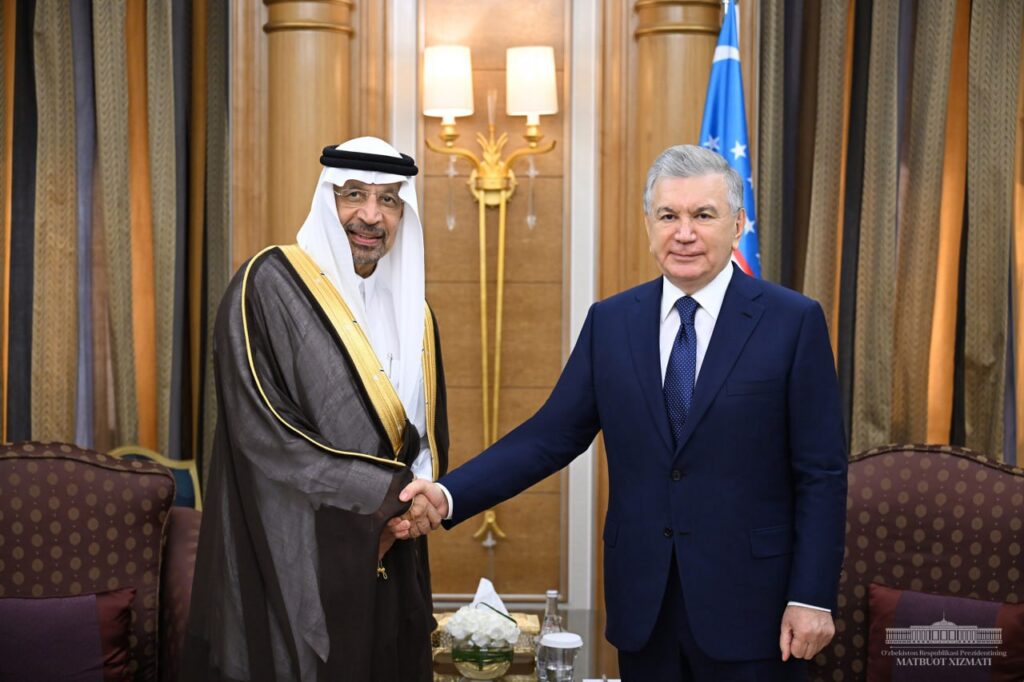
On November 11, Uzbekistan's President Shavkat Mirziyoyev met Saudi Arabia's Minister of Investments, Khalid al-Falih, during the extraordinary Arab-Islamic Summit currently being held in Riyadh. Cooperation between Uzbekistan and Saudi Arabia has rapidly developed in recent years. The volume of mutual trade, the scope of cooperation, and also the number of flights between the countries are increasing. By the end of this year, Saudi Arabian companies are expected to attract about $2.5 billion worth of investments in areas such as “green” energy, healthcare, transport infrastructure modernization, heat and water supply, agriculture, housing, and communal economy. Mirziyoyev also met with Muhammad bin Salman Al Saud, the Crown Prince and Prime Minister of the Kingdom of Saudi Arabia. Mirziyoyev noted that effective cooperation has been established with the leading company “ACWA Power,” which is modernizing Uzbekistan's energy sector through direct investments and advanced technologies. Emphasis was placed on developing wind and solar power plants across various regions of Uzbekistan and accelerating projects to produce “green” hydrogen. Additionally, an agreement was reached to engage Saudi Arabian companies and consultants to localize production and improve energy efficiency in Uzbek enterprises.

Risk and Reward: Why Savvy Investors Should Dive into Central Asia-Caspian Region

Central Asia-Caspian basin has long been a geopolitical chessboard — fragmented by conflict but dependent on cooperation. In an era of shifting alliances, political instability, and economic uncertainty, multinational corporations (MNCs) must reassess their strategies. While the region's challenges remain considerable, it also presents unique investment opportunities that should not be overlooked. Since the 1990s, operating in post-Soviet Eurasia has been synonymous with political risks. The Central Asian states have sought foreign direct investment (FDI) but face significant obstacles, including weak rule-of-law, inconsistent regulatory frameworks, and entrenched corruption. Yet despite these barriers, the region continues to attract international capital, signaling its long-term potential. Traditionally reliant on oil and gas exports, these countries are now pivoting toward diversification. Nations like Azerbaijan, Kazakhstan, and Turkmenistan are strengthening ties with the European Union (EU) to balance their historical reliance on Russia’s energy network. This shift is opening new frontiers for investment, particularly in green energy, infrastructure, and technology. However, geopolitical instability remains a critical risk. The war in Ukraine has intensified uncertainties, with Russia, China, the EU, and the U.S. vying for influence. Energy security, once an afterthought, has become a central issue. The closure of the Novorossiysk terminal in early 2023, halting Kazakh oil exports, underscored how quickly geopolitical disruptions can affect supply chains, prompting companies like ExxonMobil to reassess their regional strategies. Yet this volatility also creates opportunities. The region’s economic shift away from resource dependence toward a knowledge-based economy offers fertile ground for businesses willing to invest in infrastructure, technology, and renewable energy. The Caspian basin’s strategic location, as a transit hub for energy to Europe, only heightens its importance in the EU’s efforts to reduce dependency on Russian supplies. For international businesses, this means new markets, sectors, and investment channels are emerging. The post-Covid landscape adds complexity, with digital transformation accelerating across industries. Countries in the Central Asia-Caspian basin are under pressure to adopt these technologies, which could drive long-term economic growth. Yet the gap between ambitious reform plans and their implementation remains wide. Regulatory inefficiencies and bureaucratic hurdles continue to hamper progress, presenting a challenge for foreign investors looking for stability. For multinational corporations, the region presents both risks and significant upsides. On one hand, border disputes, political unpredictability, and regulatory uncertainty create barriers. On the other, the region’s growing role as an energy transit hub and its emerging sectors, from green energy to infrastructure, offer promising avenues for investment. Azerbaijan and Kazakhstan, in particular, have been proactive in bolstering energy exports to Europe, positioning themselves as critical players in the global energy transition. If the conflict in Ukraine continues to escalate, the region’s geopolitical risks will undoubtedly increase. However, external actors — particularly the U.S., the EU, and China — are also likely to deepen their involvement, further reshaping the region’s economic and political landscape. The rise of Sino-American tensions only adds another layer of complexity to an already volatile environment. Yet, for companies that can navigate these complexities, the rewards are significant. Central Asia-Caspian basin remains...

First-Ever Tungsten Production Launched in Kazakhstan

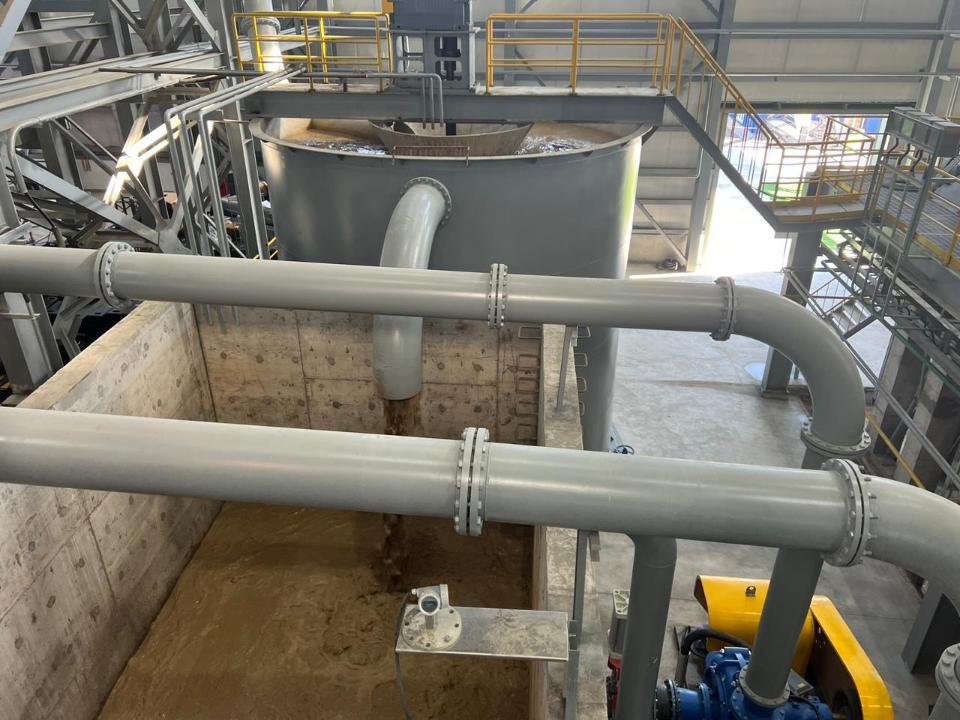
On November 1, Kazakhstan’s first tungsten processing plant was opened in the Almaty region. According to the Kazakh Ministry of Industry and Construction, this will strengthen the country's position in the global rare earth metals market. The $300 million project will create up to 1,000 local jobs and, when fully operational, will process 3.3 million tons of ore annually, producing 65% tungsten concentrate. Jiaxin International Resources Investment Ltd. is implementing the project, which was joined by Jiangxi Copper Corporation, China Railway Construction Company, China Civil Engineering Construction Company, and Ever Trillion International Singapore PTE LTD. Further plans include constructing a $150 million deep processing facility to increase tungsten content to 88.5% and produce high-purity tungsten carbide. Tungsten has the highest melting point of all metals and is alloyed with other metals to strengthen them. Tungsten and its alloys are used in many high-temperature applications, such as arc-welding electrodes and heating elements in high-temperature furnaces. Tungsten carbide is tough and important to the metal-working, mining, and petroleum industries. Speaking at the 36th meeting of the Foreign Investors’ Council in Astana on October 31, Kazakhstan President Kassym-Jomart Tokayev emphasized that Kazakhstan has a unique mineral resource base and has attracted more than $1 billion of private investment in geological exploration over the past six years.

Kazakhstan Hosts Meeting of Council of Foreign Investors

Astana's Palace of Independence hosted the 36th meeting of the Foreign Investors Council. Kazakhstan's President Kassym-Jomart Tokayev and Prime Minister Olzhas Bektenov attended the event. This year's central theme was “Kazakhstan's New Investment Cycle.” The meeting discussed strategies for the new investment cycle and the development of Kazakhstan's attractiveness to investors. Citing data from the International Institute for Management Development (IMD), Tokayev emphasized that Kazakhstan has become one of the world's top 35 competitive countries. “We set ourselves a rather ambitious goal: to attract $150 billion of foreign direct investment by 2029. To realize this goal, the Investment Headquarters under the Government is endowed with expanded powers to solve emerging problems promptly,” said the president. Tokayev noted the merits of international oil companies, which have played an essential role in the country's development. “Foreign investors have invested capital and provided advanced technologies and highly skilled labor. Their investments have contributed to the growth of our energy industry: over the past 30 years, oil production has tripled. Thanks to this, Kazakhstan has become one of the five countries with the highest oil production growth rates. Speaking about the future, we set a goal to overcome the threshold of 100 million tons per year,” he said. The meeting focused on increasing investment attractiveness in the “clean energy” sector. Specific agreements were reached with world companies such as Total, Svevind, ACWA Power, and Masdar on realizing 43 GW of “green” projects in Kazakhstan. In addition, Kazakhstan has a vast potential for developing nuclear energy, so creating an international consortium to realize the NPP construction project is under consideration. Kazakhstan focuses on the work of the Astana International Financial Center to strengthen cooperation in the financial sector. Tokayev spoke of the importance of continuing the dialog between the Council members and government agencies to improve the country's investment climate and implement new initiatives and specific projects. The meeting also included Odile Renaud-Basso, President of the EBRD; Nurlan Dosymbekov, Deputy Prime Minister and Minister of National Economy; Zhang Daowei, Chairman of the Board of the Kazakh Association “Baibazarov” and the Yerstanign Investors; Nikolai Podguzov, chairman of the EDB; Andrew Deleoni, president of Alstom for Africa, the Middle East, and Central Asia; and Vadim Vorobyov, Chief Executive Officer of PJSC Lukoil. Established in 1998, the Council of Foreign Investors is a platform for foreign investors and the government of Kazakhstan to discuss strategic objectives and find solutions to improve the business climate. From the Kazakhstani side, the Council is attended by government members and heads of several national companies and development institutions. Foreign participants include representatives of major international corporations and organizations, underscoring the global interest in investing in Kazakhstan. Last year's 35th Plenary Meeting of the Foreign Investors Council was also chaired by President Tokayev. The main topic of the meeting was “Digital Transformation of the Economy.” At the time, Tokayev emphasized that digitalization is a tremendous technological breakthrough and opportunity. The growth of digitalization is already dramatically impacting economic development and changing the game's...

U.S. Companies Seek Export Opportunities in Uzbekistan

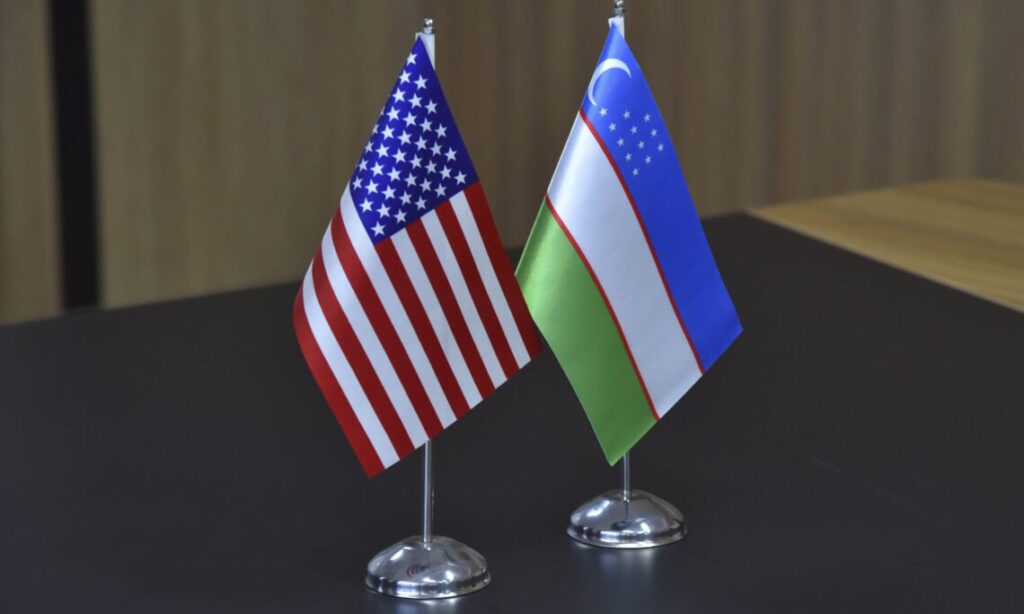
According to a recent report, the U.S. State Department is in regular receipt of applications from U.S. companies in search of opportunities to export their products to Uzbekistan's markets. “Our products likewise require review and certification for import into Uzbekistan, so expediting that process would help U.S. agricultural and livestock products reach Uzbek consumers. U.S. suppliers of technologies, industrial equipment, and manufactured goods are also actively bidding on public procurement opportunities and working with partners in Uzbekistan,” explained a spokesperson for the department. The USA's readiness to help Uzbekistan implement the announced reform program, including economic issues was noted. Referencing the  significant improvements in the investment climate created by recent economic reforms and the potential of further reforms to attract more investment and technical expertise to Uzbekistan, the department emphasized: “Generally speaking, we welcome and encourage multilateral efforts to support regional connectivity in Central Asia and the South Caucasus westward to Europe. Such efforts create a more secure, resilient, and prosperous region.” The U.S. State Department also noted that through the regional trade activities of the U.S. Agency for International Development (USAID) in Central Asia, the US is helping to increase the competitiveness of trade, entrepreneurship, e-commerce, and the private sector. As stated in the report,  “Through the Partnership for Global Infrastructure, the U.S. is currently evaluating potential areas for infrastructure investment where it could contribute project advisory technical assistance, project preparation, and financing to tangibly move forward strategic projects in the Trans-Caspian International Transport Route.”

EDB to Finance Mountain Resort in Kyrgyzstan

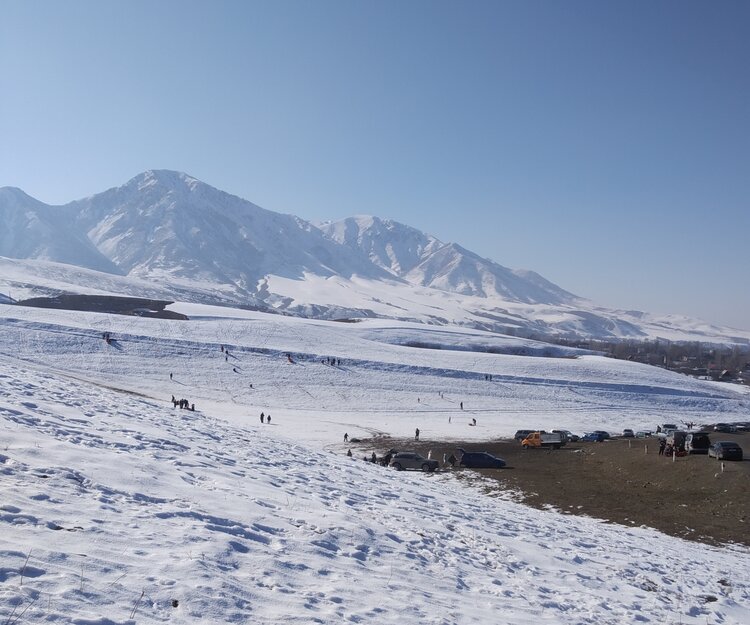
On July 10, the National Investment Agency under the President of the Kyrgyz Republic, Vasta Discovery LLC, and the Eurasian Development Bank (EDB) signed a trilateral Memorandum of Cooperation on the construction of the Baytik mountain resort, an all-season tourism cluster in Kyrgyzstan’s northern Chui region. The EDB will act as the project’s creditor but the amount of the planned investment has yet to be declared. Following the signing of the agreement, Sergey Ignatov, EDB’s Senior Managing Director stated, "As a multilateral development bank, the EDB performs its investment activities so as to contribute to the economic growth of its member countries, the expansion of trade and economic ties, and the development of integration processes in the Eurasian space. Apart from its obvious integration potential, the Baytik Mountain Resort project is also expected to contribute to the development of tourism, an important sector of the Kyrgyz economy, which will have a positive impact on related industries and cultural exchange in Eurasia, and will become a significant growth point in this region." Talantbek Imanov, Director of the National Investment Agency highlighted the fact that the Baytik Mountain Resort represents the first foray into cooperation in Kyrgyzstan’s  tourism infrastructure and outlining the project, announced: "The future resort includes 15 cable cars, 36 ski slopes exceeding 57 km, 4 tourist villages and a ski complex that meets the requirements of international top class competitions, including the Olympic Games and World Cup alpine skiing and snowboarding events.” The Baytik Mountain Resort will be constructed and developed by Vasta Discovery, a company with extensive experience in implementing large-scale tourism infrastructure projects. Emphasizing his company’s firm commitment to the project, Sergey Bachin, CEO of Vasta Discovery confirmed, "We are confident that there will be domestic demand for the resort and its services and that it will also become an important attraction for foreign tourists and inspire them to visit Kyrgyzstan."