• KGS/USD = 0.01144 0%
  • KZT/USD = 0.00212 0%
  • TJS/USD = 0.10803 0%
  • UZS/USD = 0.00008 0%
  • TMT/USD = 0.28571 0%
  • KGS/USD = 0.01144 0%
  • KZT/USD = 0.00212 0%
  • TJS/USD = 0.10803 0%
  • UZS/USD = 0.00008 0%
  • TMT/USD = 0.28571 0%
  • KGS/USD = 0.01144 0%
  • KZT/USD = 0.00212 0%
  • TJS/USD = 0.10803 0%
  • UZS/USD = 0.00008 0%
  • TMT/USD = 0.28571 0%
  • KGS/USD = 0.01144 0%
  • KZT/USD = 0.00212 0%
  • TJS/USD = 0.10803 0%
  • UZS/USD = 0.00008 0%
  • TMT/USD = 0.28571 0%
  • KGS/USD = 0.01144 0%
  • KZT/USD = 0.00212 0%
  • TJS/USD = 0.10803 0%
  • UZS/USD = 0.00008 0%
  • TMT/USD = 0.28571 0%
  • KGS/USD = 0.01144 0%
  • KZT/USD = 0.00212 0%
  • TJS/USD = 0.10803 0%
  • UZS/USD = 0.00008 0%
  • TMT/USD = 0.28571 0%
  • KGS/USD = 0.01144 0%
  • KZT/USD = 0.00212 0%
  • TJS/USD = 0.10803 0%
  • UZS/USD = 0.00008 0%
  • TMT/USD = 0.28571 0%
  • KGS/USD = 0.01144 0%
  • KZT/USD = 0.00212 0%
  • TJS/USD = 0.10803 0%
  • UZS/USD = 0.00008 0%
  • TMT/USD = 0.28571 0%

Viewing results 1 - 6 of 15

Kyrgyzstan Seeks Foreign Teachers to Ease Education Staff Shortage

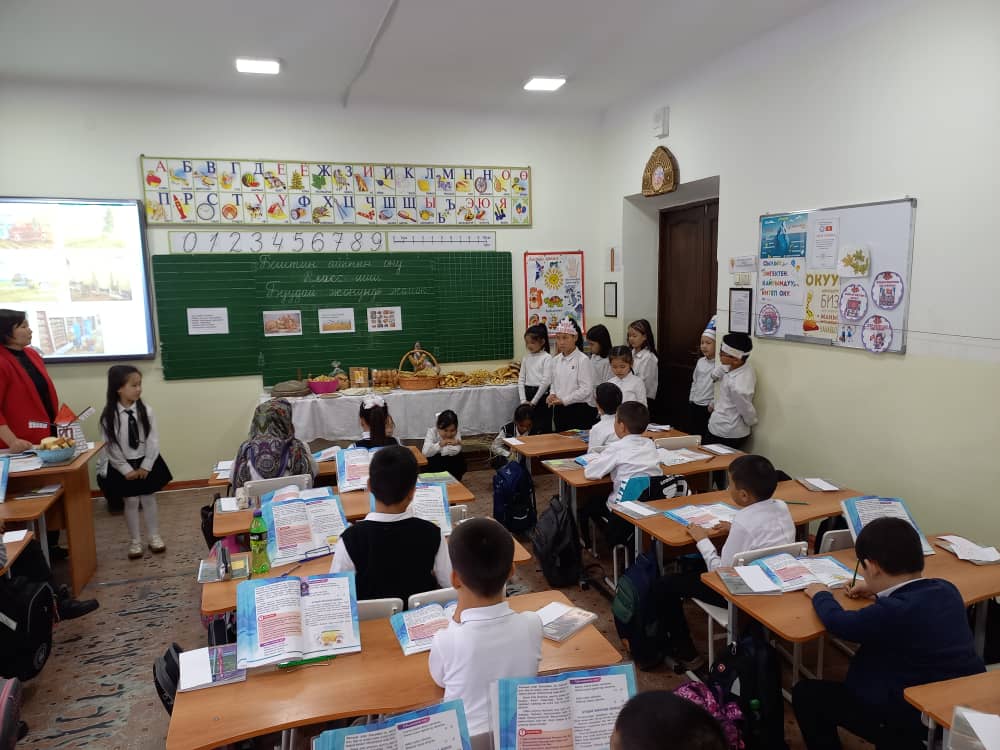
A group of deputies in Kyrgyzstan’s Jogorku Kenesh, the national parliament, has drafted legislative amendments aimed at attracting foreign teachers and modernizing the country’s educational infrastructure through new legal and economic incentives. The proposed amendments were submitted for parliamentary consideration. Under the draft legislation, foreign teachers working in Kyrgyzstan would be exempt from income tax and mandatory social security payments. The bill would also grant foreign educators the right to obtain temporary residence permits. Additional measures include tax incentives for educational institutions and exemptions from value-added tax (VAT) on imported educational equipment. The authors of the amendments argue that modernizing Kyrgyzstan’s education system will require the introduction of international teaching standards, digital technologies, and updated educational programs. They say the process will also require the involvement of highly qualified specialists, including foreign teachers with international experience. According to the lawmakers, the proposed legislation is intended to help implement advanced teaching methods and global educational practices, improve student training, create a more competitive academic environment, and strengthen the intellectual potential of younger generations without requiring students to study abroad. The bill’s explanatory note states that a shortage of qualified teachers in schools and universities remains one of the key challenges facing Kyrgyzstan’s education system. The shortage comes as the country experiences a steady increase in student numbers and mounting pressure on educational infrastructure. According to official figures cited in the draft legislation, Kyrgyzstan had 2,175 public schools and 219 private schools in 2025, serving a total of 1,526,800 students with 108,006 teaching staff. The country also has 32 public universities and 41 private universities.


Uzbekistan Collects $5 Million From Foreign Digital Companies in First Quarter

Foreign technology and digital service companies paid 65.7 billion Uzbek som ($5.1 million) in taxes in Uzbekistan during the first quarter of 2026, according to the country’s State Tax Committee. The figure represents an 81% increase compared to the same period in 2025, when foreign digital firms paid 36.2 billion som ($2.98 million) in taxes. The total value of electronic services provided by foreign companies in Uzbekistan also rose sharply, from 306.6 billion som ($25.2 million) in the first three months of 2025 to 552 billion som ($45.4 million) this year. The State Tax Committee said 89 foreign companies providing electronic services are currently registered as taxpayers in Uzbekistan. Among the largest taxpayers in the first quarter were Apple, which paid 16.1 billion som ($1.32 million) in taxes, followed by Google at 14.9 billion som ($1.23 million) and Meta at 13.9 billion som ($1.14 million). Other major contributors included Valve Corporation, which paid 8 billion som ($658,000), OpenAI with 2.5 billion som ($206,000), and Anthropic with 1.5 billion som ($123,000). Gaming and entertainment platforms also appeared among the top taxpayers. Midasbuy paid 1.3 billion som ($107,000), while TikTok, Booking.com, and Netflix collectively contributed more than 2 billion som ($165,000). Under Uzbek law, foreign legal entities providing electronic services must submit tax reports and pay taxes no later than the 20th day of the month following each reporting quarter. Previously, Kazakhstan reported that foreign digital platforms transferred nearly $18 million to the state budget in January 2026 alone through its digital services tax, commonly referred to as the “Google tax.” According to Kazakhstan’s State Revenue Committee, 120 foreign companies have registered as taxpayers there since the tax was introduced in 2022, generating a total of about $277.5 million in revenue.

Kazakh Politician Proposes Softer Punishment for Citizens Who Join Foreign Military Conflicts

Zharkynbek Amantaiuly, a member of the Mazhilis, the lower house of Kazakhstan’s parliament, has submitted a request to Prosecutor General Berik Asylov and Interior Minister Yerzhan Sadenov proposing that penalties be reconsidered for Kazakh citizens who participate in armed conflicts abroad. According to the lawmaker, growing geopolitical tensions and the increasing number of armed conflicts worldwide are contributing to a rise in the number of Kazakh citizens involved in hostilities outside the country. He noted that groups recruiting foreign citizens often rely on deception and targeted recruitment campaigns to attract participants. “Unfortunately, the number of our compatriots who have fallen under such influence is growing,” Amantaiuly said. According to data cited by him, 23 criminal cases were opened in Kazakhstan in 2023 under Article 172 of the Criminal Code, which concerns participation in foreign armed conflicts. The number increased to 36 cases in 2024 and rose sharply to 141 in 2025. Of the cases registered in 2025, 26 citizens have been convicted. The offense carries a prison sentence of between five and nine years. Amantaiuly argued that many citizens end up in conflict zones due to social difficulties, misconceptions, or deception, often after being promised high-paying jobs. “Of course, no one goes to an armed conflict zone without a reason. Many of those who find themselves in such situations say they hoped to obtain well-paid employment. When they realize they have been deceived, they become involved in bloody battles in a foreign country and understand that there is almost no way back. Their parents, families, and loved ones suffer as a result,” he said. He also noted that in some countries, participation in hostilities as part of the official armed forces of a foreign state is not considered a criminal offense. According to Amantaiuly, strict criminal liability is typically applied to individuals who join terrorist organizations, commit war crimes, or act against the national interests of their own country. For this reason, the deputy proposed studying international legal practices and preparing amendments to Kazakhstan’s criminal legislation governing citizens’ participation in armed conflicts abroad. In his view, the law should introduce a mechanism for differentiated legal assessment. Such a framework could allow for suspended sentences, restrictions on freedom, or probationary supervision for individuals who were not members of terrorist organizations, did not commit war crimes, and voluntarily returned to Kazakhstan. The deputy also proposed developing a state program for the legal, psychological, and social rehabilitation of such citizens. As previously reported by The Times of Central Asia, several Kazakh citizens who fought in Ukraine as part of the Wagner private military company have received prison sentences of up to six years. At the same time, Kazakhstan’s National Security Committee is investigating stand-up comedian Nurlan Saburov. According to media reports, he allegedly transferred motorcycle equipment purchased with his own funds to the same Wagner unit.

Kazakhstan Sets 2026 Quota for Foreign Workers

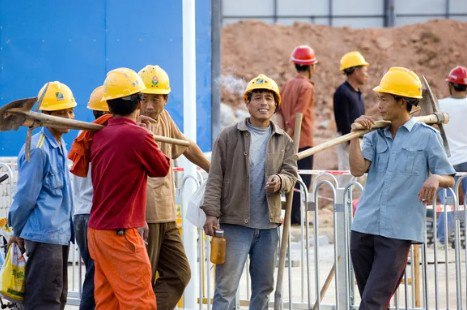
Kazakhstan has set its 2026 quota for the employment of foreign workers at 0.25% of the country’s total labor force, according to the Ministry of Labor and Social Protection. The annual quota is part of the government’s policy to regulate labor migration and safeguard the domestic job market. The 2026 quota includes specific allocations across several categories of foreign workers: 726 permits for senior managers and their deputies (first category), 3,402 for heads of structural divisions (second category), 5,893 for specialists (third category), and 3,131 for skilled workers (fourth category). An additional 4,994 permits have been allocated for seasonal labor. Separately, the quota for foreign labor employed in private households has been set at 2.9% of Kazakhstan’s total labor force for the year. The new quotas mark an increase from 2025, when the initial foreign labor cap was 0.2%, equivalent to 14,800 permits. In March 2025, that figure was raised to 16,500 following requests from regional authorities grappling with labor shortages. As of December 1, 2025, 14,103 foreign nationals were officially employed in Kazakhstan. The largest contingents came from China, Uzbekistan, Turkey, and India, underscoring the country’s continued dependence on migrant labor in construction, industry, and other specialized sectors. The quota-based system reflects Kazakhstan’s broader strategy to meet economic labor demands while prioritizing employment for domestic workers, particularly amid ongoing infrastructure expansion and industrial development.

More Than a Third of Migrant Workers in Kazakhstan Are Chinese Citizens

More than 35% of all foreign nationals officially working in Kazakhstan are Chinese citizens, according to data published by the Ministry of Labor and Social Protection of the Republic of Kazakhstan. As of December 1, 2025, a total of 14,103 foreign citizens were employed in Kazakhstan under permits issued by local executive authorities. The largest group of labor migrants comprises Chinese nationals, 5,604 individuals, representing over 35% of the total. They are followed by citizens of Uzbekistan (2,110 people, about 15%), Turkey (1,036 people, over 7%), and India (943 people, more than 6%). Migrants from other countries make up roughly 35% of the foreign labor force, a proportion nearly equal to that of China. In 2025, the structure of permits for foreign labor included 537 issued to managers and their deputies (first category), and 2,244 to heads of structural divisions (second category). Most foreign workers fell into the third and fourth categories, specialists (3,784 people) and skilled workers (1,271 people). Additionally, 2,299 permits were granted for seasonal work, and 3,970 were issued as part of corporate transfers. The ministry reported that 1,817 employers in Kazakhstan currently utilize foreign labor. These companies also employ more than 334,000 Kazakhstani citizens, who make up about 96% of their total workforce. By sector, the highest number of foreign workers are employed in construction, 4,993 people, just over 35%. Other major sectors include agriculture, forestry, and fisheries (2,316 workers, 16.5%), mining and quarrying (1,235 workers, about 9%), and manufacturing (1,155 workers, approximately 8%). To safeguard the domestic labor market, Kazakhstan sets an annual quota for the employment of foreign workers. In 2025, the initial quota was 0.2% of the workforce, or 14,800 permits. This figure was raised to 16,500 in March at the request of regional authorities. In August, the quota was increased further to 0.25% or 19,400 permits, following the expansion of the list of professions eligible for seasonal foreign workers. It was later revised down to 16,700 permits, based on updated regional needs. As previously reported by The Times of Central Asia, more than 80,000 Russian citizens received residence permits to work in Kazakhstan between January 2023 and September 2024.