• KZT/USD = 0.00210
  • TJS/USD = 0.10810
  • UZS/USD = 0.00008
  • TMT/USD = 0.29850
  • KZT/USD = 0.00210
  • TJS/USD = 0.10810
  • UZS/USD = 0.00008
  • TMT/USD = 0.29850
  • KZT/USD = 0.00210
  • TJS/USD = 0.10810
  • UZS/USD = 0.00008
  • TMT/USD = 0.29850
  • KZT/USD = 0.00210
  • TJS/USD = 0.10810
  • UZS/USD = 0.00008
  • TMT/USD = 0.29850
  • KZT/USD = 0.00210
  • TJS/USD = 0.10810
  • UZS/USD = 0.00008
  • TMT/USD = 0.29850
  • KZT/USD = 0.00210
  • TJS/USD = 0.10810
  • UZS/USD = 0.00008
  • TMT/USD = 0.29850
  • KZT/USD = 0.00210
  • TJS/USD = 0.10810
  • UZS/USD = 0.00008
  • TMT/USD = 0.29850
  • KZT/USD = 0.00210
  • TJS/USD = 0.10810
  • UZS/USD = 0.00008
  • TMT/USD = 0.29850

Viewing results 1 - 6 of 22

China Overtakes Russia as Tajikistan’s Top Trading Partner for the First Time

For the first time in over two decades, China has become Tajikistan’s largest trading partner, surpassing Russia in bilateral trade volume, according to newly released data from the Tajikistan Statistics Agency. A New Leader in Foreign Trade Between January and May 2025, trade between Tajikistan and China reached $964 million, an increase of nearly 30% compared to the same period in 2024. China's share in Tajikistan’s total foreign trade stood at 24.8%, edging ahead of Russia’s 23.2%. This surge was driven largely by Chinese exports to Tajikistan, which totaled $787 million. Tajik exports to China reached $177 million, leaving a significant trade imbalance in China’s favor, though the overall volume of bilateral engagement continues to rise rapidly. Russia had held the position of Tajikistan’s leading trade partner for more than 20 years. However, during the first five months of 2025, total trade between the two countries reached approximately $900 million. Of that, only $42 million represented Tajik exports to Russia, while Russian imports totaled $858 million. Despite a 9.3% increase year-on-year, the growth was insufficient to maintain its top position. Uzbekistan Reemerges as a Key Player Historically, Uzbekistan was Tajikistan’s main trade partner during the 1990s. In 1995, trade between the two countries reached $250 million, double the combined trade volume with other post-Soviet states at the time. However, political tensions toward the end of the decade led to a sharp decline, with trade falling to just $13 million by 2014. Following the election of Shavkat Mirziyoyev as President of Uzbekistan in 2016, bilateral relations have markedly improved. Trade between Tajikistan and Uzbekistan is once again on the rise, reaching $238 million in the first five months of 2025. China: Tajikistan’s Leading Investor and Creditor China’s growing economic influence in Tajikistan extends beyond trade. It is now the country’s largest foreign investor, having overtaken Russia in 2017. According to the State Committee for Investment and State Property Management, accumulated Chinese investment in Tajikistan totaled $5.1 billion as of Q2 2025. In comparison, Russian investments stand at approximately $2 billion, less than half. China is also Tajikistan’s largest external creditor. As of early 2025, Dushanbe’s debt to Beijing stood at around $1 billion, representing nearly one-third of the country’s total external debt. This strategic pivot in Tajikistan’s economic orientation reflects a broader regional trend. Across Central Asia, Beijing continues to expand its footprint through a combination of trade, infrastructure investment, financial lending, and diplomatic engagement.
‘Made in Kyrgyzstan’ Program Aims to Boost Exports and Strengthen Global Presence

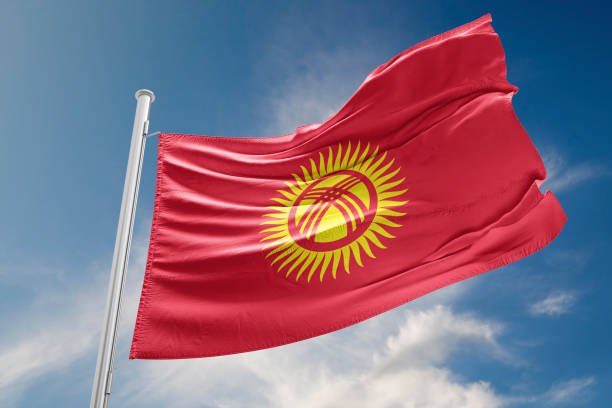
Kyrgyzstan’s Ministry of Economy and Commerce has launched the National Export Program "Made in Kyrgyzstan" for 2025-2028. Coordinated by the Kyrgyz Export Center, the initiative aims to help domestic producers access international markets, enhance the country’s export potential, and establish the “Made in Kyrgyzstan” brand as a recognizable symbol abroad. Program Goals and Priorities The program focuses on increasing Kyrgyzstan’s export volumes and foreign trade revenues by strengthening the position of Kyrgyz-made goods in global markets. It prioritizes key industries, including textiles, food, jewelry, and halal products, with the goal of making Kyrgyz exports more competitive internationally. To achieve these objectives, the program will: Support local entrepreneurs by promoting participation in international exhibitions and trade fairs. Facilitate access to financing and preferential loans for exporters. Streamline bureaucratic processes to expedite export procedures. Ensure domestic products meet international quality standards and certification requirements. Additionally, the program emphasizes increasing the export of high value-added goods and diversifying Kyrgyzstan’s export portfolio to reduce its negative foreign trade balance. Foreign Trade Trends According to the National Statistical Committee, Kyrgyzstan’s foreign trade turnover for January - October 2024 totaled $13.4 billion, marking a 6.4% increase compared to the same period in 2023. However, the trade balance remained negative, with exports accounting for 23.3% and imports for 76.7% of the total turnover​. Key highlights include: Exports: Grew by 25.2% to $3.1 billion, largely driven by gold exports, which made up 34.1% of the total. Excluding gold, exports reached $2.1 billion, an increase of 21.9%. Imports: Rose by 1.8%, amounting to $10.3 billion. Trade with member states of the Eurasian Economic Union (EAEU) - Armenia, Belarus, Kazakhstan, and Russia - amounted to $4.2 billion, a 13.7% increase. Russia (71.8%) and Kazakhstan (26.4%) remained Kyrgyzstan’s largest trading partners within the EAEU. Meanwhile, trade with countries outside the EAEU reached $9.2 billion during the same period. Strengthening Export Potential The "Made in Kyrgyzstan" program aspires to boost exports of diversified, high-quality products while addressing the country’s trade deficit. By empowering local businesses, improving export infrastructure, and fostering global competitiveness, the initiative represents a significant step forward for Kyrgyzstan’s economic growth and international trade ambitions.

Kazakhstan Opens Pavilion in Uzbek-Afghan Border Trade Center

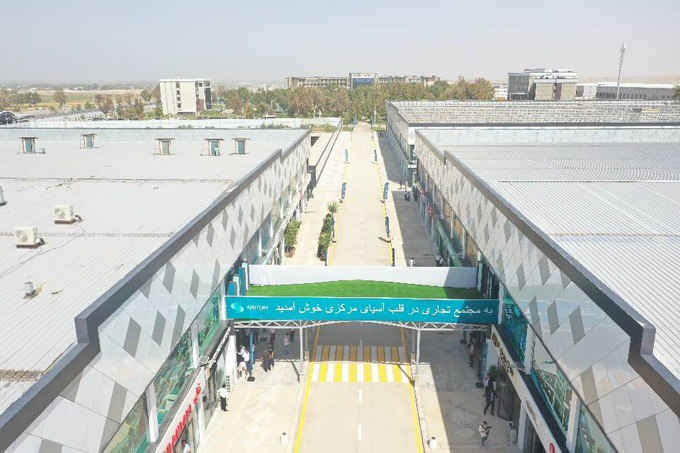
Kazakhstan’s Ministry of Trade and Integration has announced the opening of a trade pavilion showcasing Kazakh products at the Termez International Trade Center, located in the town of Termez, Uzbekistan, near the Afghan border. The pavilion is expected to serve as a strategic platform for promoting Kazakh goods in the markets of Uzbekistan and Afghanistan. The Termez International Trade Center is a crucial hub at the crossroads of Central Asian trade routes, facilitating significant trade flows between Uzbekistan and Afghanistan. Opened on August 29, the center was inaugurated by Uzbek Prime Minister Abdulla Aripov and acting Afghan Deputy Prime Minister Abdul Ghani Baradar. The facility includes retail spaces, hotels, a medical center, and other amenities. Notably, it supports transactions in multiple currencies, such as U.S. dollars, euros, rubles, and yuan. Afghan citizens can visit and conduct trade at the Termez center for up to 15 days without requiring an Uzbek visa. Kyrgyzstan has also secured a presence at the Termez International Trade Center. As The Times of Central Asia previously reported, on November 11, the Kyrgyz Ministry of Economy and Commerce acquired a trade pavilion, providing a strategic foothold to expand Kyrgyzstan’s influence in the markets of Uzbekistan and Afghanistan. Kazakhstan and Kyrgyzstan have both removed the Taliban from their lists of terrorist organizations, aligning with broader efforts by Central Asian nations to deepen trade and economic ties with Afghanistan.

Kyrgyzstan Secures Pavilion in Uzbek-Afghan Border Trade Center

The Ministry of Economy and Commerce of Kyrgyzstan has acquired a trade pavilion at the Termez International Trade Center in the town of Termez, Uzbekistan, near the Afghan border. This purchase agreement was signed on November 11 between the ministry and LLC Termez International Trade Centre, the center's management company. This pavilion offers Kyrgyzstan a strategic foothold to expand its presence in the markets of Uzbekistan and Afghanistan, promoting the export of Kyrgyz agricultural and industrial goods while enabling direct interaction with Afghan business partners. The Kyrgyz government has expressed an ongoing interest in strengthening economic relations with Afghanistan. From January to August 2024, trade between the two countries reached $14 million, with Afghan exports to Kyrgyzstan accounting for $6 million of this total, as noted in a recent report. The Termez International Trade Center serves as a vital hub at the intersection of Central Asian trade routes, facilitating substantial trade flows between Uzbekistan and Afghanistan. Opened on August 29 by Uzbek Prime Minister Abdulla Aripov and the acting Afghan Deputy Prime Minister Abdul Ghani Baradar, the center features retail spaces, hotels, a medical center, and other amenities. It also supports transactions in multiple currencies, including U.S. dollars, euros, rubles, and yuan. Notably, Afghan citizens are allowed to visit and conduct trade at the Termez center for up to 15 days without requiring an Uzbek visa, enhancing accessibility for Afghan traders.

Central Asia and South Korea Seek to Expand Cooperation

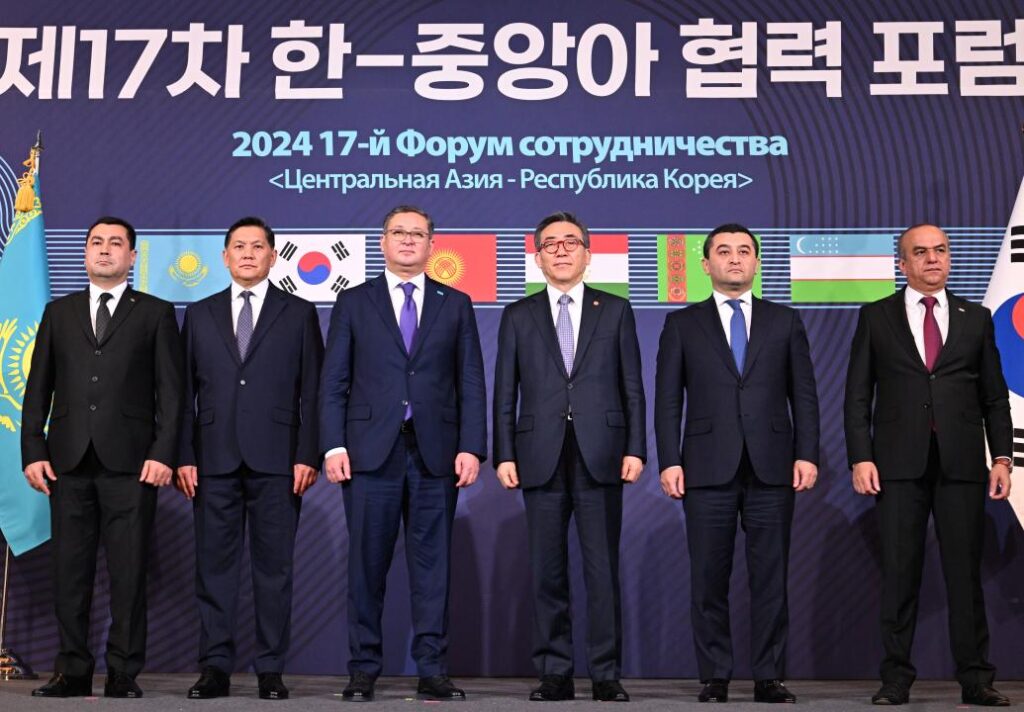
The 17th Central Asia–Republic of Korea Cooperation Forum, which took place in Seoul on November 4, addressed key areas of partnership between Central Asian countries and South Korea in sectors such as transport and logistics, energy, critical minerals, digital transformation, environmental issues, and tourism. Speaking at the forum, Kazakhstan’s Minister of Foreign Affairs, Murat Nurtleu, emphasized the importance of transport connectivity for the region’s sustainable economic growth. Kazakhstan is developing the Trans-Caspian International Transport Route to ensure safe and efficient cargo transportation from Asia to Europe. The Kazakh minister invited Korean companies to participate in major projects to expand the route’s capacity to 10 million tons of cargo annually. Addressing energy cooperation, Nurtleu highlighted Kazakhstan’s abundant natural resources, including rare earth metals and uranium. The Kazakh Foreign Minister expressed hope that Korean companies would join projects for resource extraction and processing and participate in a consortium to construct a nuclear power plant in Kazakhstan. Nurtleu stated, "Central Asian countries and the Republic of Korea are natural partners connected by a shared history, Altai heritage, and traditional trade relations dating back to the Silk Road era. The Republic of Korea is increasingly vital in the economic and technological development of the entire Central Asian region.” At the forum, Kyrgyzstan’s First Deputy Minister of Foreign Affairs, Asein Isaev, highlighted the growing role of South Korea as a high-tech nation interested in strengthening supply chains for energy resources and rare earth metals and developing transport and logistics routes with Kyrgyzstan and other Central Asian countries. As part of the forum, South Korea's President Yoon Suk Yeol met with the heads of Central Asian delegations and pointed out Korea’s interest in strengthening relations with Central Asian countries through the K-Silk Road initiative. This strategic program supports Korean infrastructure development in Central Asia in exchange for improved access to the region’s raw materials and critical minerals. During his visit to Kazakhstan in June, Yoon Suk Yeol emphasized the importance of strengthening the strategic partnership between Kazakhstan and South Korea to supply critical minerals.

Kuwaiti Companies Invited to Participate in Privatization of State-Owned Companies in Uzbekistan

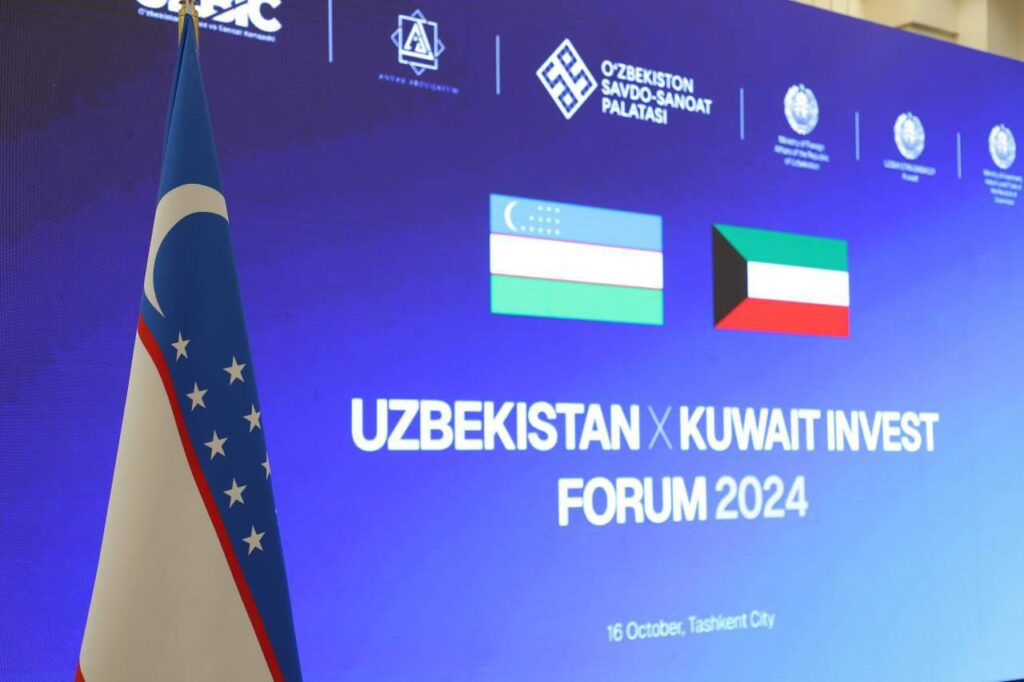
At a business forum dedicated to strengthening ties between Uzbekistan and Kuwait, in Tashkent on October 16, Deputy Minister of Investment, Industry, and Trade of Uzbekistan Akram Aliyev noted the importance of partnership with Kuwaiti businessmen, especially in healthcare, agriculture, and tourism. The forum focused on prospects for joint projects mining, energy, textile industry, and logistics. Proposals were also mooted for Kuwaiti investors to participate in the privatization program of over 1,000 state-owned companies in Uzbekistan and improve logistics infrastructure to turn Central Asia into an international trade hub. Over recent years, there have been several developments in cooperation between Uzbekistan and Kuwait. At an investment and trade forum hosted by Kuwait in August and attended by business and ministry representatives from both countries, Uzbek Foreign Minister Bakhtiyor Saidov encouraged Kuwaiti investors to explore prospects for partnership in agriculture, light industry, medical products, and renewable energy. The foreign ministers then met again, in New York in September 2024, to discuss further steps to strengthen bilateral cooperation, including the establishment of joint trade committees and new initiatives in logistics and infrastructure.