Gorno-Badakhshan Faces a Population Exodus
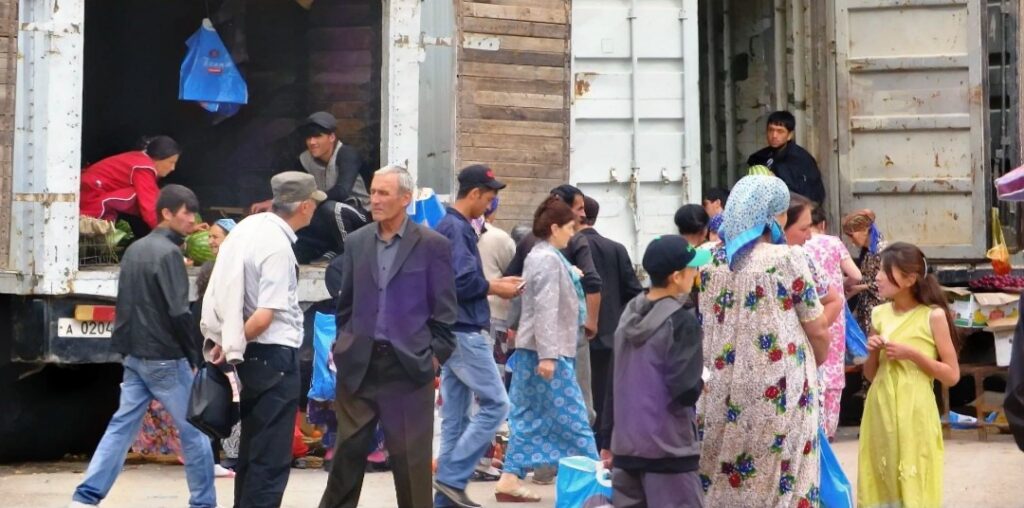
Tajikistan’s eastern Gorno-Badakhshan Autonomous Oblast (GBAO) has frequently been described as sparsely inhabited. According to the human rights organization ADC Memorial, tens of thousands of people have left this sparsely inhabited region since the Tajik government’s crackdown in 2021–2022. The estimated departures amount to more than 20% of GBAO’s pre-crackdown population, and conditions continue to worsen, so the exodus looks set to continue. Life at the Rooftop of the World GBAO makes up about 45% of Tajikistan; nearly all of the region is mountainous, with some peaks climbing to more than 7,000 meters. What is now GBAO was one part of a network of communities in the Pamir Mountains that stretched into present-day China, Afghanistan, and Kyrgyzstan. People have lived there for thousands of years. The ancient fortresses of Yamchun, built in the 3rd century BC, and Kaakha, built in the 2nd century, are the remains of a network of fortresses that once guarded trade through this area. [caption id="attachment_60717" align="aligncenter" width="2048"] White Horse Pass in Tajikistan’s Pamir Mountains. Image: Stephen M. Bland.[/caption] The small population was scattered across river valleys of the Pamir Mountains and developed in isolation from one another, so, unsurprisingly, there are several different languages spoken in the region. The GBAO capital is Khorog, at an elevation of some 2,200 meters, which is also the biggest town in GBAO with a population of some 30,000. Russia established Khorog as a garrison town at the end of the 19th century. The town looks down on the Pyanj River, and on the other side of the river is Afghanistan. Only two roads connect Khorog to the outside world: one leading to the Tajik capital Dushanbe to the west, and now to the Chinese border in the east, and another road that comes from southern Kyrgyzstan and passes through GBAO’s second-largest city, Murgab, at an elevation of some 3,650 meters, and with a population somewhere between 7,500 and 8,000. [caption id="attachment_60715" align="aligncenter" width="2048"] Murgab Bazaar; image: Stephen M. Bland.[/caption] Both roads face sudden and sustained closures during winter months due to avalanches and snowfall. Storms in the mountains can prevent planes from travelling to or from GBAO for weeks at a time. Despite these challenges and more, by 2021, the population in GBAO had grown to some 230,000, which is still only about 2% of Tajikistan’s population. Not Fully Part of Tajikistan Customs and language distinguish “Pamiris” of GBAO from Tajiks, but perhaps the most important difference is religion. The Pamiris are Ismailis, Shi’ites, followers of the Aga Khan. Most Tajiks are Sunni Muslims. After the collapse of the Soviet Union, Tajikistan declared independence on September 9, 1991. In spring 1992, a civil war broke out that pitted Tajik government forces backed by Russia and Uzbekistan against the United Tajik Opposition (UTO), a coalition of domestic opposition groups that included the Islamic Renaissance Party of Tajikistan (IRPT), the Democratic Party of Tajikistan, and La’li Badakhshan (Rubies of Badakhshan), a Pamiri group seeking greater autonomy for GBAO. The UTO established...